Dr. Assil Gives State-of-the-Art Odyssey IOL Lens Extremely High Praise

During 2025, while eye doctors worldwide advised patients on which intraocular lens implant would improve their eyesight, only one eye center was chosen to prescribe Johnson & Johnson’s new state-of-the-art Odyssey multifocal intraocular lens: Assil Gaur Eye Institute.
Dr. Kerry Assil, an internationally renowned ophthalmologist with over 70,000 eye surgeries, and his esteemed partner, Dr. Avneet Sodhi Gaur, were the world’s first cataract surgeons to implant the Odyssey. After performing the first Odyssey lens implant, Johnson & Johnson chose the Assil Gaur Eye Institute to provide the lens to its patients and help define its best use cases.
What makes the Odyssey lens so groundbreaking?

Before the Odyssey multifocal lens, doctors could correct refractive errors by implanting one eye with a near-sighted corrective lens and the other with a far-sighted corrective lens. Another option was to correct distance vision using a premium IOL and continue using reading glasses for near vision.
Read the story of AGEI Odyssey IOL cataract patient – Steve
With the Odyssey lens, doctors can now achieve clear vision at multiple focal points in both eyes at the same time, just like the natural lenses in our eyes do.
Because of its unique characteristics, the Odyssey lens has become indispensable to the Assil Gaur Eye Institute’s Premium Cataract and Refractive Lens Exchange (RLE) surgical programs.
Some of the Odyssey lens’ benefits over other options include:
Visual acuity at all distances
A diffractive pattern etched into the lens’s front surface is uniquely configured and adjusted to minimize visual confusion when viewing over different distances. The pattern also boosts contrast sensitivity.
In practical terms, the Odyssey IOL delivers a continuous, full range of vision spanning near, intermediate, and distance focal points simultaneously. Whether you are reading a text message, working at a computer, or recognizing a face across the room, the lens is engineered to handle each task without requiring you to reach for reading glasses or swap between pairs.
The diffractive pattern splits incoming light into multiple focal points at once. Concentric rings etched into the anterior lens surface bend light at precisely calculated angles, directing a portion of that light toward near objects and another portion toward distant ones, while intermediate vision is addressed across the transition zones between rings. The result is a seamless visual experience rather than the abrupt jump between focal zones that older bifocal-style implants could produce.
This is a meaningful distinction from extended depth-of-focus, or EDOF, designs. EDOF lenses elongate a single focal point into a continuous corridor of vision that performs exceptionally well at distance and intermediate ranges, but they often leave patients still dependent on reading glasses for fine near tasks like reading small print. The Odyssey’s true multifocal architecture is engineered to close that gap, delivering genuine near-vision performance that EDOF designs typically cannot match. For patients at AGEI who want the fullest possible freedom from glasses after premium cataract surgery, that difference is worth understanding before choosing a lens.
Enhanced vision by reducing chromatic aberration
The Odyssey lens’s special polymer material dramatically reduces chromatic aberration. Chromatic aberration is a distortion that occurs when a lens fails to focus all colors to the same convergence point. This results in color fringing at the boundaries between light and dark areas.
Improved visual contrast
The lens also improves contrast acuity, allowing patients to better discern between shades and patterns. This allows patients to see better in different lighting conditions (such as reading road signs at night).
Minimized optical distortions by mimicking the characteristics of a young person’s lens
The Odyssey lens’s physical shape mimics the light-focusing attributes of a young, healthy person’s natural lens. The result is minimal optical distortions.
Reduced nighttime glare and haloes
A UV and violet-light filter called “Optiblue” helps filter out harmful light rays from daylight and also reduces nighttime glare and haloes. This detail sets the Odyssey IOL apart from earlier multifocal designs, and it matters most in real-world moments patients care about: driving home after dinner, reading a lit menu in a dim restaurant, or watching headlights approach on the freeway.
That said, it is worth being honest about what the clinical picture looks like. Some patients do notice mild halos or a soft glow around lights in the first weeks after surgery. This is a normal part of the neuro-adaptation process, meaning your brain is learning to interpret the new range of visual information the Odyssey lens delivers. For most patients, these transient symptoms fade significantly within the first one to three months as neuro-adaptation completes.
The Odyssey’s optimized dysphotopsia profile is specifically engineered to minimize these effects compared to older multifocal lenses, and the Optiblue filter works alongside that optical design to further reduce light scatter. At AGEI, Dr. Assil and the team take time during your premium cataract surgery consultation to review your lifestyle, nighttime driving habits, and visual expectations so the lens selected is the right fit for you. Patients who come in with clear, realistic expectations consistently report that any early glare is a small, temporary trade-off for the freedom from glasses they gain at every distance.
Eliminating unwanted “twinkling light” in front of the pupil
The Odyssey lens eliminates the “Cat’s Eye Pupil” phenomenon, which looks like twinkling light in front of the pupil and can distract people talking with you while looking you in the eye.
Correcting astigmatism
The lens is also available for patients with astigmatism, an imperfection in the curvature of the eye’s cornea or lens. With astigmatism, vision is blurry at all distances.
The toric version of the Odyssey IOL addresses this by incorporating precise astigmatism correction directly into the lens implant itself. Rather than leaving residual astigmatism to be managed with glasses or a separate procedure, the toric Odyssey corrects it during cataract removal in a single surgery.
This makes it an especially advanced option for patients who want genuine freedom from glasses at every distance. The lens is designed to treat a meaningful range of astigmatism, and Dr. Assil’s team will measure your corneal curvature during your complimentary evaluation to confirm whether the toric Odyssey is the right fit for your prescription. For patients with higher degrees of astigmatism, this simultaneous correction can be the difference between truly clear, unaided vision and a result that still depends on corrective lenses for sharp focus.
How does the Odyssey IOL compare to other premium multifocal lenses?
If you’ve been researching premium intraocular lenses, you’ve probably noticed there are several options on the market, and it can feel overwhelming trying to figure out which one is right for you. Here’s a straightforward way to think about it.
Most premium IOLs fall into two broad categories: extended depth of focus (EDOF) lenses and true multifocal lenses. EDOF lenses stretch your range of vision by elongating the focal point, which tends to cause fewer visual disturbances but can still leave some patients reaching for reading glasses in low light. Traditional multifocal lenses split incoming light across distinct focal points for near, intermediate, and distance vision, delivering genuine freedom from glasses but sometimes at the cost of more noticeable halos or glare.
The Odyssey IOL stands apart because it combines the full-range vision of a multifocal design with an advanced optical profile engineered to minimize those unwanted visual side effects. Its Optiblue light-filtering technology reduces harmful blue light while preserving contrast sensitivity, meaning images appear sharper and more vivid, especially in dim conditions. Clinical data supports best-in-class image contrast and an unmatched range of vision across near, intermediate, and distance tasks.
Another standout feature is the Odyssey’s enhanced tolerance to small refractive errors after surgery, which is particularly valuable for patients with complex eye histories. For a deeper look at how advanced IOL technology is expanding options for patients, including those with macular concerns, this overview of eye implant technology is worth reading.
At Assil Gaur Eye Institute, our world-class surgeons help you weigh every option with precision, so the lens you choose is truly the best fit for your eyes and your lifestyle.
Who is a good candidate for the Odyssey lens?
If you are exploring the state-of-the-art Odyssey IOL multifocal lens, the first question is whether you’re a good fit. The honest answer is that most cataract patients are excellent candidates, but a thorough evaluation is essential before you decide.
You are likely a strong candidate if cataracts affect your daily life, you have realistic expectations about visual outcomes, and you genuinely want freedom from glasses for near, intermediate, and distance tasks. Patients who are highly motivated to reduce their dependence on readers or bifocals tend to be the most satisfied after surgery. The Odyssey also performs beautifully in post-LASIK eyes, an area where AGEI has documented exceptional outcomes that many practices simply cannot match.
Some patients require a more careful conversation before proceeding. If you have significant pre-existing retinal disease, advanced macular degeneration, or severe dry eye that cannot be managed beforehand, a premium multifocal lens may not deliver the crisp, full-range vision you are hoping for. Patients with very irregular corneas or certain optic nerve conditions may also be better served by an alternative lens option. You can learn more about how underlying eye health affects surgical outcomes in our guide to premium cataract surgery in Los Angeles.
The best way to know for certain is a complimentary evaluation with the world-class surgical team at Assil Gaur Eye Institute. Our surgeons will map your eye anatomy with advanced precision diagnostics and give you a completely honest recommendation tailored to your vision goals.
The Odyssey lens demonstrates startling results
“In addition to having implanted several hundred lenses during simple cataract surgery, we also implanted [the Odyssey] in more complex cases where we felt the patients were good candidates, with great patient satisfaction,” said Dr. Assil. Read the story of AGEI Odyssey RLE patient – Ally

Post-surgical outcome data for this advanced, state-of-the-art Odyssey IOL multifocal lens confirmed superb results across a wide range of patients, including those with additional challenges. Johnson & Johnson’s own clinical data reinforces what AGEI surgeons observed firsthand: 94% of patients reported satisfaction with the Odyssey lens, and 96% rated their near vision as good or excellent after implantation. Those are the kinds of enviable outcomes that make this premium lens a genuine game-changer for patients seeking freedom from glasses.
AGEI’s real-world results were equally compelling, with exceptional outcomes documented in eyes that had faced significant prior challenges, such as:
Implanting the Odyssey intraocular lenses in an eye having previously undergone Radial keratotomy (RK for correction of nearsightedness), LASIK, and PRK with exceptional outcomes.
Exchanging implanted premium lenses that provided insufficient vision correction, including those with foggy or Vaseline vision, with the Odyssey lens. AGEI’s Odyssey exchange surgeries had excellent results, with the most dramatic case improving a patient’s range of vision from 20/30 to 20/20.
Successfully treating patients with corneal issues, including dry eye or dandruff-like corneal surface dystrophy, as well as patients with larger pupil sizes.
Correcting retinal problems, such as those seen in diabetes patients or those with central retinal scarring (Epiretinal Membrane).
Delivering best-in-class image contrast performance across near, intermediate, and distance vision, even in challenging low-light settings where many competing lenses fall short.
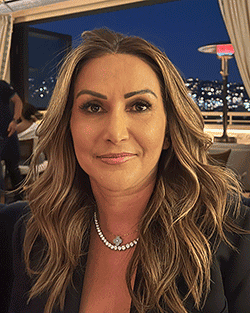
“We are proud of our ongoing contributions to vision correction. This pioneering advance allows more patients to achieve spectacle independence,” said Dr. Gaur. “We were eager to evaluate the Odyssey lens in different settings and were extremely impressed by its contrast performance and great near and distance vision in various low-light settings. We look forward to continuing to offer this lens to patients who will benefit greatly.”
Johnson & Johnson is now beginning to roll out the FDA-approved Odyssey lens to the general public. AGEI is proud to be among the elite early adopters of this world-class technology, trusted by patients across Los Angeles who deserve nothing less than the very best in precision vision correction.
Read the story of AGEI Odyssey RLE patient – Greta
Satisfied AGEI patients
Real patients. Real outcomes. Read these firsthand accounts of the state-of-the-art Odyssey IOL multifocal lens experience at Assil Gaur Eye Institute and hear what freedom from glasses actually feels like.
Steve, 62, glanced up at the Dodgers’ scoreboard to see Mookie Betts’ batting average and couldn’t read a thing. That all changed when he got the state-of-the-art Odyssey multifocal IOL by Johnson & Johnson. After surgery, Steve could read the scoreboard, his phone, and a restaurant menu without reaching for glasses. He calls the result a game-changer for his everyday life.
Sylvia, 75, didn’t wait long to reap the rewards of her state-of-the-art Odyssey lens replacement surgery. Within days of her procedure at AGEI, she was enjoying crisp, full-range vision at near, intermediate, and distance without the glasses she had worn for decades. Sylvia describes the experience as a second chance to see the world clearly.
Being glasses-free was a long time coming for Ally, 57, who said her quick RLE surgery with the Odyssey lens was “easy peasy.” Ally returned to her normal routine almost immediately, impressed by how straightforward the recovery felt compared to what she expected. She now enjoys sharp vision at every distance and says she wishes she had done it sooner.
Dr. Greta Torossian, 52, suffered from presbyopia, a common age-related vision loss that affects the ability of the eye’s lens to focus on close objects. The solution? Refractive lens exchange (RLE) with the state-of-the-art Odyssey IOL Lens by Johnson & Johnson. As a practicing optometrist, Dr. Torossian understood the science behind the lens and trusted AGEI’s world-class surgical team to deliver precision outcomes. She reports that her near and distance vision are now exceptional, and she considers the results a testament to what advanced premium IOL technology can achieve in expert hands.
Aram, 56, wanted to wait for more data before trying the state-of-the-art Odyssey lens. Now he says, “Everybody should get these lenses.” After years of deliberating, Aram chose AGEI for the procedure and was stunned by how quickly his vision transformed across all distances. His advice to anyone on the fence is simple and enthusiastic: stop waiting and experience the enviable outcomes for yourself.
Why trust Assil Gaur Eye Institute with your vision correction?
Dr. Kerry Assil has gained industry-wide respect for his extensive knowledge and contributions to cataract and refractive surgery. His knowledge of Intraocular lenses for cataract surgery and Refractive Lens Exchange is unparalleled.
With over 40 years of combined experience assisting patients with eye health, Drs. Assil and Gaur are among the most experienced eye surgeons in the United States. Dr. Assil has performed over 70,000 eye surgeries and authored over 100 textbook chapters and articles on refractive and cataract surgery.
In keeping with AGEI’s founding principles, their eye surgeons keep their clinics comfortable and familiar, much like family-run medical practices used to be.
In addition to refractive lens exchange and cataract surgery, the ophthalmology experts at AGEI are nationally recognized for their eye care and treatment options for a full range of conditions, including eye conditions such as hyperopia glaucoma, macular degeneration, retinal detachment (and other diseases of the retina), cornea conditions, contact lens, floaters and flashes, dry eye, presbyopia correction, astigmatism, farsightedness, myopia, nearsightedness, and other vision correction procedures (refractive surgery) such as LASIK surgery, PRK.
Today, AGEI is nationally recognized for its compassionate, patient-centric health care, commitment to pioneering advances in ophthalmology, and dedication to supporting the community’s health and well-being.
Please call (866) 945-2745 or make an appointment online.
Rest assured, when it comes to intraocular lenses, we have seen them all. Be it monofocal IOLs, trifocal IOLs, accommodating IOLs, extended depth of focus lenses (EDOF), intermediate vision IOLs, bifocal IOLs, Tecnis multifocal IOLs, PanOptix IOL (Alcon), Toric IOL, AcrySof IQ, monofocal lenses, Symfony and Vivity IOLs, multifocal intraocular lenses, and Crystalens accommodating lens technology with an aspheric lens design.
Frequently asked questions about the Odyssey IOL
Does the Odyssey IOL cause halos or glare?
Some patients notice mild halos around lights, especially at night, during the first few weeks after surgery. This is a normal part of neuro-adaptation, the process by which your brain learns to prioritize the clearest image at each distance. Most patients find these visual phenomena fade significantly within one to three months. The Odyssey’s optimized dysphotopsia profile is specifically engineered to minimize these effects compared to earlier generations of multifocal lenses.
Will insurance cover the Odyssey IOL?
Standard Medicare and most private insurance plans cover the basic cost of cataract surgery, but the premium upgrade to an advanced lens like the Odyssey IOL is typically an out-of-pocket expense. During your complimentary evaluation at Assil Gaur Eye Institute, our team will walk you through all costs and available financing options so you won’t be surprised.
Can I get the Odyssey IOL if I have previously had LASIK or RK surgery?
Yes, and this is an area where AGEI has documented exceptional outcomes. Our world-class surgeons have extensive experience implanting premium IOLs in post-LASIK and post-RK eyes, using advanced biometry to achieve the precision results these complex cases demand. Learn more about what makes our approach to premium cataract surgery in Los Angeles stand apart.
How soon after surgery will I notice improved vision?
Many patients experience noticeably clearer vision within the first 24 to 48 hours. Full visual quality, including comfortable full-range vision at near, intermediate, and distance, typically stabilizes over four to six weeks as your eyes and brain complete the adaptation process.
What's the Odyssey IOL recovery like?
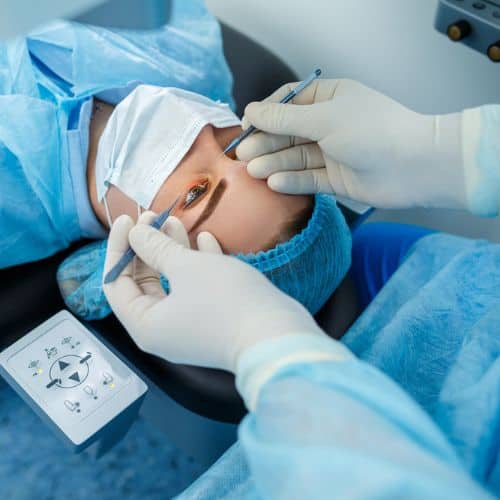
Once you and your AGEI surgeon have confirmed that the state-of-the-art Odyssey IOL multifocal lens is right for your eyes, the procedure is reassuringly straightforward. The surgery typically takes around 15 to 20 minutes per eye and is performed on an outpatient basis, meaning you go home the same day. Your surgeon uses advanced micro-incision techniques to gently remove the natural lens and precisely position the Odyssey IOL, with no stitches required in most cases.
Recovery is generally faster than most patients expect. Many people notice a meaningful improvement in vision within the first 24 to 48 hours, though your eyes will continue to refine and settle over the following weeks. You can read more about a typical post-operative timeline in our guide to vision correction recovery. Light sensitivity and mild blurring are common in the early days and usually resolve as healing progresses.
One thing worth knowing upfront is that some patients experience a brief period of neuro-adaptation, where the brain learns to process the full range of visual information the Odyssey delivers. This is completely normal and typically resolves within a few weeks to a couple of months. The Odyssey’s optimized dysphotopsia profile minimizes halos and glare compared to older multifocal designs, making the adaptation period more comfortable for most people.
Your AGEI care team will guide you through every step, from your complimentary evaluation through to your follow-up appointments, so you always know exactly where you are in your journey toward freedom from glasses.