Understanding Pinguecula: Causes, Symptoms, and Treatment
Your eyes are crucial to your overall health and daily functioning. Pinguecula is a common eye condition that can affect vision and comfort.
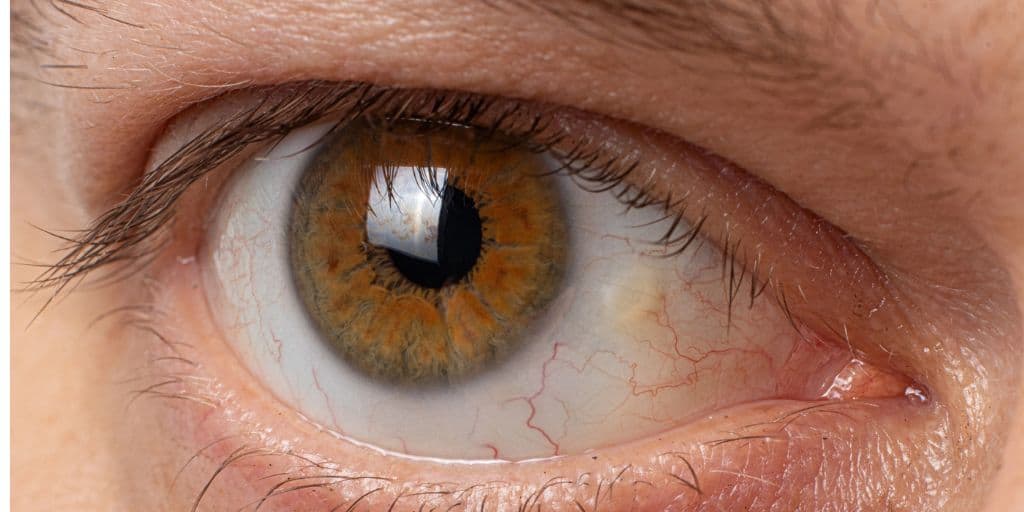
What is a pinguecula?
A pinguecula is a yellowish, slightly raised bump that appears on the white part of the eye (the sclera). It typically occurs on the inner side of the eye, near the nose.
Fortunately, this type of growth is benign. It is caused by the deposit of protein, fat, and calcium. While it’s generally harmless, a pinguecula can cause some irritation, discomfort, and cosmetic concerns.
It is important to differentiate pingueculae from pterygia (surfer’s eye). Pingueculae remain in the conjunctiva on the white of your eye and don’t overlap with the cornea. Ptergia are similar growths but extend over the corneal surface and affect vision.
What causes a Pinguecula
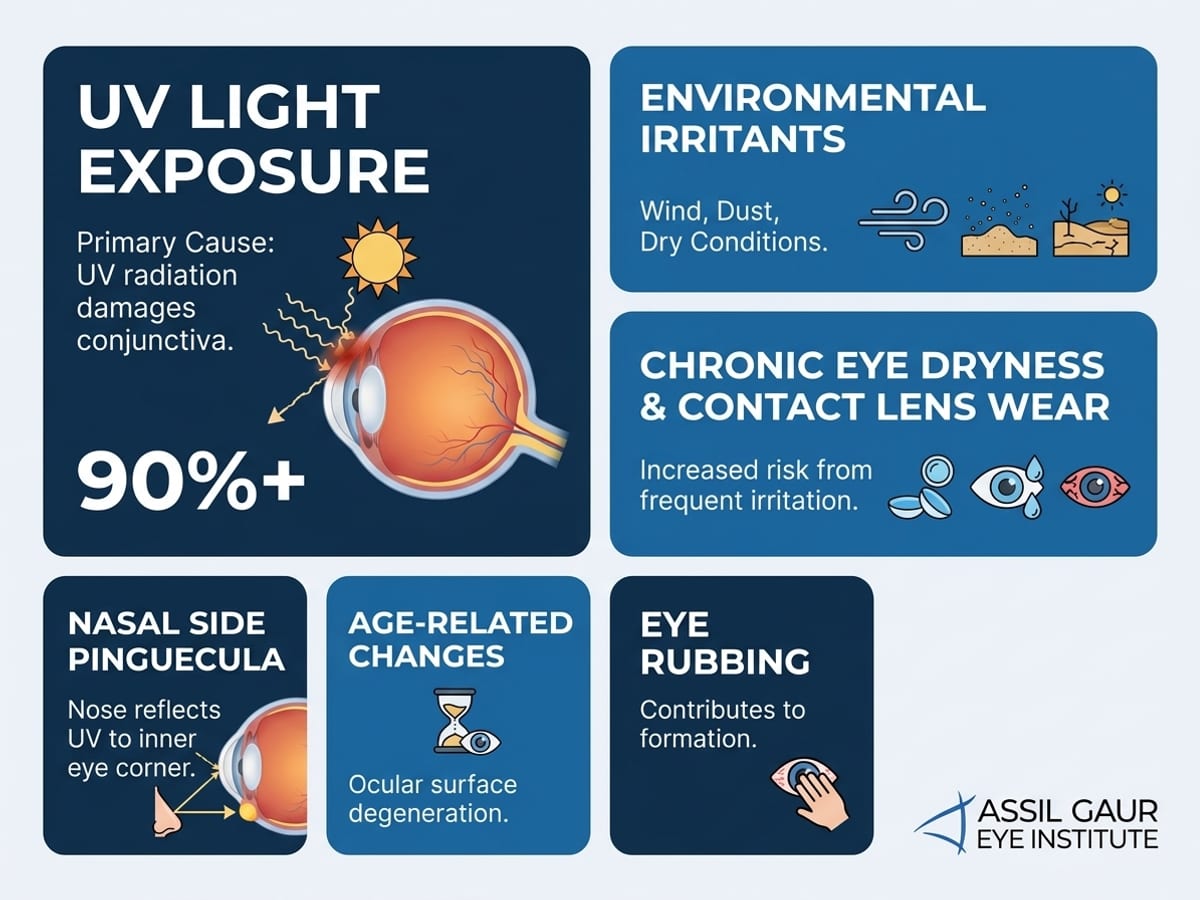
A pinguecula typically forms as a result of environmental exposure and eye irritation. Understanding what causes it in the first place and what makes it worse over time can help you take meaningful steps to protect your eyes.
Primary causes

Ultraviolet light exposure, typically from the sun, is one of the primary causes of pinguecula. People who spend a lot of time outdoors without wearing protective sunglasses are at higher risk. UV radiation can damage the thin, transparent layer that covers the white part of your eye, called the conjunctiva. Interestingly, pingueculae almost always appear on the nasal side of the eye rather than the outer side. Researchers believe this is because the nose acts as a reflective surface, bouncing additional UV light onto the inner corner of the eye and concentrating damage in that specific area.
Similarly, long-term exposure to wind, dust, and dry conditions can also irritate the eyes and contribute to the development of pingueculae. Aside from environmental factors, age can also increase your chances of developing pingueculae. As we age, we experience degeneration of the ocular surface, and these changes in the tissues of our eyes may make them more susceptible to developing growths such as pingueculae.
Contact lens wearers and individuals who experience chronic eye irritation or dryness are also at an increased risk of developing pinguecula. Irritation from rubbing dry eyes or frequent exposure to harsh chemicals can contribute to the formation of these bumps.
Who is most at risk?
Pingueculae are more common in people who live in tropical or high-altitude climates where UV exposure is intense year-round. They tend to appear most frequently in adults between the ages of 20 and 50, and research suggests men develop them at a higher rate than women, likely due to greater cumulative outdoor exposure.
What can trigger a pinguecula to grow or worsen?
Even after a pinguecula has formed, certain conditions can cause it to become inflamed or grow larger. Prolonged screen time, air conditioning, smoke, and allergens can all dry out the ocular surface and aggravate existing tissue. Continued UV exposure without protective eyewear is the most significant ongoing trigger. Wearing contact lenses over an existing pinguecula can also cause friction and irritation that accelerates growth or leads to a flare-up known as pingueculitis, where the growth becomes red, swollen, and noticeably uncomfortable.
What are the symptoms of pinguecula?
Pingueculae are often asymptomatic, meaning they do not cause symptoms.
However, when symptoms do occur, they can include:
Visible bump: A yellow or white bump on the white part of the eye, usually near the cornea.
Eye redness: The area around the pinguecula may become red and inflamed, especially when the eye is exposed to irritants such as dust or sunlight. You may notice an increase in blood vessels leading into the pinguecula.
Dryness or irritation: Many people with pinguecula experience dryness, itching, or burning in the affected eye.
Foreign body sensation: The growth can cause a sensation of something in the eye, leading to discomfort and the urge to rub the eye.
If you experience any of these symptoms, it’s important to consult an eye care professional at AGEI. While a pinguecula is typically harmless, it’s essential to rule out other eye conditions that may require treatment.
When should you see an eye doctor about pinguecula?
Most pingueculae are harmless and slow-moving, but there are specific moments when waiting it out is not the right call. Knowing those moments can protect your vision and your comfort.
Schedule an appointment with an eye doctor if you notice any of the following:
Persistent redness that does not clear up after a few days, especially if it spreads beyond the area around the growth
Significant pain or a burning sensation that over-the-counter lubricating drops are not relieving
The growth appears to be changing in size, shape, or color over a short period of time
Your contact lenses no longer sit comfortably because the raised tissue is interfering with the fit
Blurred or distorted vision, which may signal the growth is encroaching on the cornea and transitioning toward a pterygium
Watering eyes or a gritty feeling that persists despite consistent use of artificial tears
You should also seek care promptly if you experience a sudden flare of redness, swelling, and light sensitivity together. This combination can indicate pingueculitis, an inflammatory episode that typically requires prescription anti-inflammatory eye drops rather than simple lubrication.
As a general rule, any eye symptom that disrupts your daily life or lingers longer than a week deserves a professional evaluation. Your eyes reveal a great deal about your overall health, and catching changes early is always the smarter path. If you are unsure whether what you are seeing is a pinguecula or something more serious, a world-class clinical team can give you a precise, confident answer. Proactively caring for your eyes is one of the best investments you can make in your long-term well-being.
How is pinguecula diagnosed?
Diagnosing a pinguecula is relatively straightforward. During an eye exam, one of our ophthalmologists will use a slit-lamp microscope to examine the surface of your eye closely.
This allows them to observe any growths, evaluate their size, and determine whether they affect the cornea or other parts of the eye.
In most cases, a pinguecula does not require further diagnostic tests. However, if the growth is large or causing significant symptoms, our eye care specialist may perform additional evaluations to ensure no underlying issues need attention.
Pinguecula vs. pterygium: key differences

Once you know what a pinguecula looks like, it is easy to confuse it with a pterygium, and patients ask about the difference all the time. Both growths appear on the conjunctiva, are linked to UV exposure and dry, dusty environments, and tend to appear on the nasal side of the eye first. That is where the similarities end, though.
A pinguecula stays put. It is a small, yellowish-white deposit of protein and fat that sits on the white of the eye but never crosses onto the cornea. A pterygium, sometimes called Surfer’s Eye, is a fleshy, wedge-shaped growth that actively creeps across the corneal surface. That distinction matters enormously because once a pterygium reaches the center of the cornea, it can distort your vision in ways a pinguecula simply cannot.
Feature | Pinguecula | Pterygium |
|---|---|---|
Location | Conjunctiva only | Conjunctiva and cornea |
Appearance | Yellowish-white bump | Fleshy, triangular growth |
Vision impact | Rarely affects vision | Can blur or distort vision |
Surgical removal | Rarely needed | Often recommended when growing |
There is also a progression link worth knowing: a pinguecula can, over time, evolve into a pterygium. That is one more reason early diagnosis and consistent UV protection are so important. If you are unsure which condition you have, a world-class eye exam at AGEI will give you a precise answer and a clear path forward.
Pinguecula treatment options

Pingueculae are generally benign and do not always require treatment. However, if they become bothersome or cause discomfort, our doctors may prescribe one of the following treatments.
Over-the-counter artificial tears or lubricating eye drops can help reduce dryness and irritation for mild cases. These drops provide moisture to the eye, relieving symptoms associated with pinguecula, such as redness or a burning sensation. For best results, preservative-free lubricating drops are preferred, especially when used frequently throughout the day. Most patients with mild pinguecula find that applying drops 4 to 6 times daily keeps symptoms well under control without further intervention.
But if the pinguecula is inflamed or causing significant discomfort, your eye doctor may prescribe anti-inflammatory eye drops or steroid eye drops. A short course of topical corticosteroids, typically lasting one to two weeks, is the standard approach for an acute flare-up known as pingueculitis.
Because prolonged steroid use carries risks such as elevated eye pressure and cataract formation, our doctors monitor patients carefully and limit these drops to the shortest effective course. For patients who need repeated treatment cycles, topical non-steroidal anti-inflammatory drops (NSAIDs) offer a safer long-term alternative that reduces inflammation without the same side-effect profile.
In rare cases, surgical removal may be recommended when a pinguecula becomes very large, causes chronic irritation, or affects vision. The excision procedure is typically quick and performed under local anesthesia. Additional surgical indications include interference with contact lens wear, significant cosmetic concern, and growth that encroaches on the cornea.
During the procedure, the abnormal conjunctival tissue is carefully excised, and the area is covered with a conjunctival autograft, a small patch of healthy tissue taken from another part of the eye’s surface, to promote clean healing and reduce the chance of recurrence. Recovery is generally straightforward, with most patients resuming normal activities within one to two weeks. Mild redness and a foreign-body sensation are common in the first few days and are managed with lubricating drops and, where appropriate, a brief course of anti-inflammatory medication.
While pingueculae do not usually grow back after removal, wearing sunglasses and protecting the eyes from environmental irritants can reduce the risk of recurrence. Wraparound frames with lenses rated UV400 or higher offer the most complete protection, blocking ultraviolet light from both the front and the sides. Polarized lenses add an extra layer of defense by cutting reflected UV from surfaces like water, sand, and pavement.
Patients who work outdoors or in dusty environments are also encouraged to use lubricating drops proactively and consider protective eyewear on high-exposure days. At Assil Gaur Eye Institute, our world-class team will work with you to build a personalized management plan, whether that means a simple drop regimen or a precision surgical solution, so you can move forward with comfort and confidence.
Risks and complications of pinguecula
While pinguecula is generally harmless, it’s important to be aware of potential complications that can develop if the growth is left unmanaged or repeatedly irritated.
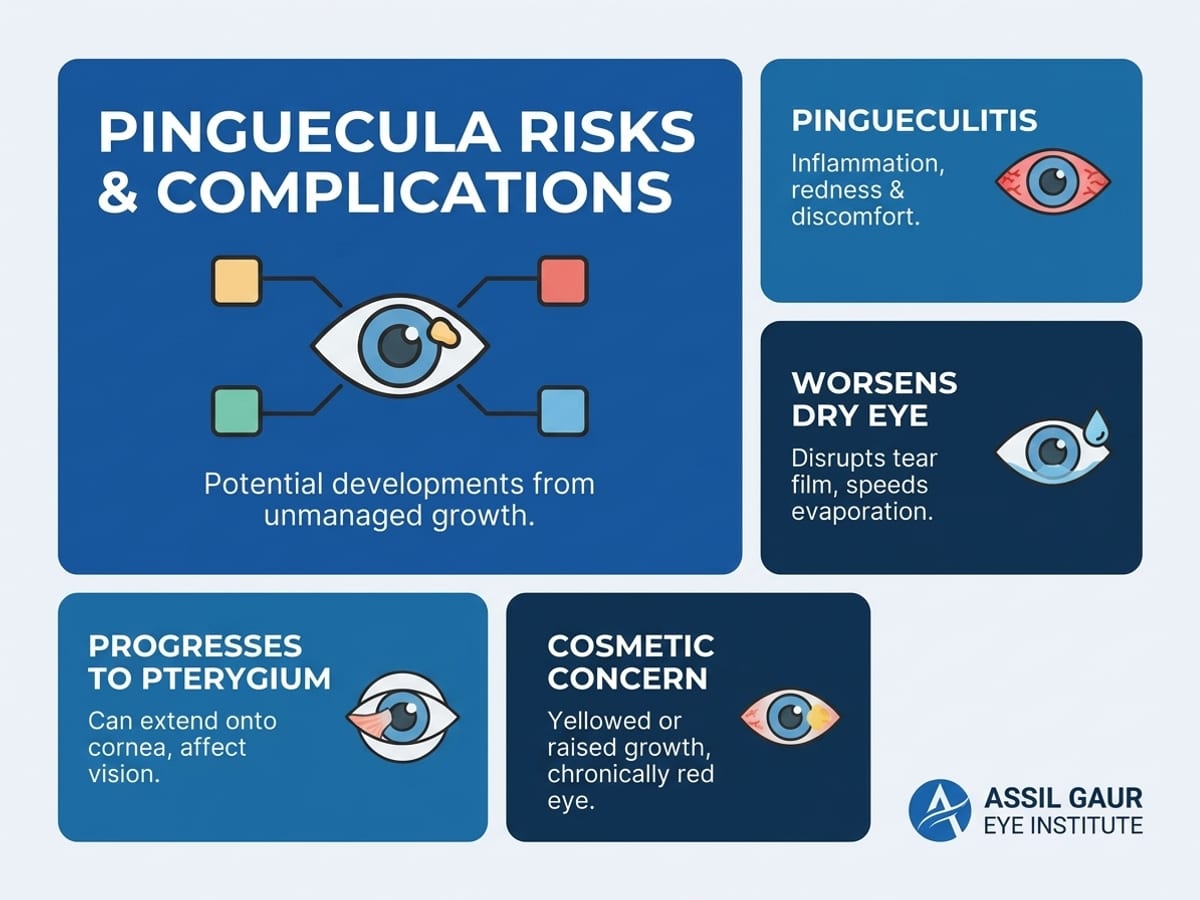
Pingueculitis is an inflammation of the pinguecula that causes redness, swelling, and noticeable discomfort. It may occur when the eye is exposed to irritants, prolonged UV light, wind, or dust, or when the pinguecula becomes chronically irritated from contact lens use. During a pingueculitis flare, the surrounding conjunctival blood vessels become engorged, making the eye appear significantly red. Some patients also experience a burning or gritty sensation, increased tearing, and light sensitivity. Mild cases typically respond well to lubricating eye drops and temporary avoidance of contact lenses, while more pronounced inflammation may require a short course of anti-inflammatory drops prescribed by your eye doctor.
Pinguecula can also worsen pre-existing dry eye disease. The raised, irregular surface of the growth disrupts the even spread of the tear film across the eye, creating a zone where tears evaporate faster than normal. This can intensify the stinging, burning, and blurred vision that dry eye patients already experience, and it may make contact lens wear increasingly uncomfortable over time.
Sometimes, a pinguecula may develop into a pterygium. This progression is more likely in patients with high cumulative UV exposure, such as those who spend significant time outdoors without protective eyewear. Unlike a pinguecula, which stays within the white of the eye, a pterygium extends onto the clear cornea and can distort its surface, inducing astigmatism and, in advanced cases, directly obstructing the line of sight. Pterygia that affect vision or cause persistent discomfort may require surgical intervention.
Finally, the cosmetic impact of pinguecula should not be dismissed. A visibly yellowed or raised growth on the white of the eye can affect a patient’s confidence, particularly when the eye appears chronically red during flare-ups. If a pinguecula is causing significant cosmetic concern, surgical removal is an option worth discussing with a world-class specialist at AGEI.
What to expect: prognosis and outlook

If you have just been diagnosed with a pinguecula, here is the reassuring news: for the vast majority of people, this is a benign, manageable condition that does not threaten your vision. A pinguecula is not cancerous; it does not spread to your cornea on its own, and it rarely causes serious complications when you take reasonable steps to protect your eyes.
That said, a pinguecula is considered a chronic condition, meaning it does not simply disappear on its own over time. Once the deposit of protein and calcium forms on your conjunctiva, it tends to stay. In some people, it remains completely stable for years or even decades. In others, prolonged UV exposure, dry environments, or ongoing irritation can cause it to grow slowly or become inflamed more frequently. This is why consistent sun protection and managing dry eye symptoms are so important for long-term comfort.
The small percentage of cases that do progress may eventually interfere with contact lens wear or cause persistent cosmetic concern. In those situations, surgical removal is a straightforward, highly effective option that resolves the issue with a very low recurrence rate when performed by an experienced specialist.
Most patients who follow a simple daily routine, wear quality UV-blocking sunglasses, use lubricating eye drops when needed, and have regular check-ups live comfortably with a pinguecula without it ever significantly affecting their quality of life. Staying proactive and keeping up with routine eye exams is the single best thing you can do to stay ahead of any changes and protect your long-term eye health.
Can pinguecula be prevented?

Preventing pinguecula involves protecting your eyes from environmental factors and UV light. Wearing sunglasses that provide 100% UV protection is one of the best ways to prevent pinguecula, and wearing a wide-brimmed hat while in the sun can also reduce exposure.
Not all sunglasses offer the same level of protection. Look for lenses rated UV400, which block wavelengths up to 400 nanometers and filter out virtually all UVA and UVB radiation. Wraparound frames are especially effective because they limit UV exposure from the sides and corners of the eye, where standard frames leave gaps. Polarized lenses can reduce glare but do not automatically block UV, so always confirm the UV400 rating on the label before purchasing.
It is also worth knowing that UV exposure does not stop when you step indoors. UV rays can pass through untreated windows, and reflective surfaces like water, sand, snow, and even pavement can bounce UV light directly into the eye. Wearing UV-protective lenses during long drives or near bright windows is a simple habit that adds meaningful protection over time.
If you work in a dusty or windy environment, wearing protective goggles can help shield your eyes from irritants that may contribute to forming pinguecula.
For those who experience dryness, regular use of artificial tears can also help keep the eyes lubricated and reduce the risk of irritation. Staying well hydrated and using a humidifier in dry indoor environments are additional steps that support a healthy ocular surface and may slow the progression of an existing pinguecula.
Why choose Assil Gaur Eye Institute for your eye health?
Assil Gaur Eye Institute remains laser-focused on our founding mission of providing exceptional health care in a compassionate and caring environment. We continue to be driven to advance the field of ophthalmology and give back to our community every day. Our specialists are trained to diagnose and manage a wide range of eye conditions, including pinguecula, ensuring that you receive the highest level of eye care.
Please call (866) 945-2745 or make an appointment online.
We are conveniently located for patients throughout Southern California and the Los Angeles area at locations in or near Beverly Hills, Santa Monica, West Los Angeles, West Hollywood, Culver City, Hollywood, Venice, Marina del Rey, Malibu, Manhattan Beach, and Downtown Los Angeles.
Pinguecula FAQs
Is pinguecula an eye disease?
Does pinguecula cause blurry vision?
Will a pinguecula go away on its own?
Can a pinguecula turn into a pterygium?
Is pinguecula contagious?
How long does pinguecula last?
Can pinguecula affect both eyes?
What is pingueculitis?
-
What is a Pinguecula and a pterygium (Surfer’s eye)? American Academy of Ophthalmology
https://www.aao.org/eye-health/diseases/pinguecula-pterygium -
“Pterygium.” AOA.org
www.aoa.org/healthy-eyes/eye-and-vision-conditions/pterygium?sso=y.

Written by The AGEI Educational Team

Medically Reviewed by Dr. John May