Pterygium Eye (SURFER’S EYE) in Los Angeles
(SURFER’S EYE) in Los Angeles
What is Pterygium (surfer's eye)?
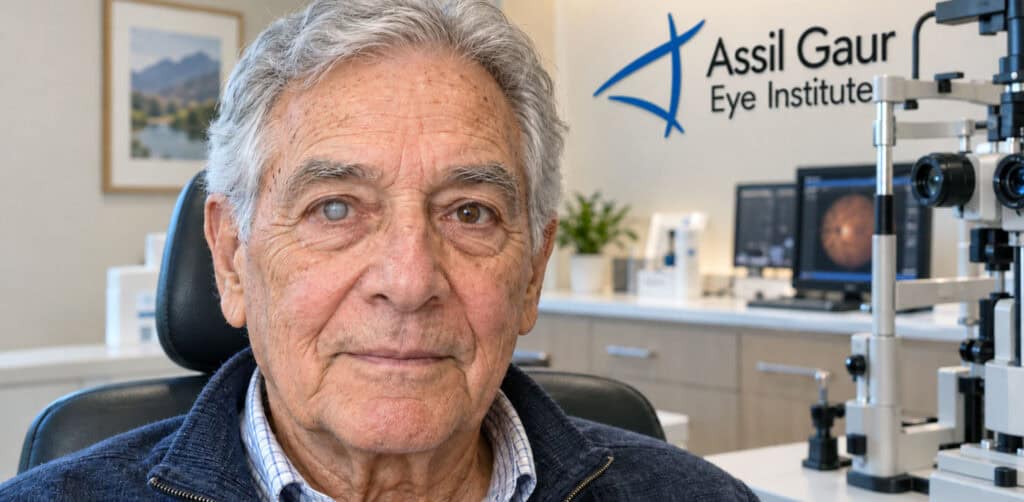
A pterygium is a raised fleshy growth filled with blood vessels that originates in the conjunctiva (the clear membrane covering the white of the eye) and spreads over the cornea (the clear outer covering of the eye).
A pterygium can range from a transparent area with a few blood vessels to a thick, opaque growth that can obstruct vision. It can occur in one or both eyes and typically originates in the inner corner of the eye and spreads toward the pupil.

What are the Pterygium Symptoms?
Pterygium is usually asymptomatic in its early stages, but symptoms tend to develop and worsen as the growth advances across the eye’s surface. The most common signs to watch for include:
Eye irritation – itching, burning, and a persistent gritty or foreign-body sensation
Redness and inflammation – the affected area of the white of the eye may appear chronically red or swollen
Excessive tearing – the eye may water more than usual, especially in windy or dry conditions
Blurred vision – as the pterygium grows over the iris and pupil, it can distort your line of sight
Astigmatism – the growth can place mechanical pressure on the cornea, changing its curvature and causing irregular astigmatism that blurs or distorts vision even before the pterygium reaches the pupil
Double vision – in more advanced cases, corneal distortion can contribute to diplopia, making it difficult to focus clearly
Contact lens intolerance – the raised tissue makes it uncomfortable or impossible to wear contact lenses
It is worth noting that symptom severity does not always match the size of the pterygium. Some patients with a visibly large growth experience only mild discomfort, while others notice significant vision disruption at an earlier stage. Because astigmatism caused by pterygium can develop gradually, many patients attribute the change to general eyestrain rather than a structural problem on the eye’s surface.
If you notice any of these symptoms, a complimentary evaluation with our world-class surgical team can determine whether your pterygium requires monitoring or whether precision removal is the right next step.
Pterygium causes and risk factors
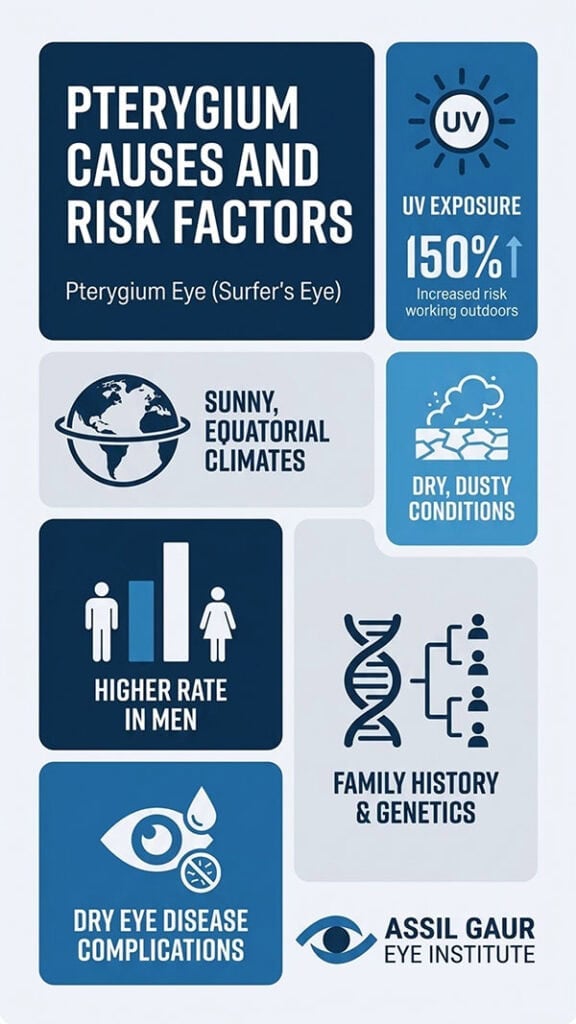
The exact cause of pterygium is unclear, but it is more common in populations living near the equator with prolonged exposure to sunlight and UV radiation. This condition is sometimes called surfer’s eye because it is common among surfers.
Risk factors for pterygium include:
Exposure to ultraviolet light (from the sun or other sources)
Living in sunny climates near the equator
Living in dry, dusty climates
Spending a lot of time outdoors (working outdoors increases your risk by 150%)
Complications from dry eye disease
Being male, as men are diagnosed with pterygium at significantly higher rates than women, likely due to greater cumulative sun and wind exposure
A family history of pterygium, since genetic predisposition can increase your likelihood of developing the condition even with moderate UV exposure
It is also worth understanding what pterygium can do to your vision if left unchecked. As the fleshy tissue advances across the cornea, it can distort the cornea’s natural curvature and induce astigmatism, causing blurred or doubled vision that glasses may only partially correct.
This is one of the most compelling reasons to have any suspicious growth evaluated early by a world-class specialist rather than waiting until symptoms become disruptive. At Assil Gaur Eye Institute, our surgeons bring elite precision to every pterygium evaluation, giving you a clear picture of your risk and the most advanced removal options available if treatment becomes necessary.
How to Prevent Pterygium
Now that you understand what drives pterygium growth, the good news is that many of those risk factors are within your control. A few consistent habits can go a long way toward protecting your eyes and reducing your chances of ever needing treatment.
Wear UV-blocking sunglasses every time you go outside. This is the single most important step you can take. Look for wraparound frames that block 100% of both UVA and UVB rays. Wraparound styles offer extra coverage on the sides, where reflected light from sand, water, and pavement can still reach your eyes. If you spend time outdoors and want to understand just how damaging UV exposure can be, our guide to safely protecting your eyes from intense light is a helpful read.
Add a wide-brimmed hat to your routine. Sunglasses alone do a great job, but pairing them with a hat that shades your face gives you an extra layer of protection during peak sun hours.
Use lubricating eye drops regularly. Chronic dryness and irritation from wind, dust, and dry environments accelerate the tissue changes that lead to pterygium. Keeping your eyes well lubricated reduces that ongoing irritation. If dry eye is already a concern for you, screen time can make it significantly worse, so it is worth addressing proactively.
Limit prolonged exposure to dusty or smoky environments when possible, and wear protective eyewear on job sites where airborne particles are common.
Prevention is always the most elegant solution, but if a pterygium has already developed, world-class surgical care is available to remove it with precision and keep recurrence rates below 1%.
How is pterygium diagnosed?
By simple observation. We can make a formal diagnosis following a slit-lamp examination that allows close-up observation of the lesion under magnification. A biopsy is often taken at the time of removal and sent to a pathologist for diagnostic confirmation.
If you have a pterygium, a thorough eye exam should be performed to assess its impact on your vision and rule out less common diagnoses that can cause an eye tumor.
As part of that comprehensive evaluation, our specialists perform visual acuity testing to measure any reduction in sharpness or clarity caused by the growth. We also use corneal topography, an advanced surface-mapping technique that creates a detailed contour map of your cornea, to detect even subtle distortions in curvature that a standard exam might miss.
This precision mapping is especially important when a pterygium begins encroaching on the central cornea, where it can induce astigmatism and meaningfully affect your quality of vision.
Not every pterygium requires immediate intervention. If your growth is small, stable, and not affecting your vision or comfort, watchful waiting is a perfectly reasonable first step. Your provider will monitor the pterygium at regular check-ups to catch any early signs of progression.
Our eye specialist will also measure how far the pterygium extends over your cornea. Usually, you will return for follow-up exams every 1 to 2 years to determine the rate of its growth toward your visual axis.
What are the Effective Treatments for Pterygium?
When symptoms are mild to moderate, conservative management is usually the starting point. Our eye care team may recommend or prescribe:
Lubricating eye drops and artificial tears to relieve the gritty, dry sensation that pterygium commonly causes throughout the day.
Over-the-counter anti-allergy drops to calm redness and itching triggered by environmental irritants like dust, wind, or pollen.
Prescription steroid eye drops or ointments for short-term use when inflammation, swelling, or significant discomfort needs more targeted relief.
UV-blocking sunglasses rated for both UVA and UVB protection, worn consistently outdoors to slow the growth and reduce the risk of recurrence.
If conservative care is no longer keeping symptoms under control, or if the pterygium begins to encroach on your cornea and threaten your vision, surgical removal becomes the recommended path forward. At Assil Gaur Eye Institute, our advanced pterygium removal protocol is designed to deliver precision outcomes and a sub-1% recurrence rate, so you can feel confident you are choosing the very best care available in Los Angeles.
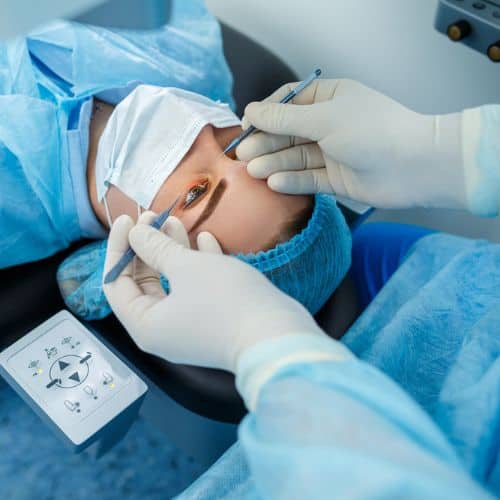
Pterygium surgery (pterygium excision)
If conservative treatments aren’t successful in relieving symptoms or the appearance of pterygia makes you self-conscious, surgery may be needed.
Unfortunately, pterygium surgery is not as simple as cutting the growth out of your conjunctiva, as this approach carries an 80 percent risk of the pterygium returning. 97 percent of regrowth occurs in the first year following the surgical removal of a pterygium.
Because of the high recurrence rate associated with simple pterygium extraction, our ophthalmologists sometimes remove a portion of the patient’s conjunctiva from another part of the eye and use it as a graft to fill the gap left by the pterygium.
This approach, known as conjunctival autografting, continues to be used successfully. However, recurrence rates can still be as high as 33 percent. Although the odds are better, they are still not great.
How does AGEI cut pterygium recurrence from 80% to below 1%?
Over the past 12 years, AGEI’s surgeons have adopted many advances in the field, resulting in a pterygium recurrence rate below 1 percent in our practice. These surgical techniques include:
Carefully removing the pterygium and underlying scar tissue to achieve clean borders
Minimizing the surgical manipulation of the tissue surrounding the gap
Using amniotic membrane graft for its ability to suppress post-op inflammation, scarring, and new blood vessel formation
Bathing the gap created by the pterygium removal with two powerful medications to minimize post-op inflammation and scarring, which leads to an increased risk of recurrence
Affixing the graft with fibrin glue to decrease inflammation and irritation at the graft site caused by sutures and to act as a physical barrier along the perimeter of the graft site to thwart pterygium regrowth
Following a meticulous post-op medication regimen designed to suppress swelling and infection
Call now or book your appointment online.
What to expect after eye whitening surgery
After surgery, your doctor will prescribe steroids and antibiotic eye drops to minimize the chances of recurrence and prevent infection. Compliance with the dosing schedule is key to helping prevent recurrent pterygium.
Your doctor will check you on the day following surgery. Then you will follow up at 1 week, 1 month, 3 months, 6 months, and 1 year post-op. After that, you will be seen annually to check for pterygium recurrence.
You may feel irritation and a foreign body sensation in your eye once your anesthesia wears off. These symptoms will resolve in a week. There will also be redness at the surgical site that can last up to six weeks.
Typically, patients take six to eight weeks to heal fully. Smaller pterygia heal faster than larger ones.
What Happens If a Pterygium Is Left Untreated?
It is tempting to ignore a pterygium, especially when it starts out small and causes only mild irritation. But leaving it untreated can lead to consequences that go well beyond a cosmetic concern, and the longer you wait, the more complicated treatment can become.
In its early stages, a pterygium may simply cause redness, dryness, and a gritty sensation in the eye. Over time, though, the growth can creep steadily across the cornea, the clear dome at the front of your eye. Once it reaches the cornea, it begins to distort the surface, causing a type of irregular astigmatism that blurs and warps your vision in ways that glasses or contact lenses cannot fully correct.
In advanced cases, a pterygium can grow toward the center of the cornea and block your line of sight entirely, leading to significant, permanent vision loss if left unaddressed. The tissue can also cause chronic dry eye symptoms that worsen progressively, making everyday activities genuinely uncomfortable.
There is also a surgical consideration worth knowing. Removing a small, early-stage pterygium is a more straightforward procedure with a faster recovery than removing one that has grown large and deeply embedded in the corneal tissue. Waiting increases both the complexity of surgery and the risk of scarring.
The good news is that with world-class precision and AGEI’s advanced surgical protocol, even more advanced cases can be treated with enviable outcomes. But catching it early gives you the best possible result, so a complimentary evaluation sooner rather than later is always the smarter move.
Should I undergo pterygium removal eye surgery?
With the dramatic improvement in results over the years at our center, most patients now undergo removal at earlier stages for cosmetic reasons rather than due to any visual loss.
Still, the decision to undergo pterygium removal surgery should be made after careful consideration and discussion with your eye doctor and primary health care provider to ensure that you understand the risks and benefits of the procedure and are willing to perform the post-operative eye care regimen necessary for successful results.
Assil Gaur Eye Institute, the best choice for pterygium surgery in Los Angeles
Our nationally recognized ophthalmologists and corneal specialists are leaders in a wide range of ophthalmological conditions, including state-of-the-art LASIK vision correction, retinal treatments, cataract surgery, glaucoma care, macular disease, and diabetic eye conditions, to name just a few.
Related conjunctival surface conditions treated at AGEI include Conjunctival Nevus (Eye Freckle) Removal.
We are conveniently located for patients throughout Southern California and the Los Angeles area at locations in or near Los Angeles, Beverly Hills, Santa Monica, West Los Angeles, West Hollywood, Culver City, Hollywood, Venice, Marina del Rey, Malibu, Manhattan Beach, and Downtown Los Angeles.
Pterygium FAQs
Can surfer's eye go away?
Surfer’s eye can go away with treatment or surgery, but preventive measures are crucial to avoid recurrence.
How much does pterygium surgery cost?
Costs vary with the size of the pterygium, the technique used, and your insurance coverage. See our full guide to pterygium surgery cost in Los Angeles for pricing, insurance, and what affects the price.
How to prevent surfer's eye (pterygium)?
To prevent surfer’s eye, you can take the following steps:
- Wear sunglasses that block 100% of UV rays to protect your eyes from the harmful effects of the sun. Look for sunglasses with polarized lenses that reduce glare and provide better vision on the water.
- Wear a wide-brimmed hat to shade your face and eyes from the sun’s rays.
- Use artificial tears to keep your eyes moist and prevent dryness, which can lead to irritation.
- Take regular breaks from being in the sun, wind, and dust to give your eyes a rest.
- Rubbing your eyes can irritate them and increase the risk of developing surfer’s eye.
- Smoking can increase the risk of developing surfer’s eye and other eye diseases.
Is pterygium dangerous?
Because it is referred to as a tumor, some people may fear it is a form of cancer. Rest assured, pterygium is a benign (non-cancerous) lesion that does not spread beyond the eye’s surface. In some cases, it can also lead to astigmatism or distortion of the cornea, which can affect the clarity of vision.
Why is it called surfer's eye?
Surfers’ eyes, also known as pterygium, are called that because they are often seen in people who spend a lot of time in the sun and wind, such as surfers. The condition is most commonly seen in people who live in tropical or subtropical climates with high ultraviolet radiation exposure.
Is pterygium sometimes confused with pinguecula?
Yes. Both pinguecula and pterygium are conditions that affect the conjunctiva, the clear tissue covering the white part of the eye and the inside of the eyelids. However, they are different in their characteristics and symptoms.
A pinguecula is a yellowish patch or bump on the conjunctiva, often on the side of the eye nearest the nose. It is caused by a change in normal tissue that deposits protein, fat, or calcium. It’s similar to a callus on the skin.
Pingueculas are often seen in middle-aged or older people who have had extensive exposure to sunlight. However, they can also appear in younger people and children, particularly those who spend a lot of time under the sun without proper eye protection.
Pinguecula often doesn’t cause symptoms, but it can cause discomfort, a feeling of something in the eye, or it can become inflamed and cause dry eye symptoms.
What are the risks of a pterygium surgical procedure?
Pterygium surgery generally has good outcomes, particularly with patients who comply with their post-op prescription eye drop schedule. There are some rare risks associated with pterygium surgery. These include:
- Eye swelling
- Double vision
- Prolonged redness
- Infection
Are lubricating eye drops enough to treat pterygium?
Lubricating eye drops are an important part of managing pterygium symptoms — they relieve the gritty, dry, and irritated feeling that the growth commonly causes — but they do not treat the pterygium itself.
Drops can make day-to-day life more comfortable and may help slow irritation-driven progression, but they will not stop the progression or correct any astigmatism they have already caused. If your symptoms are no longer well controlled with drops, or if the pterygium is encroaching on your cornea, a surgical evaluation is the appropriate next step.
Is pterygium removal surgery painful?
The procedure is performed under local anesthesia, so you will not feel pain during surgery. Afterward, it is normal to experience some irritation, a foreign-body sensation, and redness at the surgical site for up to six weeks. Most patients find these symptoms manageable with the prescribed steroid and antibiotic eye drops. Full healing typically takes six to eight weeks, with smaller pterygia recovering faster than larger ones.
How long does pterygium surgery take?
Pterygium excision is an outpatient procedure typically completed in 30 to 45 minutes. You will be able to go home the same day, and your surgeon will see you for a follow-up check the very next morning to confirm the graft is healing well.
Can pterygium cause permanent vision loss?
Yes, if left untreated long enough. As a pterygium advances across the cornea, it induces irregular astigmatism that glasses and contact lenses cannot fully correct. In advanced cases, the growth can reach the center of the cornea and directly obstruct your line of sight, leading to significant and potentially permanent vision loss. Removing a pterygium early — before it has become deeply embedded in the corneal tissue — leads to better visual outcomes and a simpler recovery. If you have noticed a growth on your eye, a complimentary evaluation with our world-class surgical team is the smartest first move.
-
Necrotising scleritis after bare sclera excision of pterygium.
https://www.ncbi.nlm.nih.gov/pmc/articles/PMC1723636/ -
What is a Pinguecula and a Pterygium (Surfer’s Eye)?
https://www.aao.org/eye-health/diseases/pinguecula-pterygium

Written by The AGEI Educational Team

Medically Reviewed by Dr. Kerry Assil
No form shortcode found.