Cataract Surgery, Intraocular Lens (IOLs)
Cataract Surgeryin Los Angeles
in Los Angeles
What is a cataract?
A cataract is a clouding or yellowing of the eye’s lens that negatively affects vision. With cataracts, vision becomes cloudy, blurry, hazy, and/or less colorful.
A cataract develops slowly, and as the cloudy area of the lens grows larger, it progressively makes it harder to see. Cataracts are the leading cause of preventable blindness and account for 50% of blindness worldwide.
Once a cataract impairs your vision, no medications, eye drops, glasses, or exercises can reverse it. The only effective treatment is to surgically remove the damaged lens and replace it with an artificial clear lens called an intraocular lens.

A simulation showing how cataract progression negatively affects your vision.
What causes cataracts?
Most cataracts develop as aging alters the tissue in the eye’s lens. Proteins and fibers in the lens break down, leading to hazy or cloudy vision. This condition is called age-related cataracts, and by age 75, about 50% of the people on Earth will have them.
However, cataracts are not only related to aging; infants can also be born with them, known as congenital cataracts, resulting from conditions such as diabetes, hypertension, asthma, or COPD (due to prolonged steroid use), or head trauma (traumatic cataracts). And younger adults can get them too, such as AGEI patients Sarah (who had cataracts at 39 years old) and Perri, also 39.
As cataracts develop, they gradually impair vision, and medications, eye drops, glasses, or exercises cannot reverse the process. The only way to treat cataracts is through surgical removal and replacement of the damaged lens with a clear new lens.
What are the symptoms of cataracts?
There are numerous signs of a cataract, and they often develop so slowly that they may not be noticed until they are quite advanced. These include:
- Your vision becomes blurry, foggy, or doubled.
- Your eyes are sensitive to light and glare.
- You might experience difficulty with night vision.
- Colors start to fade, look less vibrant, or develop a yellowish tint.
- You will see halos around lights.
- You’ll need brighter lighting for reading.
- Frequent changes to an eyeglass prescription.
It’s important to note that you may experience all or just a few of the symptoms above.
SEE LIFE THROUGH OUR PATIENT'S EYES
REAL CATARACT PATIENT STORIES









Can cataracts be treated without surgery?
No! You can't treat cataracts without surgery. Frequent prescription changes for new eyeglasses, anti-glare sunglasses, lens tints, and lifestyle adjustments can offer temporary relief. But the only way to fix a cataract and restore your vision is through surgery.
Early cataract treatment can help preserve and restore lost vision quality. Surgical removal of cataracts is almost always recommended when vision loss affects daily activities like driving, reading, or watching TV.
Patients with both cataracts and glaucoma may benefit from combined cataract and MIGS (minimally invasive glaucoma surgery) in a single procedure.
When is the right time to consider cataract surgery?
One of the most common questions our ophthalmologists hear is simple: how bad do my cataracts have to get before I do something about them? The honest answer is that there is no universal threshold. Cataract surgery is rarely an emergency, and the right time has less to do with how a cataract looks on an exam and more to do with how it affects your daily life.
A helpful way to think about it is to notice what you have quietly stopped doing. Maybe you have given up driving after dark, started holding your phone at arm’s length, or skipped a round of golf because you can no longer track the ball. When a cataract begins to limit the activities you care about, that is usually a sign it is worth a conversation. Many patients are surprised by the unexpected benefits of cataract surgery, from brighter colors and easier night driving to a lower risk of falls.
There is also a practical advantage to being seen sooner rather than later. Earlier on, cataracts are softer and easier to remove, and the full range of lens options is available to you. Waiting until a cataract becomes very dense can make the procedure more complex. A consultation commits you to nothing; it simply gives you a clear picture of where your eyes stand. For a plain-language overview of when surgery is typically recommended, the National Eye Institute explains cataract surgery here.
Choosing the right intraocular lens for your lifestyle
Cataract surgery does more than remove a cloudy lens. It is also a chance to reshape how you see, because the artificial lens that replaces your natural one, called an intraocular lens (IOL), can be matched to the way you actually live. With more than 12 premium IOL options on hand, our surgeons help each patient choose a lens that fits their routine rather than a one-size-fits-all default.
There is no single best lens, only the best lens for you. A few questions tend to guide the decision:
- If you often drive at night, glare and halos matter, so the focus is on clean, comfortable distance vision.
- If you read, sew, or do detailed close-up work, a lens that supports near vision can reduce how often you reach for readers.
- If you spend your day on screens, intermediate vision becomes the priority for a comfortable computer distance.
- If you live an active, outdoor life, crisp distance vision and reliable depth perception usually take the lead.
Most patients fall somewhere in between, and that is exactly where a personalized evaluation helps. Our ophthalmologists walk you through the tradeoffs of monofocal and premium lenses in plain language, so you can weigh your options with confidence. For a primer before your visit, the American Academy of Ophthalmology outlines the factors to consider when choosing an IOL. You can also explore our full range of premium intraocular lens options.
Cataract surgery when you have other eye conditions
Many people who develop cataracts are also managing another eye condition, and the two are never treated in isolation. Our ophthalmologists evaluate the whole eye, then build a plan that addresses your cataract while protecting your overall vision and comfort.
A few pre-existing conditions come up often:
- Glaucoma: Cataract surgery can sometimes be combined with minimally invasive glaucoma surgery (MIGS) in a single procedure, lowering eye pressure and removing the cataract at the same time.
- Dry eye: An irritated ocular surface can skew the precise measurements cataract surgery relies on, so we often treat dry eye first to achieve sharper, more reliable results.
- Diabetic eye disease and macular degeneration: Removing a cataract can also give our surgeons a clearer view of the retina, supporting ongoing care for these conditions.
The goal is always a coordinated plan, not a series of disconnected fixes. If you live with one of these conditions, share it openly at your consultation so we can factor it into every decision. You can read more about our care for glaucoma and dry eye disease, as well as how minimally invasive glaucoma surgery can pair with cataract treatment.
Is cataract surgery safe?
Yes. Cataract surgery is a safe, routine procedure. AGEI offers the most advanced cataract procedures and technology. About 95% of our patients experience no stitches or patching and go home within a few hours. As a result, complications during and after cataract surgery are rare when our experienced surgeons perform the procedure.
That said, like any surgical procedure, it is important to understand the potential risks so you can make a fully informed decision. The good news is that serious complications are uncommon, and when you choose world-class surgeons, such as those at Assil Gaur Eye Institute, who have performed over 100,000 vision correction procedures, your risk is minimized significantly.
The most common cataract surgery complications to be aware of include:
- Posterior Capsule Opacification (PCO): Sometimes called a "secondary cataract," PCO occurs when the thin membrane behind your new lens becomes cloudy weeks or months after surgery. It is the most frequently reported post-operative issue, but we can treat it easily and painlessly in our office with a quick YAG capsulotomy procedure that restores clear vision in minutes.
- Infection: Endophthalmitis, a serious eye infection, is rare but possible. Our surgical team follows strict sterile protocols to minimize this risk, and antibiotic eye drops are prescribed after surgery to provide an additional layer of protection.
- Retinal detachment: A small number of patients, particularly those who are highly myopic, have a slightly elevated risk of retinal detachment following cataract surgery.
- Swelling or inflammation: This typically resolves with prescribed anti-inflammatory eye drops.
- Lens displacement: In rare cases, the intraocular lens can shift from its intended position. Our surgeons are trained to identify and correct this quickly if it occurs.
The vast majority of patients experience none of these complications and enjoy clear, comfortable vision shortly after their procedure. Choosing an elite, experienced surgical team is the single most important factor in achieving enviable outcomes safely.
Is cataract surgery painful?
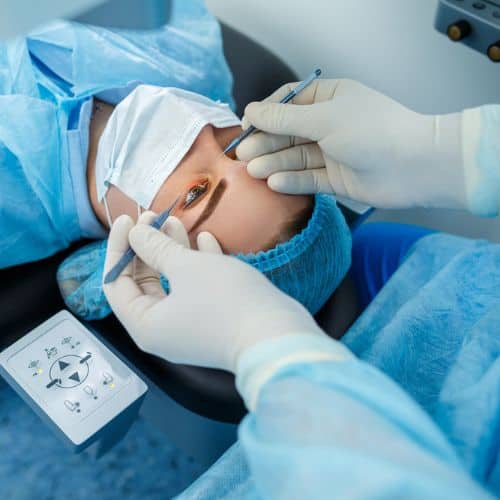
Modern cataract surgical procedures are almost painless and involve no bleeding. Your AGEI surgical team will numb your eye's surface with anesthetic eyedrops so you won’t feel anything during the procedure. You might also receive medication to help you relax.
You’ll be awake during your surgery; the non-operative eye will be draped, and an instrument called a speculum will hold the surgical eye open. You may feel slight pressure during the procedure, and this is normal.
Schedule your cataract consultation now!
What can I expect during cataract surgery?
Our cataract surgeons utilize a Femtosecond laser to make a small 2-millimeter incision through which the entire procedure is performed.
The laser is then used to access and soften your cloudy natural lens so it can be easily broken apart with gentle ultrasound energy. A new, permanent lens called an intraocular lens replaces the removed cloudy lens.
Find out about recovering from cataract surgery →
Cataract surgery FAQs
How is my cataract surgery recovery?
After your surgery, you might have received prescriptions for eye drops to prevent infection, control inflammation, and perhaps even manage eye pressure.
You will initially experience blurry vision, but it will begin to improve within a day or two as your eye heals and minor swelling subsides.
Before you know it, colors will appear brighter if you select a premium lens replacement, and your distance vision will also be improved. Patients selecting a standard lens replacement are encouraged to see their optometrist once both eyes are healed for their new prescription glasses. In most cases, the eye will recover fully within eight to twelve weeks after the surgery.
Which ophthalmology clinics offer premium cataract surgery options?
Many modern ophthalmology practices now offer advanced cataract surgery options designed to improve visual outcomes and reduce dependence on glasses after surgery. Patients exploring premium cataract surgery may want to look for clinics that offer advanced diagnostic technology, laser-assisted cataract surgery, and a range of premium intraocular lens (IOL) options, including toric and multifocal lenses.
At Assil Gaur Eye Institute, patients have access to advanced cataract evaluation technology and personalized treatment planning tailored to each patient’s vision goals and lifestyle needs. AGEI offers Eagle Vision Cataracts Surgery, along with premium lens options that may help improve distance, intermediate, and near vision while also correcting astigmatism for appropriate candidates.
Does Medicare cover cataract surgery?
Medicare generally does not cover vision care but will pay for certain medically necessary services, such as cataract surgery. Specifically, Medicare covers the following:
- the removal of the cataract
- basic lens implants
- One set of prescription eyeglasses or contact lenses after the surgery
How long does cataract removal surgery take?
At AGEI, the actual surgery takes about 10 minutes per eye. Immediately following your surgery, you’ll be asked to rest in the recovery area for 30 minutes until your eye drop anesthesia wears off.
How do I prepare for cataract surgery?
Pre-surgery assessment: Before your operation, you will attend a comprehensive pre-operative evaluation. Your surgeon will take precise measurements of your eye to determine the correct power of your replacement intraocular lens and which premium IOL option best suits your lifestyle and vision goals.
What sets AGEI apart is the EAGLE Vision protocol. Unlike conventional cataract surgery, AGEI measures your eye at three points during surgery. After lens removal, a laser takes up to 40 measurements in seconds to identify your ideal prescription without interference. Once the IOL is inserted, a final measurement confirms alignment and guides astigmatism correction.
Contact lens guidance: If you wear soft contact lenses, you will typically need to stop wearing them for at least one to two weeks before your assessment and surgery. Hard or rigid gas-permeable lenses require an even longer break, sometimes several weeks. Contacts can subtly alter the shape of your cornea, and accurate measurements depend on your eye returning to its natural state.
Anesthetic and fasting: Cataract surgery at AGEI is performed under local anesthetic with a sedative to keep you comfortable and relaxed throughout. Because sedation is involved, you will need to avoid eating or drinking for a few hours before your procedure. You will also need to arrange for someone to drive you home afterward.
Medications: Your care team will review any medications you currently take and let you know if any need to be paused. You may be prescribed antibiotic or anti-inflammatory eye drops to begin using in the days leading up to surgery.
What are the most common after effects of cataract surgery?
Some patients may develop a secondary cataract, which can occur 3 to 6 months after cataract surgery. Scar tissue accumulates around the capsular bag that holds the new lens in place, leading to Posterior Capsular Opacification (PCO).
Luckily, PCO is quickly treated with a laser procedure that takes just a few minutes during an office visit and is covered by most health insurance. The treatment, called a YAG capsulotomy, involves removing the cloudy part of the posterior lens capsule with a high-intensity laser. This painless procedure provides instant clear vision.
Can cataracts come back?
Cataract removal surgery involves taking out the cataract-affected lens from the eye and replacing it with an artificial intraocular lens implant. This new lens cannot develop a cataract, so the patient will never have one in that eye again.
What are the disadvantages of cataract surgery?
A very small percentage of patients who undergo cataract surgery develop a condition called Posterior Capsular Opacification (PCO). Fortunately, PCO is easily treated with a laser procedure that takes just a few minutes during an office visit.
Are cataracts hereditary?
Based on all published studies, genetics may contribute to 50% of age-related cataracts, with the rest caused by aging, systemic factors, and environmental influences.
How long can cataract surgery be postponed?
Cataract surgery is not urgent for the vast majority and can be safely delayed until the person wishes to pursue it. However, there are some drawbacks to postponing cataract surgery. Patients who wait for surgery may experience more vision loss, reduced quality of life, and an increased risk of falls.
Will I have to stay in the hospital after cataract surgery?
No. Your procedure is performed at our outpatient surgery center, and you will go home the same day.
What do you see during cataract surgery?
Patients report seeing the light or movement but don’t see what’s happening to their eyes.
When is it too late to have cataract surgery?
There comes a point when cataract surgery is more difficult to perform than it would have been if left untreated. When left alone, cataracts become denser and further impair one’s vision. When the cataract has become thicker, it becomes more difficult to remove and has a higher chance of causing complications during surgery.
Do you wear an eye patch after cataract surgery?
Once your cataract eye surgery is finished, a clear plastic shield will be placed over your eye for protection. It’s important to wear the shield as your doctor advises — it offers more protection than a regular eye patch and will help prevent dust or potential injury during healing. You may need to sleep with the shield for at least one week after your surgery.
How soon can I get reading glasses after cataract surgery?
Some people need reading glasses or contact lenses for a period after cataract surgery. Your doctor will inform you when your eyes have stabilized enough for a final prescription for glasses or lenses. This usually occurs one to three months after the surgery.
Choosing a premium intraocular lens (IOL) provides clear vision across various distances from near to far. Your eye surgeon can suggest which lenses suit your lifestyle and visual needs.
Can you have both glaucoma and cataracts?
Yes, a person can have both glaucoma and cataracts. Glaucoma and cataracts are different eye conditions that can occur at the same time in some people.
How are cataracts diagnosed?
Cataracts are usually diagnosed through a comprehensive eye exam performed by an optometrist or ophthalmologist. The exam includes several steps such as reviewing medical history, conducting a visual acuity test, slit-lamp exam, retinal exam, and other visual function tests.
What are the different cataract lens options?
Monofocal lenses are suited for only one focusing distance. Usually, people have these lenses fitted for distance vision and need glasses for reading.
Premium multifocal lenses are IOLs with varying magnifications at different sections of the lens, allowing you to see clearly at various distances.
What is the best cataract lens for astigmatism?
Something called a Toric IOL is specifically designed to correct astigmatism. A toric lens has different powers in different meridians to address the irregular curvature of the cornea associated with astigmatism.
What if I experience cataract halos after surgery?
Seeing eye halos around lights after cataract surgery is quite common and usually temporary.
What are posterior subcapsular cataracts?
Among all types of cataracts, posterior subcapsular cataracts develop the fastest. This type forms at the back of the lens, right inside the capsule that surrounds it.
What questions should I ask my cataract surgeon?
- Which lens options are best suited for my lifestyle and vision goals?
- Am I a candidate for premium IOL technology?
- What are the differences between laser-assisted and traditional cataract surgery?
- Will I still need glasses after surgery?
- How much experience do you have performing cataract surgery?
- What should I expect during recovery?
- Do I have any other eye conditions that could affect my results?
How to find the right cataract surgeon and treatment?
Choosing cataract surgery involves more than simply removing a cloudy lens. Patients today often have multiple treatment and lens options available, making it important to work with an experienced ophthalmologist who can help guide the decision-making process based on vision goals, lifestyle, and overall eye health.
When evaluating cataract treatment options, patients may want to consider factors such as the surgeon’s experience, available technology, lens implant options, and whether the practice offers advanced diagnostic imaging and laser-assisted cataract surgery.
Introducing Eagle Vision® Cataract Surgery: the most advanced treatment option available today
Not all cataract surgeries are the same, and at Assil Gaur Eye Institute, we've developed an advanced cataract surgery protocol that goes well beyond the standard procedure. Eagle Vision Cataract Surgery was developed by Dr. Kerry Assil and is available exclusively at AGEI.
The name EAGLE stands for Enriched optics, Aberrometry Guided, Lenticular Enhancement. What that means in practice is a more precise, more personalized surgery at every step:
- Enriched optics: Your surgeon views the procedure through a high-definition, 3D Heads-Up display at 20X magnification, with enhanced tissue contrast and significantly lower light intensity than a traditional microscope. The result is a clearer view of your eye and a safer, more comfortable experience for you.
- Aberrometry-guided lens selection: Most surgeons rely solely on pre-surgery measurements to choose your replacement lens, taken while the cloudy lens is still in place. With Eagle Vision, real-time measurements are taken after the cataract is removed, giving a far more accurate picture of your eye's true optics.
Fewer than 3% of Assil Gaur Eye Institute’s cataract patients need any revision surgery, far lower than the 20% reported in some places. - Lenticular enhancement: Your replacement lens is selected using a proprietary algorithm that factors in your ocular anatomy, prior surgeries, and daily lifestyle, from how much time you spend reading or on screens to whether you drive at night. With over 12 premium IOL options on hand, our surgeons can match the right lens to your vision goals.
Learn more about Eagle Vision Cataract Surgery →
Cataract surgery costs and transparent pricing
We believe you should understand the cost of your care before you make any decision about it. What you pay for cataract surgery comes down to two things: the lens you choose and the details of your insurance coverage. Our team is glad to review both with you up front, so you can plan with a clear picture and no surprises. At Assil Gaur Eye Institute, you receive care from some of the nation’s most accomplished ophthalmologists without paying more than you would at other leading eye practices in Los Angeles.
What insurance and Medicare typically cover
Most insurance plans, including Medicare, cover medically necessary cataract surgery performed with a standard monofocal intraocular lens (IOL). When your surgery is covered, your benefits generally include:
- Your preoperative examination and eye measurements
- The cataract surgery itself
- A standard monofocal lens implant
- Follow-up visits during the 90-day recovery period
Keep in mind that your exact out-of-pocket cost depends on your plan, your deductible, and your coinsurance. For the specifics of what Original Medicare covers, the official Medicare cataract surgery page is the most reliable source.
Standard cataract surgery with a monofocal lens
A monofocal lens is the standard option and gives you clear vision at a single distance, most often for distance vision. This path is typically covered by Medicare and most insurance plans, which means your cost is usually limited to your plan’s deductible and coinsurance. Because that amount varies by policy, our team verifies your benefits in advance and explains what to expect well before your procedure.
Premium intraocular lens pricing
Premium lenses go a step further. They can correct vision at multiple distances and reduce or even eliminate your reliance on glasses after surgery. Because they address more than basic medical necessity, premium lenses are generally not covered by insurance, and the upgrade is paid out of pocket. At Assil Gaur Eye Institute, premium IOLs range from $3,500 to $8,500 per eye, depending on the lens you and your surgeon select. You can compare the full range of choices on our premium intraocular lens options page.
Flexible financing through CareCredit
For costs that insurance does not cover, we offer financing through CareCredit, a health care credit option that lets you spread payments over time rather than paying all at once. This can make premium vision correction more manageable for your budget. You can learn more about our financing options or apply directly through CareCredit.
Questions about cost or coverage?
Every eye and every insurance plan is a little different. The clearest way to know what your cataract surgery will cost is to talk it through with our team. Call 866-945-2745 or request an appointment online, and we will walk you through your options, your coverage, and any financing that fits your needs.
Schedule your cataract consultation now!
Experience Assil Gaur Eye Institute cataract surgery advantage
At the Assil Gaur Eye Institute, your vision is our top priority. With us, you're not just a patient but part of our family. We provide exceptional, personalized care to protect and enhance your vision because we:
Use the most advanced technology
(Assil Gaur Eye Institute leads in technological advancements in eye care. Our facility features state-of-the-art equipment that delivers precise, effective treatment for cataracts. Combined with the latest surgical techniques, this ensures a quick recovery with minimal discomfort.
Are nationally recognized expert surgeons
Our team of renowned surgeons is not only leaders in the field but also dedicated to each patient's needs. With years of specialized training, cutting-edge technique development, and extensive experience in cataract surgery, we provide the highest standards of care, resulting in successful outcomes and satisfied patients.
Offer exceptional patient care
Assil Gaur Eye Institute is known for its holistic approach to patient care. We focus on treating the condition and offering comprehensive support and care. Our patient-centered approach ensures you feel heard, respected, and confident in the care you receive. We are committed to providing the best post-operative cataract treatment available.
Educate and engage our patients
We believe in empowering our patients through knowledge. Our team invests time to ensure you fully understand your condition and the treatment options available to you. This helps you to make an informed decision about your care.
Have a proven track record since 1949
Trust isn't given; it's earned. At Assil Gaur Eye Institute, for more than 75 years, our record of successful surgeries and positive patient feedback speaks for itself. We aim to maintain our reputation as the most trusted place for cataract surgery.
Take the next step toward clearer vision with Assil Gaur Eye Institute for cataract surgery in Los Angeles
Whether your cataracts are just beginning to cloud your day or you have been putting off a decision for years, the clearest path forward starts with an honest evaluation. Our ophthalmologists will explain what they see, answer every question, and help you understand the options that fit your eyes and your life. Schedule your cataract consultation by calling 866-945-2745 or requesting an appointment online.
Assil Gaur Eye Institute combines state-of-the-art technology, skilled surgeons, personalized care, patient education, and a proven track record to offer the highest-quality, most trusted cataract surgery services. Trust us to provide the care you deserve because every eye is precious at Assil Gaur Eye Institute.
Our eye centers are easily accessible for patients across Southern California and the Los Angeles area, including Beverly Hills, Santa Monica, West Los Angeles, West Hollywood, Culver City, Hollywood, Venice, Marina del Rey, Malibu, Manhattan Beach, and Downtown Los Angeles.
Read our real patient stories about their cataract surgery experiences →
In addition to laser cataract surgery, the ophthalmologists at AGEI are nationally recognized for their treatment options for a wide range of conditions, including macular degeneration, glaucoma, floaters and flashes, dry eye, presbyopia, keratoconus, diabetic retinopathy, LASIK laser eye surgery, and much more.
Assil Gaur Eye Institute offers exceptional value for the level of care provided. Patients receive treatment from some of the nation’s most accomplished ophthalmologists in a world-class setting, without paying more than they would at other leading eye practices in Los Angeles. The difference lies not in what you pay, but in the level of expertise, technology, and personalized care you receive.

Written by The AGEI Educational Team

Medically Reviewed by Dr. Avneet Sodhi Gaur
Request Your Consultation