Diabetic Eye Conditions in Los Angeles
in Los Angeles
Diabetic Eye Problems
Diabetes can cause progressive damage within your eyes, resulting in poor vision, severe vision loss, or even blindness. They generally present without warning signs because there usually are no symptoms in their early stages.
Fortunately, annual dilated vision exams as part of your regular eye exams can detect problems early, providing an opportunity for timely intervention and treatment, which can help prevent or minimize vision loss.
Dr. Assil discusses how diabetes affects the eye.
How does diabetes affect the eye?
When your body can’t produce or use insulin properly, blood glucose (sugar) can accumulate in your blood, potentially damaging your blood vessels and nerves. Over time, elevated blood sugar levels can cause the blood vessels in the retina (the back of your eye) to weaken and develop tiny bulges or leaks.
These changes increase your risk factors for numerous eye conditions, including diabetic retinopathy, macular edema, retinal tears, cataracts, and glaucoma.
What is diabetic retinopathy?
This disease affects about 30 percent of people with diabetes. In advanced diabetes, the damaged retinal blood vessels close off, causing the retina to create new, but abnormally weak and tiny, blood vessels to grow on the retina, the light-sensitive tissue at the back of the eye. The best chance of minimizing its damage is to begin treating it during the early stages of diabetic retinopathy.
What is diabetic macular edema (DME)?
Diabetic macular edema is a complication of diabetes that affects the macula, the central part of the retina responsible for sharp vision. It occurs when fluid accumulates in the macula, causing swelling and distortion of central vision. DME is the most common cause of vision loss among people with diabetic retinopathy.
Diabetic macular edema shares clinical features with age-related macular degeneration. Both conditions are managed by AGEI’s retinal specialist, Dr. Pilyugina.
What is diabetic glaucoma?
Having diabetes doubles your chances of developing glaucoma, including a rare condition known as neovascular glaucoma. This involves the growth of abnormal new blood vessels on the iris (the colored part of your eye), which block the normal outflow of intraocular fluid, raising eye pressure.
What are diabetic cataracts?
High glucose levels can cause deposits to build up on your natural lens, causing clouding. People with diabetes are two to five times more likely to develop cataracts than those without diabetes. People with diabetes also develop cataracts at an earlier age than non-diabetics.
Patients with cataracts caused or worsened by diabetes may benefit from early cataract surgery at AGEI.
Who is at risk for diabetic retinopathy?
Numerous factors can influence whether you get retinopathy, such as:
Blood sugar control
High blood pressure
High cholesterol
How long you’ve had diabetes
Genetics
Hispanics, African Americans, and Native Americans are at greater risk of developing diabetic retinopathy
The longer you’ve had diabetes, the more likely you are to have retinopathy. Almost everyone with type 1 diabetes will eventually have nonproliferative retinopathy. And most people with type 2 diabetes will also get it. But the retinopathy that destroys vision, proliferative retinopathy, is less common.
People who keep their blood sugar levels closer to normal are less likely to have retinopathy or milder forms.
What are the symptoms of diabetic retinopathy and other diabetic eye conditions?
The biggest challenge in managing diabetic eye disease is that there are no “early warning” symptoms. During the early stages, you typically do not experience any pain or changes in your vision. Only when it is too late and the damage to your eyes has progressed will you even realize something is wrong.
When the disease has progressed, you may begin experiencing one or more of these symptoms:
Frequent changes in your vision from sharp to blurry
Blurry or wavy vision
Poor color vision
Areas of darkness or black holes in your vision
Tiny spots or fine dark strings (known as Floaters)
Flashes of light
If you experience a sudden onset of any of the above symptoms, contact your eye doctor.
Are there non-surgical treatment options for diabetic eye conditions?
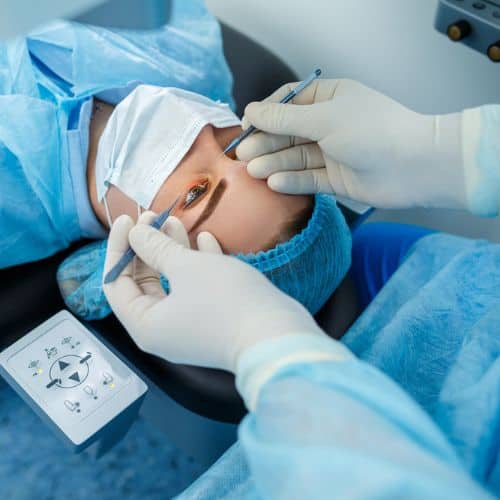
Advanced diabetic eye conditions can be treated with medicine, laser treatments, surgery, or a combination.
Anti-VEGF medications for diabetic eye conditions
Anti-VEGF medications block a protein responsible for the growth of abnormal blood vessels and stop vessels from leaking.
They are essential in treating diabetic macular edema to prevent further vision loss and may even improve vision in some cases.
Laser treatment for diabetic eye conditions
This laser treatment, known as photocoagulation, cauterizes leaky blood vessels to keep them from leaking and causing swelling.
What surgical treatments are there for diabetic eye conditions?
Some advanced diabetic eye conditions require surgical intervention. The most common surgeries performed for diabetic eye conditions include:
Vitrectomy
Diabetic retinopathy causes the growth of new, leaky blood vessels, which can lead to severe bleeding (vitreous hemorrhage) and scar tissue formation within your eye. Scar tissue can cause the delicate retina tissue to detach from the inner wall of your eye.
In such cases, a surgical procedure called a vitrectomy may be necessary to remove blood and scar tissue from the vitreous gel and repair the retinal detachment.
Cataract Lens Replacement
Cataract surgery is a same-day procedure performed in our surgery center. It involves removing your cloudy natural lens due to a cataract and replacing it with a clear artificial lens. Your vision following this surgery will depend on the type of lens used and the severity of your existing diabetic retinopathy and macular edema.
Can you lower your risk of diabetic eye disease?
Yes! Preventing diabetic eye conditions involves managing diabetes effectively. This includes controlling blood sugar levels through a balanced diet, regular exercise, and, if necessary, prescribed medications or insulin.
Maintaining healthy blood pressure and cholesterol levels, not smoking, and attending annual comprehensive eye exams are essential for early detection and timely treatment of potential eye complications.
Assil Gaur Eye Institute makes a world of difference for their diabetic patients
Our diabetic eye care is among the best available in the nation for individuals with diabetes. This continues to motivate us to strive for the highest standards of excellence anywhere.
This is one of the reasons that Los Angeles Magazine named Assil Gaur Eye Institute as one of the Top ophthalmology doctors in Los Angeles, year after year.
Our nationally recognized ophthalmologists and eye institutes are leaders in a wide range of ophthalmological conditions, including state-of-the-art LASIK vision correction, retinal treatments, cataract surgery, glaucoma care, macular disease, and, of course, diabetic eye conditions, among others.
The AGEI diabetic care team includes Stanford-trained retina specialist Dr. Svetlana Pilyugina (or “Dr. P,” as she is known to her patients). As a member of an elite group of only 3,000 retina-vitreous specialists in the United States, Dr. Pilyugina brings over a decade of clinical experience and a unique skill set to AGEI, specializing in the medical and surgical treatment of retinal diseases. She is also a member of the American Academy of Ophthalmology.
The Assil Gaur Eye Institute clinics are conveniently located for patients throughout Southern California and the Los Angeles area at locations in or near Los Angeles, Beverly Hills, Santa Monica, West Los Angeles, West Hollywood, Culver City, Hollywood, Venice, Marina del Rey, Malibu, Manhattan Beach, and Downtown Los Angeles.
Call now or book your appointment online.
Diabetic eye conditions FAQS
How do doctors diagnose diabetic eye problems?
Signs of diabetic retinopathy and DME are detected through a painless, comprehensive diabetic eye exam performed by your eye doctor. This includes:
- Visual Acuity Testing: This test measures your ability to see at various distances.
- Tonometry: This test measures the pressure inside your eye.
- Dilated eye exam: After placing eye drops in your eyes to widen the pupil, your doctor looks closely at your retina, macula, and optic nerve to look for leaky blood vessels, swelling, or damage to your lens or nerve tissue.
- Optical Coherence Tomography: This test utilizes a specialized computer that captures light waves to produce detailed images of your retina.
If your doctor finds evidence of DME or severe diabetic retinopathy, a fluorescein angiogram might be recommended to look for leaking blood vessels. This simple test involves injecting fluorescent dye into your arm vein and taking pictures of the blood vessels as the dye reaches your eye.
Can proliferative retinopathy be cured?
While there is no cure for proliferative retinopathy, treatments are available to help manage the condition and prevent further vision loss. The treatment’s primary goal is to reduce abnormal blood vessel growth in the retina.
Some treatments available for proliferative retinopathy include laser surgery, photocoagulation, which uses a laser to seal off leaking blood vessels, and injections of medications that can help prevent the growth of new blood vessels.
What causes diabetic retinopathy?
Diabetic retinopathy is caused by damage to the blood vessels in the retina, a part of the eye that senses light and sends images to the brain. High blood sugar levels (hyperglycemia) are characteristic of diabetes. In addition to causing vision problems, kidney damage is another typical result of elevated blood sugar levels.
What are the four stages of diabetic retinopathy?
The four stages of diabetic retinopathy are:
- Mild nonproliferative diabetic retinopathy: In this stage, small areas of swelling called microaneurysms appear in the retina’s blood vessels.
- Moderate nonproliferative diabetic retinopathy: In addition to microaneurysms, some of the blood vessels in the retina become blocked.
- Severe nonproliferative diabetic retinopathy: Many more blood vessels become blocked, which can form new blood vessels in the retina.
- Proliferative diabetic retinopathy: In this advanced stage, new blood vessels grow on the retina’s surface and into the vitreous gel, the clear substance that fills the eye. These new blood vessels are fragile and can bleed, leading to vision loss or blindness.
Can diabetic retinopathy be reversed with diet?
While diet can play a role in managing diabetes, it is not typically sufficient to reverse diabetic retinopathy once it has developed. Diabetic retinopathy is caused by damage to the blood vessels in the retina, which can occur over time due to prolonged high blood sugar levels.
The best way to prevent and manage diabetic retinopathy is to maintain reasonable blood sugar control through a combination of healthy eating, exercise, and medication prescribed by a healthcare provider.
-
Updates on the Current Treatments for Diabetic Retinopathy and Possibility of Future Oral Therapy
https://www.ncbi.nlm.nih.gov/pmc/articles/PMC8537579/ -
Global prevalence and major risk factors of diabetic retinopathy
http://www.ncbi.nlm.nih.gov/pubmed/22301125


17,042 TOTAL 1ST PARTY REVIEWS / 4.9 OUT OF 5 STARS


Here’s the latest from Our Seeing Eye Blog





social media for more