

Botoxin Los Angeles
in Los Angeles
Botox Done Right: Ophthalmologist-Led Precision for Smoother, Younger-Looking Skin
Cosmetic Botox works by temporarily relaxing the muscles that cause wrinkles on the overlying skin. Botox is an injectable and was approved for cosmetic use by the FDA in 2002. Botox is also used to treat medical conditions, such as chronic migraines, excessive sweating (hyperhidrosis), and muscle spasms.
“Short of having a facelift, cosmetic Botox is one of the most effective skincare options to reduce the signs of aging,” says Dr. Gaur. “It softens fine lines, creases, crow’s feet, frown lines, and eyebrow lines.”
How does Botox work?
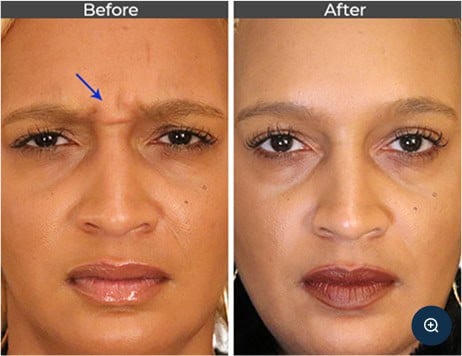
Cosmetic Botox is a neuromodulator. In other words, it works by blocking the nerve impulses that cause muscle contraction. By gently blocking those nerve signals, Botox can smooth wrinkles and soften facial expressions that contribute to the effects of aging. A more youthful look is one of the key benefits of Botox. Botox is often used to treat facial wrinkles such as forehead lines, frown lines, and crow’s feet.
Botox is not a dermal filler. A filler “plumps up” the skin. Botox, on the other hand, minimizes the muscle contractions beneath the skin. When muscle contractions beneath the skin are minimized, there is temporary muscle relaxation, softening or eliminating dynamic wrinkles.
Botox is one of several FDA-approved botulinum toxin injections. Others include Dysport, Xeomin, Jeuveau, and Daxxify.
Botox treatment areas: what can be treated and how many units are needed?
One of the most common questions patients ask before their first appointment at our Beverly Hills or Los Angeles practice is which areas Botox can actually address. The answer covers more of the face and neck than most people expect. Below is a breakdown of the most frequently treated areas along with general unit ranges. Keep in mind that the number of units needed for any individual depends on muscle strength, facial anatomy, and the result you are looking for. Our physician will determine the right amount during your personal consultation.
Forehead Lines
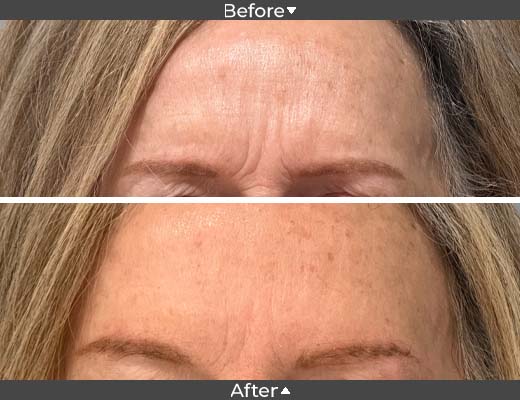
Horizontal lines that appear across the forehead when you raise your eyebrows are caused by the frontalis muscle. Relaxing this muscle softens those lines while preserving natural expressiveness. Forehead treatment typically requires 10 to 20 units, though patients with stronger muscles may need slightly more. Forehead lines are an FDA-approved treatment area for Botox Cosmetic.
Glabellar Lines (the Elevens)
The vertical furrows between the brows, commonly called the elevens or frown lines, are among the most frequently treated areas with Botox. These lines are driven by the corrugator and procerus muscles. Treatment in this zone generally requires 20 to 30 units and is one of the FDA-approved indications for Botox Cosmetic.
Crow’s Feet
The fine lines that fan out from the outer corners of the eyes when you smile or squint are caused by the orbicularis oculi muscle. This muscle sits right next to the eyelid, which is why precise injection placement matters here. Crow’s feet are an FDA-approved treatment area for Botox Cosmetic. Crow’s feet typically require 10 to 15 units per side, or 20 to 30 units total.
Brow Lift (Chemical Brow Lift)
Strategic placement of Botox below the tail of the brow can gently relax the depressor muscles that pull the brow downward, allowing the elevating muscles to lift the outer brow slightly. This non-surgical brow lift effect typically requires 2 to 5 units per side and is highly customizable. It is a nuanced technique that benefits from an injector with deep knowledge of periorbital anatomy, exactly the kind of expertise our Beverly Hills team brings to every appointment.
Bunny Lines
The diagonal wrinkles that appear on the sides of the nose when you scrunch your face are called bunny lines. They are caused by the nasalis muscle and typically require 5 to 10 units to smooth effectively.
Lip Flip
A small amount of Botox placed along the upper lip border relaxes the orbicularis oris muscle, causing the lip to roll slightly outward. This creates the appearance of a fuller upper lip without adding volume, making it a popular alternative or complement to lip filler. A lip flip typically requires 4 to 6 units.
Chin Dimpling
An overactive mentalis muscle can create a pebbled or dimpled appearance on the chin. A few units of Botox, typically 5 to 10, can smooth this texture and soften the chin contour.
Neck Bands (Platysmal Bands)
Vertical cords that appear in the neck when the platysma muscle contracts can be relaxed with Botox, a technique sometimes called the Nefertiti lift. In 2024, the FDA approved Botox Cosmetic for moderate to severe platysma bands, typically using 26 to 36 units depending on severity. Treatment requires an injector who understands the anatomy of the neck thoroughly to avoid affecting the muscles used for swallowing.
Get a Complimentary Surgical Photo Assessment!
When will I see Botox results?
You may start seeing results from Botox within 24 hours. On average, though, it takes three to five days. Most patients see maximum results within two weeks. Results typically last three to four months, sometimes longer.
Is cosmetic Botox safe?
Yes, BOTOX® Cosmetic is considered very safe when administered by qualified and experienced providers like Dr. Gaur and Dr. Adele. Millions of Botox treatments are performed each year with minimal risk.
What are the side effects of cosmetic Botox?
Most side effects, if they occur, are mild and temporary. These may include:
- Bruising: Small bruises at the injection sites are the most common side effect and usually fade within five to seven days. Avoiding aspirin, ibuprofen, and fish oil supplements for about a week before treatment lowers the risk.
- Swelling and redness: Mild swelling or redness at the injection points is normal and usually resolves within a few hours.
- Headache: A mild headache can occur in the hours after treatment. Acetaminophen is generally safe to take; avoid aspirin and ibuprofen to reduce bruising.
- Temporary asymmetry: Botox takes three to five days to take full effect, and the two sides of the face may not respond at exactly the same rate. Minor differences usually even out within two weeks. If asymmetry persists, a small touch-up can correct it.
- Temporary eyelid or brow drooping: This is rare and wears off as the Botox does, usually within two to six weeks. See the section on Botox and eyelid ptosis below.
- Spread of effect: In very rare cases, Botox can spread beyond the area where it was injected. This is one reason we ask patients not to rub the treated area or lie down for four hours after treatment.
These side effects typically resolve on their own.
With their medical training and deep understanding of facial and ocular anatomy, Dr. Gaur and Dr. Adele can promptly recognize and manage any potential side effects in the office. This eliminates the need for referrals and gives you peace of mind. Their careful technique and personalized approach significantly reduce the risk of complications.
Botox and eyelid ptosis: what you need to know
One of the most frequently searched concerns about Botox is whether it can cause droopy eyelids. The honest answer is yes, but only rarely, and careful injection technique makes it less likely.
Botox injected into the forehead or between the brows can occasionally migrate toward the levator palpebrae superioris, the muscle responsible for lifting the upper eyelid. If this muscle is unintentionally weakened, it can cause temporary upper eyelid drooping, a condition known as ptosis. This type of Botox-induced ptosis is temporary, typically resolving within two to six weeks as the product metabolizes naturally, but it is understandably distressing for patients when it occurs.
Careful injection placement is the best prevention. Our board-certified ophthalmologists know the anatomy of the eyelid and brow in detail, and Dr. Adele operates directly on the levator muscle during ptosis repair surgery. If Botox-related drooping does occur, it can be evaluated in our office, and prescription eye drops can often provide a temporary lift while the effect wears off.
Patients who already have structural eyelid drooping that is unrelated to Botox, or who are concerned about existing ptosis, should know that surgical correction is also available at this practice. Learn more about ptosis and droopy eyelid treatment at Assil Gaur Eye Institute.

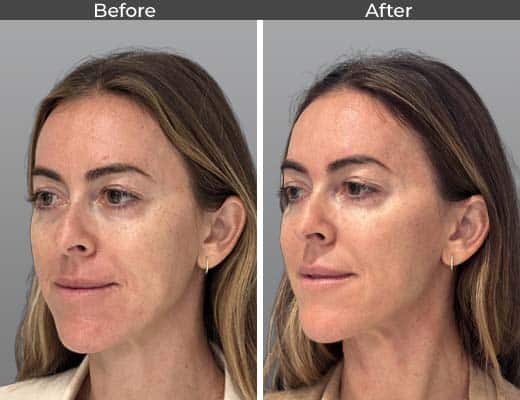
Our Botox Before & After Pictures


Why ophthalmologist-led aesthetics offer a higher standard of care
When it comes to Botox treatments, especially around the delicate eye area, the expertise of your provider matters more than you might think. At Assil Gaur Eye Institute’s aesthetics division, AG Aesthetics, your treatments are performed by board-certified ophthalmologists specializing in the eyes and surrounding facial structures.
Here’s why this makes a critical difference:
Precision at the millimeter level
Ophthalmologists work in millimeters every single day. From delicate eye surgeries to precise measurements of ocular structures, this training translates directly to Botox injections that are extraordinarily accurate and tailored to your unique facial anatomy for natural-looking results.
Intimate knowledge of eye and periorbital anatomy
The tissues around your eyes are some of the most delicate and complex in your entire face. Dr. Gaur’s and Dr. Adele’s extensive training in the anatomy of the eye, eyelids, brow, and surrounding muscles means they understand exactly how these structures interact and how to enhance them safely and beautifully in line with your aesthetic goals.
Understanding facial muscle dynamics
Crow’s feet, frown lines, and forehead wrinkles are all caused by muscle movements. Ophthalmologists study these muscles in depth to treat conditions like blepharospasm (eyelid spasms) and strabismus (eye alignment issues). This specialized knowledge allows Dr. Gaur and Dr. Adele to achieve natural, balanced results that preserve your ability to express emotion while softening unwanted lines.
Managing complications with confidence
While rare, side effects such as temporary eyelid droop may occur with Botox treatments. As trained ophthalmologists, Dr. Gaur and Dr. Adele can recognize, evaluate, and manage any eye-related complications immediately in the office, without referrals or delays.
Years of experience with delicate tissues
Ophthalmologists perform intricate surgeries on the thinnest, most sensitive tissues in the human body. This experience translates to a gentle, highly refined injection technique that minimizes discomfort and maximizes safety.
Plus, the number of units of Botox varies depending on factors such as the type of wrinkle. At Assil Gaur Eye Institute, we know how to manage the number of units as needed. Read more about why the number varies at this link.
Surgical guidance when it matters
Dr. Adele performs eyelid surgery, including blepharoplasty and ptosis repair. Some patients who come in for Botox learn that surgery would address their concern more effectively, and they get that guidance in the same visit.
“My training as an ophthalmologist gives me a unique advantage when performing Botox treatments,” explains Dr. Gaur. “I don’t just see the surface; I understand the intricate layers, muscles, nerves, and blood vessels beneath. This allows me to deliver results that are not only beautiful but also incredibly safe.”
What should I expect during Botox treatment?
Before your treatment
There’s no need to do anything out of the ordinary to prepare your body for Botox injections. However, it’s important to be aware that common medications like aspirin and ibuprofen can increase your chances of bruising. Be sure to avoid taking either of these before your appointment. Also, avoid Botox treatments if you currently have a skin infection or are breastfeeding or pregnant.
During your treatment
Injections are administered with an ultra-fine needle (injector) directly into the treatment area. The needle may cause a brief, sharp sensation. But if numbing cream has been applied to the area, you shouldn’t feel much pain. The entire procedure typically takes just 10-15 minutes.
After your treatment
While there is no downtime after receiving Botox, you may experience some side effects. These can include mild headaches, neck pain, or flu-like symptoms. The injection site may also become red, swollen, or bruised. However, these side effects are usually minor and temporary.
To ensure the best results, follow these guidelines:
- Do not rub or massage the treated area.
- Avoid lying down or bending over for at least four hours (otherwise, the toxin could spread and cause bruising).
- Avoid sleeping on your face the first night.
- Do not exercise or partake in any strenuous activity for the next 24 hours.
- Avoid excessive alcohol consumption for the next 24 hours.
- Avoid exposure to strong sunlight, warm temperatures, and saunas for 48 hours.
- Wait at least 24 hours before getting a facial (facials before Botox are fine).
Are you a good candidate for Botox?
Most healthy adults who are bothered by dynamic facial wrinkles (lines caused by muscle movement rather than skin volume loss) are good candidates for Botox. Here is a more detailed look at who tends to benefit most and who should hold off.
Good candidates for Botox generally include:
- Adults age 18 and older with realistic expectations about what Botox can and cannot do
- Patients with moderate to significant dynamic wrinkles on the forehead, between the brows, or around the eyes
- Patients who want a refreshed, natural appearance without surgical downtime
- Adults who want to use Botox preventively to slow the deepening of lines over time
- Patients who have been medically cleared and have no contraindicated conditions
Patients who should avoid or delay Botox:
- Pregnant or breastfeeding patients. Botox hasn’t been studied enough in pregnancy or breastfeeding to confirm it’s safe, so we recommend waiting until after delivery and breastfeeding.
- Patients with neuromuscular disorders such as myasthenia gravis, Lambert-Eaton syndrome, or ALS, because Botox affects the way nerves communicate with muscles.
- Patients with an active skin infection, rash, or open wound in the planned treatment area.
- Patients with a known allergy to botulinum toxin or any ingredient in the formulation.
- Patients taking certain medications such as aminoglycoside antibiotics that can potentiate the effect of botulinum toxin. Your provider will review your medication list during consultation.
If you are unsure whether Botox is appropriate for your health history, our board-certified physicians at our Beverly Hills and Los Angeles locations are fully equipped to review your medical background and recommend the safest path forward.
Call now or book your appointment online.
How much does Botox cost in Beverly Hills and Los Angeles?
Botox is priced per unit, and the total cost of your treatment depends directly on how many units are used across your chosen treatment areas. In Beverly Hills and the broader Los Angeles market, per-unit pricing reflects the level of provider training, the clinical setting, and the quality of the product being administered.
At AGEI, Botox is performed by board-certified ophthalmologists. Physician injectors with specialized knowledge of the eye area often charge more, which reflects their training and precision.
Because the number of units needed varies from patient to patient and area to area, we do not publish a single flat price. Instead, we encourage you to schedule a complimentary consultation, during which your provider will assess your anatomy, discuss your goals, and give you a transparent, personalized quote before any treatment begins. There are no surprises.
We also offer patient financing through CareCredit, a healthcare credit program that allows you to spread the cost of treatment over time with flexible payment plans. Ask our team about financing options when you call or request an appointment online.
Why choose AG Aesthetics in Los Angeles for Botox?
You’re not visiting a typical med spa; you’re receiving care in a physician-led medical practice where treatments are guided by surgical-level precision and deep anatomical expertise. In addition to a personal consultation, every procedure is performed with the safety standards, clinical judgment, and emergency readiness of a board-certified ophthalmologist.
At Assil Gaur Eye Institute, we ALWAYS have your treatment supervised by a licensed ophthalmologist. Because Botox can have serious side effects if not applied correctly, it is critical to select the best doctor to administer it.
AGEI’s aesthetic ophthalmologists have an extensive understanding of eyes, facial structure, facial muscles, and delicate periorbital tissues. This makes them uniquely qualified to safely deliver the best possible facial rejuvenation results to patients.
We are conveniently located for patients throughout Southern California and the Los Angeles area, including Beverly Hills, Santa Monica, West Los Angeles, West Hollywood, Culver City, Hollywood, Venice, Marina del Rey, Malibu, Manhattan Beach, and Downtown Los Angeles.
Schedule a consultation by calling us at (866) 945-2745 or request your consultation online.
Meet the physicians performing your Botox treatment
Two board-certified ophthalmologists lead the cosmetic injectable program at AG Aesthetics.
Dr. Avneet K. Sodhi Gaur
Dr. Gaur is a board-certified, fellowship-trained ophthalmologist who completed her residency at Tufts Medical Center/New England Eye Center and her fellowship at Tufts and Ophthalmic Consultants of Boston. She has performed thousands of eye surgeries, and she brings that surgical precision to cosmetic injectables, with a focus on natural, balanced results. Dr. Gaur was named a Top Doctor in Los Angeles for 2026 by Los Angeles Magazine.
Dr. Adeleh Yarmohammadi (Dr. Adele)
Dr. Adele is a board-certified ophthalmologist and Assil Gaur Eye Institute’s Director of Oculoplastic Surgery. She trained at UC San Diego’s Shiley Eye Institute, where she was selected as chief resident, and she performs eyelid procedures including blepharoplasty and ptosis repair. Her surgical work on the eyelids informs an anatomy-first approach to injectables around the eyes. She also offers a complimentary photo assessment for patients considering eyelid-related procedures, which can be completed from home.
Botox FAQs
Is cosmetic Botox different than therapeutic Botox?
Cosmetic Botox and Therapeutic Botox both use the same active ingredient, botulinum toxin. The key difference lies in how they’re used.
Therapeutic Botox is prescribed to treat medical conditions such as chronic migraines, muscle stiffness or spasms, TMJ, persistent neck pain, blepharospasm (eyelid twitching), and excessive sweating.
Cosmetic Botox, on the other hand, is an effective treatment used to temporarily relax the muscles that cause facial wrinkles and fine lines, helping to create a smoother, more youthful appearance. Both types are administered through small injections into targeted areas. Results are temporary, and most patients return for follow-up treatments every three to four months.
Can you get Botox while pregnant or breastfeeding?
Botox hasn’t been studied enough in pregnancy or breastfeeding to confirm it’s safe. Although there’s no evidence that it harms a developing baby, most providers recommend waiting until after delivery and breastfeeding before having Botox injections.
How often should you get Botox?
For most people, the ideal frequency for Botox injections is once every four months. However, this may vary depending on your individual needs and goals.
Can Botox cause headaches?
Botox-related headaches are rare and are caused by the over-contraction of certain facial muscles. Most patients experience mild headaches that last for a day or two.
However, if you experience severe or prolonged headaches after Botox injections, please get in touch with your doctor. Interestingly, Botox can also be an excellent treatment for persistent migraines.
Can someone be allergic to Botox?
Although it’s not very common, it is possible to have an allergic reaction to Botox injections. There have been a few systemic reactions (body-wide) to Botox, but no fatalities. Usually, any negative side effects of Botox will show up within the first week.

Written by The AGEI Educational Team

Medically Reviewed by Dr. Avneet Sodhi Gaur