Blepharoplasty Recovery: An Oculoplastic Surgeon’s Day-by-Day Guide
Eyelid Surgery Recovery Timeline – What Eye Specialists Want You to Know
You’ve scheduled your blepharoplasty – now the question everyone actually wants answered is: how long until you look like yourself again, and what happens in the days between surgery and that moment? That anxiety is completely normal, and it’s one we hear from patients every week at Assil Gaur Eye Institute.
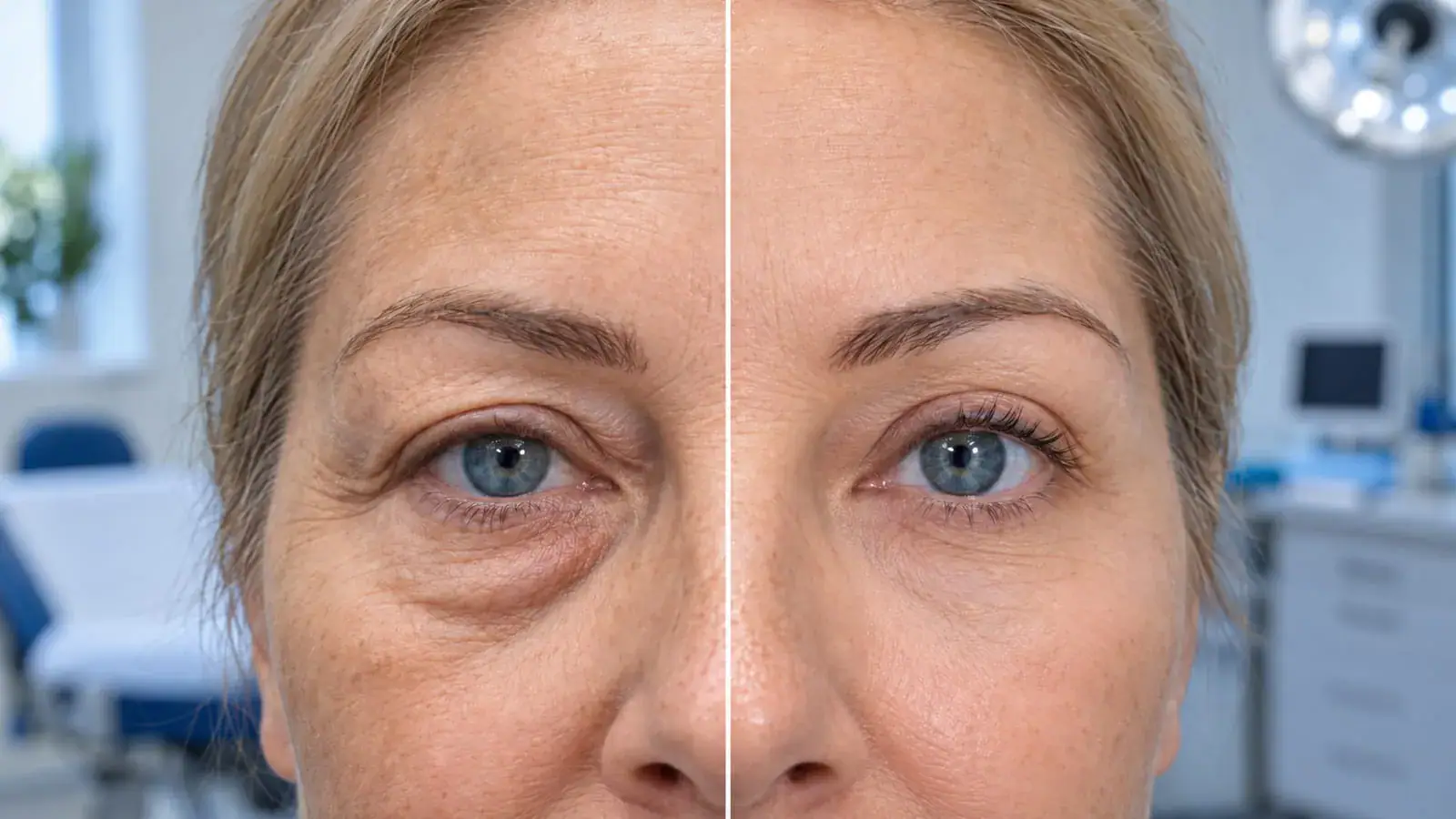
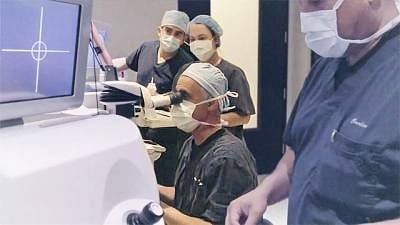
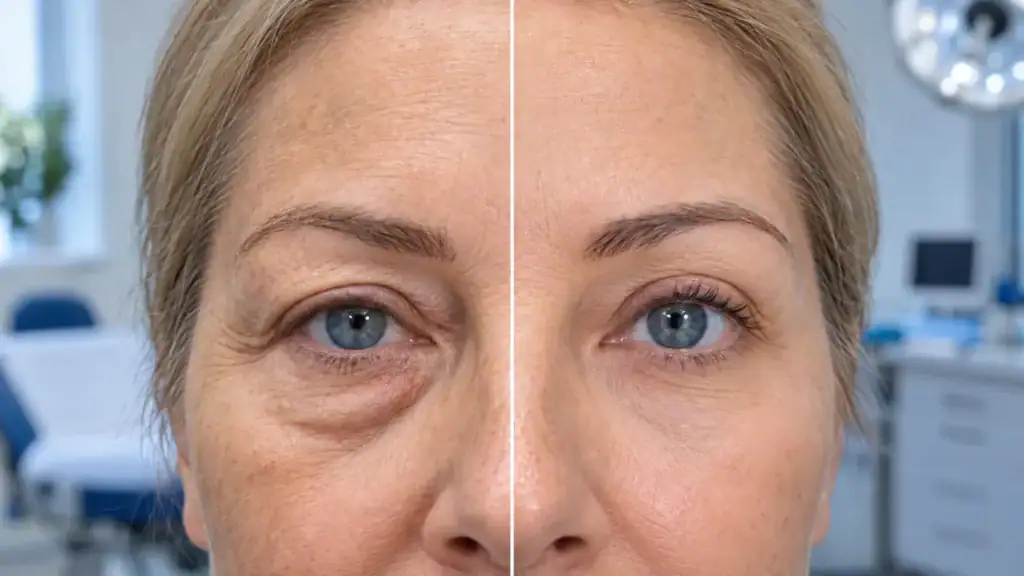
Most recovery guides give you a generic “one to two weeks” answer and stop there. But if you’re having eyelid surgery at a full-spectrum ophthalmology practice – where blepharoplasty is frequently combined with vision correction procedures like EagleVision LASIK, cataract surgery, or ICL implantation – your recovery is more layered than any plastic surgery blog will tell you.
This guide delivers a day-by-day timeline from AGEI’s oculoplastic specialists, expert aftercare protocols for patients with pre-existing eye conditions, and the three recovery milestones most patients don’t know to watch for.
You’ll learn exactly what to expect in the first 48 hours, how upper and lower blepharoplasty recoveries differ, and what changes when you’ve had a vision correction procedure in the same surgical session – so you can plan confidently and heal with precision.
What Makes Blepharoplasty Recovery Different When Your Surgeon Is an Oculoplastic Specialist
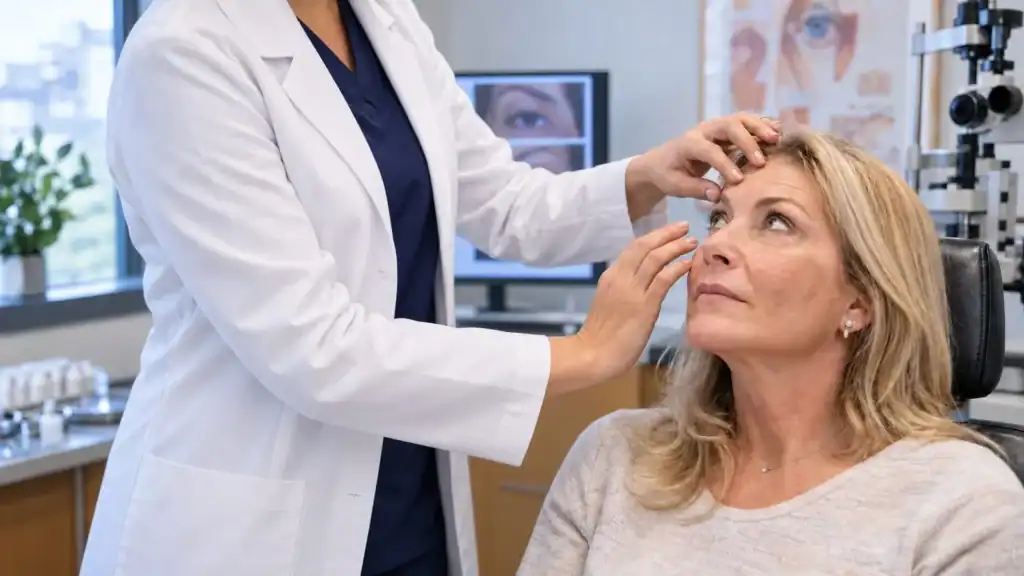
Blepharoplasty performed by an oculoplastic surgeon is not the same as eyelid surgery performed by a general plastic surgeon, and recovery reflects that difference. Oculoplastic surgeons complete full ophthalmology training before subspecializing in the eyelids, orbit, and lacrimal system. That means they understand the eye itself, not just the skin around it.
At AGEI, Dr. Adeleh Yarmohammadi leads our oculoplastics and aesthetics program, and patients consistently describe outcomes that go beyond cosmetic improvement. One patient review, Fay V., put it this way: “I am so glad I went with my gut and trusted something quite sensitive to me to Dr. Adeleh Yarmohammadi”.
The result is everything I dared to hope for.” Another patient, Annie Y., noted that Dr. Adeleh “reconstructed my eyes to help me see better, but also created more symmetry on my face” – a reminder that oculoplastic surgery addresses function and form simultaneously.
This dual focus matters during recovery. An oculoplastic specialist monitors corneal exposure, tear film stability, and intraocular pressure alongside standard wound healing – factors a cosmetic surgeon may not routinely assess. If you’re interested in what this level of care looks like in practice, explore our oculoplastics and aesthetics services at AGEI.
The American Society of Ophthalmic Plastic and Reconstructive Surgery (ASOPRS) sets the training and credentialing standards for this subspecialty, and choosing a surgeon with ASOPRS fellowship training is one of the most important decisions you’ll make before scheduling eyelid surgery.
Your Blepharoplasty Recovery Timeline: Day by Day Through Week Six
What does blepharoplasty recovery look like day by day?
Recovery from blepharoplasty follows a predictable arc, but the specifics depend on whether you had upper eyelid surgery, lower eyelid surgery, or a combined procedure – and whether vision correction was performed in the same session.
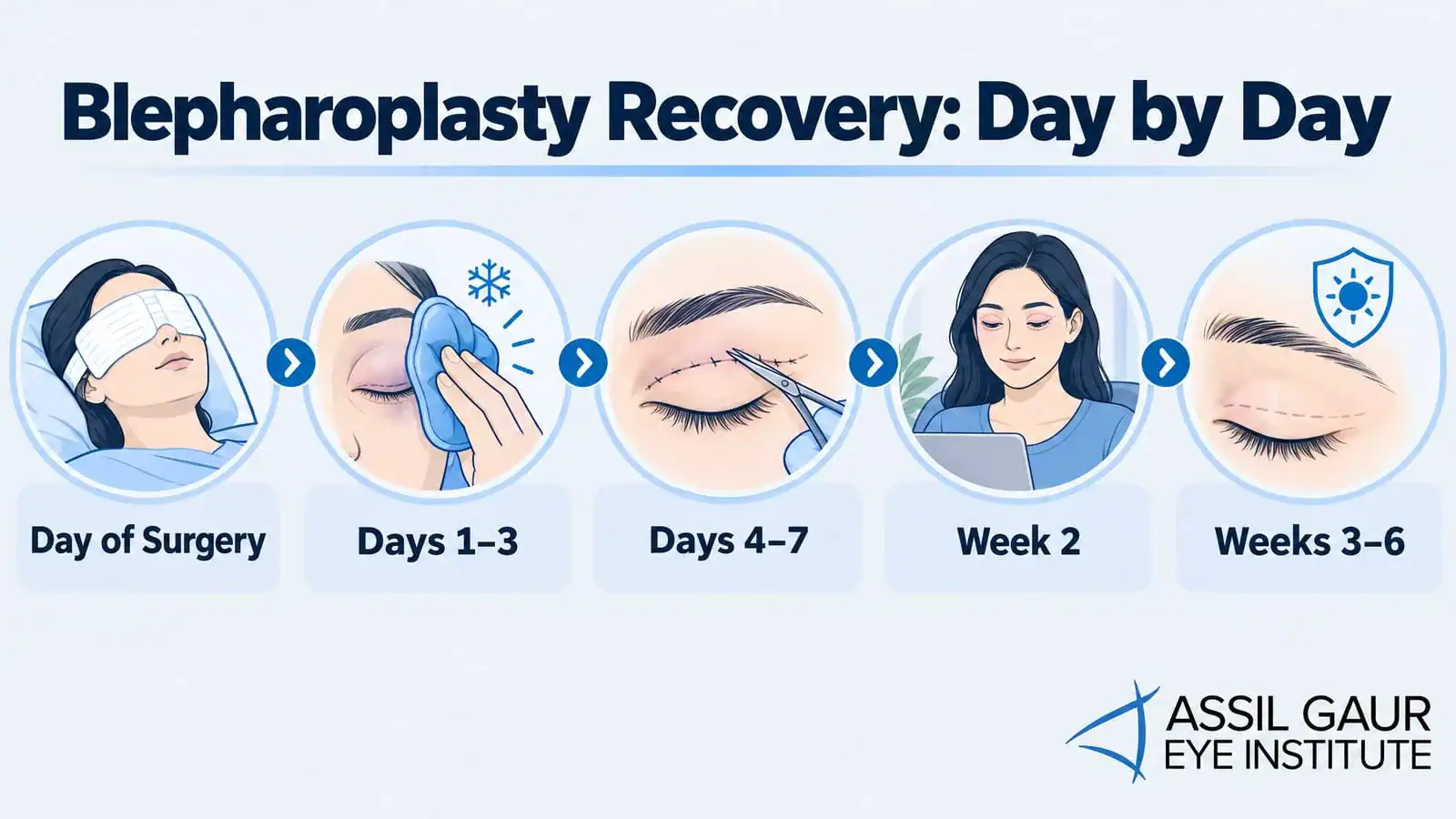
Day of surgery: You’ll leave the operating room with lubrication ointment applied to the incisions and possibly a light dressing. Expect blurred vision from the ointment, mild to moderate swelling, and some tearing. You need a driver – no exceptions. Sleep with your head elevated at 45 degrees that night.
Days 1 to 3: Swelling and bruising peak during this window. The eyelids may feel tight and heavy. Cold compresses applied for 10 to 15 minutes every hour while awake significantly reduce swelling – use a clean cloth over a gel pack, never ice directly on the skin.
Avoid bending forward, straining, or any activity that raises blood pressure. Keep screen time minimal; your eyes will fatigue quickly.
Days 4 to 7: Bruising begins shifting from deep purple to yellow-green as the blood disperses. Swelling starts to soften. Most patients have sutures removed between days five and seven for upper blepharoplasty.
You’ll likely feel well enough to move around the house comfortably, but this is not the week to push activity.
Week 2: Most visible bruising resolves. Residual swelling remains, particularly in the lower eyelids, but is subtle enough that many patients feel comfortable returning to work – especially in remote or low-visibility settings. Incision lines are still pink and slightly raised at this stage.
Weeks 3 to 6: Swelling continues to resolve gradually. Scar maturation begins in earnest – incision lines fade from pink to a skin-toned color. Final results are not visible until the scar has fully matured, which takes three to six months for most patients.
Sun protection over the incision lines during this period is non-negotiable, particularly in the Los Angeles climate.
How long does blepharoplasty recovery take?
The honest answer is that “recovery” has two definitions. Functional recovery – feeling well, looking presentable, returning to work – takes one to two weeks for most patients.
Complete recovery, meaning fully resolved swelling and mature scars, takes three to six months. Both timelines are normal, and understanding the difference can prevent unnecessary anxiety at the six-week mark, when your results still look slightly unfinished.
Managing Swelling and Bruising After Eyelid Surgery – What’s Normal and What’s Not
How do I reduce swelling after eyelid surgery?
Cold compresses are the single most effective tool in the first 72 hours. Apply them consistently – every waking hour for the first two days – rather than sporadically. After 72 hours, switch to warm compresses to help disperse residual bruising.
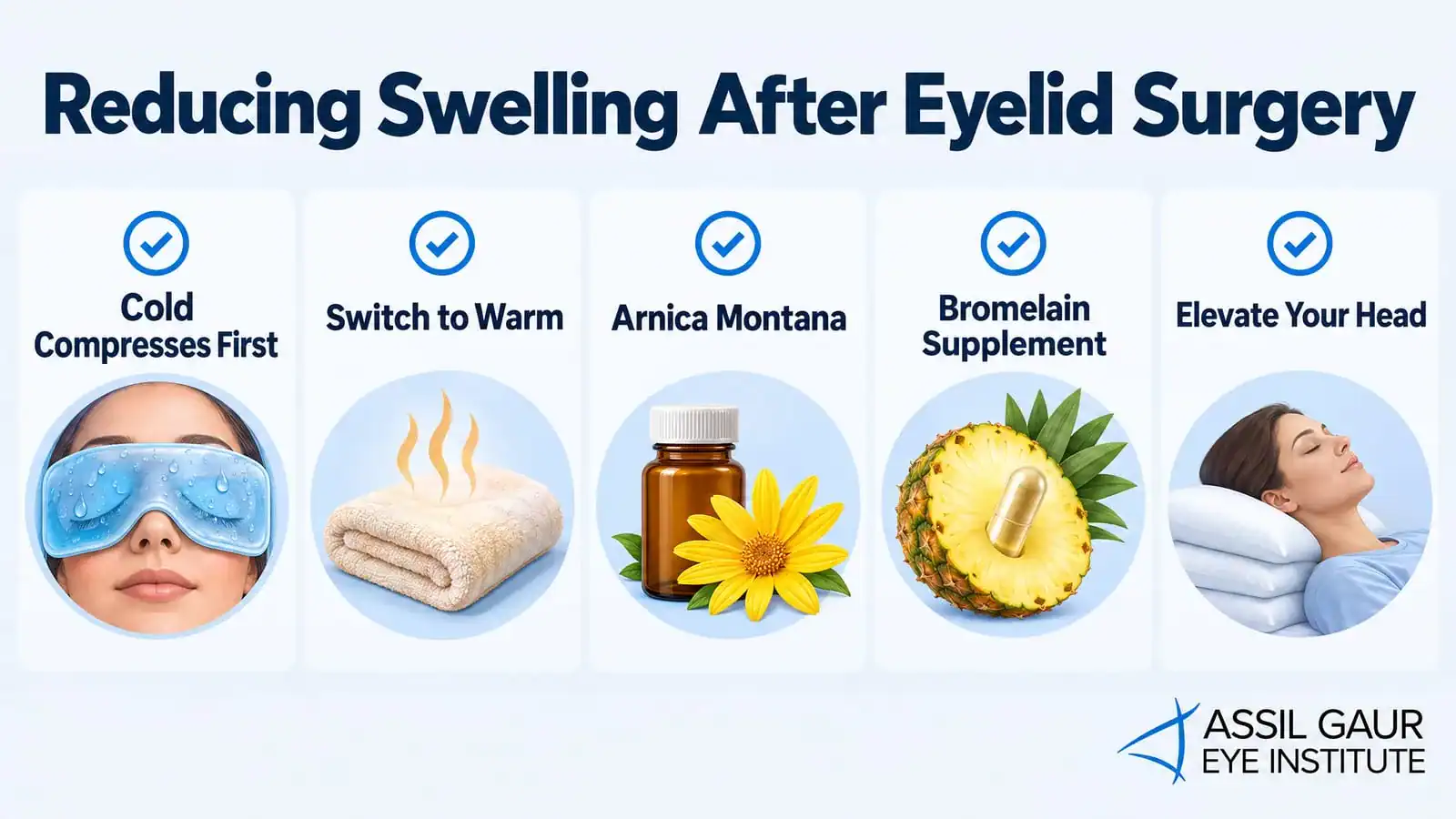
Arnica montana, available as oral tablets or topical gel, has a well-established role in reducing post-surgical bruising. Many of our patients at AGEI begin oral arnica two to three days before surgery and continue for a week afterward.
Bromelain, an enzyme found in pineapple, is another supplement with evidence supporting reduced post-operative swelling – discuss both with your surgeon before starting them.
Sleep position matters more than most patients expect. Keeping your head elevated above your heart for the first week reduces fluid pooling in the eyelid tissues. Two to three pillows, or a wedge pillow, achieves this without requiring you to sleep sitting upright.
How long does bruising last after eyelid surgery?
For upper blepharoplasty alone, most bruising resolves within seven to ten days. Lower blepharoplasty and combined procedures typically produce more extensive bruising that can persist for two to three weeks.
Individual variation is significant: patients on blood thinners, those with fair skin, and those who had more extensive fat repositioning tend to bruise more and for longer. Arnica, consistent cold compresses in the first 72 hours, and avoiding alcohol for two weeks all accelerate resolution.
Bruising that worsens after day three, or that comes with increasing pain and firmness in the eyelid, warrants a call to your surgeon. That pattern can indicate a hematoma, which requires prompt attention.
Upper Eyelid vs. Lower Eyelid vs. Combined Blepharoplasty: How Recovery Differs
Upper blepharoplasty removes excess skin and sometimes fat deposits from the upper eyelid, addressing sagging eyelids that can impair peripheral vision or create a heavy, tired appearance. Recovery is generally faster: sutures come out at five to seven days, bruising resolves within a week for most patients, and the incision sits in the natural eyelid crease where it heals with minimal visibility.
Lower blepharoplasty addresses fat deposits and excess skin beneath the eye. The recovery is longer and more variable. Swelling in the lower eyelid can persist for four to six weeks, and the risk of temporary lower eyelid laxity (the eyelid pulling slightly downward) is higher.
Patients who have had prior LASIK or who have dry eye disease need particularly careful monitoring during lower blepharoplasty recovery, because corneal exposure increases when the lower eyelid position is temporarily altered.
Combined upper and lower blepharoplasty produces the most dramatic results but also the most significant initial recovery. Expect peak swelling at 48 to 72 hours, bruising that may extend onto the cheeks, and a return-to-work timeline closer to 10 to 14 days rather than seven.
When combined blepharoplasty is performed alongside a vision correction procedure – which we discuss in detail in the next section – the recovery planning becomes more specific still.
Aftercare Instructions Your Surgeon Will Give You – and Why Each One Matters
What should I avoid during blepharoplasty recovery?
Post-operative instructions exist for precise clinical reasons, not as arbitrary restrictions. Here is what your surgeon will tell you, and the mechanism behind each instruction:
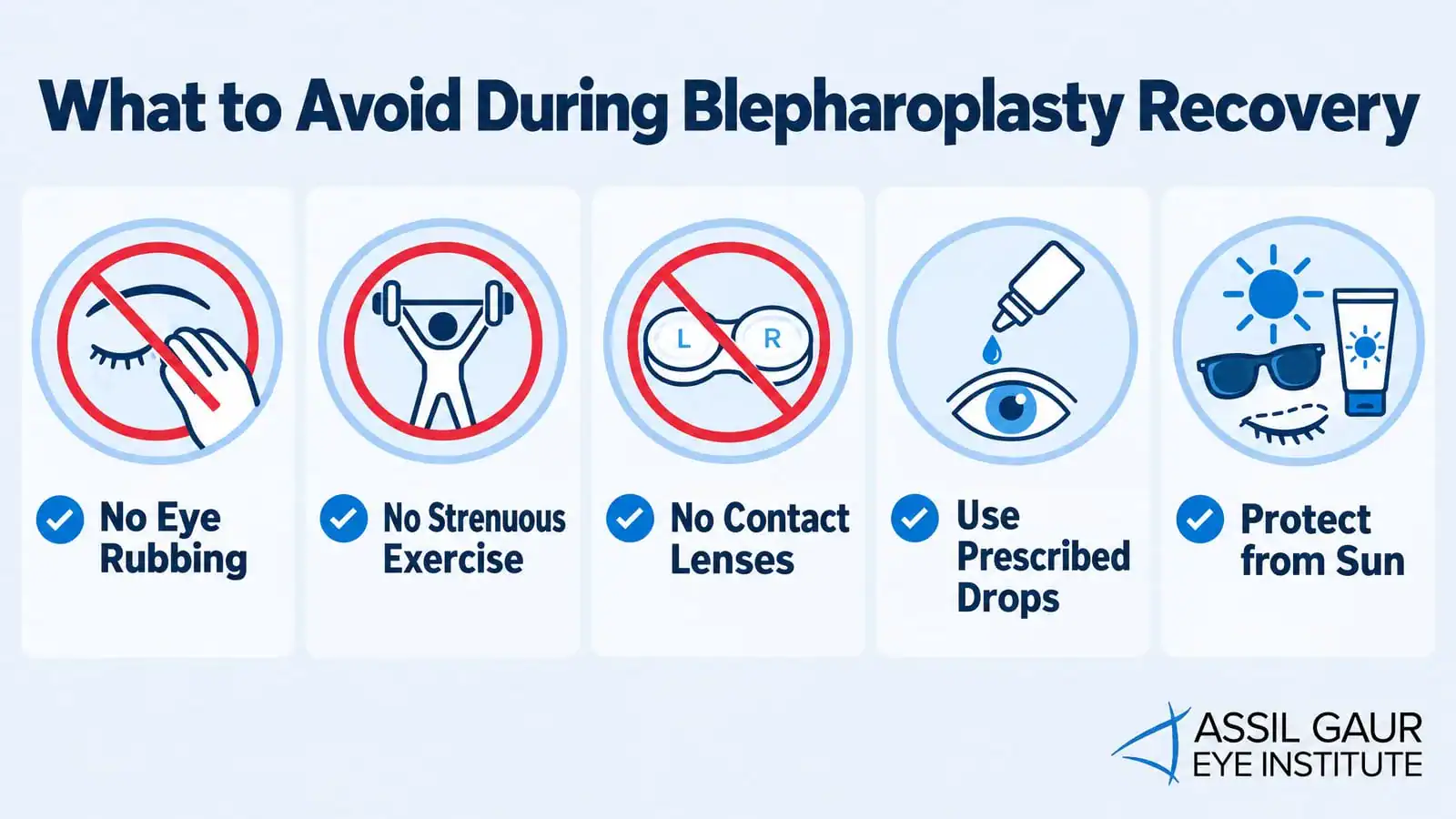
No rubbing or touching the eyes. The incision is held together by sutures and early fibrin adhesion – mechanical disruption can open the wound or introduce bacteria. This restriction applies for at least two weeks.
No strenuous exercise for three to four weeks. Elevated heart rate and blood pressure increase the risk of bleeding into the surgical site. Even activities like yoga inversions or heavy lifting can cause a hematoma days after surgery if the vessels haven’t fully sealed.
No contact lenses for two to four weeks. Inserting and removing contacts requires touching the eyelid and can stress the incision.
If you wear contacts and are also recovering from LASIK or ICL surgery in the same session, your surgeon will give you a specific timeline for resuming lenses, which will be longer than for blepharoplasty alone.
Prescribed eye drops on schedule. Antibiotic drops prevent infection at the incision site. Lubricating drops address the temporary dry eye that almost universally follows eyelid surgery, because the altered eyelid mechanics temporarily reduce tear distribution across the cornea.
If you already have dry eye disease, your drop regimen will be more intensive. Understanding dry eye treatment options in Los Angeles before your surgery helps you manage this phase more effectively.
Sun protection over incisions. UV exposure during scar maturation can cause hyperpigmentation that makes incision lines more visible long term. Apply broad-spectrum SPF 50 carefully around (not on) fresh incisions, and wear sunglasses outdoors, for the first three to six months.
Can I wear makeup after blepharoplasty and when?
Most surgeons clear patients for eye makeup at two weeks post-surgery, once sutures are removed and the incision has closed. Mascara and eyeliner applied directly to the lash line should wait until the incision is fully healed – typically three weeks.
Mineral-based products are preferred over liquid formulas during the early return-to-makeup phase, as they are less likely to migrate into the eye and cause irritation.
Call now or book your appointment online.
If You Have Dry Eye, Prior LASIK, or Glaucoma: What Your Recovery Plan Should Include
This is the section no plastic surgery website can write with clinical authority – and it’s where AGEI’s full-spectrum ophthalmology model makes a genuine difference for patients.
Does dry eye affect blepharoplasty recovery?
Yes, significantly. Blepharoplasty temporarily disrupts eyelid closure mechanics and tear distribution. In patients who already have dry eye disease, this disruption adds to an already compromised tear film, which can lead to significant corneal exposure, discomfort, and, in severe cases, corneal epithelial breakdown.
Patients with pre-existing dry eye need a more aggressive lubrication protocol: preservative-free artificial tears every one to two hours while awake, lubricating gel at night, and potentially punctal plugs to conserve tear volume during healing.
Research published by the American Academy of Ophthalmology supports intensive lubrication protocols in post-blepharoplasty patients with baseline dry eye disease.
Patients who have had prior LASIK surgery face a related challenge. LASIK reduces corneal sensation by cutting corneal nerves during flap creation, and reduced corneal sensation means the eye is less efficient at triggering the blink reflex and tear production.
After blepharoplasty, this reduced sensation can compound the temporary dry eye that follows eyelid surgery. At AGEI, we assess corneal sensation and tear film quality before any combined procedure to build an individualized recovery protocol.
You can also read about how omega-3 supplementation supports eye surgery recovery, which we often recommend as part of pre-surgical preparation for patients with dry eye.
For patients with glaucoma, the key consideration is intraocular pressure monitoring during recovery. Steroid eye drops – commonly prescribed after blepharoplasty to reduce inflammation – can raise intraocular pressure in steroid-responders, a risk that is particularly significant in glaucoma patients.
Our glaucoma specialist, Dr. Avneet K. Sodhi Gaur, coordinates with the oculoplastics team on these cases to ensure pressure is monitored and drop regimens are adjusted appropriately.
Consider the case of Dr. Klaus Ito, an optometrist who came to AGEI for vision correction after years of dry eye problems from hard contact lenses. During his pre-surgical consultation with Dr. Avneet Gaur, he discovered a previously undetected retinal tear, which was repaired before he underwent Eagle Vision LASIK.
He achieved 20/10 vision in each eye – better than 20/20 – with no dry eye issues post-procedure. That kind of pre-surgical thoroughness protects patients with multiple eye conditions intersecting with a planned procedure.
Call now or book your appointment online.
When Can You Return to Work, Exercise, and Normal Life in Los Angeles?
When can I return to work after blepharoplasty?
For desk work and remote roles: most patients are comfortable returning at seven to ten days, once sutures are removed and the most visible bruising has faded.
For in-person, client-facing roles: plan for ten to fourteen days, and keep in mind that residual swelling may still be noticeable to colleagues even if the bruising has resolved. For physically demanding work or roles requiring protective eyewear: at least four weeks.
If you’ve had blepharoplasty combined with LASIK or ICL surgery, add three to five days to each timeline. The visual fluctuation that accompanies vision correction healing – particularly in the first week – makes screen-heavy work more fatiguing, and the combined recovery demands more rest.
Driving in Los Angeles requires clear, stable vision and comfortable eyelid movement. Most patients are cleared to drive 7 to 10 days after upper blepharoplasty alone. After combined procedures, your surgeon will assess your visual acuity and eyelid function before clearing you – do not assume the standard timeline applies.
Exercise follows a graduated return: walking at one week, light cardio at three weeks, resistance training and high-intensity exercise at four to six weeks. The Los Angeles outdoor lifestyle – hiking, cycling, beach activities – adds a sun exposure variable that requires consistent sunglasses and SPF protection throughout the recovery period.
How to Know You’re Healing Well – and When to Call Your Surgeon
What are the signs of complications after eyelid surgery?
Normal healing includes swelling that peaks at 48 to 72 hours and then gradually improves, bruising that shifts color from purple to yellow-green over seven to fourteen days, mild tightness and occasional itching at the incision site, and temporary blurred vision from lubricating ointment or drops.
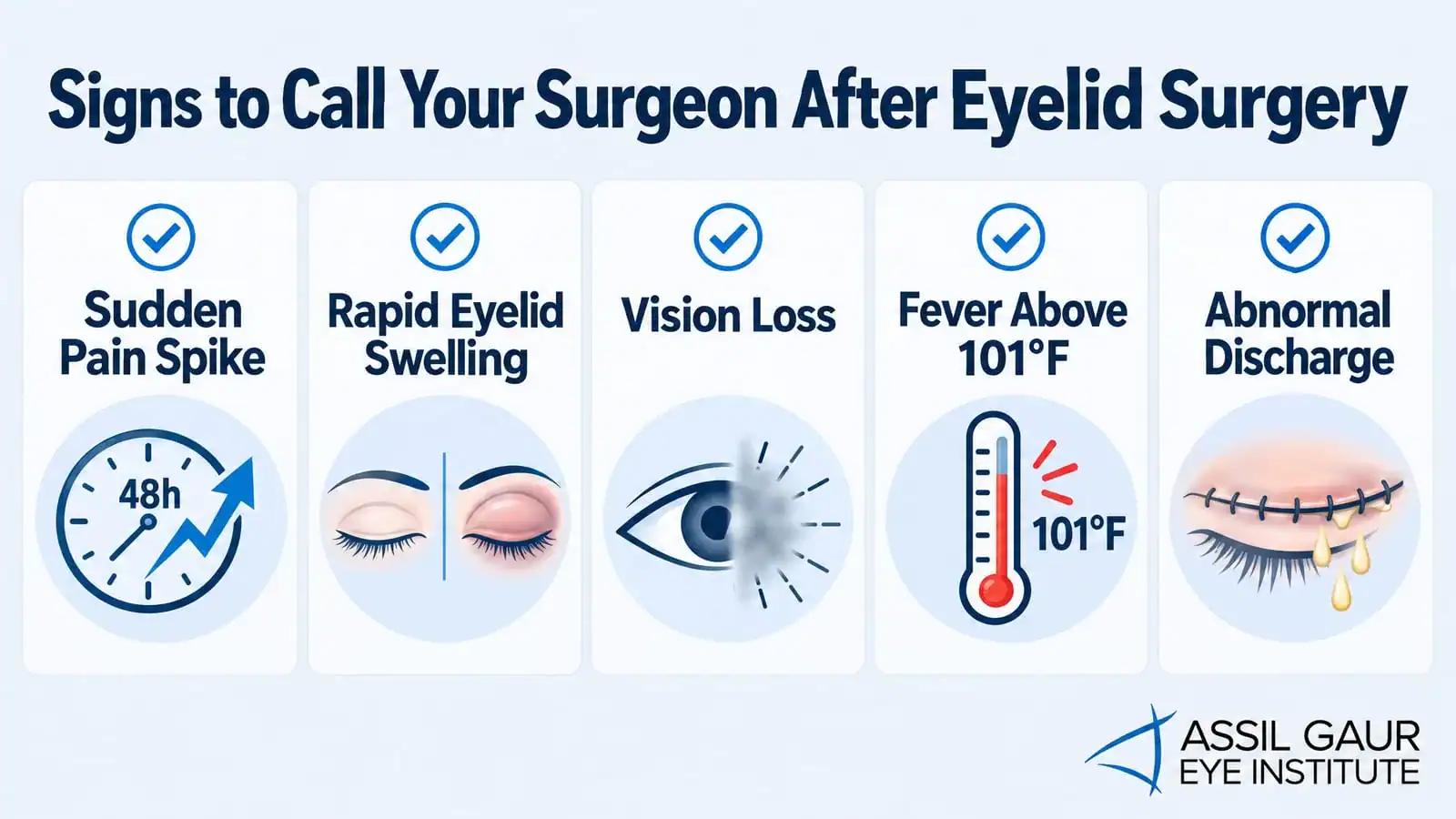
Call your surgeon immediately if you experience: sudden increase in pain after the first 48 hours (not gradual improvement), rapidly increasing swelling or firmness in one eyelid (possible hematoma), significant vision loss or new visual disturbance, fever above 101°F, or discharge from the incision that is thick, yellow, or foul-smelling.
One of our patients, Steven L., came to AGEI for cataract surgery, and Dr. Pilyugina detected a retinal issue before the procedure, which he described as “a vision saver.” That story illustrates why pre-surgical screening at a full-spectrum ophthalmology practice catches problems that might otherwise surface as complications during recovery.
The same principle applies to blepharoplasty: thorough pre-operative assessment is the best tool for preventing complications.
When will I see the final results of my blepharoplasty?
The three milestones most patients don’t know to watch for: First, at three weeks, swelling has resolved enough that you can see the general shape of your result but not the final version. Second, at six weeks, the eyelid contour is nearly final, though the incision lines are still maturing.
Third, at three to six months, the scar matures, and the result you see is the result you keep. Patients who judge their outcome at two weeks are almost always looking at an incomplete picture.
If you’re ready to explore what blepharoplasty combined with vision correction could look like for you, our team at AGEI offers a complimentary consultation through our oculoplastics and aesthetics program.
Call now or book your appointment online.
Frequently Asked Questions
Can I wear contacts during blepharoplasty recovery?
Soft contact lenses are typically restricted for 2 to 4 weeks after blepharoplasty because inserting and removing them requires touching the eyelid and can stress the incision. If you’ve had LASIK, ICL, or cataract surgery in the same session as your blepharoplasty, your surgeon will recommend no contact lens use during the immediate recovery period and provide a specific timeline for future lens wear based on the outcomes of your combined procedures. Hard contact lens wearers should expect a longer restriction period because of greater mechanical interaction with the eyelid.
Is it safe to combine blepharoplasty with LASIK or cataract surgery?
Yes, when a surgical team with full ophthalmology training and oculoplastic subspecialty expertise performs it, combining procedures is both safe and efficient. The key is sequencing: in most cases, surgeons perform vision correction before or after blepharoplasty in a carefully planned session, with the oculoplastic and refractive teams coordinating anesthesia, drop protocols, and recovery instructions. At AGEI, this coordination happens within a single practice, which eliminates the communication gaps that can occur when patients see separate surgeons at different facilities. Patients considering this path should schedule a combined consultation to assess candidacy for both procedures at the same time.
How do I sleep comfortably after eyelid surgery?
Sleep on your back with your upper body elevated at approximately 45 degrees for the first week. A wedge pillow is more reliable than stacking standard pillows, which tend to shift overnight. Avoid sleeping on your side, which can increase swelling asymmetrically and put pressure on the operated eyelid. If you’ve also had LASIK in the same session, your surgeon may recommend an eye shield at night for the first week to prevent accidental rubbing during sleep.

Written by The AGEI Educational Team

Medically Reviewed by Dr. Adeleh Yarmohammadi