Why LA Patients Choose an Oculoplastic Surgeon for Cosmetic Eye Procedures
When you’re considering cosmetic treatment around your eyes, the type of specialist you choose matters. Plastic surgeons, facial plastic surgeons, and dermatologists all offer cosmetic care in this area, but oculoplastic surgeons approach it differently: they are ophthalmologists (eye physicians and surgeons) first, with additional training focused on the eyelids, eye socket, tear drainage system, and surrounding face.
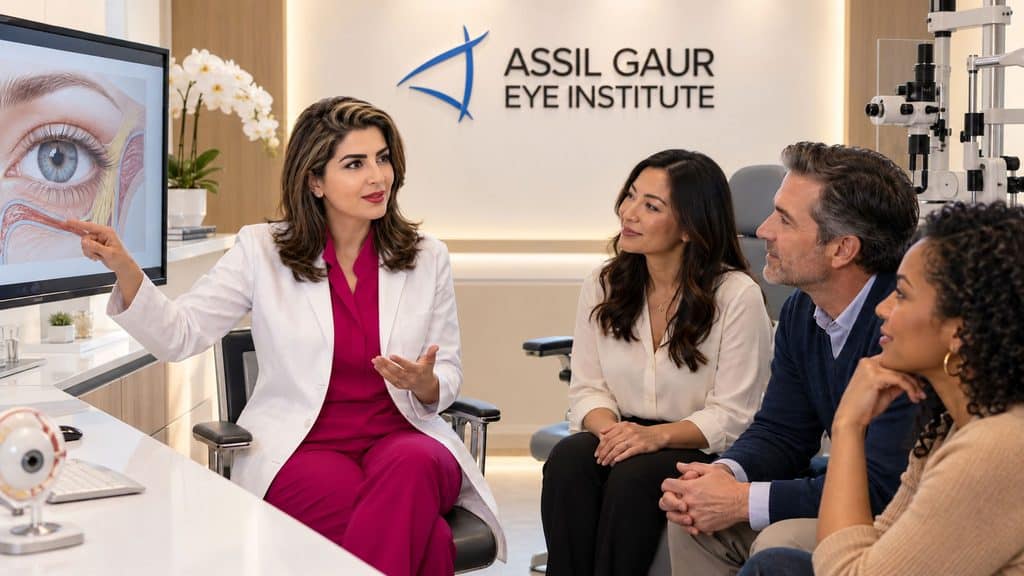
This guide explains how that training compares with other specialties, which cosmetic procedures oculoplastic surgeons perform, the risks to understand, and what to expect at a consultation with the Oculoplastics and aesthetics team at Assil Gaur Eye Institute in Los Angeles.
What is aesthetic ophthalmology?
Aesthetic ophthalmology is the cosmetic side of eye care, and oculoplastic surgeons are the ophthalmologists who specialize in it. It includes surgical procedures such as eyelid surgery (blepharoplasty), droopy eyelid repair (ptosis surgery), and canthoplasty, as well as non-surgical treatments such as BOTOX, dermal fillers, and laser skin resurfacing.
What sets it apart is the starting point. A physician plans every procedure, with core training in eye health and function, so they weigh cosmetic goals alongside how changes to the eyelids or surrounding tissue may affect comfort, tear film, and vision.
Why choose an oculoplastic surgeon for cosmetic care around the eyes
Each specialty that performs cosmetic eyelid surgery comes from a different training path. General plastic surgeons train in cosmetic and reconstructive surgery across the entire body, including the face. Facial plastic surgeons typically train first in ear, nose, and throat surgery and focus on the face and neck. Dermatologists focus on the skin and commonly provide injectables and laser treatments around the eyes, though they typically do not perform eyelid surgery.
Oculoplastic surgeons complete medical school, a full ophthalmology residency, and a fellowship in ophthalmic plastic and reconstructive surgery, focusing on orbital surgery, the eyelids, the eye socket (orbit), the tear drainage system, brows, and the midface.
These fields overlap, and surgeons in each may perform eyelid procedures. But because oculoplastic surgeons are ophthalmologists first, they bring advantages that come directly from years of focused training on the eye and the structures that protect it.
Precision at the millimeter level
Ophthalmologists work in millimeters every day, from eye surgery to precise measurements of the eye and eyelids. Around the eyes, small differences in how much skin is removed, where an incision is placed, or where a treatment is injected can change both the result and how the eyelids function. That habit of precision carries into every cosmetic procedure.
Detailed knowledge of eye and eyelid anatomy
The tissues around your eyes are some of the most delicate and complex in your face. Ophthalmologists train extensively in the anatomy of the eye, eyelids, brow, tear ducts and drainage system, and surrounding muscles, so they understand how these structures work together and how to enhance them safely in line with your aesthetic goals.
Protecting how your eyes work, not just how they look
Your eyelids do essential work: they protect the cornea, spread tears with every blink, and keep the eye surface healthy. An ophthalmologist plans cosmetic treatment with those functions in mind, checking for dry eye, eyelid laxity, and other conditions before treatment, so improving your appearance doesn’t come at the cost of comfort or vision.
Deep experience with the muscles around the eyes
Many lines and changes around the eyes come from muscle movement. Ophthalmologists have treated these muscles medically for decades; BOTOX itself was first developed by an ophthalmologist, and its first FDA approvals were for eye conditions, including involuntary eyelid spasms. That understanding helps achieve natural, balanced results that soften lines while preserving your natural expression.
Recognizing and managing complications early
Complications are uncommon, but when a concern involves the eye, such as eyelid droop, difficulty closing the eyes, or dry eye after treatment, an ophthalmologist can evaluate it directly and manage most issues in the office, without a referral elsewhere.
The full range of options in one place
At Assil Gaur Eye Institute, patients have access to injectables, laser and skin treatments, and eyelid surgery within the same practice. Some patients who come in for a non-surgical treatment learn that surgery, such as blepharoplasty or ptosis repair, would address their concern more effectively. Others learn the opposite. Either way, the recommendation is based on what fits your anatomy and goals, not on which treatments a single provider happens to offer.
Cosmetic procedures performed by oculoplastic surgeons
Oculoplastic surgeons treat eye concerns ranging from heavy lids and under-eye bags to fine lines, using surgery, non-surgical options, or both. At Assil Gaur Eye Institute, every plan starts with an eye health evaluation, so your treatment fits how your eyes look and how they function.
Surgical procedures
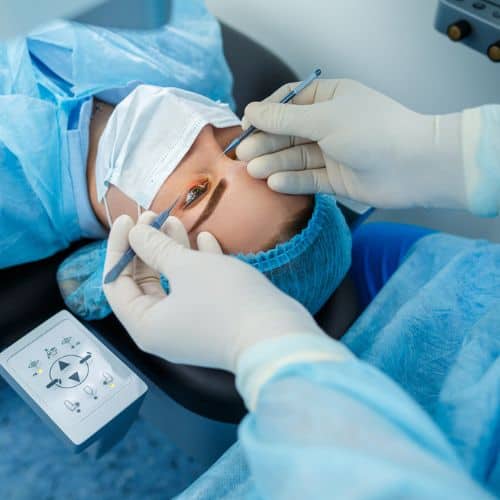
- Blepharoplasty removes or repositions excess skin and fat from the upper or lower eyelids. Upper blepharoplasty can address hooded lids and, in some patients, excess skin that blocks peripheral vision. A lower eyelid blepharoplasty targets under-eye bags.
- Ptosis repair corrects drooping eyelids by tightening or reattaching the muscle that lifts the upper lid. Because eyelid height affects how well the eye is protected and lubricated, planning this surgery requires careful assessment of the cornea and tear film.
- Canthoplasty reshapes or tightens the outer corner of the eye, either for cosmetic reasons or to support a loose lower lid.
- Ectropion and entropion repair corrects a lower eyelid that turns outward or inward, often due to aging, injury, thyroid eye disease, orbital fractures, or skin cancer excision, and can cause irritation, tearing, and an altered appearance.
- Revisional eyelid surgery addresses concerns after a previous eyelid procedure or brow lift, such as asymmetry or difficulty closing the eye.
Non-surgical treatments
- BOTOX, dermal fillers, and laser and light-based skin treatments can soften crow’s feet, frown lines, and under-eye hollows, and improve skin tone and texture.
Call now or book your appointment online.
Eye surface procedures that require an ophthalmologist
Some cosmetic concerns involve the eye itself, not the skin around it. These procedures are performed on the surface of the eye and fall within ophthalmology:
- Conjunctival nevus (eye freckle) removal removes a pigmented spot on the white of the eye. Patients often seek removal for appearance, and the removed tissue is typically sent for laboratory examination. A board-certified ophthalmologist should evaluate any eye freckle that changes in size, shape, or color.
- Pterygium removal excises a fleshy growth on the white of the eye that is strongly associated with sun exposure. Pterygia can cause redness and irritation, and larger growths can affect vision.
Understanding the risks
Every cosmetic procedure carries risk, and a good consultation covers them openly. Common considerations include:
- Eyelid surgery: Bruising and swelling are expected for one to two weeks. Other possible effects include temporary dry eye, mild asymmetry, and difficulty fully closing the eyes during healing. Serious complications, such as bleeding behind the eye, are rare but require immediate care, which is one reason eye health is assessed before surgery.
- BOTOX: Temporary bruising is common. If the product spreads beyond the intended area, it can cause a temporary droop of the eyelid or brow that resolves as the effect wears off.
- Dermal fillers: Swelling, bruising, and small lumps are possible, and filler placed too superficially under the eyes can cause a bluish tint. In rare cases, filler can block a blood vessel, which may damage skin and, very rarely, affect vision. Choosing an injector with detailed knowledge of the anatomy around the eye, and who knows how to recognize and respond to these events, is an important safety measure.
- Your surgeon will review which risks apply to you based on your anatomy, health history, and goals.
Combining cosmetic eye procedures with vision correction
Some patients are interested in both cosmetic eyelid treatment and vision correction such as LASIK. Because eyelid surgery can temporarily affect the tear film and how the eye surface heals, these procedures are usually staged rather than performed together, with timing coordinated between your surgeons. Having both under one practice keeps your full eye history in one place and makes that planning simpler.
Meet Dr. Adele, Oculoplastics Director at Assil Gaur Eye Institute
Dr. Adeleh Yarmohammadi, known to her patients as Dr. Adele, is a board-certified ophthalmologist and the Oculoplastics Director at Assil Gaur Eye Institute. Her practice focuses on cosmetic and reconstructive eyelid surgery and facial aesthetics, including upper and lower blepharoplasty, ptosis repair, canthoplasty, ectropion and entropion repair, revisional eyelid surgery, and BOTOX and dermal fillers.
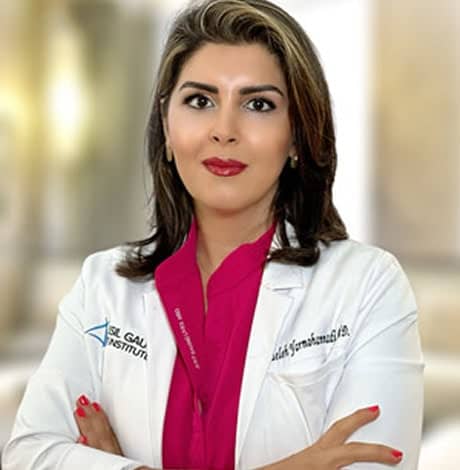
Dr. Adele completed her ophthalmology residency at UC San Diego’s Shiley Eye Institute, where she served as Chief Resident and trained in Oculoplastics under Dr. Don Kikkawa and Dr. Bobby Korn, two leaders in the field. She also completed a fellowship in glaucoma and anterior segment surgery under Dr. Robert Weinreb and has published more than 40 peer-reviewed research papers in ophthalmic journals. That depth in both eye health and eyelid surgery shapes how she plans every cosmetic procedure.
Dr. Adele is also a painter, and she describes ophthalmology as a blend of science and art: advanced diagnostics and careful listening come first, followed by surgical technique guided by an artist’s eye. Her goal is natural results that preserve each patient’s eye shape, ethnicity, and identity, and she plans and performs every procedure herself.
What to expect at your consultation
A consultation begins with your goals, whether you are exploring eyelid surgery or an eyebrow lift, and your health history. Your surgeon will examine the eyelids, brow position, skin quality, and eye surface, and may check tear function or visual fields when eyelid position could be affecting vision. From there, you’ll discuss which options fit your anatomy and goals, what recovery involves, and the risks specific to your situation, so you can decide without pressure.
Find out if you’re a candidate
Not sure whether eyelid surgery, injectables, or a non-surgical treatment is right for you? Dr. Adele offers a complimentary “Are You a Candidate for Eyelid Surgery” photo assessment, so you can get her expert opinion from home before scheduling an in-office visit.
Add photo assessment CTA
Prefer to talk to someone? Call our team serving Beverly Hills, Santa Monica, and the greater Los Angeles, CA at (866) 945-2745
Call now or book your appointment online.
Aesthetic ophthalmology FAQs
Is eyelid surgery covered by insurance?
Cosmetic blepharoplasty is not covered by insurance. When drooping upper eyelid skin or ptosis measurably blocks your field of vision, surgery may qualify as medically necessary. Coverage usually requires documentation such as visual field testing and photographs, and criteria vary by insurer.
Learn more about when droopy eyelid surgery is covered by insurance.
How long is recovery after blepharoplasty?
Most bruising and swelling settles within one to two weeks, and many patients return to work and social plans in that window. Incisions continue to soften and fade over several
months, so final results take time to appear.
Can I have BOTOX or fillers if I have dry eye or have had eye surgery?
Often yes, but it should be planned with your eye history in mind. Treatments near the eyelids can temporarily affect blinking or eyelid position, so tell your injector about dry eye, recent LASIK or cataract surgery, or prior eyelid procedures.
-
American Society of Ophthalmic Plastic and Reconstructive Surgery (ASOPRS). https://www.asoprs.org
-
American Academy of Ophthalmology. Eyelid Surgery. EyeSmart. https://www.aao.org/eye-health/treatments/eyelid-surgery
-
Scott AB, Fahn S, Brin MF. Treatment of strabismus and blepharospasm with Botox (onabotulinumtoxinA): Development, insights, and impact. https://pmc.ncbi.nlm.nih.gov/articles/PMC10374181/
-
U.S. Food and Drug Administration. Unintentional Injection of Soft Tissue Filler into Blood Vessels in the Face: FDA Safety Communication. 2015.
-
Mayo Clinic. Blepharoplasty. https://www.mayoclinic.org/tests-procedures/blepharoplasty/about/pac-20385174

Written by The AGEI Educational Team

Medically Reviewed by Dr. Adeleh Yarmohammadi