How To Choose a Diabetic Retinopathy Specialist in Los Angeles
If you have diabetes, changes in the retina can begin long before you notice any symptoms. Diabetic retinopathy is one of the most common causes of vision loss and blindness in adults, and it develops when chronically elevated blood sugar levels damage the small blood vessels in the eye. If left untreated, it can lead to complications such as diabetic macular edema, retinal bleeding, retinal detachment, and permanent vision loss.
Because early disease often has no warning signs, routine eye health monitoring is essential. Working with an experienced specialist is one of the best ways to protect your vision by detecting changes early. Choosing the right specialist in the Los Angeles area can significantly influence long-term outcomes and help preserve vision before permanent damage occurs.

Understanding the stages of diabetic retinopathy
Diabetic retinopathy generally progresses through four distinct stages:
- Mild non-proliferative diabetic retinopathy (NPDR)
- Moderate NPDR
- Severe NPDR
- Proliferative diabetic retinopathy (PDR)
As the disease advances, blood vessels become increasingly damaged and abnormal new vessels may develop. Proliferative diabetic retinopathy (PDR) is the most advanced stage of the disease and carries the highest risk of bleeding, retinal detachment, and severe vision loss.
What type of eye doctor treats diabetic retinopathy?
Different providers contribute to the diagnosis and management of eye conditions, but they do not all provide the same level of care for retinal diseases.
Optometrists
Optometrists perform routine vision tests and dilated eye exams, which are critical for early detection of diabetic changes. They can identify early signs of diabetic eye disease, such as subtle retinal swelling, early floaters, or changes in the blood vessels. However, they typically refer patients out for treatment once the disease is more advanced.
Board-certified ophthalmologists
Board-certified ophthalmologists are doctors trained in ophthalmology who diagnose and treat a wide range of eye conditions, including glaucoma, cataracts, and early retinal changes. However, when disease becomes more complex or involves the central retina, subspecialty care is often needed.
Retina specialists
A retina specialist is an ophthalmologist with advanced fellowship training in retinal conditions such as diabetic retinopathy, macular degeneration, age-related macular degeneration, uveitis, and macular hole. They also treat complications such as diabetic macular edema, scar tissue formation, and retinal detachment.
These specialists are trained to interpret advanced imaging, perform delicate procedures, and manage progressive disease that can otherwise lead to irreversible vision loss.
Signs you should see a retina specialist
You should see a retina specialist and seek an evaluation if you are experiencing:
- New or worsening floaters (may indicate bleeding in the retina)
- Blurry or fluctuating vision that changes throughout the day
- Dark or missing areas in central vision (often linked to macular edema)
- Wavy or distorted straight lines (a sign of retinal distortion)
- A long history of diabetes (more than 10 years)
- Poorly controlled blood sugar levels
- Abnormal findings during a dilated eye exam
Even without symptoms, diabetes can silently damage the blood vessels in the eye. That’s why regular screening is essential to prevent late-stage retinal diseases.
What to look for in a diabetic eye care clinic
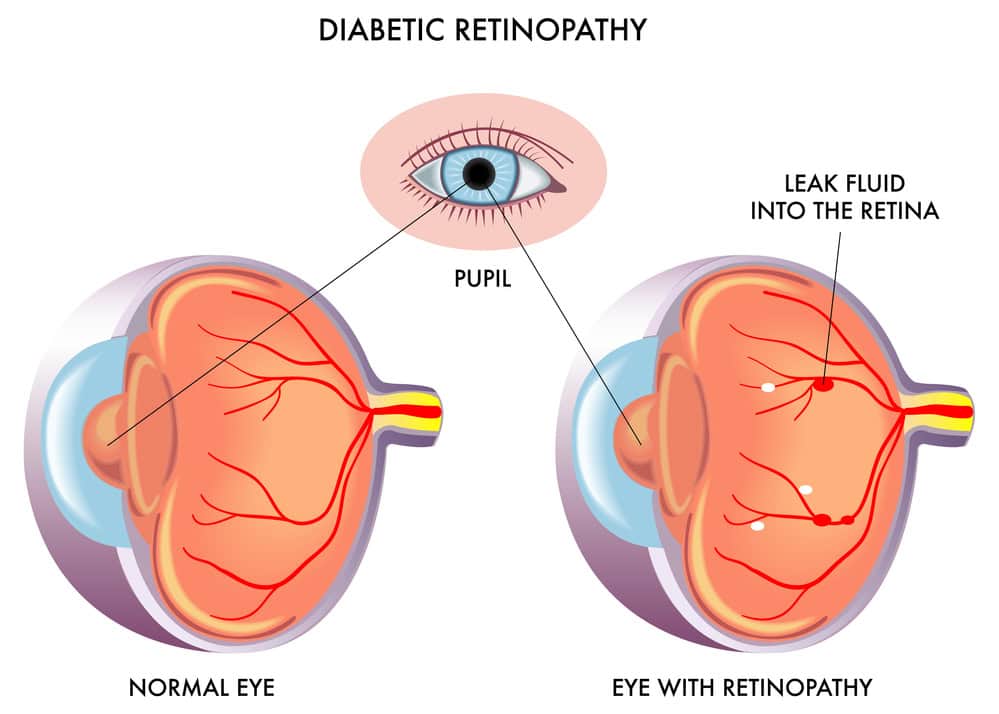
Not all eye care clinics offer the same level of diabetic eye care. Beyond your doctor’s credentials, it’s important to consider the technology, diagnostic testing, and treatment options available at the practice. An excellent clinic should offer:
Monitoring over time
Annual dilated eye exams and imaging are essential. Retinal conditions can change slowly or rapidly, so structured follow-up ensures treatment begins at the right time: not too early and not too late.
When detected early through regular eye exams, most severe vision loss from diabetic retinopathy can be prevented with appropriate monitoring and treatment.
Advanced retinal imaging
High-quality ophthalmology care depends on technology that can visualize subtle retinal changes:
- Optical coherence tomography (OCT): Produces high-resolution cross-sections of the retina and is especially useful for detecting diabetic macular edema before noticeable vision changes occur. It also helps track response to treatment over time.
- Fluorescein angiography: Uses a safe dye to highlight leaking or blocked blood vessels, helping identify areas of damage, abnormal vessel growth, and early signs of progression toward more severe retinal conditions.
These tests provide a much more complete picture of eye health than a standard exam alone.
Coordinated medical care
Because diabetic eye disease is closely tied to systemic health, it is important to seek care at a clinic that works with endocrinologists and primary care physicians to help manage blood sugar levels, which directly affect disease progression.
Laser surgery and retinal treatment
Laser surgery plays an important role in stabilizing diabetic eye disease. It works by targeting areas of abnormal or leaking blood vessels in the retina, sealing them to reduce fluid leakage and slow disease progression. In more advanced cases, pan-retinal laser treatment can help shrink abnormal vessel growth that threatens long-term vision.
While laser treatment does not reverse damage, it can significantly reduce the risk of worsening vision loss and help preserve remaining sight.
Anti-VEGF injections
The body produces a protein called vascular endothelial growth factor (VEGF), which triggers the formation of new blood vessels. However, sometimes too much VEGF is produced, and abnormal blood vessels can grow in the eye, causing damage and harming vision.
Anti-VEGF medication is injected directly into the eye to block signals that cause abnormal blood vessel growth and reduce swelling in the retina. These medications are a first-line treatment for diabetic macular edema and are often used long-term to maintain vision stability.
Surgical care when needed
In advanced cases requiring vitrectomy, surgeons remove the gel-like vitreous from the eye when it becomes clouded by blood or scar tissue. This procedure can also repair retinal detachment or relieve traction on the macula, helping to restore or stabilize vision, depending on the severity.
What happens if diabetic retinopathy is found?
Treatment depends on severity and on whether complications such as diabetic macular edema or retinal detachment are present. When diabetic retinopathy requires intervention, several established treatments can help slow its progression and preserve vision.
Monitoring
Early disease may only require observation and improved systemic control. The focus is on preventing progression through tighter blood sugar management and regular imaging.
Anti-VEGF injections
These injections can help slow the growth of abnormal blood vessels and reduce retinal swelling. Over time, many patients experience improved or stabilized vision, especially when treatment begins early.
Laser treatment
Laser therapy is used to seal leaking blood vessels and reduce oxygen demand in the retina, which slows abnormal vessel growth. This is especially important for preventing progression to the advanced stage of PDR.
Vitrectomy
When bleeding or scar tissue interferes with vision, a vitrectomy may be recommended. This surgery removes damaged vitreous material and can repair complications such as retinal detachment, depending on severity and timing.
Call now or book your appointment online.
Diabetic retinopathy care at Assil Gaur Eye Institute
At Assil Gaur Eye Institute, diabetic retinopathy care is handled by a team that includes both retina specialists and board-certified ophthalmologists working together.
Dr. Svetlana Pilyugina, our retina and vitreoretinal specialist, completed her fellowship training at Stanford University. She’s one of approximately 3,000 board-certified retina-vitreous specialists in the United States. This subspecialty requires additional years of training beyond ophthalmology residency. Her focus is on the medical and surgical management of retinal disease, including age-related macular degeneration, diabetic retinopathy, and diabetic macular edema.
Our approach to diabetic eye care includes:
- In-office OCT and fluorescein angiography for precise staging and monitoring
- Anti-VEGF injections are performed on-site, reducing delays between diagnosis and treatment
- Laser treatments available within the practice
- Surgical capabilities for cases that progress to vitreous hemorrhage or tractional retinal detachment
- Collaboration with referring physicians, including endocrinologists and primary care providers
- Individualized monitoring schedules based on disease stage and treatment response
Care at Assil Gaur Eye Institute isn’t one-size-fits-all. A patient with mild background retinopathy and well-controlled blood sugar has different needs than someone with proliferative disease or significant macular involvement. Treatment plans are always personalized and tailored to each individual patient.
To learn more, visit the retina care page or read more about Dr. Pilyugina.
Please call (866) 945-2745 or make an appointment online.
We are conveniently located for patients throughout Southern California and the Los Angeles area at locations in or near Beverly Hills, Santa Monica, West Los Angeles, West Hollywood, Culver City, Hollywood, Venice, Marina del Rey, Malibu, Manhattan Beach, and Downtown Los Angeles.
Frequently asked questions about diabetic eye care
What type of doctor treats diabetic retinopathy?
A retina specialist, an ophthalmologist with subspecialty fellowship training in retinal and vitreous diseases, is the appropriate specialist for diagnosing and treating diabetic retinopathy and other complex retinal conditions. General ophthalmologists can monitor mild cases, whereas a retina specialist typically manages more advanced or complex diseases.
When should a person with diabetes see a retina specialist?
Anyone with diabetes should have a baseline dilated eye exam, and annual exams are recommended for most people with diabetes. A consultation with a retina specialist is advisable if your general eye doctor finds retinal changes, you’re experiencing any visual symptoms, you’ve had diabetes for 10 years or more, your blood sugar control has been difficult to manage, or you’re pregnant and have diabetes (when a first-trimester exam is recommended).
Can diabetic retinopathy be reversed?
It depends on the stage. Early retinal changes may partially stabilize or improve with better blood sugar control. Vision loss from diabetic macular edema can often be reduced or halted with anti-VEGF injections, and many patients regain meaningful vision with consistent treatment. However, advanced structural damage, particularly involving the central macula or resulting from tractional detachment, may not be fully reversible. Early intervention significantly improves outcomes.
How often should people with diabetes get eye exams?
Once baseline retinopathy is established, the general recommendation is annual eye exams for most people with diabetes. If retinopathy is detected, monitoring frequency typically increases, sometimes to every three to six months, depending on severity and whether treatment is underway.
What are the warning signs of diabetic eye disease?
Blurry or fluctuating vision, new floaters or spots, shadowy areas in central vision, distortion of straight lines, and sudden vision loss are all signs that warrant prompt evaluation. However, early diabetic retinopathy often has no symptoms, which is why regular screening exams matter even when vision feels normal.
What is the standard treatment for diabetic macular edema?
Anti-VEGF injections are currently the primary treatment for diabetic macular edema. They’re administered as a series of in-office injections into the vitreous cavity of the eye. Focal laser therapy may also be used, sometimes alongside injections, depending on the pattern of leakage and how the eye responds to initial treatment.
Can diabetic retinopathy cause blindness?
Yes. Untreated diabetic retinopathy can lead to severe vision loss and blindness due to complications such as vitreous hemorrhage, diabetic macular edema, and retinal detachment. Early detection and treatment significantly reduce this risk.
Sources
Diabetic Retinopathy: Causes, Symptoms, Treatment
https://www.aao.org/eye-health/diseases/what-is-diabetic-retinopathy
Ophthalmology Subspecialists
https://www.aao.org/eye-health/tips-prevention/ophthalmology-subspecialists
Anti-VEGF Treatments
https://www.aao.org/eye-health/drugs/anti-vegf-treatments
Vitrectomy for diabetic retinopathy: A review of indications, techniques, outcomes, and complications
https://pmc.ncbi.nlm.nih.gov/articles/PMC11717329/

Written by The AGEI Educational Team

Medically Reviewed by Dr. Adeleh Yarmohammadi