How to Choose an Ophthalmologist in Los Angeles
If you are facing an upcoming cataract surgery or are ready to finally eliminate your dependence on glasses, looking for an eye doctor in Los Angeles can quickly become overwhelming. The local market is incredibly competitive, packed with hundreds of medical practices ranging from independent optometrists to expansive, multi-specialty surgical centers.
Because ophthalmic options are abundant, it is easy to default to the closest clinic or the one with the most aggressive marketing. Still, neither is a reliable indicator of medical quality.
To make a confident, informed choice, you need a reliable framework. Instead of just searching for a quick fix to an immediate issue, the smartest approach is to find a practice that can manage your long-term eye health through every stage of life. This guide details the specific credentials, technological standards, and subspecialty expertise to look for.
Technical baseline: board certification and fellowships
Before booking an appointment, it is crucial to verify a physician’s baseline credentials, starting with board certification. In this field, true certification is issued by the American Board of Medical Specialties (ABMS) through the American Board of Ophthalmology (ABO).
Achieving ABO certification requires a physician to successfully complete a rigorous, multi-year path:
- Medical school graduation
- A one-year clinical internship
- A three-year specialized residency in ophthalmology
- Comprehensive written and oral board examinations
Because not every eye care provider has completed this process, you should actively check their status. You can verify credentials for free on the ABMS website or use the American Academy of Ophthalmology (AAO) physician finder tool to confirm active AAO membership. If a practice hides or omits its doctors’ specific credentials on its website, consider it a notable warning sign.
For complex or surgical cases, look for a doctor with fellowship training. This means the surgeon spent an extra 1 to 2 years after residency focusing deeply on a specific subspecialty, such as the cornea, retinal care, glaucoma, or oculoplastics. For complex or surgical cases, fellowship training is a meaningful differentiator.
Understanding the roles: ophthalmologists, optometrists, and opticians
Patients frequently confuse the different types of eye care providers. To keep your care seamless, it helps to know who does what:
- Ophthalmologist: A medical doctor (MD or DO) who has completed medical school and residency. They are fully licensed eye surgeons and can perform advanced medical treatments and surgical procedures in an operating room, such as LASIK, glaucoma surgeries, and cataract removals.
- Optometrist: A professional holding a Doctor of Optometry (OD) degree. They specialize in vision testing, prescribing glasses or contacts, and managing certain medical eye conditions, but they do not perform eye surgery.
- Optician: A technician trained to read prescriptions written by eye doctors in order to properly fit, adjust, and dispense eyeglasses and other eyewear.
If you need eye surgery, LASIK, cataract removal, glaucoma procedures, or anything involving the operating room, you need an ophthalmologist.
What’s the value of built-in subspecialty expertise?
Finding a practice that uses a coordinated, multispecialty model ensures you receive highly targeted care under one roof, without fragmented treatment plans or outside referrals.
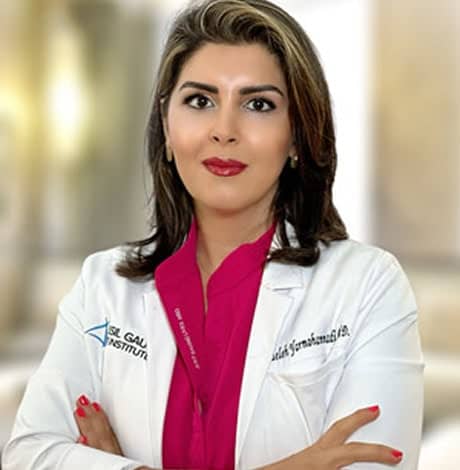
The AAO recognizes several distinct subspecialties within eye care, including glaucoma, retinal issues, oculoplastics, and cornea and refractive surgery. While general ophthalmologists are perfectly capable of handling standard eye care, complex or vision-threatening diseases are best managed by fellowship-trained experts.
At the Assil Gaur Eye Institute (AGEI), for example, the medical team covers a comprehensive spectrum of specialized eye health:
- Dr. Assil and Dr. Gaur are nationally recognized surgeons focusing on LASIK, premium cataract surgery, and comprehensive glaucoma care.
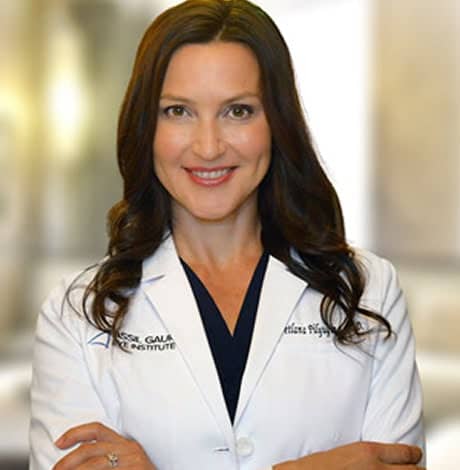
- Dr. Pilyugina serves as the team’s dedicated retina specialist, managing serious conditions like diabetic retinopathy, macular degeneration, and retinal tears.
- Dr. Adele specializes in oculoplastics, focusing on precise eyelid surgeries, orbital conditions, and aesthetic procedures around the eyes.
AEGI’s multi-faceted approach means the same healthcare practice can safely guide you from start to finish.
Consider what this looks like in practice. Patients like Dwyane Wade have trusted AEGI for procedures spanning multiple subspecialties, from the advanced Eagle Vision LASIK to ocular surface surgery, demonstrating the value of having a full spectrum of expertise within a single, coordinated team.
Call now or book your appointment online.
Evaluating Technology and Surgeon Volume
Because the structures of the eye are measured in microscopic fractions of a millimeter, advanced technology directly influences your final surgical outcome. High-quality eye centers distinguish themselves by explicitly stating the modern diagnostic and laser platforms they use.
- When researching LASIK, ask whether the surgeons use modern wavefront-guided or topography-guided laser platforms (and which specific platform they use) to correct astigmatism, rather than relying on outdated standards.
- When researching cataract surgery, ask whether the practice utilizes femtosecond laser-assisted surgical techniques. You should also look at the variety of intraocular lenses (IOLs) they offer. A practice that limits you to only one or two options, rather than a full range of premium multifocal and extended depth-of-focus lens implants, restricts your potential visual outcome.
Alongside technology, always ask about surgical volume. Clinical research shows that greater surgical experience is directly associated with better patient outcomes. A specialist who performs hundreds of a specific procedure every year (such as cataract surgery) maintains a sharper skill set than a doctor who only performs a few dozen. Don’t be shy about asking how many procedures of your specific type a surgeon performs annually.
Investigating reviews and documented outcomes

While online star ratings on Google or Healthgrades offer insight into the general patient experience, you need to read the actual review text. Look for specific details: Do patients name their surgeons? Do they describe the thoroughness of their outcomes? How did the staff handle unexpected questions or complications? And if the practice publishes in-depth patient stories, find patients who are on a journey similar to yours and read about their experiences.
Also consider the number of authentic, four- and five-star reviews. A practice with thousands of patients like Assil Gaur Eye Institute signals something real about patient experience.
Genuine, documented patient stories carry significant weight—especially when a patient’s career depends on split-second visual precision. For instance, when LeBron James chose AGEI for his EagleVision LASIK, it was a decision based purely on track record and trust. As he noted, “I wasn’t nervous at all… I knew I was going to the very best.” That level of confidence in a practice speaks directly to the quality of care on offer.
Similarly, Academy Award-winning actress Marlee Matlin trusted AEGI for critical, vision-saving surgery that successfully preserved her ability to perform on stage and screen.
These aren’t marketing anecdotes. They’re documented outcomes from patients whose livelihoods depend on their vision and who had every resource available to choose any practice in the world.
What questions should you ask at your first consultation?
You should treat your first consultation like a vision care interview. The highest quality surgeons will be transparent, highly detailed, and welcoming of your questions. If a doctor gives vague answers or tries to rush you through the appointment, take it as an important warning sign regarding how they’ll communicate throughout your patient care.
Key questions to ask before any surgical procedure include:
- How many times have you personally performed this specific procedure?
- What is your personal complication rate, and how does it compare to published benchmarks?
- What FDA-approved technology will you use for my eye problems, and why did you choose that platform over alternatives?
- What are the realistic best-case and worst-case vision outcomes based on my unique eye measurements?
- What does my recovery roadmap look like?
Additionally, make sure to clarify exactly who is on your care team. Ask who will run your preoperative diagnostic tests and who will handle your follow-up appointments. In high-volume environments, post-operative care is often handed off to a completely separate provider. Knowing this up front allows you to set clear expectations for continuity of care.
Call now or book your appointment online.
Why choosing an ophthalmologist in LA is different (and more important) than you think
The smaller the city, the more limited your options. This is not always a bad thing. Sometimes, an abundance of choice, like in Los Angeles, creates a real problem: without a clear framework, patients often default to whoever is closest, whoever advertises most aggressively, or whoever shows up first in a Google search. None of those are reliable quality signals.
The most important shift in thinking we’d encourage you to do is to stop looking for the best ophthalmologist for your current problem. But instead, start looking for the best practice for your eye health over the long term. A practice with deep subspecialty expertise, advanced technology expertise, and a proven track record across multiple procedures can serve you better at every stage of life.
Choosing an Ophthalmologist in Los Angeles FAQs
How do I locate a reliable LASIK or cataract specialist in LA?
Always start by checking for ABMS board certification and confirming that the doctor has completed a fellowship in refractive or anterior segment surgery. From there, look closely at their annual surgical volume, tech platforms, and published case studies. For those seeking LASIK, clinics that offer advanced, proprietary platforms like EagleVision LASIK show a much higher dedication to custom visual outcomes than clinics offering standard LASIK alone. For cataract treatment, prioritize practices that utilize premium IOL variations and femtosecond laser-assisted techniques.
Will insurance pay for my ophthalmologist appointments in Los Angeles?
It depends entirely on your specific policy. Standard, medically necessary care — such as glaucoma treatments or cataract surgery — is typically billed through your primary medical insurance rather than vision insurance. Elective vision correction like LASIK is not covered. If you are using a large employer PPO or a Medicare Advantage plan, always confirm the clinic’s exact in-network status beforehand. In California’s managed care landscape, out-of-network surgical billing can be highly complex and expensive.
Are there any eye clinics in LA that offer advanced diagnostic technology?
Yes, and the technology gap between advanced institutes and standard clinics is vast. Top-tier locations feature an array of in-house diagnostic equipment to assess your eyes with extreme precision without needing to refer you out to a separate imaging center. This diagnostic suite should include:
• Optical Coherence Tomography (OCT): For detailed retinal and optic nerve imaging.
• Corneal Topography: For mapping the surface of the eye before refractive surgery.
• Wavefront Aberrometry: For measuring subtle optical irregularities that basic prescriptions miss.
Practices that offer these tools in-house can complete your eye exam and diagnostic workup more efficiently and with greater precision than those that refer out for imaging.
When evaluating a practice, ask specifically what diagnostic equipment they use for your condition. If a practice claims to treat conditions like dry eye, they should utilize advanced tools like tear osmolarity testing or meibography, rather than relying strictly on a basic slit lamp exam and a basic questionnaire. In-house cutting-edge diagnostics show that a clinic prioritizes accurate medical outcomes over fast patient throughput.
How do I choose the best eye doctor in Los Angeles for a comprehensive exam?
The best ophthalmologists for comprehensive eye exams in Los Angeles are those who combine thorough diagnostic capability with the subspecialty depth to act on whatever they find.
Look for a practice where the comprehensive exam is performed by a board-certified ophthalmologist who has immediate access to in-house diagnostic imaging and an integrated team of surgical specialists. A truly comprehensive exam goes well beyond a basic vision check. It must actively screen for silent, asymptomatic conditions that cause progressive vision loss, including macular degeneration, glaucoma, and diabetic retinopathy.
Choosing a practice with deep clinical capabilities ensures that if an issue is discovered during a routine checkup, you have immediate, continuous access to the exact surgeon who can treat it.

Written by The AGEI Educational Team
Medically Reviewed by Dr. Kerry Assil