SMILE Eye Surgery May Leave You Little to Smile About
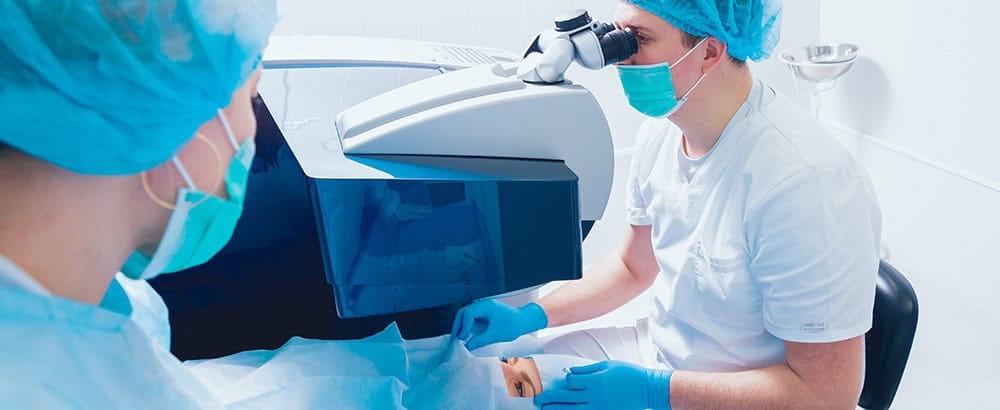
What is SMILE Eye Surgery?
The SMILE (Small Incision Lenticule Extraction) procedure involves reshaping the cornea by removing a small lens (lenticule) from the central corneal layer. The process uses a femtosecond laser and extracts the lenticule through four small incisions on the corneal surface. SMILE patients typically heal within several days.
The net result, as is the case with LASIK, is that the cornea is reshaped to correct the refractive (or focusing) errors in your vision.
Who Is a Good Candidate for SMILE Eye Surgery?
Once you have a sense of which procedure might suit your lifestyle, the next practical question is whether your eyes actually qualify. SMILE has a fairly specific candidacy profile, and not everyone who wants it will be approved for it.
Generally speaking, you may be a good candidate for SMILE if you meet criteria like these:
You are at least 22 years old with a stable prescription for at least one to two years
You have myopia (nearsightedness) in the range of roughly -1.00 to -10.00 diopters
You have mild to moderate astigmatism, typically up to about -5.00 diopters
Your corneas are thick enough and healthy enough to support the procedure
You do not have active eye disease, keratoconus, or significant dry eye
One important limitation worth knowing: SMILE is not currently approved for farsightedness (hyperopia). If you rely on glasses or contacts primarily for reading or distance vision caused by hyperopia, SMILE is simply not an option for you at this time.
It is also worth noting that because SMILE cannot be easily repeated if the initial correction falls short, precision in patient selection matters enormously. That 11% astigmatism undercorrection rate mentioned earlier is a real consideration for anyone with significant astigmatism.
If you are unsure whether you qualify for SMILE or another advanced procedure, a complimentary evaluation with a world-class surgical team is the smartest first step toward finding the vision correction solution that is truly right for you.
What to Expect During the SMILE Procedure
If you are seriously considering SMILE LASIK, knowing exactly what happens on procedure day can help you feel confident walking through the door. Here is a straightforward look at the experience from start to finish.
Before the procedure: You will arrive at the surgical suite with clean eyes, free of contact lenses, makeup, and lotions. Your surgeon will review your pre-operative measurements one final time and administer numbing eye drops so you stay comfortable throughout. The entire visit typically takes about two hours, though the laser treatment itself lasts only a few minutes per eye.
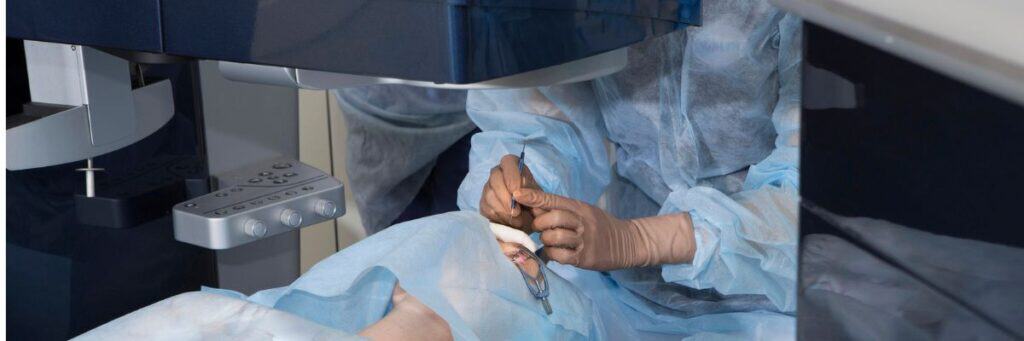
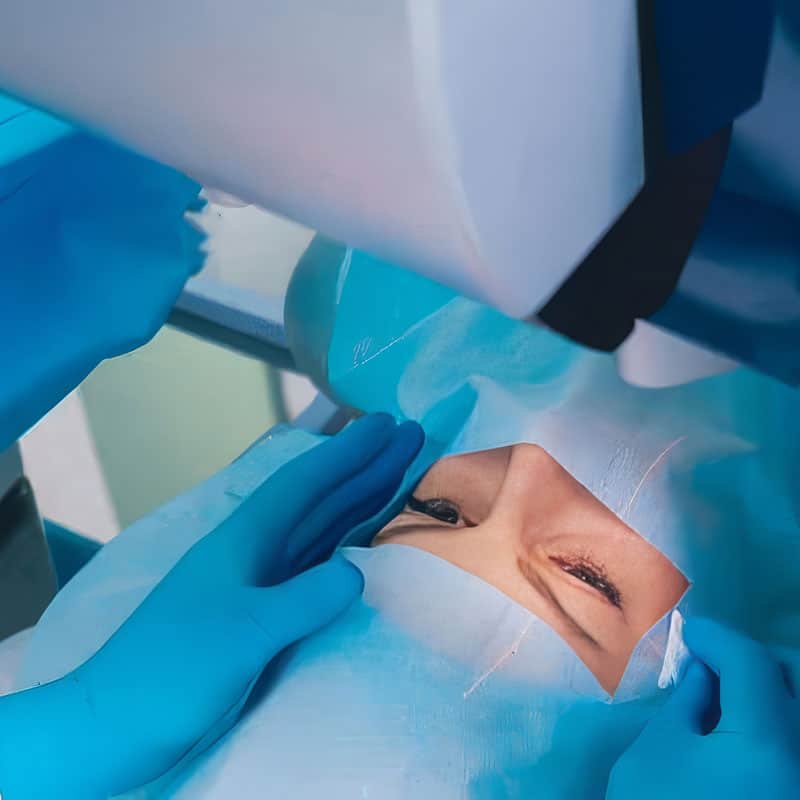
During the procedure: You will lie back under the laser system while a gentle suction device holds your eye steady. The femtosecond laser then creates a thin, disc-shaped layer of tissue called a lenticule just beneath the surface of your cornea, along with a small arc-shaped incision. Your surgeon carefully extracts the lenticule through that tiny opening, reshaping the cornea to correct your prescription. Most patients feel mild pressure but no pain, and the active laser time is typically around 25 to 30 seconds per eye.
Immediately after: Your vision may appear hazy or slightly blurred right away, which is completely normal. You will rest briefly, receive a post-operative exam, and head home with a friend or family member driving. Protective eyewear is recommended for the first day. Most patients notice meaningful vision improvement within 24 to 48 hours, though full clarity can take a few days to settle in.
Curious how this compares to the precision and proven track record of advanced LASIK options? A complimentary evaluation at Assil Gaur Eye Institute can help you decide which approach is right for you.SMILE Eye Surgery Recovery: What to Expect
How is SMILE laser eye surgery different from LASIK?
One critical difference between SMILE and the LASIK procedure is that SMILE can ONLY correct simple forms of nearsightedness (myopia). SMILE cannot correct farsightedness, significant astigmatism, high nearsightedness, or other vision deficits commonly known as Higher-Order Aberrations. These can only be corrected using more advanced LASIK laser vision correction technology.
How does LASIK work?
LASIK (Laser-assisted in situ keratomileusis) differs from SMILE in that it uses two different lasers to create a more precise outcome. First, a femtosecond laser forms a microscopically thin hinged flap from the outer (epithelial) surface of the cornea. The corneal flap is then folded back to expose underlying corneal tissue (the stroma). Next, an excimer laser precisely sculpts the stroma using gentle UV rays so the cornea can focus light more precisely.
A sophisticated computer program uses space-age technology to measure both the topography and refractive error of over 1200 zones in the cornea to create a unique surgical plan for each eye. This computer program also guides the excimer laser. The corneal reshaping procedure takes under one minute per eye, after which the flap is gently settled back into place and heals on its own.
Visual recovery from LASIK is much quicker than with SMILE. Most patients are comfortable enough to return to work the next day instead of the two or three days typical of SMILE patients.
How do SMILE outcomes compare to LASIK?

Research studies comparing SMILE outcomes to those of wavefront-guided LASIK demonstrate that SMILE does not provide better long-term visual and refractive (corrective) outcomes. That’s because only wavefront-guided LASIK is able to address what are known as higher-order aberrations (HOAs). HOAs are optical abnormalities responsible for halos, glare, starbursts, and poor night vision.
In fact, 3% of SMILE patients undergo visual enhancement procedures within two years of their initial surgery, and most of these are due to under-correction. During FDA clinical trials in 2016, fewer patients achieved 20/20 vision following SMILE surgery than after undergoing LASIK surgery.
Since SMILE’s introduction, research has shown that undercorrection occurs in 11% of patients with astigmatism who undergo SMILE procedures. This may be because SMILE technology lacks the iris registration capacity found in today’s 4th-generation wavefront-guided LASIK. Iris registration maintains the laser beam focus precisely on its target regardless of patients’ eye movement during surgery, ensuring more accurate vision correction.
What are the risks associated with SMILE vision correction surgery?
When considering vision correction surgery options, it’s important to weigh the risks versus benefits of each procedure. SMILE is FDA-cleared and generally considered safe, but like any surgical intervention, it carries a distinct risk profile that every informed patient should understand before making a decision. Here are the key risks associated with SMILE procedures, along with the clinical context behind each one.
Debris left behind
When you consider that SMILE involves separating and extracting tissue from the mid-cornea layer, this adds a unique possible complication of incomplete tissue removal. The presence of residual corneal debris can lead to a corneal abrasion, adhesions, and incisional tears. These can require a bandage contact lens and prolonged healing at worst, and irritation and inflammation at best.
If caught early, debris can be flushed out with non-invasive treatments. In extreme cases, it may require a second surgical procedure to remove the debris. Often, debris symptoms are temporary, but they can make recovery prolonged and complicated. This complication is essentially unique to SMILE because the lenticule must be physically extracted through a small incision rather than ablated away, as in LASIK. The surgeon’s technique and experience level play a significant role in how cleanly the tissue separates and exits the eye.
Inflammation
While inflammation is a natural consequence of any invasive procedure, in extreme cases inflammation can make recovery more complicated and prolonged. Because SMILE involves more corneal tissue removal than LASIK, there is greater potential for more post-op inflammation. SMILE patients have to be hyper-vigilant for pain or vision problems. Patients should promptly communicate these symptoms to their eye surgeon to avoid further escalation. Diffuse lamellar keratitis, a specific inflammatory response sometimes called “Sands of the Sahara,” has been documented in SMILE patients and requires prompt steroid treatment to prevent lasting vision disruption. Catching it early is critical, which is why close follow-up with your surgeon in the first week post-op matters enormously.
Clouded vision
Because SMILE is designed to treat nearsightedness, it has a higher probability of resulting in hazy vision symptoms. In fact, patients who undergo SMILE surgery tend to describe issues with blurry vision and light sensitivity at one month post-op more often than those who undergo LASIK. This haziness is largely attributed to the interface created between the lenticule and the surrounding stromal tissue during extraction. While it typically resolves within the first few months, the slower visual clarity timeline can be frustrating for patients who expected sharp vision within the first few days, which is the more common experience with advanced LASIK.
Dry eyes
The most common side effect reported by all laser surgery patients is dry eyes, and SMILE patients are no exception. SMILE ads claim that their patients experience less post-op dry eye than LASIK patients. That’s because the SMILE approach disrupts fewer corneal nerves. This is a greater concern for people with pre-existing dry eye problems.
In fact, there is no difference in dryness symptoms among post-op SMILE and LASIK patients after six months. Today’s 5th-generation LASIK, known as Eagle Vision, involves a unique surgical technique designed to minimize post-op dry eye symptoms. EagleVision LASIK, the proprietary procedure exclusive to Assil Gaur Eye Institute, uses advanced precision technology to preserve more corneal nerve integrity than conventional LASIK approaches, which is one reason it has become the trusted choice of elite athletes and performers who depend on their vision at the highest level.
You can learn more about what makes EagleVision LASIK the gold standard in vision correction and why it consistently delivers enviable outcomes for patients across Los Angeles. For patients who already experience chronic dry eye, neither procedure is ideal without a thorough pre-operative evaluation. At Assil Gaur Eye Institute, every complimentary LASIK evaluation includes a detailed dry eye assessment to ensure the recommended procedure is the right fit for your corneal health.
Over or under vision correction
If too much or too little corneal tissue is removed during a SMILE procedure, it can result in over- or undercorrection, making your vision problems worse than before surgery and necessitating retreatment. In the case of overcorrection, your nearsightedness might be replaced with farsightedness. Clinical data shows that astigmatism undercorrection occurs in approximately 11% of SMILE cases, a meaningful rate that underscores the precision demands of the procedure.
A significant proportion of SMILE patients report impaired visual acuity up to three months post-op. Unfortunately, they must wait until their vision stabilizes before proceeding with enhancement surgery to fine-tune their vision correction. It’s important to note that once you’ve undergone SMILE, this procedure cannot be repeated. You will need to undergo PRK or LASIK surgery to fix any miscorrection issues. That limitation is worth taking seriously. Choosing a procedure that cannot be enhanced with the same technique means your fallback options are more complex and may involve additional recovery time.
Corneal weakening and tensile strength loss
A 2016 meta-analysis of 11 clinical studies comparing SMILE and LASIK outcomes found that corneal sensitivity at one week and six months post-op was higher in patients following SMILE procedures as compared to LASIK. A biomechanical study that measured tensile strength of post-op corneas found that the SMILE corneas lost 40% more of their tensile strength after surgery as compared to LASIK corneas.
Corneal warping (known as ectasia) can result in various vision problems and related complications that can only be corrected with glasses or contact lenses. Extreme cases might require a corneal transplant. SMILE proponents often cite the smaller surface incision as evidence of superior structural integrity, but that argument overlooks total incision length. When you account for the full arc of the internal lenticule cut, the total tissue disruption in SMILE is comparable to or greater than that of a LASIK flap, which is precisely why the tensile strength data tells a different story than the marketing does. For patients with thinner corneas or early keratoconus, this distinction is especially important to discuss with a specialist before committing to any procedure.
The risks of SMILE may outweigh its benefits
SMILE has not been proven to provide better visual outcomes or faster recovery as compared to wavefront-guided LASIK refraction. Therefore, we simply do not recommend it. LASIK offers consistent excellent outcomes. And that’s only one reason why it remains the vision correction procedure of choice among the top ophthalmology practices in the United States.
How to select the best vision correction surgery for me?
This is probably the most important question each patient needs to answer and starts with choosing the best surgeon they can. At Assil Gaur Eye Institute, we pride ourselves in offering the most advanced surgical techniques and state-of-the-art LASIK technology to provide our patients with the safest, most effective procedure designed to optimize their treatment experience and visual outcomes.
Researching refractive surgery can be a daunting task given all of the options currently being marketed and the dizzying claims being tossed about. I can’t stress enough the importance of doing your homework before undergoing an irreversible surgery on your eyes.
We invite you to request your complimentary LASIK consultation at Assil Gaur Eye Institute. Our doctors will closely examine your eyes and ask about your overall health, lifestyle, and vision goals. All of these factors will be taken into account by your surgeon when advising you regarding your eligibility for different vision correction procedures. Our ophthalmologists will also explain how they perform the surgery and answer all of your questions. We want you to feel comfortable that you have the information needed to choose what’s best for you. And, what’s more, that you feel comfortable that you’re in the right hands for any and all of your follow-up needs.
Please call us at (866) 945-2745 or click here to request an appointment or fill out our short LASIK questionnaire.
At AGEI, we take our patients’ safety seriously. That’s why our facility’s Covid-19 patient safety procedures exceed all CDC recommendations.
We are conveniently located throughout Southern California and the Los Angeles area. Our ophthalmologists are available at locations in or near Santa Monica and Beverly Hills. We are conveniently located near WestLos Angeles, Culver City, West Hollywood, Downtown Los Angeles, Marina del Rey, Pacific Palisades, Malibu, Manhattan Beach, Sherman Oaks, and Encino, to name a few.