LASIK: a competitive option for martial arts fighters
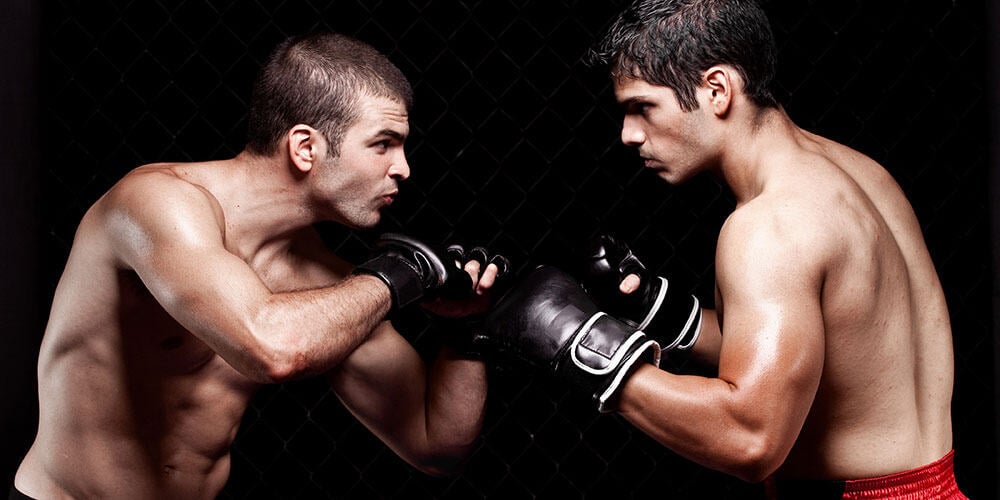
Myths discouraging LASIK for boxers and fighters have been dispelled
What is LASIK surgery?
LASIK, the acronym for Laser-Assisted in Situ Keratomileusis, is the most popular vision correction procedure at the Assil Gaur Eye Institute (AGEI), especially for athletes in high-contact sports.
For those who balk at this notion, just look at AGEI patients like “Sugar” Shane Mosley, former world champion boxer. Or NBA stars LeBron James, Anthony Davis, and Chris Paul. All realize that their eyes are their most prized possessions.
What to know about LASIK surgery and combat sports
Doctors indeed used to recommend that MMA fighters and boxers undergo photorefractive keratectomy (PRK) surgery for eye correction. With LASEK, the laser energy is applied directly to the corneal surface, whereas with LASIK, the outer corneal layer is spared and the laser energy is applied to the middle corneal layer.
So why does boxing after LASIK require such careful consideration? It comes down to how the procedure works. During LASIK, a thin flap is created in the outer corneal tissue, the laser reshapes the underlying tissue, and the flap is then laid back into position. In the early weeks of healing, that flap bonds progressively to the underlying cornea but has not yet reached its full structural integrity. A direct blow to the eye or the surrounding orbital area during this window poses two specific risks: the impact force can displace the flap before it has fully adhered, and the sudden pressure change from a punch landing near the eye socket can stress the healing tissue even without direct contact.
This is why the waiting period after LASIK is not arbitrary. The corneal flap needs time to integrate securely, and the inflammatory response triggered by surgery must fully resolve before the eye can safely withstand the kind of trauma that is routine in boxing and MMA. Returning too soon does not just risk the flap itself. It can also compromise the precision outcomes that advanced vision correction is designed to deliver. The good news is that once healing is complete, the risks associated with boxing after LASIK drop significantly, and most fighters find their performance improves with the sharper, unaided vision that world-class laser correction provides.
The difference between LASEK (PRK) and LASIK
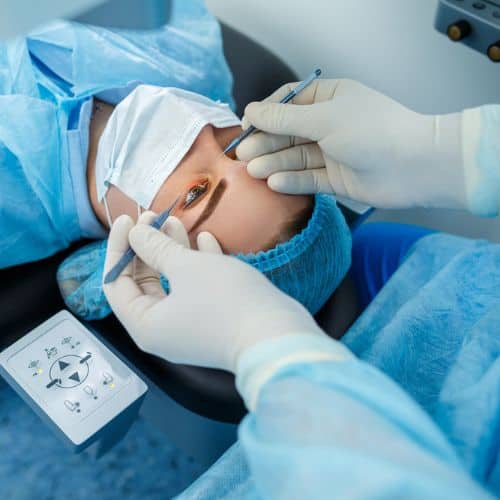
LASIK begins with Dr. Kerry Assil creating a thin flap from the cornea’s outer layer (the epithelium). The flap is peeled back so the laser can sculpt the corneal tissue beneath. Once the LASIK sculpting is done, the flap is repositioned with the cornea intact.
LASEK involves no flap but uses a chemical to gently dissolve the tissue and expose the inner layer of the cornea. The doctor then focuses the laser directly on the cornea to shape the correction.
Conventional wisdom holds that LASEK is preferred for combat sports because fighters do not want to injure the flap. That said, injuries to the LASIK flap are much more unusual than injuries due to blunt force, such as broken bones. So, the worries about injuring the flap appear more theoretical than practical.
For a boxer weighing up the two procedures, the practical trade-off comes down to recovery time versus perceived risk. LASIK delivers faster visual recovery, with most patients seeing clearly within 24 to 48 hours, and fighters can typically return to non-contact training within two weeks. PRK and LASEK, because the surface epithelium must fully regenerate, require a longer healing window of four to six weeks before vision stabilizes, and a full return to sport is generally delayed compared with LASIK.
The flap concern that steers some fighters toward PRK is worth examining honestly. Advanced flap engineering, such as the precision architecture used in EagleVision LASIK, creates a flap that integrates tightly with the surrounding corneal tissue.
Under blunt trauma, the facial bones and orbital rim absorb the majority of impact force before it ever reaches the eye, which is why documented flap dislodgements from sport are genuinely rare in the clinical literature. For most competitive boxers, the longer visual downtime of PRK is a more concrete disadvantage than the theoretical flap risk of LASIK.
The right choice depends on your training schedule, your competition timeline, and a thorough evaluation of your corneal anatomy. A complimentary evaluation at AGEI will determine which procedure gives you the best combination of safety, speed of recovery, and long-term visual performance in the ring.
A sight-correcting procedure for fighters that’s better than standard LASIK?
Yes! EagleVision® is the reason more and more professional and amateur athletes turn to AGEI for eye correction. Indeed, the state-of-the-art procedure was specifically developed for high-contact athletes. Based on Dr. Assil’s decades of experience, customized EagleVision is the next generation of LASIK and was designed in part for people who participate in high-contact sports.
Four main advantages of EagleVision LASIK include:
Scientifically designed flap for the larger treatment area to protect against eye injury.
Sharper post-op visual acuity.
Low incidence of post-op dry eye.
Superior flap stability during high-contact sports.
New flap design adds great durability and lowers injury risk for combat fighters
The customized EagleVision procedure achieves greater flap stability than other LASIK surgeries. This is especially critical for combat fighters and boxers. The scientific flap design allows for a larger treatment area and adds protection against eye injury, promoting quicker healing.
This scientifically designed flap provides greater protection for the eyes, in collaboration with the facial bones, in the event of blunt trauma.
What makes this meaningful for boxing after LASIK is the engineering behind the flap itself. EagleVision uses a precisely controlled flap thickness, typically 90 to 110 microns, which preserves more of the cornea’s structural integrity than thicker flaps created by older microkeratome blades. A thinner, more uniform flap means the residual stromal bed beneath it remains robust, giving the eye greater resistance to deformation under impact.
Clinical research published in peer-reviewed ophthalmology literature has consistently shown that modern femtosecond laser-created flaps adhere more securely than those made with mechanical blades, with dislodgement rates in trauma scenarios measured at well under one percent in studies tracking patients over multiple years.
For combat athletes, this matters because a punch does not land in isolation. The orbital bones surrounding the eye absorb and redirect a significant portion of blunt force, and the EagleVision flap design is engineered with that anatomy in mind. By working in collaboration with the natural protective structure of the facial bones, the flap is less exposed to the shear forces that theoretically pose a risk.
That word “theoretically” is worth emphasizing: flap dislodgement from sport-related trauma, while a legitimate concern in the early recovery window, is considered rare in the peer-reviewed literature once full healing is confirmed, typically around the 12-week mark. This is precisely why surgeons trusted by elite fighters and world-class athletes consistently recommend EagleVision as the premium choice for anyone returning to contact sports.
What is the recovery time like for LASIK and PRK?
There is a large difference in recovery times between PRK and LASIK.
The recovery time for PRK?
After PRK, the doctor ends surgery by placing a contact bandage over your eye to lessen sensitivity to light. Vision will be a bit blurry until the bandage is removed in about a week.
The doctor will prescribe eye drops to keep the eye moist as it heals. Although vision will improve after surgery, it often worsens until the eye heals. Driving is off-limits until vision becomes acute.
Full recovery from PRK takes about a month.
The recovery time for LASIK?
Clearer vision begins directly after LASIK. Many people have near-perfect vision the day after surgery.
There is usually no pain or discomfort as the eye heals. The doctor prescribes medicated eye drops in case there is some burning during the hours after surgery.
Full recovery from EagleVision LASIK generally takes only a few days
Are there sports that require a longer recovery after LASIK than others?
Yes, and the difference comes down to one simple factor: how much direct impact your eyes and face are likely to absorb. Not all sports carry the same risk to a healing cornea, so recovery timelines are not one-size-fits-all.
Low-impact activities like swimming, cycling, and running carry relatively modest risks, and most patients can ease back into those within a few weeks under their surgeon’s guidance. The main concerns there are chlorine exposure, dust, and sweat getting into the eyes rather than blunt trauma to the face.
Contact and combat sports sit at the far end of the spectrum. Boxing, MMA, wrestling, judo, and Brazilian jiu-jitsu all involve a realistic chance of taking a direct hit to the eye or orbital area. That is why surgeons typically recommend waiting a full 12 weeks before returning to full sparring or competition after standard LASIK. Sports like football and basketball fall somewhere in the middle, with most athletes cleared around the six-to eight-week mark, provided they wear protective eyewear during that window.
It is also worth noting that PRK has a longer initial recovery period than LASIK overall, but the surface healing it produces can make it a strong option for fighters who want to minimize long-term flap concerns. Your surgeon will consider your specific sport, training schedule, and eye anatomy before making a recommendation.
If you are unsure where your sport falls on that spectrum, a complimentary evaluation with an AGEI specialist is the best place to start getting a personalized answer.
What physical activities are acceptable after LASIK?
Recovery from LASIK surgery is a process, not an event. The doctor will provide you with specific instructions, but here is a rough estimate of how soon you can resume physical activities.
After 1 week
It is okay to practice Yoga or Pilates, as well as to jog lightly. Remember, listen to your body and don’t push yourself. Be careful when you wipe the sweat from your eyes.
2 to 4 weeks
At 2 weeks, you can expand your activities to using gym weight machines on low settings. The resistance can be increased in a month, as well as lifting free weights.
At four weeks, you can begin swimming, although we strongly recommend wearing protective goggles. Your eyes should have healed enough to use a sauna or steam room without experiencing irritation.
At this time, it is okay to take part in sports such as basketball, football, skiing, and tennis.
After 12 weeks
It is safe to resume boxing and martial arts. You may want to consider eye protection.
Six months
At this point, your eyes should have totally healed. But everyone is different so follow the doctor’s orders.
What precautions should boxers take during LASIK recovery?
Once you’ve had LASIK, the weeks leading back to full training require some real discipline. The good news is that the precautions are straightforward, and following them closely means you’ll be back in the ring with world-class vision before you know it.
The most important rule in the early days is simple: no contact, no exceptions. Even light sparring carries the risk of an accidental blow to the eye, so keep your distance from bag work and stick to footwork drills, shadowboxing, and conditioning during the first few weeks. Your surgeon will give you a precise timeline, but most boxers aim for a minimum of 12 weeks before returning to full-contact training.
Protective eyewear matters more than ever during the transition period. When you do return to non-contact training, wearing approved sports goggles adds a layer of security that lets you focus on your technique rather than worrying about your eyes. It’s also worth talking openly with your coach about your recovery timeline so they can structure your sessions accordingly and make sure training partners know to keep their distance.
Dry eye is a common side effect after LASIK, and the sweat and dust of a gym environment can make it worse. Using prescribed lubricating eye drops before and after training sessions helps keep your eyes comfortable. You can learn more about managing dry eye symptoms during recovery to stay on top of any discomfort early.
Finally, never skip a follow-up appointment. Your AGEI care team will monitor your healing with precision and clear you for each stage of training when the time is genuinely right.
The best choice for laser eye correction surgery is Assil Gaur Eye Institute
At AGEI, you will experience state-of-the-art ophthalmology that brings revolutionary technologies together with experienced, board-certified vision care professionals. Our goal is to help you achieve your best possible vision with our eye care.
Please call 866-945-2745 or visit us online to make an appointment. If you are experiencing any concerning symptoms or require immediate eye care, contact us immediately to determine the best time to schedule an exam.
We are conveniently located for patients throughout Southern California and the Los Angeles area at locations in or near Beverly Hills, Santa Monica, West Los Angeles, West Hollywood, Culver City, Hollywood, Venice, Marina del Rey, Malibu, Manhattan Beach, and DowntownLos Angeles.