Flaxseed Oil for Dry Eyes: What Your Ophthalmologist Wants You to Know
Flaxseed oil is one of the most popular natural remedies for dry eyes, but most people take it in a way that limits how much their eyes can actually use. If you’ve recently had LASIK surgery, or you’re planning to, this gap matters more than you might think.

Post-LASIK dry eye is one of the most common complaints we hear at Assil Gaur Eye Institute. Patients who sailed through surgery sometimes find themselves reaching for artificial tears weeks later, wondering why their eyes still feel gritty or fatigued. Many have already started taking flaxseed oil. Some are getting real relief. Others aren’t – and the reason almost always comes down to the type of omega-3 their body can actually convert and use at the ocular surface.
This article explains exactly how flaxseed oil interacts with your tear film, why the ALA-to-EPA conversion gap matters for your results, and when it’s time to move beyond supplements to advanced dry eye care. You’ll learn how flaxseed oil’s omega-3 fatty acids support tear film quality and reduce ocular surface inflammation, how it compares to fish oil for post-LASIK patients, and which patients are most likely to benefit versus those who need clinical intervention sooner.
If you’re evaluating your vision correction options and want to understand how dry eye factors into that decision, our Eagle Vision LASIK page explains how we screen and prepare patients to minimize post-surgical dryness from day one.
What Is Flaxseed Oil and How Does It Help Dry Eye?
Flaxseed oil is pressed from flax seeds and is one of the richest plant-based sources of alpha-linolenic acid (ALA), an omega-3 fatty acid. ALA helps reduce systemic inflammation, and because dry eye disease is fundamentally an inflammatory condition of the ocular surface, the connection makes clinical sense.
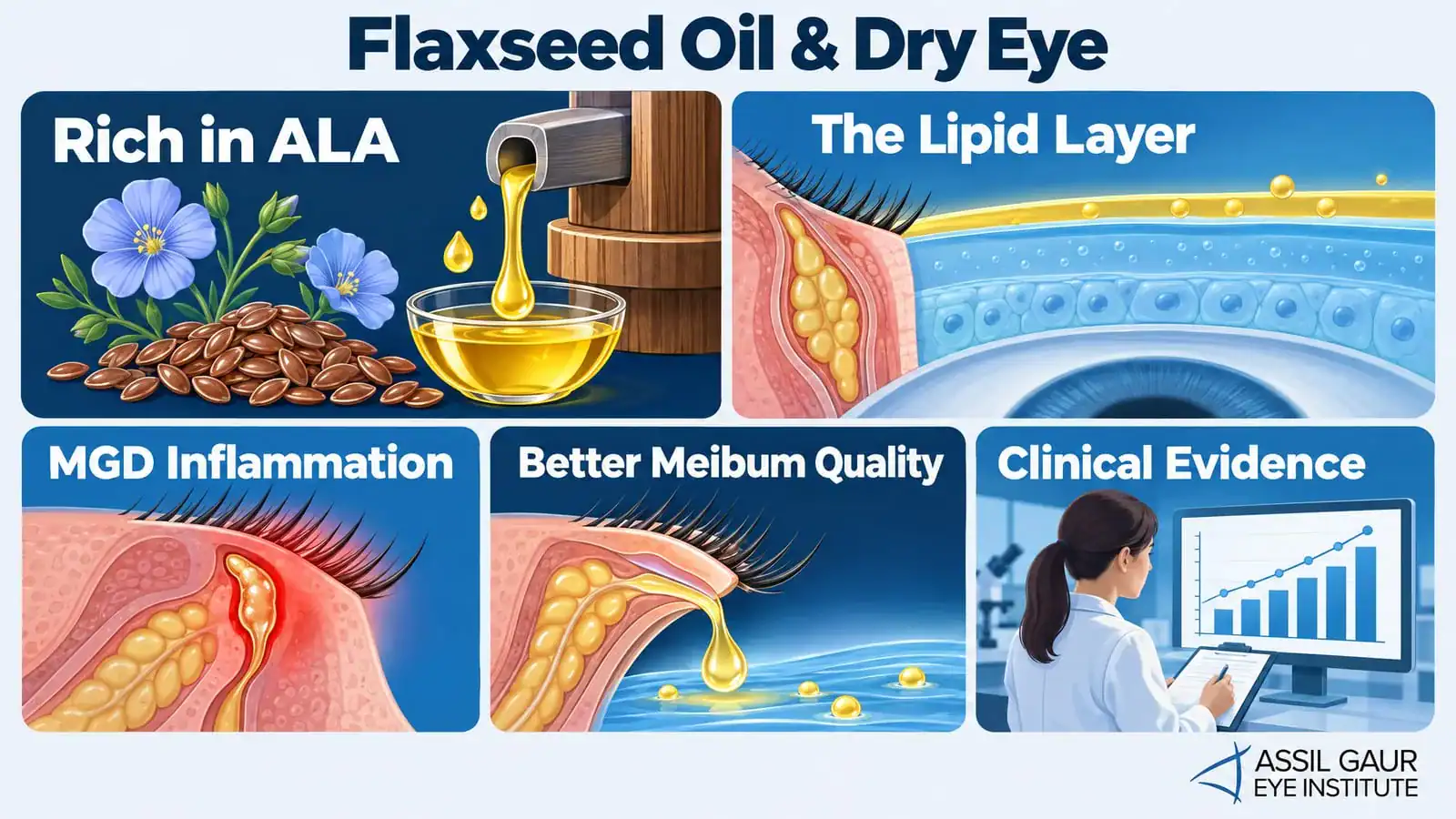
Your tear film has three layers: a mucin layer, an aqueous layer, and a lipid layer on top. The lipid layer, produced by the meibomian glands along your eyelid margins, is what prevents your tears from evaporating too quickly. When those glands are inflamed or blocked – a condition called meibomian gland dysfunction (MGD) – the lipid layer thins, tears evaporate faster, and you get the classic symptoms: burning, grittiness, light sensitivity, and blurred vision that clears when you blink.
Omega-3 fatty acids, including ALA from flaxseed oil, help reduce the inflammatory signaling that drives MGD. They also support the production of higher-quality meibum (the oil secreted by meibomian glands), which directly improves tear film stability. A published clinical study by Nadeem et al. on ResearchGate found that flaxseed supplementation produced measurable improvements in mild-to-moderate dry eye symptoms, including increased tear production and reduced ocular surface inflammation markers.
Flaxseed Oil vs. Fish Oil for Dry Eye – Key Differences
Both flaxseed oil and fish oil are omega-3 sources, but they are not interchangeable for dry eye treatment. The distinction matters most for patients managing post-LASIK dry eye, where the inflammatory response is acute, and the tear film needs support quickly.

Fish oil delivers EPA (eicosapentaenoic acid) and DHA (docosahexaenoic acid) directly. These long-chain omega-3s are used at the cellular level to modulate inflammation and support meibomian gland function. Flaxseed oil delivers ALA, which your body must first convert into EPA and DHA before it can be used the same way.
That conversion step is where most people lose ground.
ALA vs. EPA/DHA: Why the Type of Omega-3 Matters
ALA is an essential fatty acid, meaning your body cannot make it – you have to get it from food or supplements. But “essential” doesn’t mean “immediately usable.” The enzymes that convert ALA into EPA and DHA are slow, competitive (they also process omega-6 fatty acids), and highly variable between individuals.
Research published through the National Institutes of Health indicates that the human body typically converts less than 10% of dietary ALA into EPA, and less than 1% into DHA. For a patient with active post-LASIK dry eye who needs meaningful anti-inflammatory support at the ocular surface, that conversion rate can be a real limiting factor.
This doesn’t mean flaxseed oil is useless. It means the dose needed to deliver the same EPA/DHA as fish oil is substantially higher, and the timeline to symptom relief is longer. For patients who are vegan, vegetarian, or allergic to fish, flaxseed oil remains a valid and clinically supported option – but expectations need to be calibrated accordingly.
Conversion Efficiency in the Body
Several factors affect how efficiently your body converts ALA to EPA and DHA. Age, sex, genetics, and the omega-6-to-omega-3 ratio in your overall diet all play a role. Women tend to convert ALA more efficiently than men, likely because estrogen influences the conversion enzymes. People eating a diet high in processed foods and vegetable oils (which are rich in omega-6) have a more competitive enzymatic environment, meaning less ALA gets converted.
For post-LASIK patients specifically, this matters because the corneal nerves that regulate tear secretion are partially disrupted during the laser procedure. That disruption typically resolves within three to six months, but during that window, the tear film is more vulnerable. Getting adequate EPA and DHA to the ocular surface during this period supports faster recovery of the tear film’s lipid layer.
In our experience at AGEI, patients who supplement with a combination of flaxseed oil and a direct EPA/DHA source tend to report faster symptom improvement than those relying on flaxseed oil alone. The combination approach addresses both the systemic inflammatory load (where ALA contributes) and the immediate ocular surface need (where EPA/DHA acts directly).
Who Should Choose Flaxseed Oil (Vegan and Vegetarian Patients, Fish Allergies)
Flaxseed oil is the right primary omega-3 source for patients who cannot or choose not to take fish oil. Vegan and vegetarian patients, and those with fish or shellfish allergies, can achieve meaningful dry eye support through flaxseed oil – the key is using a higher dose and being patient with the timeline.
A typical starting dose for dry eye support is 1,000 to 2,000 mg of flaxseed oil daily, though some clinical protocols use up to 3,000 mg for moderate-to-severe symptoms. Algae-based omega-3 supplements are another excellent option for this group: they deliver EPA and DHA directly (algae is where fish get their omega-3s in the first place) without the ALA conversion bottleneck.
For patients who want a topical option alongside oral supplementation, products like Refresh Optive Mega-3 use a flaxseed oil-based emulsion in the drop itself, delivering lipid support directly to the tear film surface. This mechanism differs from oral supplementation and can provide faster symptomatic relief while the systemic anti-inflammatory effects of oral omega-3s build over weeks.
Who Benefits Most – and Who Should Skip Straight to Professional Dry Eye Treatment
Flaxseed oil is most likely to help patients with mild-to-moderate evaporative dry eye driven by MGD, particularly those whose symptoms are intermittent rather than constant. If your eyes feel worse at the end of the day, in air-conditioned environments, or after prolonged screen use, that pattern is consistent with evaporative dry eye – and omega-3 supplementation is a reasonable first-line addition to your routine.
Patients who should move directly to professional evaluation by an optometrist or ophthalmologist include those with severe or worsening symptoms despite supplementation, those with visible corneal staining on slit-lamp exam, those with a history of autoimmune conditions (like Sjogren’s syndrome or rheumatoid arthritis), and anyone whose dry eye is interfering with daily function or vision quality.
Call now or book your appointment online.
Flaxseed Oil and LASIK: What Patients Considering Vision Correction Should Know
Is flaxseed oil good for dry eyes after LASIK?
Yes, with important nuance. Flaxseed oil can support tear film recovery after LASIK by reducing the ocular surface inflammation that drives post-surgical dryness. However, because of the ALA conversion limitation, it works best as part of a broader protocol that may include artificial tears, warm compresses, and in some cases, prescription anti-inflammatory drops or punctal plugs.
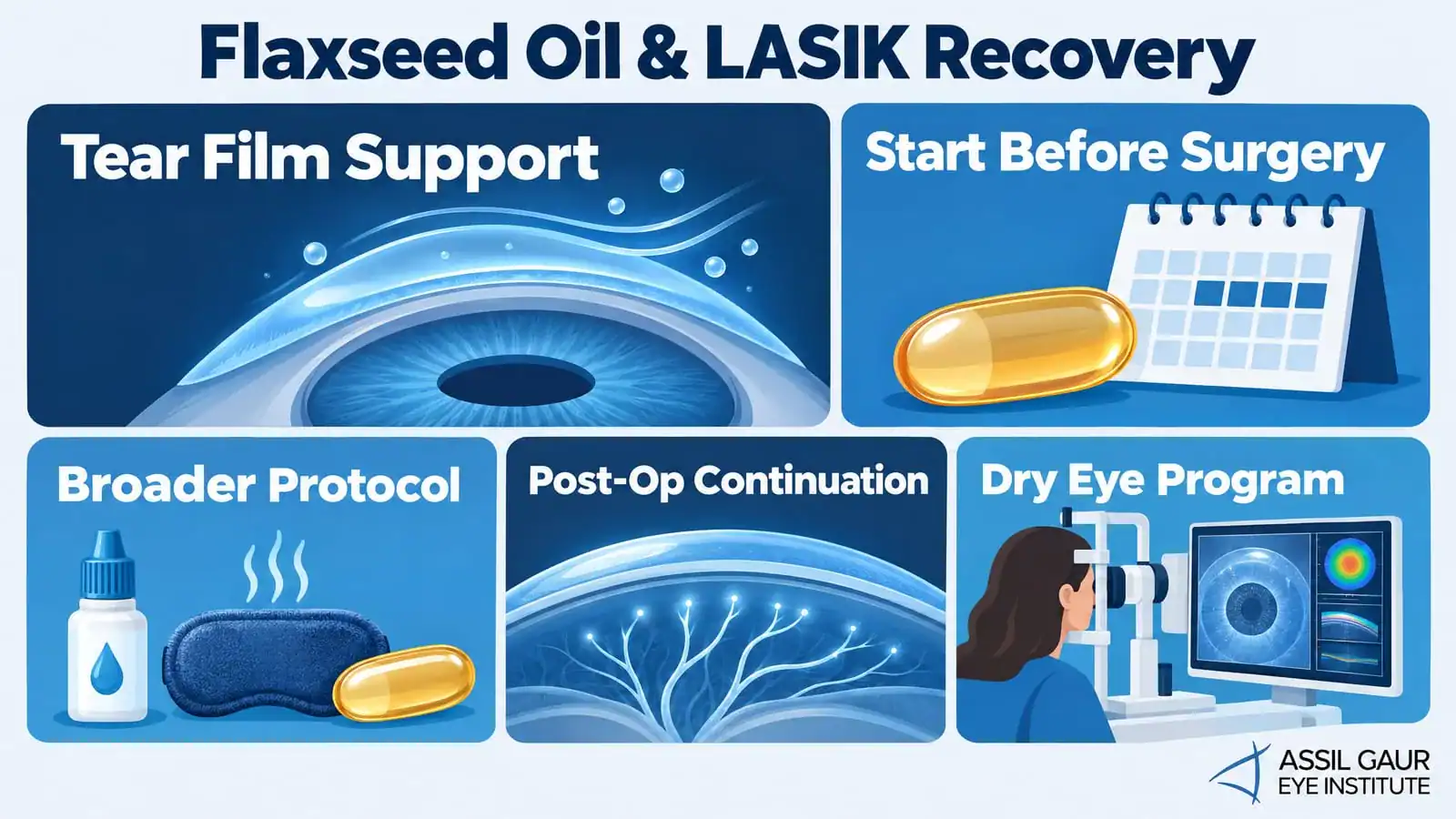
At AGEI, we typically recommend that patients begin omega-3 supplementation at least four weeks before their Eagle Vision LASIK procedure. Building systemic omega-3 levels before surgery gives the tear film a better baseline for recovery. Post-operatively, we continue supplementation for at least three months, which aligns with the typical timeline for corneal nerve regeneration.
LeBron James, who underwent Eagle Vision LASIK at AGEI, described his experience simply: “I wasn’t nervous at all… I knew I was going to the very best.” That confidence comes from knowing every aspect of surgical preparation – including tear film health – has been addressed before the laser ever touches the cornea.
For patients who are not yet LASIK candidates due to dry eye severity, we offer a structured dry eye treatment program to bring the ocular surface to a healthy baseline before surgery is considered. Learn more about how omega-3 fish oil affects dry eye and LASIK outcomes in our dedicated resource.
What the Research Says About Flaxseed Oil and Tear Production
The clinical evidence for flaxseed oil in dry eye treatment is encouraging, particularly for mild-to-moderate cases. The Nadeem et al. study found statistically significant improvements in Schirmer’s test scores (a measure of tear production) and tear break-up time (TBUT) in patients who supplemented with flaxseed over 12 weeks. TBUT is especially relevant for post-LASIK patients because it directly measures how quickly the tear film destabilizes between blinks.
The American Academy of Ophthalmology notes that evidence supports omega-3 supplementation in dry eye management, though the FDA emphasizes that the quality and type of omega-3 source affect outcomes. This matches what we see clinically: patients taking high-quality, cold-pressed flaxseed oil in adequate doses tend to report better results than those taking low-dose or oxidized supplements.
One practical note: flaxseed oil oxidizes quickly. Always store it in the refrigerator, buy in small quantities, and check the expiration date. Rancid flaxseed oil not only loses its anti-inflammatory benefit – it may actually increase oxidative stress at the ocular surface.
Anti-Inflammatory Foods That Complement Flaxseed Oil
Supplementation works best when it’s supported by an overall anti-inflammatory diet. Foods that complement flaxseed oil’s effects on the ocular surface include fatty fish (salmon, sardines, mackerel), walnuts, chia seeds, and dark leafy greens rich in lutein and zeaxanthin. These nutrients support both the tear film and the overall eye health that underpins long-term visual quality.
Conversely, a diet high in refined carbohydrates, trans fats, and omega-6-heavy vegetable oils actively competes with omega-3 conversion and increases systemic inflammation. For post-LASIK patients trying to optimize their recovery, reducing processed food intake during the first three months post-surgery is a practical step that costs nothing and supports everything else you’re doing.
Staying well hydrated also matters more than most patients realize. Dehydration reduces aqueous tear production, and no amount of omega-3 supplementation compensates for a chronically under-hydrated tear film.
When Flaxseed Oil Isn’t Enough: Advanced Dry Eye Care at Assil Gaur Eye Institute
Flaxseed oil is a useful tool. It is not a treatment for moderate-to-severe dry eye disease, and it is not a substitute for clinical evaluation when symptoms persist or worsen. At Assil Gaur Eye Institute, our dry eye evaluation goes well beyond a symptom questionnaire.
We use advanced imaging to assess meibomian gland structure, measure tear osmolarity, evaluate corneal staining patterns, and identify the specific dry eye subtype driving your symptoms. That distinction matters because aqueous-deficient dry eye and evaporative dry eye require different treatment approaches. Treating the wrong subtype with the wrong intervention – including the wrong supplement – is why so many patients spend months getting partial relief.
If you’ve been managing dry eye symptoms on your own and aren’t getting the relief you need, or if you’re preparing for LASIK and want to optimize your tear film first, please call (866) 945-2745 or make an appointment online. The right diagnosis is the first step toward genuinely comfortable, clear vision.
We are conveniently located for patients throughout Southern California and the Los Angeles area, including Beverly Hills, Santa Monica, West Los Angeles, West Hollywood, Culver City, Hollywood, Venice, Marina del Rey, Malibu, Manhattan Beach, and Downtown Los Angeles.
Call now or book your appointment online.
Frequently Asked Questions About Flaxseed Oil and Dry Eye
Does flaxseed oil help with dry eyes?
Yes, flaxseed oil can help with dry eyes, particularly for patients with mild-to-moderate evaporative dry eye driven by meibomian gland dysfunction. Its ALA omega-3 content reduces ocular surface inflammation and supports meibum quality, which stabilizes the tear film’s lipid layer. Clinical studies have shown improvements in tear production and tear break-up time with consistent flaxseed supplements over 8 to 12 weeks, though results vary based on dose, supplement quality, and individual ALA conversion efficiency.
How much flaxseed oil should I take for dry eyes?
Most clinical protocols for dry eye support use 1,000 to 3,000 mg of flaxseed oil daily in capsule form, typically divided into two doses taken with meals to improve absorption. Starting at 1,000 to 2,000 mg is reasonable for mild symptoms; patients with moderate symptoms or those preparing for LASIK may benefit from the higher end of that range. Always choose cold-pressed, refrigerated flaxseed oil and confirm the supplement hasn’t oxidized, as rancid oil loses its anti-inflammatory benefit entirely.
Is flaxseed oil or fish oil better for dry eyes?
For most patients, fish oil delivers faster and more direct results because it provides EPA and DHA without requiring the body to convert ALA first. The human body converts less than 10% of ALA into EPA and less than 1% into DHA, so flaxseed oil requires a higher dose and a longer timeline to achieve comparable ocular surface effects. That said, flaxseed oil is the preferred choice for vegan, vegetarian, and fish-allergic patients, and algae-based omega-3 supplements offer a plant-based alternative that delivers EPA and DHA directly.
Can I use flaxseed oil eye drops for dry eyes?
Yes. Topical products like Refresh Optive Mega-3 use a flaxseed oil-based lipid emulsion to support the tear film’s outer layer directly, which works differently than oral supplementation. These drops can provide faster symptomatic relief by replenishing the lipid layer directly, while oral omega-3s work systemically over weeks to reduce the underlying inflammation driving meibomian gland dysfunction. Using both together is a reasonable approach for patients with moderate evaporative dry eye.
How long does it take for flaxseed oil to help dry eyes?
Most patients notice some improvement in dry eye symptoms within four to eight weeks of consistent daily supplementation, with more significant changes typically appearing at the 10 to 12-week mark. The timeline reflects how long it takes for systemic omega-3 levels to build and for the anti-inflammatory effects to reach the meibomian glands and ocular surface. Patients who don’t notice any improvement after 12 weeks of adequate dosing should seek a clinical evaluation, as their dry eye may have a different underlying cause that supplementation alone won’t address.
What is the best omega-3 supplement for dry eye syndrome?
The best omega-3 supplement for dry eye delivers adequate EPA and DHA in a bioavailable form, is free from oxidation, and is taken consistently at a therapeutic dose. For non-vegan patients, high-quality fish oil supplements or krill oil with at least 1,000 mg combined EPA/DHA per day is generally the most efficient choice. For vegan and vegetarian patients, algae-based omega-3 supplements that deliver EPA and DHA directly are preferable to flaxseed oil alone. Combined formulas like EyeScience Dry Eye Formula, which pair EPA, DHA, and flaxseed oil with additional ocular nutrients, are designed specifically for this purpose.
Can flaxseed oil worsen dry eyes?
In most cases, no. However, rancid or oxidized flaxseed oil can increase oxidative stress at the ocular surface and may worsen symptoms rather than improve them. Some patients also report that very high doses cause gastrointestinal side effects like discomfort or diarrhea, which can lead to inconsistent use. A small subset of patients has dry eye driven by aqueous deficiency rather than evaporative causes, and for them, omega-3 supplementation alone is unlikely to provide meaningful relief regardless of the source. If your symptoms worsen after starting flaxseed oil, stop the supplement and schedule an evaluation with an ophthalmologist.
-
National Institutes of Health, Office of Dietary Supplements. Omega-3 Fatty Acids: Fact Sheet for Health Professionals. https://ods.od.nih.gov/factsheets/Omega3FattyAcids-HealthProfessional/
-
Dry Eye Assessment and Management Study Research Group. n-3 Fatty Acid Supplementation for the Treatment of Dry Eye Disease. New England Journal of Medicine. 2018;378:1681-1690. https://www.nejm.org/doi/full/10.1056/NEJMoa1709691
-
Downie LE, Ng SM, Lindsley KB, Akpek EK. Omega-3 and omega-6 polyunsaturated fatty acids for dry eye disease. Cochrane Database of Systematic Reviews. 2019;12:CD011016. https://www.cochranelibrary.com/cdsr/doi/10.1002/14651858.CD011016.pub2/full
-
Efficacy of Omega-3 Intake in Managing Dry Eye Disease: A Systematic Review and Meta-Analysis of Randomized Controlled Trials. Journal of Clinical Medicine. 2023;12(22):7026. https://www.ncbi.nlm.nih.gov/pmc/articles/PMC10672334/

Written by The AGEI Educational Team

Medically Reviewed by Dr. Lindsay Harris