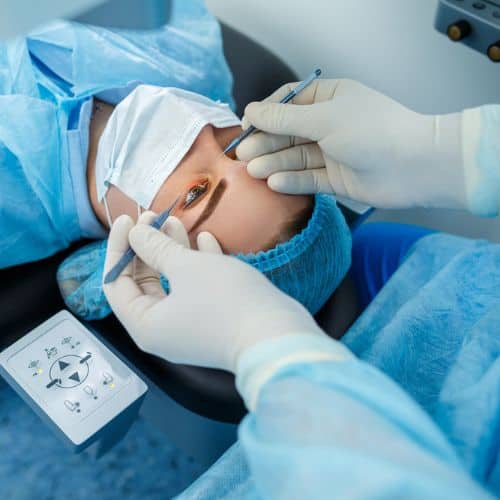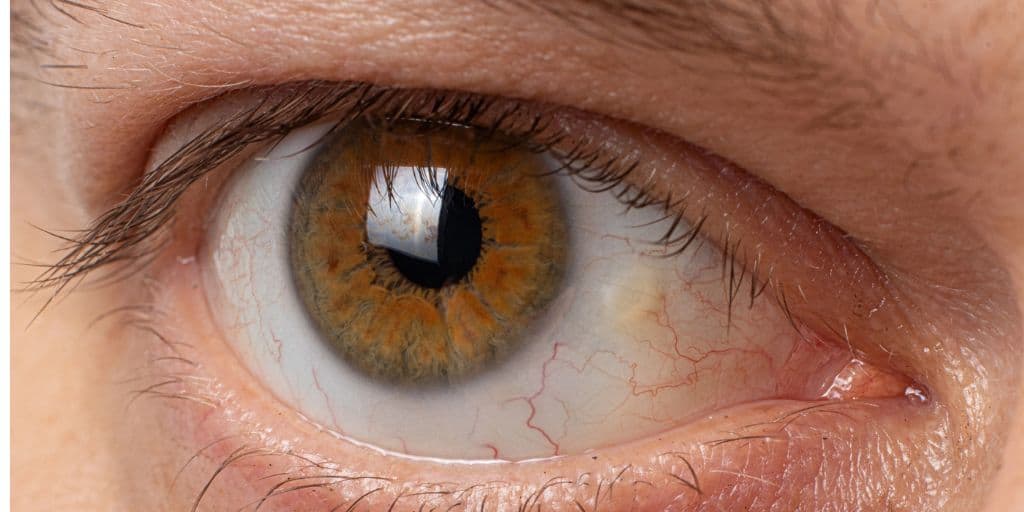
What’s Minimally Invasive Glaucoma Surgery (MIGS)?
MIGS incorporates state-of-the-art minimally invasive glaucoma surgeries that use microscopic instruments to facilitate small incision surgery. It provides a safer option to reduce intraocular pressure (IOP) than traditional glaucoma surgery, with the added benefits of a strong safety profile and faster recovery time. MIGS present a significantly reduced risk of complications like hypotony, infection and scarring.
The goal of MIGS procedures is to improve fluid drainage out of the eye in patients with mild to moderate glaucoma, reducing the eye pressure that damages the optic nerve. Clinical trials have shown that MIGS procedures achieve a significant decrease in eye pressure over periods of up to 24 months, along with a decrease in prescription eye drop usage.
The three types of MIGS
MIGS procedures fall into three different categories according to how they achieve decreased intraocular pressure:
- Improving your eye’s natural drainage system, known as the trabecular meshwork (iStent, Trabectome, and OMNI360). Similar to a traditional tube shunt.
- Redirecting excess ocular fluid outside of your eye (XEN Gel Stent).
- Decreasing the production of ocular fluid within your eye (Endocyclophotocoagulation).
Surgical procedures that decrease eye pressure by improving your eye’s natural drainage pathway
There is a wide range of drainage options for the treatment of glaucoma. These treatment options achieve IOP reduction by increasing the drainage of aqueous humor (ocular fluid) from the eye. These include:
iStent Trabecular Micro-Bypass Stent
The iStent is the smallest implantable device approved for use in the human body. It is a titanium device that is implanted at two different sites in the front of your eye to create two bypasses that increase ocular fluid outflow through your eye’s natural drainage system.
The iStent is typically implanted at the time of cataract surgery. In clinical trials of the next-generation iStent Inject, most patients were completely off glaucoma medications at 23 months. The stent is made of titanium, so you can safely undergo magnetic resonance imaging (MRI) studies without the risk associated with metal implants.
iTrack Canaloplasty
The iTrack repairs the eye’s natural drainage system in two ways: First, it uses a micro-catheter to bore a path through the eye’s clogged natural drainage canal between the anterior chamber and Schlemm’s canal. Next, once the canal has been cleared of debris, a viscoelastic gel is injected into the canal and expands, widening the canal diameter by two to three times its original size. The net result is a greater fluid outflow and decreased eye pressure.
Trabectome
FDA-approved in 2006, the Trabectome is a MIGS device used for the treatment of primary open-angle glaucoma. The Trabectome is an electrocautery device that removes part of the meshwork from your eye’s natural drainage system. By creating a larger opening in the meshwork, this procedure enlarges your eye’s natural outflow channel, thus decreasing internal eye pressure.
The Omni360 Glaucoma Treatment System
This system combines two MIGS procedures in one surgery. First, it creates a new internal channel for shunting fluid from within your eye and directing it out through your eye’s natural drainage system. Secondly, it enlarges the natural opening from your eye’s drainage system to the primary canal through which fluid exits your eye (called Schlemm’s canal).
Goniotomy
Goniotomy lowers eye pressure by opening the eye’s natural drainage pathway at the angle, removing or incising a strip of the trabecular meshwork so fluid can exit more freely. Because it restores outflow through the eye’s own system rather than implanting a device, it can be a good fit for patients who want a stent-free option, and it is increasingly used in adults. Learn more in our guide to goniotomy surgery for adult glaucoma.
Advanced glaucoma technology for redirecting excess ocular fluid
For patients who don’t benefit from or can’t have a drainage procedure, fluid redirection can help reduce eye pressure. One option for redirecting excess ocular fluid is the XEN Gel Stent.
What is the XEN Gel Stent?
This is a stent device made of a soft gel material the size of an eyelash. The goal of the stent is to redirect excess ocular fluid out of your eye.
It is placed through the eyewall without requiring an incision in the conjunctiva (the clear membrane covering the white of your eye). It is designed to stay in your eye permanently. The XEN stent is placed in the front of your eye to shunt excess ocular fluid from within your eye to a subconjunctival space.
Interventions that decrease ocular fluid production
Another way to prevent vision loss from glaucoma and reduce IOP is to decrease ocular fluid production. One way to do that is via Endocyclophotocoagulation.
What is Endocyclophotocoagulation?
Endocyclophotocoagulation, also known as ECP, decreases eye pressure by decreasing overall fluid production. ECP utilizes a miniature camera placed inside the eye to view the ciliary body cells that produce ocular fluid.
These cells are then treated with a very precise laser beam to decrease their fluid production activity, thereby leading to lower intraocular pressure. ECP can be used for both open-angle or angle-closure glaucoma patients and takes about five minutes per eye.
Request Your Consultation
Call now or book your appointment online.
MIGS vs. traditional glaucoma surgery: How they compare
“Traditional” glaucoma surgery usually refers to trabeculectomy and glaucoma drainage devices (tube shunts such as the Ahmed or Baerveldt implants). Both work by creating an entirely new pathway for fluid to leave the eye: trabeculectomy forms a guarded flap and a filtering reservoir under the conjunctiva, while a drainage device routes fluid to a small plate implanted on the eye wall. These procedures are powerful and time-tested, and they remain the right choice for moderate to advanced or hard-to-control glaucoma. They also carry a higher risk profile and a longer recovery than MIGS.
MIGS takes a different approach. Rather than building a new drainage route, most MIGS procedures work through the eye’s own drainage system or use microscopic implants, often through the same incision used for cataract surgery, and typically spare the conjunctiva. The trade-off is that MIGS generally produces a more modest pressure reduction, which is why it is best suited to mild and moderate glaucoma.
MIGS vs. traditional glaucoma surgery
| Feature | MIGS | Traditional glaucoma surgery |
|---|---|---|
| How it works | Uses the eye’s natural drainage system or tiny implants; conjunctiva-sparing | Creates a new drainage pathway (filtering bleb or implanted tube and plate) |
| Invasiveness | Micro-incisional, often combined with cataract surgery | Larger incision, more tissue involved |
| Best suited for | Mild to moderate glaucoma | Moderate to advanced or refractory glaucoma, or when other treatments have not controlled pressure |
| Pressure-lowering power | Modest to moderate | Greater, can reach lower target pressures |
| Recovery | Days to a couple of weeks, fewer restrictions | Several weeks to months, more follow-up |
| Complication profile | Lower risk of hypotony, infection, and scarring | Higher risk, including bleb or tube-related complications |
Who is a candidate for MIGS?
MIGS is not right for every patient, and candidacy is determined by a glaucoma specialist after a complete eye exam. In general, you may be a good candidate for MIGS if you have:
- Mild to moderate open-angle glaucoma that is progressing slowly or is reasonably well controlled but would benefit from lower pressure
- Glaucoma or ocular hypertension alongside a cataract, since many MIGS procedures are performed at the same time as cataract surgery through the same incision
- A desire to reduce your reliance on pressure-lowering eye drops, whether because of side effects, cost, or difficulty keeping up with a daily regimen
- A preference for a lower-risk, faster-recovery option when your glaucoma does not yet require the greater pressure reduction of filtration surgery
Some MIGS procedures, such as goniotomy, the XEN Gel Stent, and ECP, can also be performed on their own rather than only in combination with cataract surgery, which widens the range of patients who may qualify.
Traditional glaucoma surgery may be the better path if you have advanced or rapidly progressing glaucoma, need a very low target pressure, have a glaucoma type that responds better to a drainage device, or have not achieved adequate control from medications, laser, or a previous procedure. Factors such as the openness of your drainage angle and whether you have had prior eye surgery also help determine which options are appropriate.
The only way to know which category you fall into is a thorough evaluation of your glaucoma type, its stage, your eye’s anatomy, and your treatment history. Our glaucoma team will walk you through the options that genuinely fit your eyes.
Which glaucoma surgery is right for me?
During your examination, our eye doctor will review the options available from our large toolkit of procedures. The doctor will review your type of glaucoma, the stage of your glaucoma, eye anatomy, and other medical conditions you may have. Taking all of these factors into account — along with the safety profile of the procedures — our glaucoma expert will choose the best option for you.
MIGS procedures are frequently performed in combination with cataract surgery for the appropriate patients. MIGS performed at the Assil Gaur Eye Institute include iStent, OMNI 360, XEN gel stent, and ECP.
Trust Assil Gaur Eye Institute’s glaucoma specialists
Assil Gaur Eye Institute adheres to the highest standards of ophthalmology and patient care in the country. They have assembled a team of top ophthalmologists from around the country who continue AGEI’s tradition of offering patients the highest quality of specialist eye care and postoperative support.
Our Director of Glaucoma Services, Dr. Avneet K. Sodhi Gaur, is a board-certified, fellowship-trained cataract and glaucoma specialist and a member of the American Academy of Ophthalmology.
She has extensive experience in conventional glaucoma laser treatments and surgical procedures, such as trabeculectomy and glaucoma drainage implants. Dr. Gaur also performs state-of-the-art minimally invasive glaucoma procedures, including iStent, iStent inject, Hydrus, Goniotomy, ECP, OMNI 360, and Xen gel stent.
Request Your Consultation
Call now or book your appointment online.
We are conveniently located for patients throughout Southern California and the Los Angeles area in or near Beverly Hills, Santa Monica, West Los Angeles, West Hollywood, Culver City, Hollywood, Venice, Marina del Rey, Malibu, Manhattan Beach, and downtown Los Angeles.
MIGS FAQs
How long is MIGS recovery?
Most patients are back to their normal routine within a few days to about a week. When MIGS is done alongside cataract surgery, recovery tracks with the cataract procedure: brief blurriness, a short course of drops, and a few temporary restrictions. Your surgeon will check your eye pressure at follow-up visits over the next few weeks.
How does MIGS compare to eye drops?
Drops are usually the first treatment, but they only work if taken consistently, and many patients struggle with the daily routine or side effects. MIGS can lower eye pressure while reducing and sometimes eliminating the need for drops. It is not always a full replacement, since some patients still use one or more medications afterward.
Can MIGS be combined with cataract surgery?
Yes, and it is one of the most common ways MIGS is performed. Several procedures, especially the iStent, are placed during cataract surgery through the same incision, so you get one operation and one recovery. Some MIGS options can also be done on their own when cataract surgery is not needed.
What are the long-term outcomes of MIGS?
Studies show MIGS can produce lasting reductions in eye pressure and medication use, with most published data covering the first one to two years. Results vary by procedure and glaucoma severity. MIGS manages glaucoma rather than curing it, so lifelong monitoring is essential and some patients need further treatment over time.
-
Davids A-M, Pahlitzsch M, Boeker A, Winterhalter S, Maier-Wenzel A-K, Klamann M. Ab interno canaloplasty (ABiC)—12-month results of a new minimally invasive glaucoma surgery (MIGS). Graefe’s Archive for Clinical and Experimental Ophthalmology. 2019;257:1947-1953.
-
Grover D.S., Fellman R.L. Gonioscopy-assisted transluminal trabeculotomy (GATT): Thermal suture modification with a dye-stained rounded tip. J. Glaucoma. 2016;25:501–504. doi: 10.1097/IJG.0000000000000325.
-
Lass J.H., Benetz B.A., He J., Hamilton C., Von Tress M., Dickerson J., Lane S. Corneal endothelial cell loss and morphometric changes 5 years after phacoemulsification with or without CyPass Micro-Stent. Am. J. Ophthalmol. 2019;208:211–218. doi: 10.1016/j.ajo.2019.07.016.
-
Saheb H, Ahmed I. Micro-Invasive glaucoma surgery: current perspectives and future directions.Curr Opin Ophthalmol. 2012;23:96-104.
-
SooHoo J.R., Seibold L.K., Radcliffe N.M., Kahook M.Y. Minimally invasive glaucoma surgery: Current implants and future innovations. Can. J. Ophthalmol. 2014;49:528–533. doi: 10.1016/j.jcjo.2014.09.002.