

Aesthetic Eye Surgery
Revisional Eyelid Surgeryin Los Angeles
in Los Angeles
What is revisional eyelid surgery?
Those unhappy with prior blepharoplasty (lower eyelid surgery or upper eyelid surgery) often seek the expertise of Assil Gaur Institute’s oculoplastic surgeons to correct or revise the undesired outcomes.
Revisional eyelid surgery is highly complex because it’s performed on anatomy that has already been altered and has scar tissue. This poses challenges that only become apparent during surgery. Therefore, consulting a board-certified oculoplastic surgeon specializing in ocular procedures is crucial.
Are you a good candidate for eyelid revision surgery?
Get a Complimentary Surgical Photo Assessment from Dr. Adele!
What are the reasons for eyelid revision surgery?
The most common reasons that patients seek eyelid surgery revolve around dissatisfaction with eyelid position, which can cause:
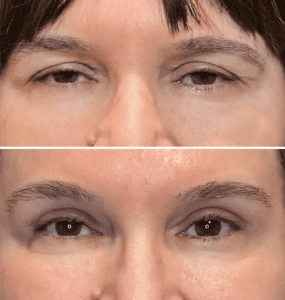
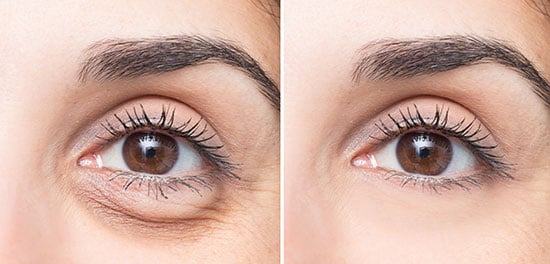
Droopy or baggy eyelids (Under-correction following blepharoplasty surgery)
If not enough upper eyelid skin or excess fat is removed, the upper lid becomes too low or droopy (known as ptosis), and the lower eyelids can develop a baggy appearance under the eyes.
Sunken or hollowed-out eyelid appearance (over-correction following an eyelid blepharoplasty procedure)
The upper eyelid is a very complex structure. If too much skin and tissue are removed from the upper eyelid crease, the eyes can appear hollowed out, or the lower eyelids may seem too low, revealing too much of the whites of the eye (known as scleral show).
One of the most common reasons patients consult us about a revision surgery is that too much tissue was removed in their previous surgery.
Addressing these issues is complex and requires careful planning to achieve the desired results. Our revisions often require volume augmentation of the upper eyelid, with results that are incredibly satisfying to our patients.
Eyelid asymmetry
When a person’s two eyelids are not identical or symmetrical, the result can be a difference in the eyelids’ size, shape, position, or function.
The eyelids can become poorly positioned when too much skin or fat is removed. An asymmetrical, unbalanced, and unnatural appearance can be an unfortunate result. That is when we perform a Blepharoplasty revision to realign everything to restore the previous symmetry.
Visible scarring
A patient might request a surgical procedure for scar revision following a blepharoplasty or brow lift due to noticeable scars and bumps around the incision sites. If scarring is the primary reason for eyelid revision surgery, we can effectively correct this with our scar revision procedures.
Poor blinking or inability to close the eye
If too much tissue is removed (excess skin excision) during an eyelid lift, it can make it hard to close the eyes properly. This inability to blink or close the eyes properly can lead to dry eye symptoms.
Excessive tearing
Excessive eye tearing, or epiphora, is characterized by an overproduction of tears or poor drainage. Excessive tearing can cause blurred vision, sore skin around the eyes, or lead to infection.
Loss of initial surgical results
The natural aging process can cause skin sagging, which can make eyelift surgery results fade, prompting the desire for a touch-up procedure.
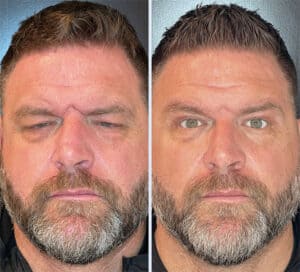
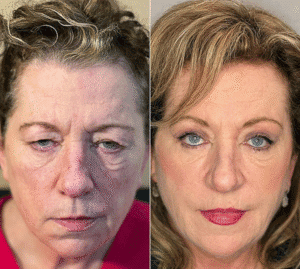
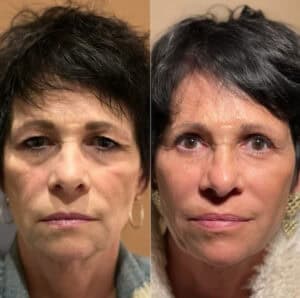
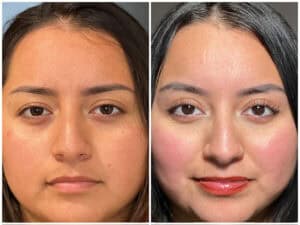
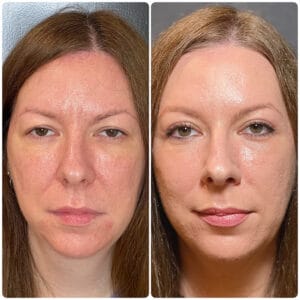
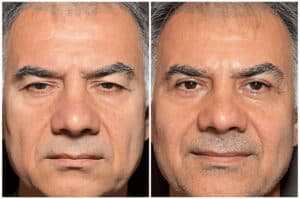
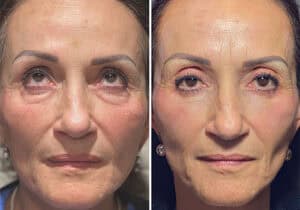
SEE LIFE THROUGH OUR PATIENT'S EYES
REAL LIFE AESTHETIC EYE SURGERY PATIENT STORIES





What happens during a revision blepharoplasty consultation?
During your first meeting for revision blepharoplasty, it is essential to communicate openly about your concerns and expectations. This conversation helps us understand your desired outcomes from the corrective eyelid procedure. The session thoroughly examines your eye region, facial skin, and the underlying tissues. This exam provides our surgeons with a planned approach that won’t compromise your eyes’ health and stability. Additionally, a comprehensive overview of your past medical records will be necessary.
Following this comprehensive evaluation, Dr. Adeleh Yarmohammad will be able to create a personalized surgical plan tailored to your specific needs. The doctor will guide you through what you can realistically expect from the procedure, ensuring that your aspirations align with the achievable results.
To facilitate a well-informed discussion during this session, please provide a detailed account of your prior surgeries and copies of your medical records, including photos taken before and after your initial blepharoplasty. This provides us with a better understanding of your previous surgical outcomes and helps us plan your revision surgery effectively.
Request Your Consultation
Call now or book your appointment online.
Is revision blepharoplasty right for me?
It’s advisable to wait until your post-op swelling has entirely resolved, typically several months after your initial surgery, to see the final result before contemplating further surgery.
You must clearly understand what you hope to achieve with revisional surgery and receive appropriate advice on whether your objectives are feasible and whether additional surgery is the best option for achieving them.
Choosing to undergo revision of eyelid surgery is a highly personal and important decision. Opting for a secondary procedure demands careful consideration and a thoughtful approach.
The first and most important step in considering revision eyelid surgery is consulting with a board-certified oculoplastic surgeon who has extensive experience in revision eyelid procedures, such as Dr. Adeleh Yarmohammad. She is an oculoplastic surgeon, board-certified in ophthalmology, with additional subspecialty training in eyelid, eyebrow, forehead, and midface cosmetic surgery.
What’s the difference between oculofacial plastic surgery and general plastic surgery?
Oculoplastic surgeons are trained to correct not just the appearance of the eye but to do so while preserving or improving the eye’s function – something an ophthalmologist is best qualified to do.
On the other hand, general plastic surgery is a broader field that can involve cosmetic or reconstructive procedures anywhere on the body. This discipline offers a specialized focus on the eyes and surrounding structures, distinct from oculofacial plastic surgery.
Your eyes are one of the most delicate structures in your body. That’s why, when looking for a Los Angeles area surgeon to correct the appearance or function of your eyelids and the structures surrounding your eyes, you want to seek an oculoplastic surgeon like Dr. Adeleh.
As a trained ophthalmologist with a sub-specialty in oculoplastic surgery, Dr. Adeleh Yarmohammad will thoroughly examine your eyes, understand any underlying eye disease, and identify potential problems that might impact the surgical plan -- things that even a board-certified facial plastic surgeon is not trained to do.
Why choose AGEI for your eyelid revision procedure?
Assil Gaur Eye Institute has over three decades of experience treating functional eye problems that affect patients’ vision and eye health, performing cosmetic procedures, and revising surgeries performed elsewhere with unsatisfactory outcomes, including canthoplasty, lower blepharoplasty, upper blepharoplasty, and other reconstructive surgeries.
Among the conditions we treat are excess eyelid skin or fat, drooping eyelids, wrinkles around the eyes, eyelid reconstruction after tumor removal or eye injuries, excessive tearing, revising prior unsatisfactory cosmetic eyelid surgeries, and abnormally turned-in (entropion) or turned-out (ectropion) lid margins.
Read real patient stories about aesthetic eye surgery.
If you would like to schedule a consultation with us in our Beverly Hills office to discuss your concerns about the appearance or function of your eyelids and to learn what treatments might be right for you, please call 866-945-2745 or click here to request an appointment online.
Are you a good candidate for eyelid revision surgery?
Get a Complimentary Surgical Photo Assessment from Dr. Adele!
Eyelid revision surgery FAQs
Will fat grafting be needed during my eyelid revision surgery?
In certain situations, a shortage of skin or other tissues due to previous eyelid surgery may necessitate grafts to correct the problem.
What is ptosis repair eye surgery?
Ptosis correction surgery aims to address the drooping of the upper eyelid by shortening or resectioning the levator muscle. The levator muscle is responsible for elevating the upper eyelid, and by adjusting its length or resecting a portion of it, the surgeon can help restore a more natural and symmetrical eyelid position.
What is eyelid retraction?
Eyelid retraction is when the upper eyelid, lower lid, or both are abnormally high or low, exposing an unusual amount of the eyeball. It can lead to a wide-eyed stare and symptoms of various conditions.
Oculofacial vs. General Plastic Surgery: Key Distinctions
Following your eyelid revision surgery, a procedure also known as secondary blepharoplasty, the immediate post-operative period will involve a few key steps to promote proper healing and comfort.
Immediately after the procedure, your sight may be blurred due to an antibiotic ointment we apply. This ointment helps to keep your eyes moist and prevent infections. Coupled with some prescribed eye drops, it must be used multiple times a day for a duration set forth by your surgeon.
To alleviate any discomfort, over-the-counter analgesics may be utilized. Keeping your eyes dry for the initial 48 hours after surgery is essential. Subsequently, you can cleanse the eye area with mild soap and water, gently patting it dry to avoid disrupting the healing process.
Depending on the specific surgical approach used by Dr. Adeleh, we may employ either dissolvable sutures that dissolve over time or removable ones that require removal after approximately five to ten days. Your surgical plan, including details about your post-operative care, will be explained thoroughly to you before and after your operation.
Since secondary blepharoplasty is performed on an outpatient basis, you can leave our surgery center on the same day. Remember that you must have some to transport you home. You will not be allowed to take yourself home, which is unsafe. But our patients almost always feel well enough to move about by the evening of their surgery or the following morning.
Post-operative swelling, bruising, and puffiness are expected reactions, lasting anywhere from one to four weeks, depending on the procedure specifics and individual patient characteristics. Applying cold compresses to the affected area and maintaining an elevated sleeping position can help reduce swelling. If crusts or scabs form, resist the urge to remove them; they’ll shed naturally.
In the first week following surgery, you should avoid strenuous activities, like vigorous workouts or heavy lifting. Nevertheless, we encourage light, steady walking to maintain mobility and facilitate a smoother return to daily activities.
After two weeks, it’s typically safe to resume wearing makeup and contact lenses. We also recommend wearing sunglasses outdoors to protect your eyes from UV exposure during the healing phase.
Is eyelid revision surgery safe?
Blepharoplasty, whether it is your first surgery or you, unfortunately, require an eyelid revision surgery, is a very complex and meticulous procedure that requires precision and expertise for a successful outcome. We can assure you it is when executed by an expert oculoplastic surgeon like Dr. Adeleh.
We must emphasize that not all cosmetic eyelid surgeons are ophthalmologists and possess the necessary skills and training to perform this complex operation. The required precision makes it a challenging process, especially when corrections or adjustments are needed.
It is crucial, therefore, to entrust your eyelid revision surgery to a seasoned and highly competent professional like Dr. Adeleh. Her extensive training and experience ensure you will receive the desired results. She has a proven track record of success in this field, making her a safe and reliable choice for your surgery.
How much time should I take off from work after eyelid revision surgery?
Patients typically need between 14 and 21 days off from work to recover, depending on the severity of their case. Depending on the nature of their job, most people will be okay to work from home using a laptop 48 hours after surgery.
What happens if you bend over after eyelid surgery?
Also, avoid everyday activities such as lifting heavy items, bending over, or lying flat, which can increase blood flow to your eyes or pressure on your healing lids.
How long do you have to sleep sitting up after eyelid surgery?
Resting with your head elevated in a recliner or with at least two pillows for the first 48 hours after surgery would be best.
How long does the tightness last after eyelid surgery?
This may feel strange or frightening initially, but rest assured that this is an average post-operative effect that should subside with time. Most patients report that tightness after eyelid surgery typically lasts about two weeks, although numbness or a change in eyelid sensation may persist for longer.
What is the fastest way to recover from upper eyelid surgery?
Tips for Rapid Recovery
- Use an ice pack to reduce swelling. Before your surgery, ensure you have comfortable ice packs and plenty of gauze for your recovery.
- Wear sunglasses to protect your eyelids.
- Get more sleep.
- Avoid physical exertion.
- Steer clear of smoking and alcohol.

Written by The AGEI Educational Team

Medically Reviewed by Dr. Adeleh Yarmohammadi