Nevus (Eye Freckle) Removal
Conjunctival Nevus Removalin Los Angeles
in Los Angeles
What is a conjunctival nevus?
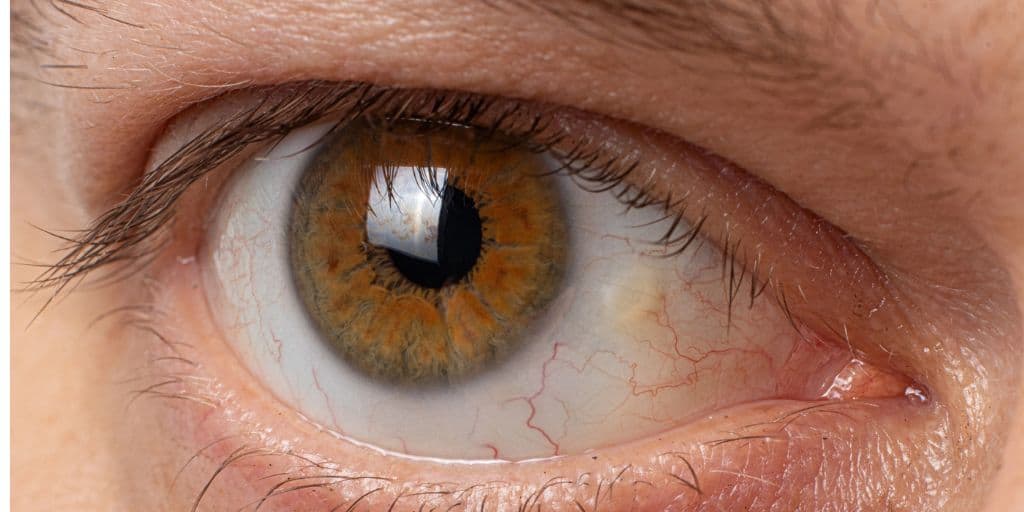
A conjunctival nevus is a spot that looks like a freckle or mole and is usually found on the transparent tissue covering the eye. Nevi (the plural of nevus) can vary from dark brown to yellow, and over time, these spots might become darker or lighter. They are typically located near the iris, which is the colored part of the eye.
Nevi are composed of pigment cells called melanocytes that give color to your skin, hair, and eyes. When multiple melanocytes cluster together, they form a nevus.
They are commonly found in Caucasians because light eyes, fair skin, and people who burn easily when exposed to the sun are also risk factors.

What causes eye freckles?
Large-scale studies have identified a link between prolonged sun exposure and the development of nevi. The American Academy of Ophthalmology (AAO) indicates that ultraviolet (UV) light exposure might play a role in the formation of choroidal nevi.
A family history of nevi does not influence your risk of developing conjunctival pigmentation.
What are the symptoms of conjunctival nevus?
Like freckles anywhere on your body, conjunctival nevi aren’t linked to pain or discomfort. While they usually stay stable, they can grow because of inflammation or hormonal shifts.
Honestly, the most common symptom of an eye freckle for our patients is emotional discomfort or insecurity. Since people often look us in the eye when we speak with them, it is much more noticeable than a freckle on your hand or a mole on the back of your neck.
How worried should I be about an eye freckle?
A nevus is rarely cancerous (conjunctival melanoma), and people are often born with harmless eye nevi (benign melanocytic tumor or lesion). A nevus that develops later in life is typically also harmless, but, like a skin mole, it could develop into eye cancer (called ocular melanoma). Again, though rare, it should be monitored with periodic eye exams.
SEE LIFE THROUGH OUR PATIENT'S EYES
REAL NEVUS REMOVAL PATIENT STORIES



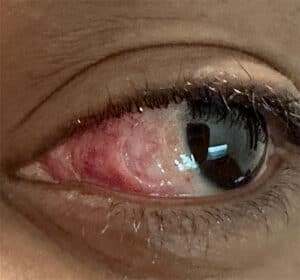
When should you see your eye doctor about an eye freckle (nevus)?
If you notice something that looks like a freckle in your eye that wasn’t there before, you should get it checked by an ophthalmologist. Although it’s likely harmless, your eye care provider will want to examine it closely and continue regular checkups to ensure it doesn’t change.
There could be other issues if you have a nevi and are experiencing:
- Blurry vision or other vision changes.
- Eye floaters or flashing lights.
- Eye pain or discomfort.
- Changes in the size or color of the freckle.
These can be symptoms of retinal detachment. Choroidal nevi can sometimes leak fluid, resulting in abnormal blood vessels, which can lead to retinal detachment and vision loss.
What are the treatments for conjunctival nevus?

Because nevi are painless and don't affect vision, they don’t necessarily require treatment other than periodic observation to monitor for changes in the nevus over time.
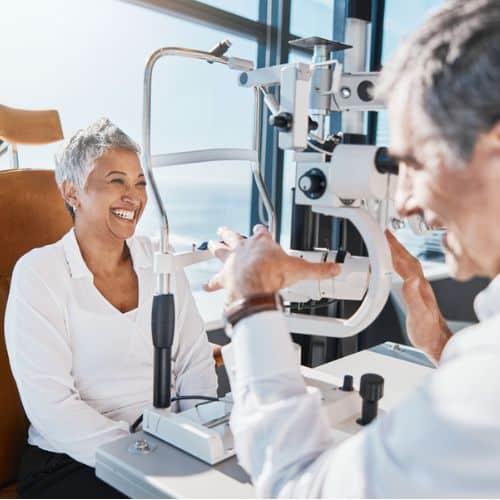
Our doctors will thoroughly examine your eye's front and inside structures, including the retina, the macula, and the optic nerve.
Just as with skin cancer, during your eye examination, your doctor will look for the ABCDE clinical features of moles that warrant close monitoring:
- Asymmetrical shape
- Irregular borders
- Color changes or several colors present
- Diameter that has advanced
- Evolution of the nevi's appearance over time
During your examination, our doctors will direct our highly trained staff to take pictures of the nevus and compare them over time to see if it has changed in size or shape. You may be asked to return to have the nevus rechecked in six months.
If the nevus does not change over a year or two, it is unlikely to be choroidal melanoma. However, our ophthalmologists recommend checking it regularly since it is possible for it to become something serious.
Request Your Consultation
Call now or book your appointment online.
Eye freckle removal surgery

Assil Gaur Eye Institute removes conjunctival nevi for two common reasons:
- If melanoma is suspected: If there are any cancer concerns, our eye doctor will recommend an excisional biopsy, where the pigmented lesion is removed surgically. The removed tissue is sent to a pathology lab to assess the presence of any cancer cells.
- Cosmetic reasons: Thanks to techniques developed by renowned ophthalmologist Dr. Kerry Assil, removing a cosmetic nevus is now a much simpler and gentler procedure than it used to be.
The procedure involves using a very mild thermal brushing technique to extract the pigment from the surface of the conjunctiva. Recovery is typically quick and painless, with no trace of the prior nevus. Unfortunately, because this treatment is considered cosmetic, insurance does not typically cover it.
Why choose AGEI for your eye freckle removal in Los Angeles
The team of ophthalmologists at AGEI has performed thousands of eye freckle removal surgeries and is nationally recognized as leaders in the field, thanks to their proprietary removal techniques.
Our nationally recognized ophthalmologists and eye institutes are leaders in a wide range of ophthalmological conditions, including state-of-the-art LASIK vision correction, retinal treatments, cataract surgery, glaucoma care, macular disease, and, of course, diabetic eye conditions.
This is one reason why Los Angeles Magazine named Assil Gaur Eye Institute one of the Top ophthalmology doctors in Los Angeles year after year.
At AGEI, you will experience a state-of-the-art healthcare facility that combines revolutionary technologies with experienced vision care professionals. Our goal is to help you achieve your best vision and optimal eye health.
Related conjunctival surface conditions treated at AGEI include Pterygium (Surfer's Eye), another growth on the conjunctiva with overlapping UV risk factors. Patients seeking cosmetic improvements to the eye area may also be interested in AGEI's full range of Oculoplastics and Aesthetics procedures.
Read real patient stories about nevus removal surgery.
Request Your Consultation
Call now or book your appointment online.
We are conveniently located for patients throughout Southern California and the Los Angeles area in or near Beverly Hills, Santa Monica, West Los Angeles, West Hollywood, Culver City, Hollywood, Venice, Marina del Rey, Malibu, Manhattan Beach, and Downtown Los Angeles.
Eye Freckle FAQs
Are there different types of nevi?
There are different types of nevi based on where the nevus is located.
- Conjunctival nevus
This type of eye freckle is the conjunctiva, the transparent film covering the front of your eyes. It usually shows up because it appears on the sclera or the white part of your eye. Conjunctival nevi are the common type of nevi. -
Iris nevus and iris freckle
An iris nevus and iris freckles appear in the iris. An iris freckle is smaller than an iris nevus. However, an iris nevus goes deeper into the iris and sometimes can pull the pupil to the side. -
Choroidal nevus
A choroidal nevus occurs in the choroid, the layer of tissue beneath the retina in the back of the eye. The choroid is part of the uvea, the pigmented part of your eye, and includes the iris. Both choroidal nevi and iris nevi are forms of uveal nevi.
What is recovery like after eye freckle removal, and how soon can I return to normal activities?
Recovery is typically quick and comfortable, with no stitches and most patients back to their normal routine within a few days. Mild redness, a gritty feeling, or light watering in the first several days is normal, and your surgeon will give simple aftercare instructions like avoiding eye rubbing and swimming for a short period
Sources
-
Conjunctival Nevi: Clinical Features and Natural Course in 410 Consecutive Patients
https://doi.org/10.1001/ARCHOPHT.122.2.167 -
Conjunctival naevi in Denmark 1960-1980. A 21-year follow-up study
https://www.ncbi.nlm.nih.gov/pubmed/8883545 -
Conjunctival lesions in adults. A clinical and histopathologic review
https://www.ncbi.nlm.nih.gov/pubmed/3301209 -
Subepithelial conjunctival nevus with atypia: Expanding our understanding of a challenging diagnosis
https://www.sciencedirect.com/science/article/pii/S2214330018300300

Written by The AGEI Educational Team

Medically Reviewed by Dr. Kerry Assil
No form shortcode found.