Omega-3 Fish Oil for Eye Health: How It Affects LASIK Eligibility, Cataract Surgery, and Long-Term Vision
Whether you’re preparing for LASIK, recovering from cataract surgery, or simply looking to protect your vision for decades to come, omega-3 fish oil for eye health is a topic your ophthalmologist will almost certainly raise. The research is compelling, and its clinical application is well-established.

Our surgeons at Assil Gaur Eye Institute (AGEI) are trusted by elite athletes, Academy Award-winning performers, and patients who simply want the best care for conditions such as glaucoma, retinal diseases and cataracts, to name just a few. At AGEI, we recognize the importance of high-quality nutritional supplements as an integral part of world-class eye care.
Below, we explain the benefits of omega-3 fish oil for your eyes, how it affects surgical outcomes, and what our team recommends for patients at every stage of their vision journey.
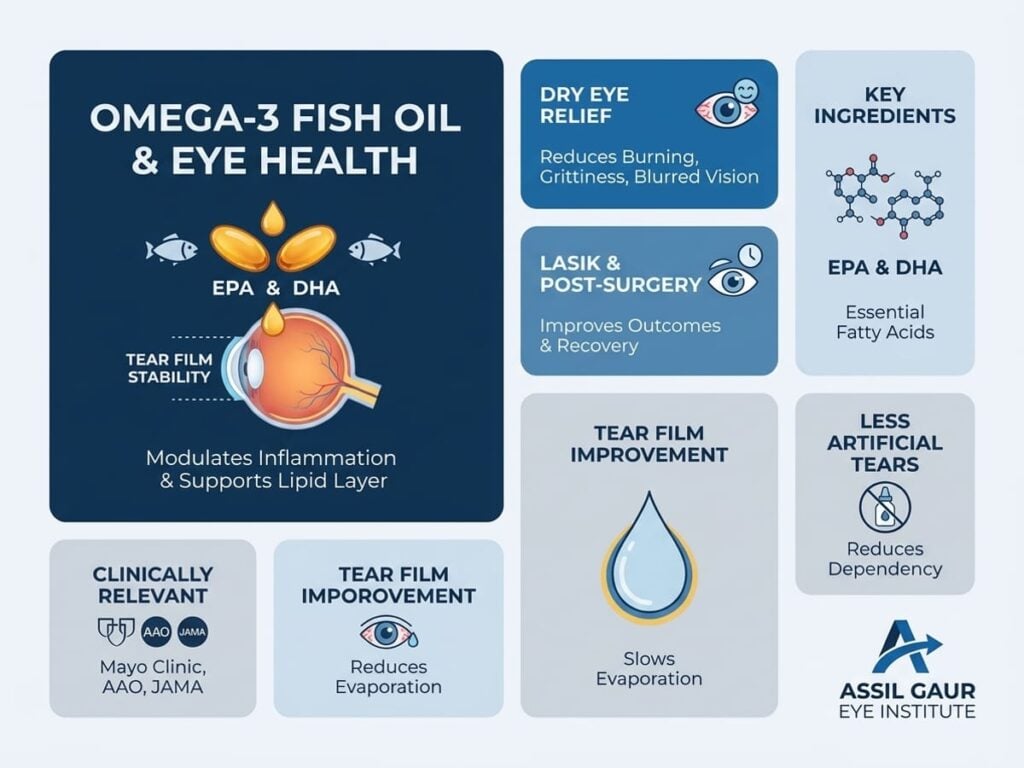
What are omega-3 fatty acids, and why do eyes need them?
Omega-3 fatty acids are essential fatty acids and polyunsaturated fats that the body cannot produce on its own. The two forms most relevant to omega-3 fish oil for eye health, alongside the plant-based alpha-linolenic acid (ALA), are:
- Eicosapentaenoic acid (EPA): A potent anti-inflammatory that helps regulate the meibomian glands that produce the oily layer of your tear film, addressing the root cause of meibomian gland dysfunction (MGD) that can cause tears to evaporate too quickly and lead to dry eye symptoms.
- Docosahexaenoic acid (DHA): A structural component of the retina and macula that supports photoreceptor function and long-term macular health.
The retina contains one of the highest concentrations of DHA anywhere in the human body. This omega-3 works with other structural proteins, such as collagen, to maintain overall eye health.
When a diet is low in nutrients or high in processed foods, tear quality declines, inflammation increases, and the risk of conditions such as dry eye disease and age-related macular degeneration (AMD) rises significantly.
Omega-3 fish oil for eye health and dry eye disease
Dry eye disease is the single most common complaint among both preoperative LASIK candidates and postsurgical patients. Research on omega-3 fish oil and eye health consistently shows that EPA and DHA are key to maintaining tear film stability. By reducing inflammation in the meibomian glands, omega-3 supplementation improves the lipid layer of the tear film. This slows down evaporation and reduces the need for artificial tears to relieve the burning, grittiness, and blurred vision that characterize dry eye syndrome.
The Mayo Clinic, the American Academy of Ophthalmology, and peer-reviewed literature published in JAMA Ophthalmology all recognize omega-3 supplementation as a clinically relevant part of dry eye management. While one study (the 2018 DREAM trial) found that high-dose fish oil did not outperform refined olive oil in one specific patient group, the majority of the evidence supports omega-3 supplementation as part of a comprehensive dry eye protocol. Our surgeons’ extensive clinical experience reflects these broader findings.
How omega-3 fish oil for eye health affects LASIK eligibility

Dry eye is one of the primary reasons a patient may be deemed ineligible for LASIK or advised to delay surgery. Because omega-3 fish oil for eye health can improve tear film quality, patients whose initial LASIK screening reveals borderline dry eye scores are often advised to start a high-quality omega-3 supplement regimen for 60 to 90 days before their evaluation is repeated.
At AGEI, our preoperative assessments are among the most advanced available. Using precision diagnostic imaging and tear film analysis, our surgeons determine whether your ocular surface is healthy enough to support the healing process that follows Eagle Vision LASIK. Optimizing omega-3 intake before your complimentary evaluation and comprehensive eye exams can meaningfully improve your eligibility for the procedure.
NBA legend LeBron James trusted AGEI to perform Eagle Vision LASIK surgery, a testament to the institute’s commitment to excellent outcomes at the highest level. That same standard of care applies to every patient who walks through our doors.
Request Your Consultation
Call now or book your appointment online.
Omega-3 fish oil for eye health and cataract surgery

The relationship between omega-3 fish oil for eye health and cataract surgery operates on two levels: prevention and recovery.
Prevention
Epidemiological studies suggest that diets rich in omega-3 fatty acids are associated with a reduced risk of nuclear cataract formation. DHA’s antioxidant properties work alongside other vitamins and nutrients, including beta-carotene, vitamin A, vitamin C, vitamin E, and zinc, to help protect the crystalline lens.
These nutrients are found in foods such as:
- Beta-carotene and vitamin A (carrots and sweet potatoes)
- Lycopene (tomatoes and tomato products)
- Vitamin C (citrus fruits such as grapefruit)
- Vitamin E (oil-rich plant foods such as seeds and nuts)
- Zinc (egg yolks and dairy products)
These vitamins and nutrients help protect the crystalline lens from blue light, oxidative stress, and free radicals, which are primary drivers of cataract development over time.
Recovery
After cataract surgery, the ocular surface undergoes a period of inflammation and healing. Omega-3 supplementation supports recovery by calming inflammation and helping to maintain a stable tear film.
Patients who keep omega-3 within a healthy range tend to report faster visual stabilization, improved night vision, and greater comfort in the weeks following their procedure. This is especially important for patients receiving premium intraocular lenses (IOLs), because a healthy ocular surface is critical to achieving the full visual benefit of the implant.
One of our patients, Steven L., had a retinal issue detected by Dr. P before his cataract surgery, a discovery he credits with saving his vision. This same level of thorough, proactive care extends to nutritional guidance: our team makes sure every patient is well-prepared, both inside and out, before any surgical intervention.
Omega-3 fish oil for eye health and age-related macular degeneration
Age-related macular degeneration is the leading cause of irreversible vision loss in adults over 50. The role of omega-3 fish oil in eye health and maintaining healthy vision, including the prevention and progression of AMD, is one of the most extensively studied topics in nutritional ophthalmology.
DHA is a primary structural lipid in photoreceptor membranes. Higher dietary intake of omega-3 fatty acids has been linked to a lower risk of developing advanced AMD in multiple large-scale studies. This includes findings from the Age-Related Eye Disease Study 2 (AREDS2), which also examined the benefits of carotenoids found in spinach and kale, such as lutein and zeaxanthin, alongside vitamin A (which supports a healthy cornea) and copper.
While omega-3 supplementation alone is not a cure, it is an important part of a premium, proactive eye health strategy, especially for patients with a family history of macular disease.
Choosing the right omega-3 supplement for eye health
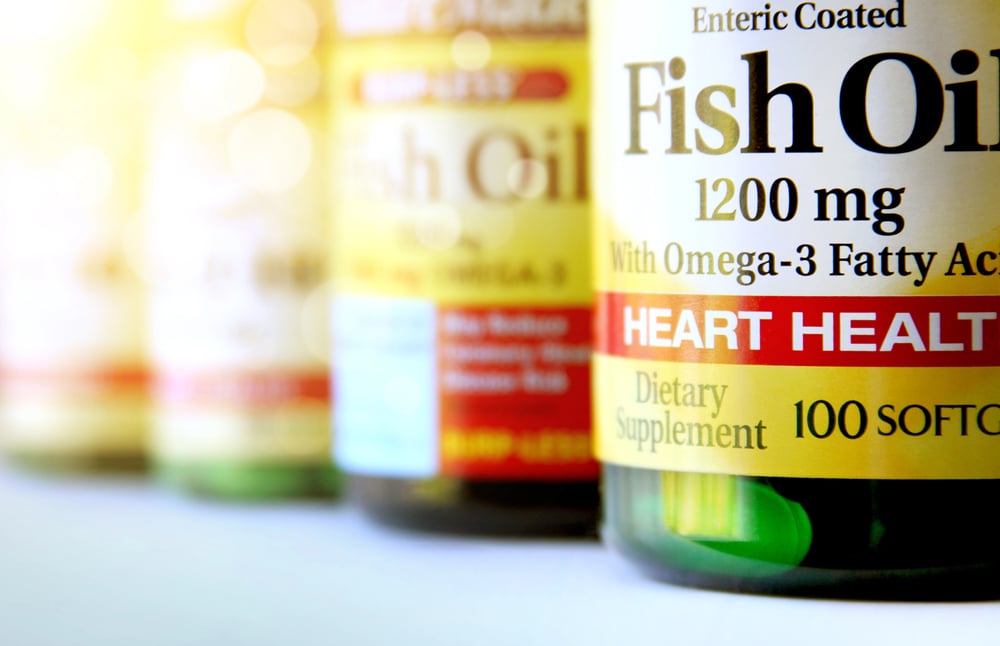
Not all fish oil supplements, multivitamins, and nutritional products are created equal. When evaluating omega-3 fish oil products for eye health, our clinical team advises patients to look for:
- High EPA and DHA concentrations: Aim for a combined total of at least 1,000 mg per day, with a higher EPA-to-DHA ratio for dry eye management.
- Triglyceride form: More bioavailable than the ethyl ester form found in many budget supplements.
- Third-party purity testing: Confirms the absence of heavy metals and oxidation by-products.
- Enteric coating: Reduces the “fish burp” effect and improves tolerability for long-term use.
Plant-based alternatives, such as algae-derived DHA or flaxseed oil, are excellent options for patients who do not eat shellfish or fatty fish like herring or tuna. Adding vegetables such as broccoli can also offer additional antioxidant support alongside the benefits of omega-3 fish oil for eye health.
What AGEI patients should know before their appointment
Omega-3 fish oil for eye health is not a substitute for expert surgical care; it is a complement to it. Here is what we recommend for patients at each stage:
- Pre-LASIK candidates: Begin omega-3 supplementation at least 60 days before your evaluation to optimize tear film quality and improve candidacy scores for Eagle Vision LASIK.
- Pre-cataract surgery patients: Discuss your current supplement regimen with your surgeon. High-dose fish oil has mild blood-thinning properties; your team will advise on timing relative to your procedure date.
- Postoperative patients: Continue omega-3 supplementation throughout your recovery to support ocular surface healing and visual stabilization, especially if you have received premium intraocular lenses.
- Long-term vision maintenance: Incorporate omega-3-rich foods, such as wild salmon, sardines, mackerel, walnuts, and flaxseed, alongside a quality supplement as part of an ongoing, proactive eye health plan, especially if you have risk factors for macular degeneration or chronic dry eye.
Request Your Consultation
Call now or book your appointment online.
Experience world-class eye care at Assil Gaur Eye Institute
At AGEI, we believe that exceptional vision outcomes begin long before you enter the operating room. From advanced diagnostic imaging to personalized nutritional guidance on omega-3 fish oil for eye health, our team delivers the full spectrum of elite, precision eye care. We are trusted by professional athletes, Hollywood performers, and discerning patients across Southern California and beyond.
Whether you are exploring LASIK eligibility, preparing for cataract surgery, or seeking expert advice on long-term vision protection, we invite you to schedule a complimentary evaluation with our world-class team.
Your vision deserves the very best. Book your complimentary evaluation today.

Written by The AGEI Educational Team

Medically Reviewed by Dr. Kerry Assil