Best Cataract Surgery Los Angeles
Top Cataract Surgeons
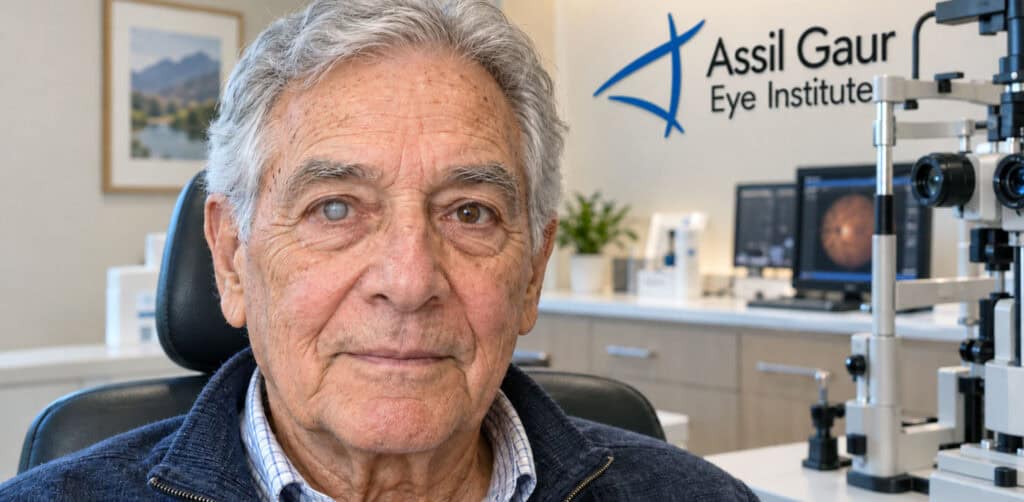
Assil Gaur Eye Institute
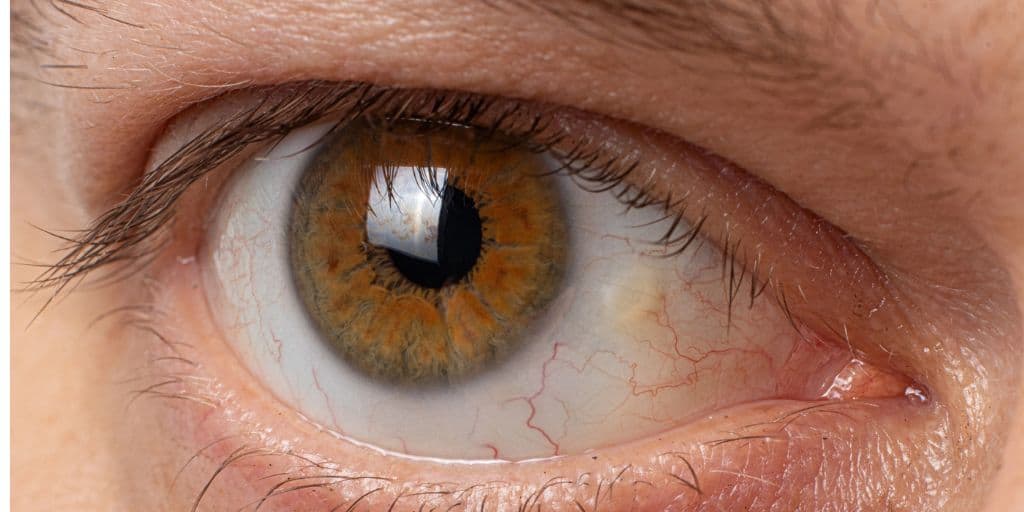
What causes cataracts?
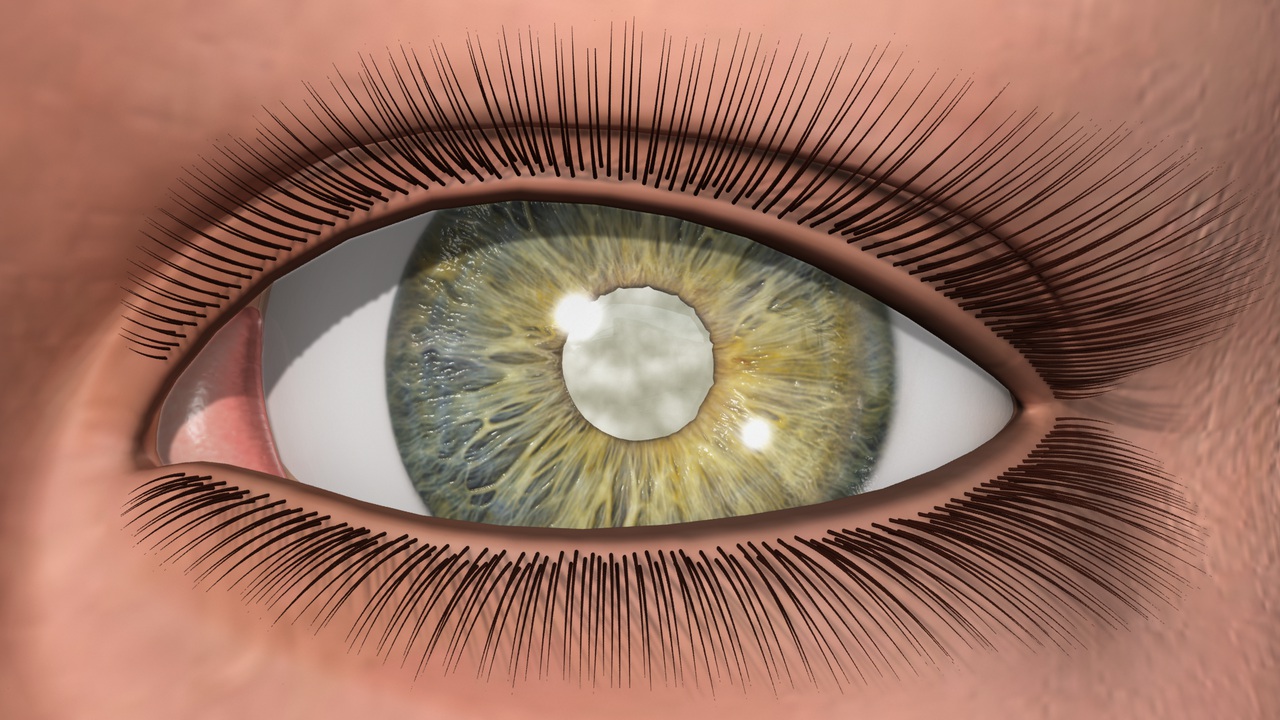
Most cataracts develop as aging alters the tissue in the eye’s lens. Proteins and fibers in the lens break down, leading to hazy or cloudy vision. This condition is called age-related cataracts.
However, cataracts are not only related to aging; infants can also be born with them, known as congenital cataracts, resulting from conditions such as diabetes, hypertension, asthma, or COPD (due to prolonged steroid use), or head trauma (traumatic cataracts).
As cataracts develop, they gradually impair vision, and medications, eye drops, glasses, or exercises cannot reverse the process. The only way to treat cataracts is to surgically remove the damaged lens and replace it with a clear new lens.
What are the symptoms of cataracts?
Your vision may become blurry, foggy, or double.
Your eyes are sensitive to light and glare.
You might experience difficulty with night vision.
Colors start to fade, look less vibrant, or develop a yellowish tint.
You will see halos around lights.
You’ll need brighter lighting for reading.
Frequent changes to an eyeglass prescription.
You may experience all or just a few of the symptoms above.
SEE LIFE THROUGH OUR CATARACT PATIENTS’ EYES
REAL CATARACT PATIENT STORIES
Can cataracts be treated without surgery?
No! You can’t treat cataracts without surgery. Frequent prescription changes for new eyeglasses, anti-glare sunglasses, lens tints, and lifestyle adjustments can offer temporary relief. But surgery is the only way to fix a cataract and restore your vision.
Early cataract treatment can help preserve and restore lost vision quality. Surgical removal of cataracts is almost always recommended when vision loss affects daily activities like driving, reading, or watching TV.
How to prepare for cataract surgery
Once you and your surgeon decide cataract surgery is the right move, a little preparation goes a long way toward a smooth, stress-free experience. Here is what you can expect in the lead-up to your procedure at Assil Gaur Eye Institute.
Pre-surgery assessment: Before your operation, you will attend a comprehensive pre-operative evaluation. Your surgeon will take precise measurements of your eye to determine the correct power of your replacement intraocular lens. This is also the appointment where you can ask any remaining questions and discuss which premium IOL option best suits your lifestyle and vision goals.
Contact lens guidance: If you wear soft contact lenses, you will typically need to stop wearing them for at least one to two weeks before your assessment and surgery. Hard or rigid gas-permeable lenses require an even longer break, sometimes several weeks. Contacts can subtly alter your cornea’s shape, and accurate measurements depend on your eye returning to its natural state.
Anesthetic and fasting: Cataract surgery at AGEI is performed under local anesthetic with a sedative to keep you comfortable and relaxed throughout. Because sedation is involved, you will need to avoid eating or drinking for a few hours before your procedure. You will also need to arrange for someone to drive you home afterward.
Medications: Your care team will review any medications you currently take and let you know if you need to pause any. You may be prescribed an antibiotic or anti-inflammatory eye drop to begin using in the days leading up to surgery. For a deeper look at what living with cataracts involves and when to act, our blog is a great resource.
Is cataract surgery safe?
Yes. Cataract surgery is one of the safest and most commonly performed surgical procedures worldwide. At AGEI, our world-class surgeons have performed over 100,000 vision correction surgeries, and most patients have no stitches or patching and go home within a few hours after their procedure.
That said, like any surgery, it is worth understanding the small risks involved so you can make a fully informed decision.
Serious complications are rare when surgery is performed by an experienced, elite surgical team, but they can include:
Posterior capsule opacification (PCO): The most common issue after cataract surgery, sometimes called a secondary cataract. The lens capsule behind your new IOL gradually clouds over, causing blurred vision to return weeks or months after surgery. It is not a true cataract and is easily corrected with a quick, painless in-office procedure called a YAG capsulotomy.
Infection (endophthalmitis): A rare but serious bacterial infection inside the eye. AGEI follows strict sterile protocols to minimize this risk.
Retinal detachment: A small number of patients, particularly those with high myopia, have a slightly elevated risk of retinal detachment following cataract surgery. Our retinal specialist, Dr. Svetlana Pilyugina, is on hand to diagnose and treat any retinal concerns promptly.
Swelling or inflammation: Mild swelling of the cornea or the central retina (cystoid macular edema) can occur but typically resolves with prescribed anti-inflammatory eye drops.
Glare or halos: Some patients notice increased glare or halos around lights in the weeks following surgery, particularly at night. This usually settles as the eye heals and adapts to the new premium intraocular lens.
The precision of AGEI’s advanced Femtosecond laser technique, combined with the expertise of surgeons trusted by elite athletes and patients worldwide, means your risk profile is as low as possible. If you have specific concerns about your risk factors, our team will review them in detail during your complimentary evaluation.
Is cataract surgery painful?
Modern cataract surgery is almost painless and involves no bleeding. Your AGEI surgical team will numb the surface of your eye with anesthetic eye drops, so you won’t feel anything during the procedure. You might also receive medication to help you relax.
You’ll be awake during your surgery; we’ll drape the non-operative eye, and an instrument called a speculum will hold the surgical eye open. You may feel slight pressure during the procedure, and this is normal.
What can I expect during cataract surgery?
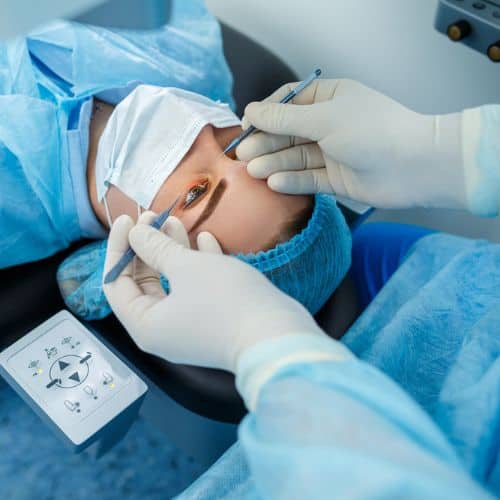
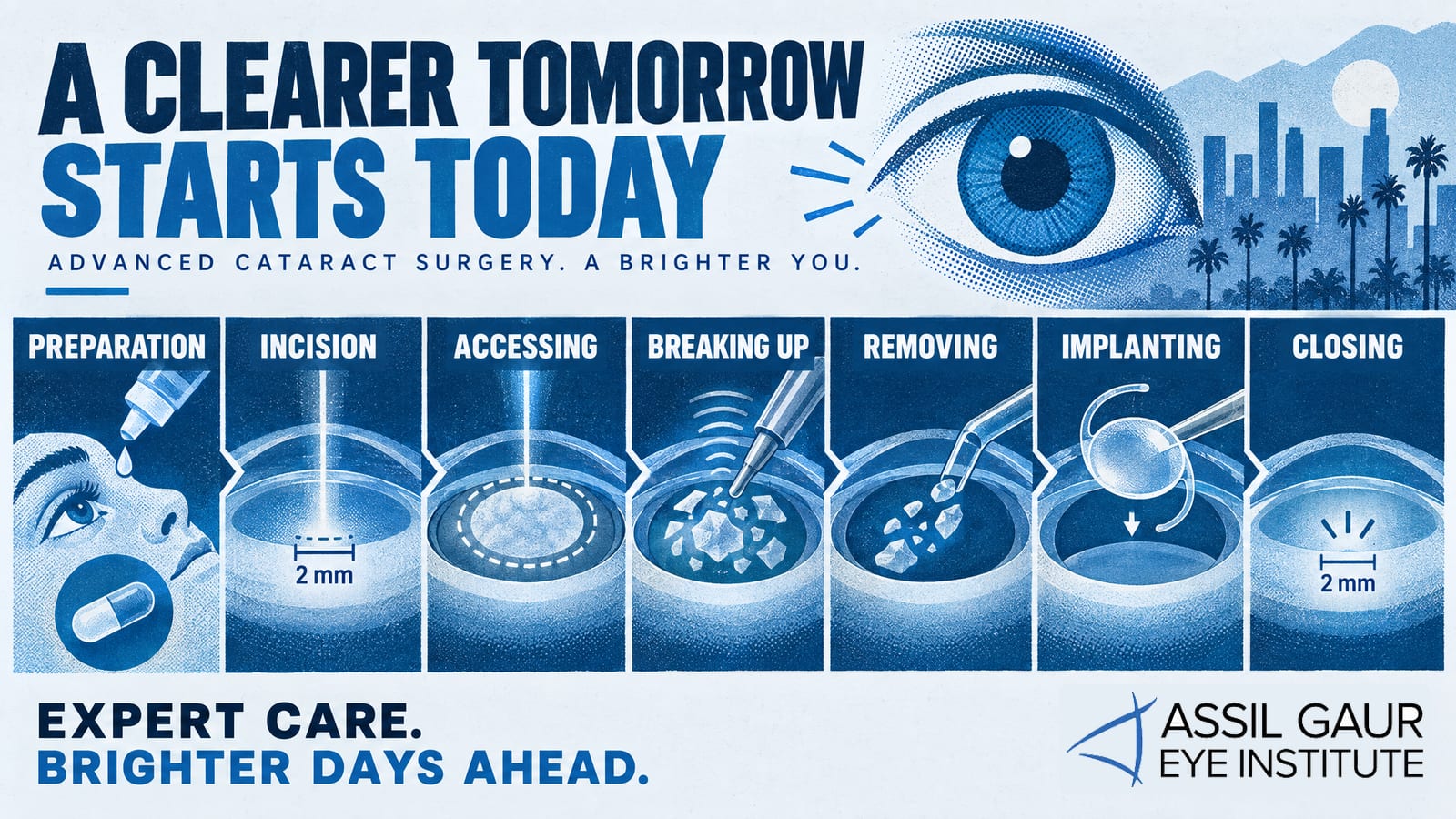
Cataract surgery at AGEI is a precise, outpatient procedure that typically takes less than 20 minutes per eye. Our surgeons combine advanced Femtosecond laser technology with decades of elite surgical experience to deliver consistently enviable outcomes. Here is a step-by-step look at exactly what happens.
Preparation and anesthesia. Before the procedure begins, we apply numbing eye drops to keep you comfortable throughout. Most patients are also given a mild sedative to help them relax. General anesthesia is not required, meaning you stay awake but feel no pain.
Creating the incision. Our cataract surgeons utilize a Femtosecond laser to make a small 2-millimeter incision. This laser-guided entry point is extraordinarily precise, reducing the risk of complications and supporting faster recovery than traditional blade-based techniques.
Accessing the lens. The laser then accesses and softens your cloudy natural lens. It creates a perfectly circular opening in the lens capsule, a step that requires world-class precision and is among the most technically demanding moments of the entire procedure.
Breaking up the cataract. The surgeon applies gentle ultrasound energy, a technique called phacoemulsification, to break the softened lens into tiny fragments. Because the Femtosecond laser has already pre-softened the lens, less ultrasound energy is needed, making the procedure gentler on the surrounding eye tissue.
Removing the cloudy lens. The fragmented lens material is carefully suctioned out through the same 2-millimeter incision, leaving the natural lens capsule intact to support the new lens.
Implanting the intraocular lens (IOL). A new, permanent lens called an intraocular lens replaces the removed cloudy lens. AGEI offers premium IOL options, including the Odyssey IOL for full-range vision and the Toric IOL for patients with astigmatism, so many patients achieve meaningful freedom from glasses after surgery.
Closing the incision. The 2-millimeter incision is so small that it is typically self-sealing and requires no stitches. You will rest briefly in our care before heading home the same day.
Find out about recovering from cataract surgery here.
What are my options for replacement intraocular lenses?
Patients can choose from two types of lenses:
Monofocal IOL lens
A single-vision lens helps patients see clearly at one distance, but they will need glasses for driving or reading. This lens is covered by insurance.
Premium IOL lens
Premium lenses, such as Johnson & Johnson’s advanced Odyssey IOL, are sight-correcting devices that can restore sharp vision by correcting nearsightedness, farsightedness, or astigmatism. Essentially, we can restore your vision to or better than what eyeglasses provide, without needing to wear glasses! Premium IOL lenses usually aren’t covered by insurance.
Learn more about our premium IOL lens options here.
Laser-assisted cataract surgery vs. traditional cataract surgery
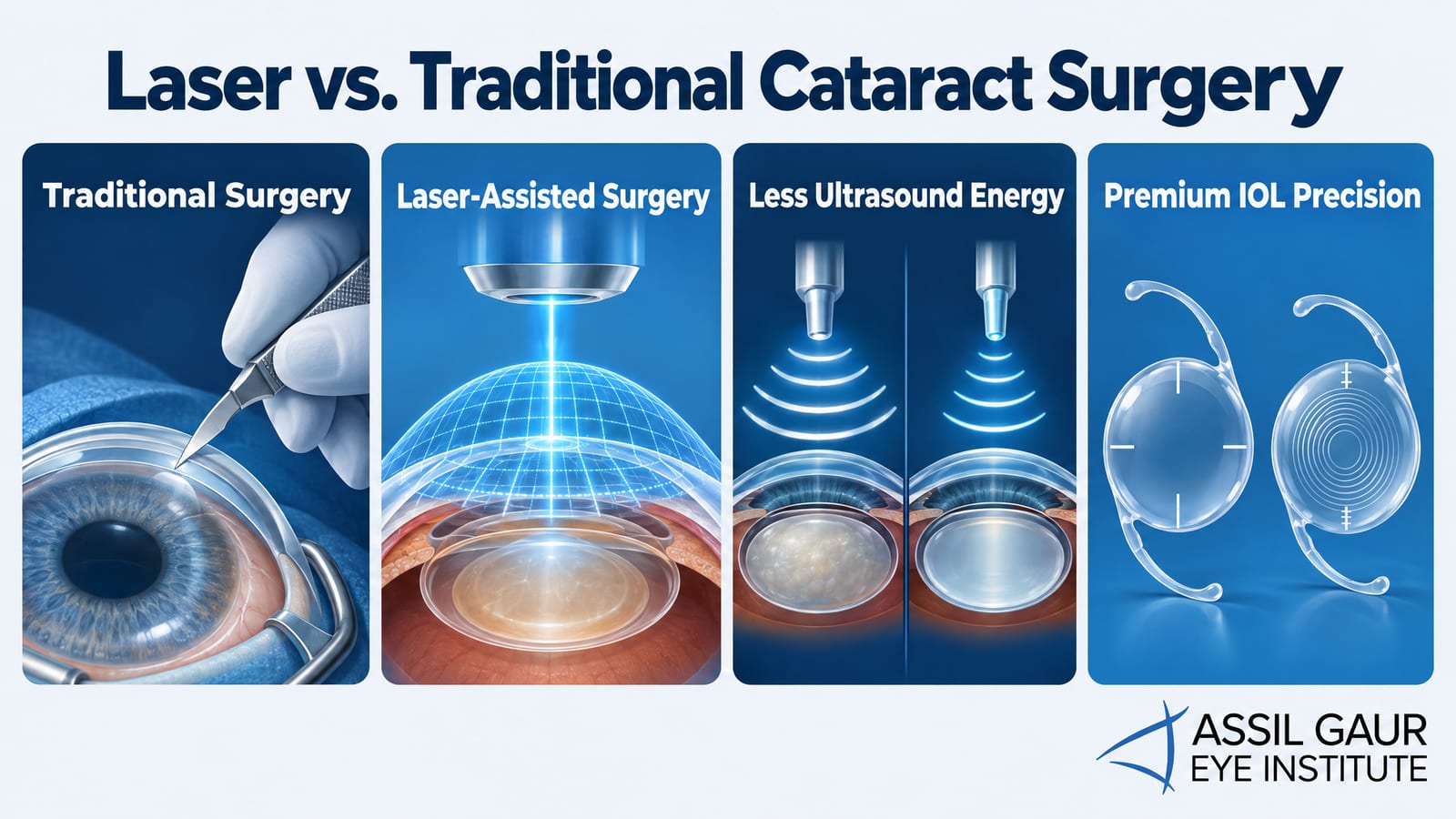
Once you have decided to move forward with cataract surgery in Los Angeles, one of the first questions your surgeon will walk you through is whether laser-assisted or traditional surgery is the right fit for your eyes. Both approaches safely remove the clouded natural lens and replace it with a premium intraocular lens, but they get there in meaningfully different ways.
Traditional cataract surgery, sometimes called phacoemulsification, relies on the surgeon using a handheld blade to create a small incision in the cornea. Ultrasound energy then breaks up the cloudy lens, allowing it to be gently suctioned away. This technique has an outstanding safety record built over decades, and in skilled hands it delivers excellent results.
Laser-assisted cataract surgery takes precision a step further. A femtosecond laser maps your eye in three dimensions and then performs the most technically demanding steps of the procedure, including the corneal incision, the circular opening in the lens capsule, and the initial softening of the lens, with computer-guided accuracy. Because the laser pre-softens the lens, less ultrasound energy is needed inside the eye, which can mean a smoother recovery and a more predictable outcome, especially when pairing your surgery with a premium IOL designed for full-range vision.
For patients choosing advanced lens options like toric IOLs to correct astigmatism or multifocal lenses for freedom from glasses, that extra precision can make a real difference in the final visual result. Learn how intraocular lens technology has evolved to appreciate how far both techniques have come.
At Assil Gaur Eye Institute, our surgeons have performed well over 100,000 vision correction procedures and will recommend the approach best suited to your unique anatomy, lifestyle, and lens choice during your personalized consultation.
Experience Assil Gaur Eye Institute cataract surgery advantage
When you’re evaluating cataract surgery in Los Angeles, credentials matter. At Assil Gaur Eye Institute, our surgeons have performed over 100,000 vision correction procedures and trained more than 14,000 surgeons worldwide. That depth of expertise is what separates a world-class outcome from an average one, and it’s why patients across Southern California trust AGEI with their most precious sense.
Advanced Technology
Assil Gaur Eye Institute leads in eye care technology. Our facility features state-of-the-art equipment that delivers precise, effective cataract treatment. We use femtosecond laser technology to perform bladeless, computer-guided incisions with a level of precision no hand-held blade can match. This laser-assisted approach softens the cataract before removal, reducing the ultrasound energy needed during surgery and supporting a faster, more comfortable recovery. Combined with the latest surgical techniques, this ensures a quick recovery with minimal discomfort.Premium IOL Options
Choosing the right intraocular lens is one of the most important decisions in your cataract surgery journey. AGEI offers a curated selection of premium IOLs, including the enVista IOL for full-range vision and toric lens options specifically designed to correct astigmatism, giving patients a genuine path to freedom from glasses after surgery. During your complimentary evaluation, our surgeons will match the ideal lens to your lifestyle, prescription, and visual goals.Expert Surgeons
Our team of renowned surgeons is not only leaders in the field but also dedicated to each patient’s needs. With years of specialized training, cutting-edge technique development, and extensive experience in cataract surgery, we provide the highest standards of care, resulting in successful outcomes and satisfied patients. Each procedure is performed by a fellowship-trained ophthalmologist, and our surgical team’s collective experience spans well over 100,000 cases, a volume that translates directly into precision and confidence for every patient we treat.Patient Care
Assil Gaur Eye Institute is known for its holistic approach to patient care. We focus on treating the condition and offering comprehensive support and care. Our patient-centered approach ensures you feel heard, respected, and confident in the care you receive. We are committed to providing the best post-operative cataract treatment available.Education and Engagement
We believe in empowering our patients through knowledge. Our team invests time to ensure you fully understand your condition and the available treatment options. This helps you to make an informed decision about your care. Before surgery, we walk every patient through a detailed diagnostic workup, including advanced corneal mapping and biometry measurements, so we calculate your IOL power with elite-level accuracy.Track Record
Trust isn’t given; it’s earned. At Assil Gaur Eye Institute, our record of successful surgeries and positive patient feedback speaks for itself. With over 100,000 procedures performed and surgeons who have shaped training standards for ophthalmologists worldwide, AGEI has built a reputation as the most trusted destination for cataract surgery in Los Angeles. We aim to maintain our reputation as the most trusted place for cataract surgery.
Why choose AGEI for cataract surgery in Los Angeles
In short, Assil Gaur Eye Institute combines state-of-the-art technology, skilled surgeons, personalized care, patient education, and a proven track record to offer the highest-quality, most trusted cataract surgery services. Trust us to provide the care you deserve because every eye is precious at Assil Gaur Eye Institute.
Our eye centers are easily accessible for patients across Southern California and the Los Angeles area, including Beverly Hills, Santa Monica, West Los Angeles, West Hollywood, Culver City, Hollywood, Venice, Marina del Rey, Malibu, Manhattan Beach, and Downtown Los Angeles.
AGEI operates two premier surgical locations in Los Angeles. Our Beverly Hills eye clinic is situated in the heart of one of the world’s most recognized medical corridors, offering convenient access for patients throughout the Westside, Hollywood, and the greater LA basin.
Our Santa Monica Eye Institute serves patients along the coast and inland communities alike, with ample parking and a welcoming, world-class environment designed to put you at ease from the moment you arrive. Both locations are staffed by the same elite surgical team and equipped with the same advanced femtosecond laser technology, so you receive identical precision and care regardless of which office you visit.
Read our real patient stories about cataract surgery.
In addition to laser cataract surgery, the ophthalmologists at AGEI are nationally recognized for treating a wide range of conditions, including macular degeneration, glaucoma, floaters and flashes, dry eye, presbyopia, keratoconus, diabetic retinopathy, LASIK laser eye surgery, and more.
Assil Gaur Eye Institute offers exceptional value for the level of care we provide. Patients receive treatment from some of the nation’s most accomplished ophthalmologists in a world-class setting, without paying more than they would at other leading eye practices in Los Angeles. The difference is not what you pay, but the level of expertise, technology, and personalized care you receive.
Call now or book your appointment online.
Meet our cataract surgeons
When you’re choosing where to have cataract surgery in Los Angeles, the surgeon’s credentials matter as much as the technology itself. At Assil Gaur Eye Institute, our cataract team brings together some of the most experienced and decorated ophthalmologists in the country, with a collective record of over 100,000 vision correction surgeries performed and more than 14,000 surgeons trained worldwide.
Dr. Kerry Assil is a globally recognized pioneer in refractive and cataract surgery, trusted by elite athletes, entertainers, and patients who simply want the very best. His precision-driven approach and decades of surgical innovation have made AGEI a destination practice for patients across Los Angeles and beyond.
Dr. Avneet K. Sodhi Gaur leads our advanced diagnostics and is a specialist whose work has been featured in Forbes, reflecting the kind of world-class recognition our patients can feel confident in. Her expertise ensures that every cataract evaluation is thorough, personalized, and grounded in the latest clinical evidence.
Our retinal specialist, Dr. Svetlana Pilyugina, adds surgical expertise for patients whose cataracts are complicated by underlying retinal conditions, ensuring seamless, comprehensive care under one roof.
Together, this team combines advanced femtosecond laser technology with deep surgical experience to deliver enviable outcomes for every patient. Whether your case is straightforward or complex, you’ll be in the hands of surgeons who have seen it all and treated it with precision. Schedule a complimentary evaluation today to meet the team and explore your premium cataract surgery options.
How much does cataract surgery cost in Los Angeles?
Cost is one of the first questions patients ask, and the honest answer is that it depends on the procedure type and the lens you choose. In Los Angeles, cataract surgery typically ranges from about $1,500 to $5,000 or more per eye, depending on whether you choose conventional surgery or laser-assisted cataract surgery and which intraocular lens best fits your vision goals.
Here is a general breakdown to help you plan:
Procedure Type | Estimated Cost Per Eye | What’s Included |
|---|---|---|
Standard cataract surgery with basic IOL | $1,500 – $2,500 | Monofocal lens, often partially covered by Medicare or insurance |
Laser-assisted cataract surgery | $2,500 – $4,000 | Femtosecond laser precision, premium planning technology |
Premium IOL upgrade (multifocal, toric, extended range) | Prices vary widely based on the IOL and vision correction that’s best for you. | Freedom from glasses, astigmatism correction, full-range vision |
Medicare and most insurance plans cover the medically necessary portion of cataract surgery, which typically means the basic procedure and a standard monofocal lens. If you choose a premium IOL like the advanced options available at Assil Gaur Eye Institute, including lenses designed for full-range vision, the upgrade cost is generally an out-of-pocket investment. Many patients find that the investment is well worth it for the freedom from glasses it delivers.
To learn more about the evolution of intraocular lenses and what today’s premium options can do, our team has put together a helpful resource. The best way to get an accurate, personalized cost estimate is to schedule a complimentary evaluation with our world-class surgical team.
How to find the right cataract surgeon and treatment?
Choosing cataract surgery involves more than simply removing a cloudy lens. Patients today often have multiple treatment and lens options, so it’s important to work with an experienced ophthalmologist who can guide decision-making based on vision goals, lifestyle, and overall eye health.
When evaluating cataract treatment options, patients may want to consider the surgeon’s experience, available technology, lens implant options, and whether the practice offers advanced diagnostic imaging and laser-assisted cataract surgery.
Cataract surgery FAQs
How is my cataract surgery recovery?
After your surgery, you may receive prescriptions for eye drops to prevent infection, control inflammation, and perhaps even manage eye pressure. Following this routine precisely is one of the most important steps you can take to protect your results and support a smooth recovery.
You will initially experience blurry vision, but it will begin to improve within a day or two as your eye heals and minor swelling subsides. Before you know it, colors will appear brighter with a premium lens replacement, and your distance vision will improve as well. In most cases, the eye will fully recover within eight to twelve weeks after surgery.
When both eyes need treatment, your AGEI surgeon will typically schedule the second procedure one to two weeks after the first, once the initial eye has stabilized. This staged approach allows your visual system to adjust and gives your care team a chance to confirm the first outcome before proceeding.
Activity restrictions are an important part of protecting your recovery. Most patients can return to light daily tasks within 24 to 48 hours, but plan to avoid driving until your surgeon confirms your vision meets the required standard, usually at the first follow-up visit. Limit screen time during the first few days, as extended reading or device use can strain your eyes while they heal. Avoid strenuous exercise, swimming, and any activity that risks eye injury for at least two to four weeks. Also avoid bending at the waist and heavy lifting in the early days to prevent pressure changes inside the eye.
Contact your AGEI care team promptly if you notice a sudden increase in pain, a significant drop in vision, increasing redness, flashes of light, or floaters that appear after surgery. These are not typical recovery symptoms and deserve immediate attention.
Patients selecting a standard lens replacement are encouraged to see their optometrist once both eyes have healed to obtain their new prescription glasses. Those who choose a premium intraocular lens often enjoy much greater freedom from glasses as part of their recovery outcome.
Which clinics offer premium cataract surgery options?
Many modern ophthalmology practices now offer advanced cataract surgery options designed to improve visual outcomes and reduce dependence on glasses after surgery. Patients exploring premium cataract surgery may want clinics that offer advanced diagnostic technology, laser-assisted cataract surgery, and a range of premium intraocular lens (IOL) options, including toric and multifocal lenses.
At Assil Gaur Eye Institute, patients have access to advanced cataract evaluation technology and personalized treatment planning tailored to each patient’s vision goals and lifestyle needs. AGEI offers laser-assisted cataract surgery, along with premium lens options that may help improve distance, intermediate, and near vision while also correcting astigmatism for appropriate candidates.
What are the most common aftereffects of cataract surgery?
Some patients may develop a secondary cataract, which can occur 3 to 6 months after cataract surgery. Scar tissue accumulates around the capsular bag that holds the new lens in place, leading to Posterior Capsular Opacification (PCO).
Luckily, PCO can be treated quickly with a laser procedure that takes just a few minutes during an office visit and is covered by most health insurance plans. The treatment, called a YAG capsulotomy, involves removing the cloudy part of the posterior lens capsule with a high-intensity laser. This painless procedure provides instant clear vision.
Does Medicare cover cataract surgery?
Medicare generally does not cover routine vision care but will pay for certain medically necessary services, including cataract surgery. Specifically, Original Medicare (Part B) covers the following:
- the removal of the cataract
- basic monofocal lens implants
- one set of prescription eyeglasses or contact lenses after the surgery
Medicare does not cover an upgrade to a premium intraocular lens. If you choose an advanced IOL, such as a multifocal, extended depth-of-focus, or toric lens for astigmatism correction, you will pay an out-of-pocket difference between what Medicare reimburses for a standard lens and the cost of the premium option. That difference varies by lens, but it is a one-time investment that can significantly reduce or eliminate your dependence on glasses after surgery. For patients pursuing full range vision with a premium lens like the enVista IOL, that upgrade cost is separate from what Medicare pays, and our team will give you a clear, itemized breakdown before you commit to anything.
If you are enrolled in a Medicare Advantage plan (Part C), your coverage for the core surgical procedure is generally the same as Original Medicare, since Advantage plans must cover everything Medicare covers. However, some Medicare Advantage plans include additional vision benefits that may offset some premium lens costs or post-operative care. Call your plan directly before your consultation to confirm exactly what is included. Some Advantage plans also have preferred provider networks, so confirm that AGEI is an in-network or accepted provider before your appointment to avoid unexpected billing surprises.
Supplemental insurance, sometimes called Medigap, can help cover costs like your Part B deductible and the 20 percent coinsurance Medicare typically leaves to the patient for outpatient procedures. Medigap does not, however, cover elective lens upgrades. Think of Medigap as a tool to reduce your share of the base surgical cost, not a way to fund a premium IOL. If out-of-pocket costs for an advanced lens are a concern, many patients find that financing options make the upgrade far more accessible than they expected.
A quick summary of how the layers stack up: Original Medicare covers the procedure and a standard lens. Medicare Advantage mirrors that coverage and may add modest vision extras. Medigap fills gaps like deductibles and coinsurance. None of these programs cover the cost difference for a premium IOL, which is always an elective upgrade billed separately.
At AGEI, our team is happy to walk you through your coverage options during your complimentary evaluation, so you have a clear picture of costs before you decide. Understanding your insurance is one less thing to worry about on the way to world-class results.
How long does cataract removal surgery take?
At AGEI, the actual surgery takes about 10 minutes per eye. Immediately following your surgery, you’ll be asked to rest in the recovery area for 30 minutes until your eye-drop anesthesia wears off.
Can cataracts come back?
Cataract removal surgery involves removing the cataract-affected lens and replacing it with an artificial intraocular lens implant. This new lens cannot develop a cataract, so the patient will never have one in that eye again.
What are the disadvantages of cataract surgery?
A very small percentage of patients who undergo cataract surgery develop a condition called Posterior Capsular Opacification (PCO). Fortunately, PCO is easily treated with a laser procedure that takes just a few minutes during an office visit.
Are cataracts hereditary?
Published studies suggest genetics may account for 50% of age-related cataracts, with the remainder attributable to aging, systemic factors, and environmental influences.
How long can you postpone cataract surgery?
Cataract surgery is not urgent for most people and can be safely delayed until they choose to pursue it. However, postponing cataract surgery has some drawbacks. Patients who wait for surgery may experience more vision loss, reduced quality of life, and an increased risk of falls.
Will I have to stay in the hospital after cataract surgery?
No. We perform your procedure at our outpatient surgery center, and you will go home the same day.
What do you see during cataract surgery?
Patients report seeing light or movement but don’t see what’s happening to their eyes.
When is it too late to have cataract surgery?
There comes a point when cataract surgery is more difficult to perform than it would have been if left untreated. Left alone, cataracts become denser and further impair vision. As the cataract thickens, it becomes harder to remove and carries a higher risk of complications during surgery.
Do you wear an eye patch after cataract surgery?
After your cataract eye surgery, a clear plastic shield will be placed over your eye for protection. Wear the shield as your doctor advises—it offers more protection than a regular eye patch and helps prevent dust and potential injury while you heal. You may need to sleep with the shield for at least one week after your surgery.
How soon can I get reading glasses after cataract surgery?
Some people need reading glasses or contact lenses for a period after cataract surgery. Your doctor will inform you when your eyes have stabilized enough for a final prescription for glasses or lenses. This usually occurs one to three months after the surgery.
Choosing a premium intraocular lens (IOL) provides clear vision across a range of distances, from near to far. Your eye surgeon can recommend lenses that suit your lifestyle and visual needs.
Can you have both glaucoma and cataracts?
Yes, a person can have both glaucoma and cataracts. Glaucoma and cataracts are different eye conditions that can occur at the same time. A patient undergoing glaucoma care can develop a cataract at any time, irrespective of their glaucoma diagnosis.
How are cataracts diagnosed?
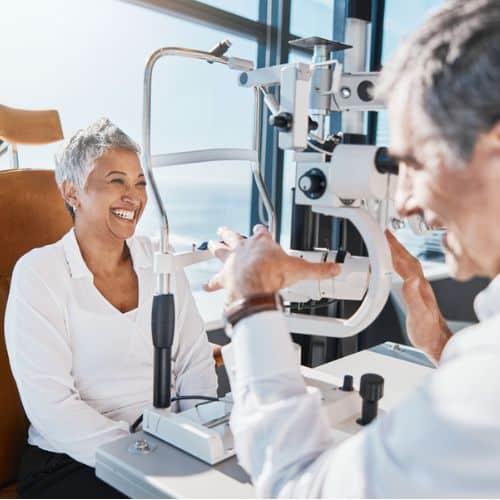
An optometrist or ophthalmologist usually diagnoses cataracts through a comprehensive eye exam. The exam includes several steps, such as reviewing medical history, testing visual acuity, performing a slit-lamp exam, examining the retina, and conducting other visual function tests.
What cataract lens options are available?
Monofocal lenses provide one focusing distance. Usually, people have these lenses fitted for distance vision and need reading glasses.
Premium multifocal lenses are IOLs with varying magnifications at different sections of the lens, allowing you to see clearly at various distances.
What is the best cataract lens for astigmatism?
A Toric IOL is specifically designed to correct astigmatism. A toric lens has different powers in different meridians to address the irregular corneal curvature associated with astigmatism.
What if I experience cataract halos after surgery?
Seeing eye halos around lights after cataract surgery is quite common and usually temporary.
What are posterior subcapsular cataracts?
Among all cataract types, posterior subcapsular cataracts develop the fastest. This type forms at the back of the lens, right inside the capsule that surrounds it.
What questions should I ask my cataract surgeon?
- Which lens options best suit my lifestyle and vision goals?
- Am I a candidate for premium IOL technology?
- What’s the difference between laser-assisted and traditional cataract surgery?
- Will I still need glasses after surgery?
- How much experience do you have performing cataract surgery?
- What should I expect during recovery?
- Do I have any other eye conditions that could affect my results?
Call now or book your appointment online.

Written by The AGEI Educational Team

Medically Reviewed by Dr. Avneet Sodhi Gaur