Dry Eye Disease Isn’t Just an Itch — It Is Also a Hazard for Your Vision
Most of us associate tears with intense emotion — an ocean of tears that follows deep sadness, or tears of joy that foreshadow brighter times. In reality, tears are a constant and necessary component of eye health: your tear film keeps all the delicate tissues of the eye lubricated and healthy.
When tear production falls, the results may seem like an immediate annoyance. Although many like to dismiss its seriousness, severe dry eye can also impair your quality of life, causing blurred vision and even damage to the cornea or other parts of the eye.
So, before we reach for a vial of OTC eye drops, it’s best to examine what’s behind dry eye disease and how best to treat it.

What is dry eye disease?
Dry eye disease, also known as DED, dry eye syndrome or keratoconjunctivitis sicca, occurs when your lacrimal glands do not produce enough tears, or the ones they produce don’t have the right balance of oil, water, and mucus to properly protect your eyes.
In most cases, the first sign of dry eyes is a sensation of dryness; however, sometimes there are no sensory symptoms at all. It is a complex, multifactorial condition that affects millions and can originate from a variety of underlying causes.
What are tears made of?
Tears are not made of salty water alone. In reality, the tear film is a multi-layered system that combines:
- An inner coating of mucus or mucin
- A middle aqueous layer made of saline.
- An outer lipid (oily) film.
Each one of these layers plays a specific role in your eye’s overall balance. If any of these layers are off balance, tears won’t be as effective, leaving your eye unprotected.
Causes of dry eye
There are ways in which the delicate balance of your tears can go awry, precipitating dry eyes. Ultimately, they can all be classified into three categories.
Decreased tear production
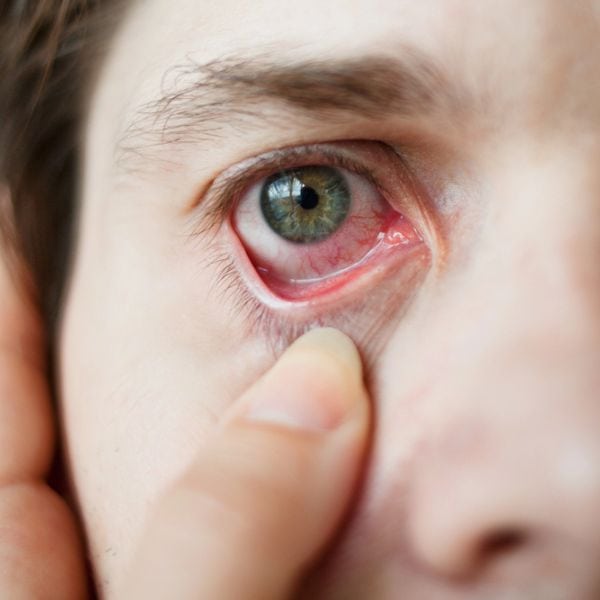
This is when the eyes stop producing enough tears overall, regardless of their quality. This can happen due to:
- Aging
- Some medications, especially decongestants, antihistamines, antidepressants, and medications for high blood pressure, can cause dry eyes as a side effect.
- Some medical conditions, such as thyroid issues or autoimmune diseases like rheumatoid arthritis, lupus, or Sjogren’s disease
- Damage to the corneal nerve can occur after LASIK surgery or as a complication of diabetes.
Poor tear quality
This occurs when the eyes produce enough tears but lack the right balance of oil, water, and mucus. Often, severe cases of dry eye disease happen due to damage to the glands that produce each of these components.
Increased tear evaporation
Finally, some cases of dry eyes happen when tears evaporate too quickly, even if the eye is technically producing enough good-quality tears.
This can happen due to:
- Not blinking enough, especially due to prolonged screen time or contact lens use
- Frequent exposure to dry air or harsh winds
- Smoke and environmental factors
- Eyelid issues that make it hard to blink properly
Risk factors for dry eye disease
Most people can have an occasionally gritty day, especially during unusual weather or when overtime at the office becomes unavoidable. However, some people are at higher risk of developing full-blown dry eye disease:
- Women
- People over the age of 65
- People of East Asian ethnicity
- Those with a family history of DED or Sjogren’s disease
- People who wear contact lenses daily, or nearly so, for 10 or more years
Symptoms of dry eye syndrome
The symptoms of dry eye can vary depending on the type of dry eye syndrome at play.
The most common symptoms are burning and stinging, often accompanied by a “gritty” feeling. For contact lens users, this is often accompanied by feeling the contact lens on top of the eye or noticing it doesn’t move properly with the eye.
Paradoxically, other types of dry eye have excessive tearing instead. This may happen when there’s poor tear quality: the eyes may create more water to compensate, but this will not be effective due to a lack of lipids or mucins in the tear film. The severity can range from mild occasional discomfort to debilitating symptoms that interfere with daily activities.
How can dry eyes affect your vision?

The eye is made up of many delicate components that detect light, reflect it, and send signals to the brain. What’s more, every time we blink, focus our gaze, or turn it, these components rub against each other.
Without a proper lubricating layer, the cornea (the dome-shaped part at the front of the eye) can easily become irritated and even develop tiny scratches in its surface (corneal abrasion). In turn, this can impact other parts of the eye:
- The retina, or the light-sensitive tissue at the back of the eye, can get irritated, causing photophobia (sensitivity to light).
- Irritation and dryness can predispose the eyes to infections like conjunctivitis (pink eye) or keratitis.
- Frequent corneal abrasion can lead to scarring in the cornea, which can cause a permanent “blurry spot” in the eye.
- The combined discomfort from all the previous symptoms can increase stress and precipitate headaches.
Call now or book your appointment online.
Are there different types of dry eye disease?
Yes! Dry eye conditions are not all the same. There are several different types of dry eye disease with distinct underlying causes and characteristics:
Mucin/goblet cell deficiency

Mucin in tears helps water and oil layers adhere to the surface of your eye. Mucin is produced by goblet cells located along the sclera (the white part of the eye). When these cells are damaged — whether due to chronic allergies, scarring, or disease — the tear film can become unstable, causing it to evaporate too quickly or causing tears to slide down before they can do their work.
Exposure dry eye
Dryness occurs when the eye’s surface is exposed for longer than usual (due to incomplete blinking or lid sealing), leading to tear film evaporation and discomfort
Allergic dry eye
Inflammation from allergic conjunctivitis can disrupt the tear film, leading to itchiness, burning, and a gritty sensation.
Mechanical lid abnormalities
Some abnormalities in the shape of our eyelids, or the way in which they move, can affect the way we blink. In turn, this may keep tears from distributing properly.
Meanwhile, a condition known as conjunctivochalasis can cause excess conjunctival tissue to develop between the eyeball and the lower eyelid. This can also lead to excessive tearing and poor tear quality, thereby precipitating DED.
Aqueous tear deficiency
A decrease in the watery component of tears (often linked to autoimmune conditions such as Sjögren’s syndrome) results in an inflamed, thin, and unstable tear film.
Evaporative dry eye
This type of dry eye occurs when there is insufficient lipid content in the tear film. This commonly occurs due to Meibomian gland dysfunction (MGD). In some cases, frequent eyelid infections (blepharitis), overgrowth of demodex mites, LASIK eye surgery, or skin conditions like rosacea can also damage the Meibomian gland.
Dermatologic causes
Rosacea, seborrheic dermatitis, and other skin conditions can affect the eyelids and nearby oil glands, impacting tear quality and production.
Neurotrophic dry eye
Also known as neurotrophic keratitis, this condition involves damage to the nerves near the ocular surface. This reduces sensation and tear secretion, making the eye’s surface prone to scarring and infection.
Mixed dry eye
For some people, the causes behind dry eye overlap. For example, decades of contact lens use, combined with the hormonal changes of menopause and a dry, dusty environment, can impact both tear quality and tear production. This is why personalized evaluation and targeted treatments are vital for long-term ocular health, longevity, and visual performance.
Why understanding your dry eye type matters
Different types of dry eye disease often require specific treatment approaches. For example, artificial tears might help with aqueous-deficient dry eye, while warm compresses and lid hygiene are more effective for evaporative dry eye. Some cases may require prescription ointments, punctal plugs, or other specialized treatments — while in other cases, a combination of adjustments, such as humidifiers and over-the-counter drops, can be enough to provide lasting relief.
This is why it’s important to have dry eyes properly evaluated by an eye care professional who can determine the specific type and its underlying causes. After a proper eye exam, an ophthalmologist can recommend the most effective treatment approach for your particular situation.
Call now or book your appointment online.
Let’s protect those precious tears together

Doctor of Optometry (O.D)
The team of ophthalmologists and optometrists at Assil Gaur Eye Institute (AGEI) offers world-class eye care. Our eye doctors treat all significant eye conditions, including cataracts, dry eye, laser vision correction (such as LASIK and PRK), glaucoma, macular degeneration, and more.
At Assil Gaur Eye Institute, you will experience a state-of-the-art healthcare facility that combines revolutionary technologies with experienced vision care professionals. Our goal is to help you achieve your personal best vision.
Please call 866-945-2745 or visit our website to make an appointment online. If you are experiencing any concerning symptoms, contact an eye doctor immediately to determine the best time to schedule an exam.
Sources:
Pflugfelder SC et al. “Dry eye disease: pathophysiology, classification, and diagnosis.” Ocul Surf. 2017;15(1):77–202.
Craig JP et al. “TFOS DEWS II Report: Definition and classification.” Ocul Surf. 2017;15(3):276–283.
Bron AJ et al. “Meibomian gland disease and evaporative dry eye: review and clinical implications.” Eye. 2011;25(4):407–417.
Bielory L et al. “Allergic conjunctivitis and dry eye disease: overlapping and unique clinical characteristics.” Ann Allergy Asthma Immunol. 2019;122(3):237–242.
Meller IO et al. “Conjunctivochalasis and its role in ocular surface disease.” Curr Opin Ophthalmol. 2008;19(5):412–417.

Written by The AGEI Educational Team

Medically Reviewed by Dr. Lindsay Harris