Intraocular Lens (IOLs)
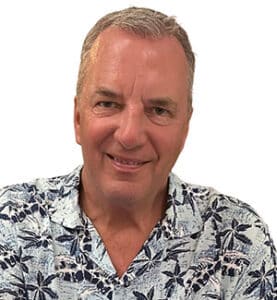
Light Sensitivity Made Steve’s Life Unbearable, Until Dr. Assil’s State-of-the-Art IOL Surgery
With cataracts forming in both his eyes, Steve’s vision became intolerable, they affected every part of his life. He took in a Los Angeles Dodgers game and watched all-star lead-off hitter Mookie Betts take a couple of practice swings and step into the batter’s box. Steve glanced up at the scoreboard to see Mookie’s batting average — and all he saw were glimmering bright lights. No detail whatsoever. No batting averages. A real strikeout.
Steve learned that no medications, eye drops, glasses, or exercises could reverse his visual decline thanks to cataracts. The only way to treat it was to surgically remove and replace the damaged lens with an artificial, clear lens called an intraocular (IOL) lens. Nearly 4 million Americans undergo cataract surgery each year to restore their vision.
“Both of my eyes had gotten progressively worse,” says water conservation expert Steve, 62. “I was wearing progressive eyeglasses at the time, and once the cataracts started, the glasses were useless. I started seeing starbursts and became highly sensitive to light.”
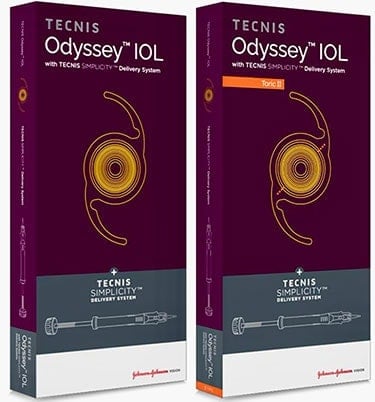
That all changed when he visited the Assil Gaur Eye Institute, where he received the state-of-the-art Odyssey multifocal IOL by Johnson and Johnson.
What is a cataract?
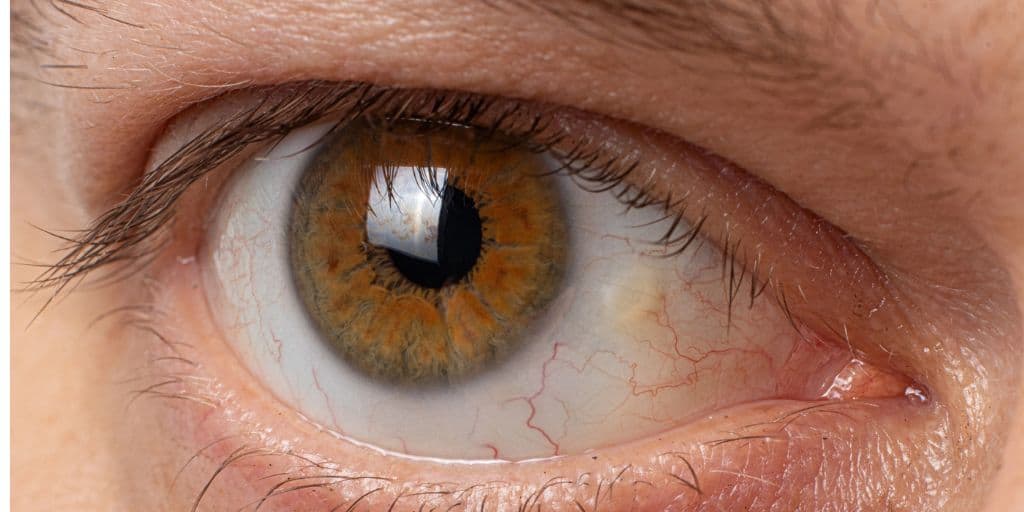
A cataract is a medical condition that affects the eye, specifically the lens. The eye’s lens is usually clear and transparent, allowing light to pass through and focus on the retina, which sends visual signals to the brain. The lens becomes cloudy or opaque when a cataract develops, gradually losing clear vision.
The only treatment for cataracts is eye lens replacement surgery. Cataract surgery is a standard and relatively straightforward procedure in which the cloudy eye’s natural lens is replaced with an artificial lens.
Steve’s road to regaining vision began with his optometrist
The day after the Dodgers game, he called his eye doctor, who saw him immediately. It was clear that his lens opacification (cataracts) had greatly progressed, and he was referred to Assil Gaur Eye Institute (AGEI) to get expert help.
Before his first appointment at AGEI, Steve learned he could remove his cataract-diseased lenses and replace them with an IOL (intraocular lens) that could eliminate his need for glasses. To say that he was intrigued would be an understatement.
After researching cataract intraocular lens options online, Steve was excited but also confused, as there are so many types of intraocular lenses available. “There were monofocal lenses, trifocals, light-adjustable lenses, extended-depth-of-focus lenses, accommodative lenses, toric lenses to correct astigmatism, and maybe even more! I had no idea what was right for me. Needless to say, I was armed with many questions when I met with Dr. Assil,” said Steve.
Picking the perfect IOL is not for amateurs!
After all the time Steve spent researching “Dr. Google,” he was very concerned about how to choose the right lens for himself.
“I was immediately relieved to learn that Dr. Assil developed a precise algorithm to help select the best IOL implant for each patient’s unique physical realities and lifestyles,” said Steve.
Together, they explored several IOL options, including monofocal and multifocal lenses. Dr. Assil suggested the Johnson & Johnson Odyssey lens, a state-of-the-art Premium IOL that was nearing market release, for which he had exclusive rights to use before general release for his patients.
Dr. Assil felt the Odyssey lens was best for Steve for four reasons:
- Steve wanted to see both near and far distances without needing glasses.
- He had medium to large pupils in dim light.
- Steve’s eyes were sensitive to light.
- Steve’s corneal curvature,
The Odyssey multifocal IOL provides excellent vision at both near and distance. It also produces fewer visual haloes and glare compared to other lenses. It is also great for patients with larger pupils, which Steve has,” states Dr. Assil.
Dr. Assil, who worked directly with manufacturer Johnson & Johnson (J&J) during the lens development and sits on the J&J board of directors, was granted early access to this for his patients in the United States.
Request Your Consultation
Call now or book your appointment online.
Understanding Cataracts: Causes and Treatments
Made of acrylic, this lens leverages J&J’s existing TECNIS Synergy™ technology, which refracts light and focuses it on the back surface of the eye. TECNIS Synergy has demonstrated, after millions of IOL implants over a quarter of a century, that it is safe and remains crystal clear within the eye over time. It also protects the eye against harmful ultraviolet rays.
However, the new Odyssey lens differs from the conventional monofocal IOL, which focuses light only on objects far away. People who receive monovision lens implants usually need glasses for close-up vision. But not with this new lens!
A perfectly uneventful lens replacement surgery
Though a bit wary of eye surgery, Steve forged ahead. Since he had cataracts in both eyes, the best practice is to operate on each eye a week apart. The surgery for his first intraocular lens implants made Steve nervous, with slightly elevated blood pressure. However, a week later, during the second eye procedure, he was wide awake, relaxed, and asked Dr. Assil questions. “He was very good at explaining what he was doing,” remarks Steve. “I felt confident with Dr. Assil’s stellar history of being on the cutting edge.”
With 20/20 vision post-surgery, Dr. Assil says Steve’s vision will stabilize over the next three months and continue to improve. “You can tell it’s more consistent daily,” remarks Steve, who no longer needs to wear reading glasses.
Meanwhile, Steve is spreading the word about AGEI’s fantastic technology. “I have friends I share my experience with,” he says. “They’re all very impressed and are leaning toward getting the very same surgery I had.”
Why trust AGEI with your Cataract Intraocular Lens (IOL) surgery?
With 30 years of experience in eye health, Dr. Assil is among the most experienced cataract surgeons in the United States. He has performed over 70,000 eye surgeries and authored over 100 textbook chapters and articles on refractive and cataract surgery.
Assil Gaur Eye Institute has assembled a team of top ophthalmologists from across the country who offer their patients the highest-quality specialist eye care in the United States.
In keeping with the founding principles of AGEI, eye surgeons keep their clinics comfortable and familiar, much like how family-run medical practices used to be.
In addition to refractive lens exchange and cataract surgery, the ophthalmology experts at AGEI are nationally recognized for their eye care and treatment options for a full range of conditions, including eye conditions such as hyperopia glaucoma, retinal detachment (and other diseases of the retina), cornea conditions, contact lens, floaters and flashes, dry eye, presbyopia, astigmatism (using a toric lens), farsightedness, myopia, nearsightedness, and other vision correction procedures (refractive surgery) such as LASIK surgery, PRK, and many more laser procedures.
Today, AGEI is nationally recognized for its compassionate, patient-centric health care, commitment to pioneering advances in ophthalmology, and dedication to supporting its patients’ and the community’s health and well-being.
Request Your Consultation
Call now or book your appointment online.
We are conveniently located for patients throughout Southern California and the Los Angeles area in or near Beverly Hills, Santa Monica, West Los Angeles, West Hollywood, Culver City, Hollywood, Venice, Marina del Rey, Malibu, Manhattan Beach, and Downtown Los Angeles.
More Stories You might be interested in


Dry Eye Intraocular Lens (IOLs)
Mario’s Second Eye Lens Replacement Surgery, This Time With Dr. Assil, is the Charm

Cataract Surgery Intraocular Lens (IOLs)
Sylvia, 75, Goes Glasses-Free for First Time in a Decade After Premium Cataract Surgery with Dr. Assil

Cataract Surgery Refractive Lens Exchange (RLE)