Causes of Blurry Vision: A Complete Guide
AGEI
What Is Blurry Vision?
Blurry vision is a loss of sharpness or clarity in your eyesight that makes objects appear out of focus, hazy, or indistinct. It can affect one eye or both, and it may develop gradually over months or years or appear suddenly within seconds. Blurry vision is one of the most common reasons people visit an ophthalmologist, and it can stem from causes as straightforward as a change in your glasses prescription or as serious as a stroke or retinal detachment.
Understanding the full range of causes is the first step toward the right diagnosis and treatment. This guide covers every major cause, from everyday refractive errors to medical emergencies, so you know exactly when to book a routine eye exam and when to call for emergency help.
Common Causes of Blurry Vision
Most cases of blurry vision have a straightforward explanation. The causes below account for most visits to an eye doctor and are highly treatable when caught early.
Refractive Errors
Refractive errors are the single most common cause of blurry vision worldwide. They occur when the eye’s shape prevents light from focusing correctly on the retina, the light-sensitive tissue at the back of the eye. The four main types are:
Myopia (short-sightedness): Distant objects appear blurry because the eye is too long or the cornea too curved, causing light to focus in front of the retina rather than on it.
Hyperopia (long-sightedness): Close objects appear blurry because the eye is too short, causing light to focus behind the retina. In mild cases, distant vision may also be affected.
Astigmatism: An irregularly shaped cornea or lens causes light to focus at multiple points, producing blurry or distorted vision at all distances.
Presbyopia: A natural, age-related stiffening of the eye’s lens that makes it harder to focus on close objects. It typically becomes noticeable after the age of 40 and is why many people need reading glasses.
Doctors diagnose refractive errors during a routine eye exam and correct them with prescription corrective lenses, contact lenses, or refractive surgery such as LASIK.
Dry Eye
Dry eye is an extremely common condition in which the eyes do not produce enough tears, or the tears evaporate too quickly, leaving the eye surface inadequately lubricated. The result is a fluctuating blurriness that often worsens after prolonged screen use, in air-conditioned environments, or in windy conditions.
Symptoms alongside blurry vision include a gritty or burning sensation, redness, and paradoxically, excessive watering as the eye attempts to compensate for dryness. Risk factors include age, hormonal changes, certain medications (including antihistamines and antidepressants), contact lens wear, and prolonged digital screen use.
Treatment ranges from over-the-counter artificial tears and lifestyle adjustments to prescription anti-inflammatory eye drops, punctal plugs, and in-office procedures. A comprehensive eye exam at a specialist practice such as Assil Gaur Eye Institute can identify the specific type of dry eye and tailor a treatment plan accordingly.
Eye Strain and Digital Screen Use
Extended periods of reading, driving, or staring at screens can fatigue the eye muscles, causing temporary blurry vision, headaches, and difficulty focusing. This is sometimes called digital eye strain or computer vision syndrome. Symptoms typically resolve with rest, but persistent eye strain warrants an eye exam to rule out an underlying refractive error.
Cataracts
A cataract is a clouding of the eye’s natural lens, which sits behind the iris and pupil. As the lens becomes progressively less transparent, vision grows increasingly blurry, hazy, or dim. Colors may appear faded, and glare from lights, particularly at night, becomes more pronounced.
Cataracts develop slowly and are most common in people over 60, though they can occur earlier due to diabetes, steroid use, UV exposure, or eye injury. They are the leading cause of reversible blindness worldwide. The only effective treatment is surgical removal of the clouded lens and replacement with a clear artificial intraocular lens implant. Cataract surgery is one of the most commonly performed and successful surgical procedures in medicine, and the surgeons at Assil Gaur Eye Institute are among the most experienced in Los Angeles.
Glaucoma
Glaucoma is a group of eye conditions in which optic nerve damage, most commonly caused by elevated intraocular pressure, leads to progressive vision loss. In its most common form, primary open-angle glaucoma, peripheral vision is lost so gradually that many people do not notice until significant damage has already occurred. This is why glaucoma is often called the “silent thief of sight.”
Acute angle-closure glaucoma is a less common but far more urgent form, in which intraocular pressure rises suddenly, causing severe eye pain, nausea, halos around lights, and rapid blurring of vision. This is a medical emergency requiring immediate treatment. Regular eye exams that include intraocular pressure measurement and optic nerve assessment are the most reliable way to detect glaucoma before vision loss becomes significant.
Age-Related Macular Degeneration
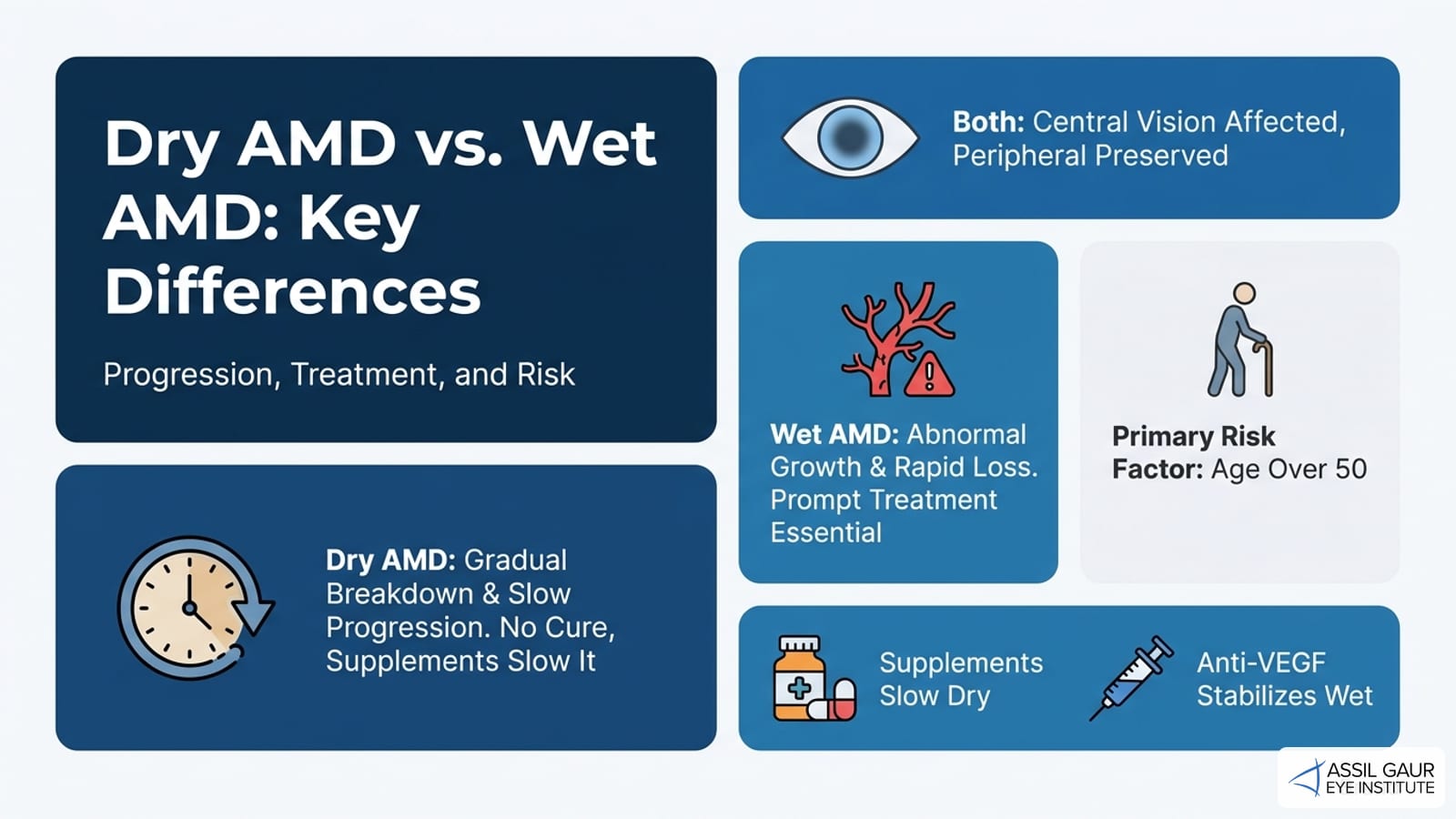
Age-related macular degeneration (AMD) affects the macula, the central part of the retina responsible for sharp, detailed central vision. It is the leading cause of severe vision loss in people over 50 in the developed world. In the early stages, AMD may cause subtle blurring or distortion in the center of the visual field. Straight lines may appear wavy, and a blurry or blank spot may develop in the center of vision.
There are two forms: dry AMD, which progresses slowly as retinal cells gradually break down, and wet AMD, in which abnormal blood vessels grow beneath the retina and can cause rapid, severe vision loss. While there is currently no cure for dry AMD, nutritional supplements can slow its progression. Doctors can treat wet AMD with anti-VEGF injections administered directly into the eye, which can stabilize or even improve vision when started promptly.
Diabetic Retinopathy
Diabetic retinopathy is a complication of diabetes that damages the retina’s blood vessels. High blood sugar levels cause these vessels to leak fluid, swell, or grow abnormally, distorting vision and, in advanced cases, causing severe vision loss or blindness. Blurry vision is often one of the earliest symptoms, though the condition can be present without any noticeable symptoms in its early stages.
Controlling blood sugar, blood pressure, and cholesterol is the cornerstone of prevention. Annual dilated eye exams are essential for anyone with diabetes, as early detection and treatment, including laser therapy or anti-VEGF injections, can prevent the majority of diabetes-related vision loss.
Medication Side Effects
Many medications can cause blurry vision as a side effect. These include antihistamines, antidepressants, corticosteroids, certain blood pressure medications, and some antimalarial drugs. Some medications affect the eye’s ability to focus; others can raise intraocular pressure or cause corneal deposits. If you notice a change in your vision after starting a new medication, speak to your prescribing doctor before stopping the medication, and arrange an eye exam to assess any impact on your vision.
Serious and Emergency Causes of Blurry Vision
Some causes of blurry vision require urgent or emergency medical attention. If you experience sudden blurry vision, particularly alongside any of the symptoms described below, seek emergency medical care immediately.
Retinal Detachment
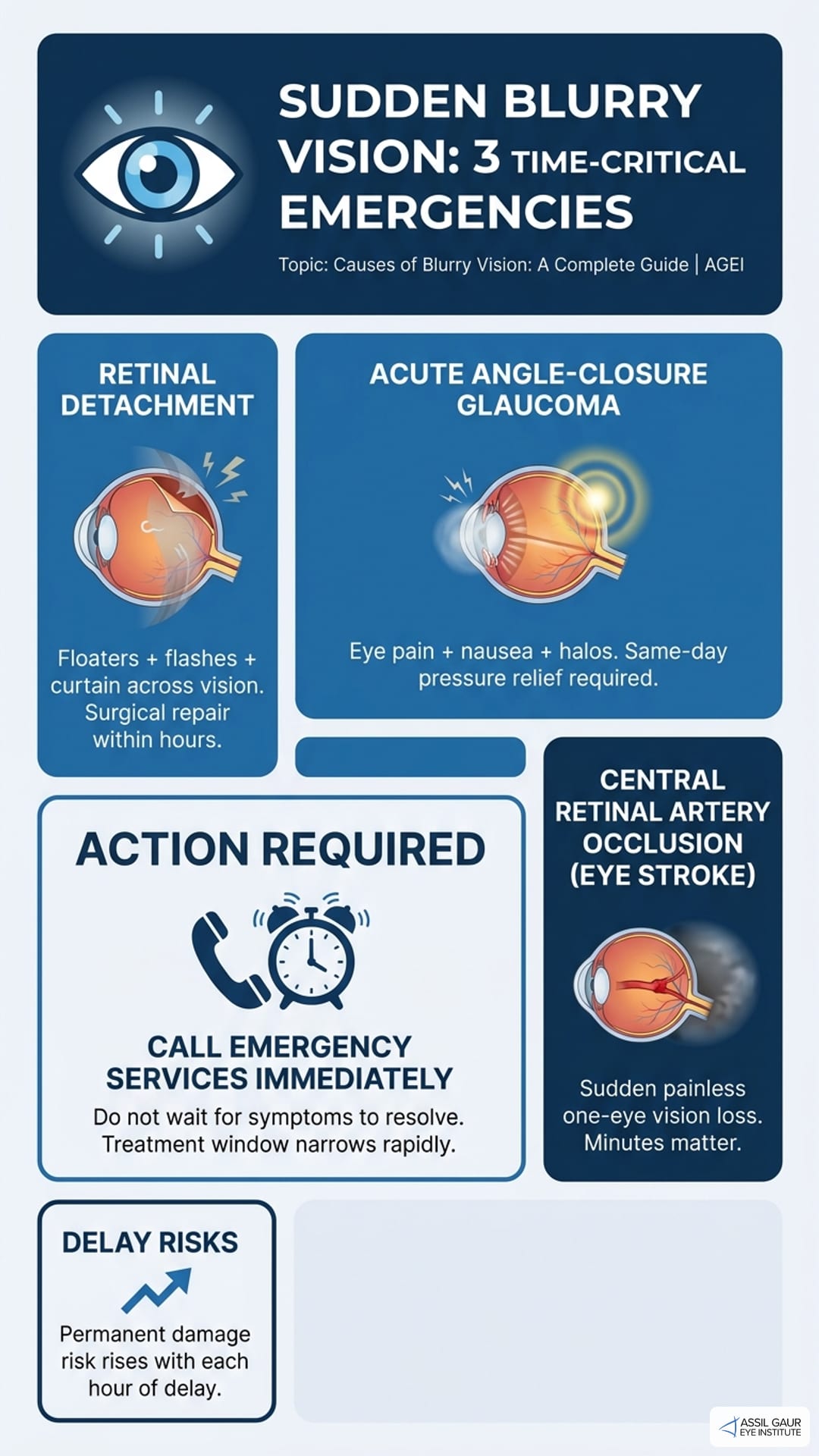
The retina can separate from the underlying tissue at the back of the eye, cutting off its blood supply. Warning signs include a sudden increase in floaters, flashes of light, and a shadow or curtain spreading across part of the visual field, often accompanied by blurry vision. Retinal detachment is a medical emergency. Without prompt surgical treatment, permanent vision loss is likely.
Acute Angle-Closure Glaucoma
As noted above, a sudden spike in intraocular pressure can cause rapid blurring of vision, severe eye pain, headache, nausea, and halos around lights. This constitutes an ophthalmic emergency and requires immediate treatment to prevent permanent optic nerve damage.
Migraine with Aura
Migraine can cause temporary visual disturbances, including blurry vision, zigzag lines, blind spots, or flashing lights, typically lasting 20 to 60 minutes before the headache phase begins. While migraine aura is not dangerous on its own, a doctor should always evaluate new or unusual visual symptoms to rule out other causes.
Concussion and Head Injury
A blow to the head can disrupt the brain’s visual processing pathways, causing blurry vision, double vision, difficulty focusing, and light sensitivity. A medical professional should promptly assess any blurry vision after a head injury.
Sudden Blood Pressure Changes
Both very high blood pressure (hypertensive crisis) and very low blood pressure can cause sudden blurry vision. A hypertensive crisis can damage the blood vessels supplying the retina and optic nerve, causing rapid vision deterioration. If you experience sudden blurry vision alongside a severe headache, chest pain, or shortness of breath, seek emergency care immediately.
Low Blood Sugar
Hypoglycemia, or low blood sugar, can cause temporary blurry vision, dizziness, and confusion, particularly in people with diabetes. Vision typically improves once blood sugar returns to normal, but discuss recurrent episodes with a doctor.
When Is Sudden Blurry Vision an Emergency?
A problem in any part of the eye or visual pathway can cause sudden blurry vision. When it occurs in only one eye, or alongside other symptoms, it may signal a medical emergency that requires immediate evaluation to prevent permanent damage and vision loss.
Three conditions deserve special attention because they are time-sensitive and often misread as minor complaints.
Retinal detachment happens when the light-sensitive tissue at the back of the eye separates from its supporting layers. Warning signs include a sudden shower of floaters, flashes of light, and a shadow or curtain spreading across your field of vision. Without treatment within hours, permanent vision loss is likely.
Acute angle-closure glaucoma is a rapid spike in eye pressure that can destroy the optic nerve in a matter of hours. It typically presents as sudden blurry vision combined with severe eye pain, headache, nausea, and halos around lights. This is a true ophthalmic emergency requiring same-day care.
Central retinal artery occlusion, sometimes called an eye stroke, causes sudden, painless vision loss in one eye and is often a warning sign of cardiovascular disease. Like a brain stroke, the treatment window is extremely narrow, so every minute matters.
Seek emergency medical services immediately if you experience any of the following:
Sudden, unexplained change in vision, including blurry vision that comes on within seconds or minutes
Eye pain, particularly if severe or accompanied by nausea
Eye injury of any kind
Signs of a stroke, such as facial drooping, one-sided weakness, or difficulty speaking
Marked vision impairment, especially if limited to one eye
Loss of part of the visual field, including peripheral vision or central vision
A shadow, curtain, or veil spreading across your vision (possible retinal detachment)
Sudden blurry vision in someone with a weakened immune system due to conditions such as HIV or chemotherapy treatment
Sudden vision loss accompanied by severe headache, eye pain, or halos around lights (possible acute angle-closure glaucoma)
Sudden painless vision loss in one eye, which may indicate a central retinal artery or vein occlusion
A new shower of floaters or flashes of light, even without pain, as these can precede a retinal tear or detachment
Prompt medical treatment gives you the best possible chance of preserving your vision. Do not wait to see whether symptoms resolve on their own.
If you are in the Los Angeles area and experiencing any of these warning signs, the advanced retinal and glaucoma specialists at Assil Gaur Eye Institute are equipped to provide world-class emergency eye care. For non-urgent concerns about blurry vision, a complimentary evaluation is the first step toward understanding what affects your sight and what precision treatment options are available.
What causes blurry vision?
Blurry vision has a surprisingly wide range of causes, from everyday issues like needing a stronger glasses prescription to more serious conditions that require prompt medical attention. Understanding what is behind your blurry vision is the first step toward getting the right care and, in many cases, achieving clearer sight than you thought possible.
The most common culprits are refractive errors, which include myopia (nearsightedness), hyperopia (farsightedness), astigmatism, and presbyopia. These occur when the shape of your eye prevents light from focusing correctly on the retina. The good news is that refractive errors are highly treatable, whether with glasses, contacts, or advanced vision-correction procedures like laser eye surgery.
Beyond refractive errors, other frequent causes include:
Dry eye disease – insufficient or poor-quality tear production disrupts the smooth optical surface of the eye, causing intermittent blurring
Cataracts – a clouding of the eye’s natural lens that tends to develop gradually with age, making vision appear foggy or washed out; cataracts are increasingly affecting younger patients as well
Glaucoma – elevated eye pressure that damages the optic nerve, often affecting peripheral vision first
Macular degeneration – deterioration of the central retina that distorts or dims central vision, particularly in older adults
Diabetic retinopathy – high blood sugar damages the tiny blood vessels in the retina, leading to swelling and vision changes
Medication side effects – certain antihistamines, blood pressure medications, and other drugs can temporarily blur vision as a side effect
Eye strain – prolonged screen time or reading without adequate breaks can fatigue the eye muscles and cause temporary blurring
Some of these causes are minor and easy to correct, while others signal conditions that need prompt, expert evaluation. If your blurry vision is new, worsening, or accompanied by other symptoms, it is always worth having a world-class ophthalmologist take a closer look.
Can a Stroke Cause Blurry Vision?
Yes, a stroke can significantly affect your vision. According to the American Stroke Association, about 65% of stroke survivors experience vision problems. Stroke-related vision loss is among the most complex and least understood consequences of stroke, and it deserves dedicated attention.
How vision is affected depends on several factors, including stroke severity, time to treatment, and which part of the brain was affected. The stroke’s location determines the type of vision loss. Damage to the right side of the brain causes changes in the left visual field, while damage to the left side of the brain causes changes in the right visual field.
There are four main categories of vision deficit following a stroke:
Visual field loss
Eye movement problems, where damage to the nerves and muscles of the eye affects focus and movement
Visual processing problems, where awareness of one side of the body is inhibited
Other post-stroke vision impairments, including blurry vision, double vision, and light sensitivity
Visual Field Cut
The visual field encompasses everything you can see, including straight ahead (central vision) and to the sides (peripheral vision). A visual field cut is a partial loss of vision in a specific area of the visual field. Stroke-related visual field deficits include:
Homonymous hemianopia: peripheral vision loss occurring in either the right or left half of the visual field in both eyes simultaneously.
Homonymous quadrantanopia: vision loss occurring in either the upper or lower quarter of the visual field.
Scotoma: a blind spot occurring anywhere in the visual field.
Sudden Blurry Vision from Stroke
A stroke can cause sudden blurry vision in one or both eyes if it affects an area of the brain that controls sight. A transient ischemic attack (TIA), sometimes called a ministroke, can also cause blurry vision that resolves within minutes to hours. Because TIA symptoms are temporary, they are sometimes dismissed, but a TIA is a serious warning sign of a future major stroke and requires immediate medical evaluation.
Double Vision (Diplopia)
When the eye muscles weaken after a stroke, the eyes can’t align, creating a visual perception of two objects, known as diplopia. Double vision after a stroke can be constant or present only when looking in a particular direction. The two overlapping images may also appear blurry rather than distinctly doubled.
Spatial Inattention and Visual Neglect
Spatial inattention occurs when a person does not respond to or is unaware of objects on their stroke-affected side. This is not a problem with the eye itself but results from damage to the parts of the brain that perceive and interpret visual information.
Eye Movement Disorders
Eye movement disorders can occur when a stroke damages the nerves and muscles that control eye movement. These include:
Rapid eye jiggling (nystagmus)
Eye turning (strabismus)
Eye tracking control issues (oculomotor dysfunction)
Double vision (diplopia)
These disorders can also affect depth perception, balance, coordination, and overall vision.
Dry Eye and Light Sensitivity After Stroke
Dry eye disease is one of the most common causes of blurry vision, and itis often overlooked because people assume blurriness always points to a prescription problem. In reality, when your tear film is unstable or insufficient, it creates an uneven surface on the eye that scatters light and produces that familiar fluctuating blur, especially after long stretches of screen time or reading.
The symptoms go beyond simple dryness. Most people with dry eye experience a gritty or burning sensation, redness, excessive tearing (the eye’s reflex response to irritation), and noticeable light sensitivity. Vision often clears momentarily after blinking, then blurs again within seconds, which is a telltale pattern that points directly to tear film instability rather than a refractive error.
Certain groups are at higher risk. Women, particularly those going through hormonal changes, are disproportionately affected. Prolonged screen use, contact lens wear, living in a dry or windy climate, and taking antihistamines or antidepressants can all reduce tear production or quality. Age is also a significant factor, as tear glands naturally become less productive over time.
Treatment depends on the underlying cause and severity. Preservative-free artificial tears are a common first step, but chronic dry eye often requires a more advanced approach. At Assil Gaur Eye Institute, our dry eye specialists offer a full range of world-class treatment options tailored to your specific tear film profile, so you get lasting relief rather than a temporary fix. A complimentary evaluation is the best place to start.
Dry eye can also develop in stroke survivors who have difficulty fully closing their eyes, which disrupts the natural blinking mechanism that keeps the tear film intact. In those cases, protective eyewear and prescription treatments are typically recommended alongside broader post-stroke vision rehabilitation.
Loss of Vision After Stroke
A stroke can cause complete loss of vision in one eye and, rarely, in both eyes. Complete loss of vision in one eye is typically due to a blockage in a retinal artery. Research from the University of Rochester found that stroke patients may retain some visual capabilities immediately after the stroke, but these abilities diminish and disappear permanently after six months, making early intervention critical.
If you experience any of these vision changes alongside other stroke symptoms, such as sudden weakness or numbness on one side of the body, an intense headache, or difficulty speaking or walking, call emergency services immediately.
What Visual Processing Areas of the Brain Are Affected by a Stroke?
The visual processing areas of the brain most commonly affected by stroke include:
The occipital lobe: The occipital lobe is the primary vision center of the brain. While all areas of the brain contribute to processing visual information, the occipital lobe handles most of it.
The brain stem: Located at the base of the brain, the brain stem controls eye movements, balance and stability, and the ability to recognize objects.
How Is Vision Loss Diagnosed After a Stroke?
A doctor or other healthcare professional will refer you to an eyecare specialist to help diagnose post-stroke visual problems. The type of specialist will depend on the root cause:
Ophthalmologists and optometrists diagnose and treat eye disorders.
Neurologists treat conditions associated with stroke, brain injuries, and brain disorders, focusing on changes in the brain and their impact on vision.
Neuro-ophthalmologists and neuro-optometrists specialize in visual symptoms resulting from neurological conditions, including stroke.
Can Vision Improve After a Stroke?
Most people with vision loss after a stroke will not fully recover their sight. Glasses or contact lenses cannot correct vision loss caused by brain damage. However, some recovery may be possible in the first few months. Research from the University of Rochester confirmed that early vision training interventions are far more effective than those begun after the six-month window, during which residual visual capabilities tend to diminish permanently.
Treatment options for post-stroke vision rehabilitation include scanning techniques, prism lenses, eye patches, lubricating eye drops, and protective sunglasses. Vision loss can significantly affect a stroke survivor’s safety and independence, but targeted training and environmental modifications can help limit the impact.
How Is Blurry Vision Treated?
Treatment for blurry vision depends entirely on the underlying cause. No single solution exists, so an accurate diagnosis from a qualified ophthalmologist is essential before any treatment begins.
Refractive errors are corrected with prescription corrective lenses, contact lenses, or refractive surgery such as LASIK or PRK.
Doctors manage dry eye with artificial tears, prescription anti-inflammatory drops, lifestyle changes, and in-office treatments such as punctal plugs or thermal pulsation therapy.
Cataracts are treated surgically, replacing the clouded lens with a clear artificial intraocular lens implant.
Glaucoma is managed with prescription eye drops to lower intraocular pressure, laser treatment, or surgery, depending on the type and severity.
Age-related macular degeneration is treated with anti-VEGF injections for wet AMD and nutritional supplementation to slow the progression of dry AMD.
Diabetic retinopathy is managed through blood sugar and blood pressure control, laser therapy, anti-VEGF injections, and in advanced cases, vitreoretinal surgery.
Medication-related blurry vision may resolve with a dosage or medication change, under the guidance of a prescribing doctor.
Emergency causes such as retinal detachment or acute angle-closure glaucoma require immediate surgical or laser intervention.
Protecting Your Vision: Prevention and Eye Health
Many causes of blurry vision are preventable or can be detected early enough to prevent significant vision loss. The following habits support long-term eye health:
Schedule regular eye exams. A comprehensive eye exam with an ophthalmologist can detect conditions such as glaucoma, macular degeneration, and diabetic retinopathy before symptoms appear. Adults should have a full eye exam at least every 1 to 2 years, or more often if they have risk factors.
Control blood sugar and blood pressure. Keeping these within healthy ranges significantly reduces the risk of diabetic retinopathy, hypertensive retinopathy, and stroke-related vision loss.
Wear UV-protective eyewear. UV protection reduces the risk of cataracts and macular degeneration. Sunglasses should block 100% of UVA and UVB radiation.
Take regular breaks from screens. Following the 20-20-20 rule- every 20 minutes, look at something 20 feet away for 20 seconds- can reduce digital eye strain.
Maintain a healthy lifestyle. A diet rich in leafy greens, oily fish, and antioxidants supports retinal health. Not smoking is one of the most important steps you can take to protect your vision, as smoking significantly increases the risk of AMD, cataracts, and optic nerve damage.
Know your family history. Conditions such as glaucoma and AMD have a strong genetic component. Inform your ophthalmologist of any family history of eye disease.
When to See an Ophthalmologist About Blurry Vision
Not every episode of blurry vision is an emergency, but all persistent or unexplained blurry vision deserves professional evaluation. You should book an appointment with an ophthalmologist if:
Your blurry vision has developed gradually and is affecting your daily activities
You have not had an eye exam in the past year or two
You have diabetes, high blood pressure, or a family history of eye disease
You are over 40 and finding it harder to read or focus on close objects
You have noticed changes in your peripheral vision or central vision
You are experiencing dry eye symptoms that are not responding to over-the-counter artificial tears
If your blurry vision is sudden, severe, or accompanied by pain, flashes, floaters, or any of the emergency warning signs listed above, do not wait for an appointment. Seek emergency care immediately.
World-Class Eye Care at Assil Gaur Eye Institute
At Assil Gaur Eye Institute, we believe that every patient deserves the very best in ophthalmic care, delivered with precision, compassion, and clinical excellence. Our team of Los Angeles’ leading LASIK, cataract, and retinal surgeons offers state-of-the-art diagnosis and treatment for the full spectrum of conditions that cause blurry vision, including refractive errors, cataracts, glaucoma, macular degeneration, diabetic retinopathy, and dry eye, all under one roof.
Whether you are seeking a routine eye exam to update your corrective lens prescription or need expert evaluation of a more complex condition, our specialists are here to deliver the enviable outcomes our patients have come to expect. Our expert staff can also provide guidance on what to do in an emergency if you suspect a stroke or another serious eye condition, before it happens.
“I knew I was going to the very best.” Our patients choose Assil Gaur Eye Institute because they refuse to compromise on the quality of their vision care.
Please call (866) 945-2745 or make an appointment online.
We are conveniently located for patients throughout Southern California and the Los Angeles area at locations in or near Beverly Hills, Santa Monica, West Los Angeles, West Hollywood, Culver City, Hollywood, Venice, Marina del Rey, Malibu, Manhattan Beach, and Downtown Los Angeles.