Cataract Surgery Intraocular Lens (IOLs)

Anita Wore Glasses for Decades, Then Dr. Gaur Helped Her Wake Up to Perfect Vision
Every December, Anita faithfully kept her annual appointment with her optometrist. She relied on glasses for distance and multifocal contacts for concerts and sporting events. Regular eye exams were simply part of her routine.
But when she attended her December 2024 exam, there was a small change in Anita’s prescription. Her optometrist assured her that it was considered a normal part of aging and nothing to be alarmed about; her prescription was updated, she went home, and didn’t give it a second thought.
But the following spring, something significantly shifted.
“All of a sudden, things just didn’t seem so clear,” Anita recalls. By late summer, she noticed no improvement, so she returned to her optometrist. The usual exam revealed nothing significant, and there was no noticeable change in her prescription. However, her optometrist recommended an additional test, which told a different story.
Anita knew she had been developing cataracts slowly over time. But the further test revealed that they had progressed to the extent that the cloudy lens was now actively affecting her vision. Her optometrist wasted no time and immediately referred Anita to Dr. Avneet Sodhi Gaur at Assil Gaur Eye Institute (AGEI) and assured her she’d be in great hands.
How Anita knew it was time for cataract surgery
When her vision became so blurry that even glasses with an updated prescription could not restore clear sight, Anita knew it was time for cataract surgery. “I was reaching for my readers more,” Anita recalls. “And when driving, street signs didn’t come into focus until I was right at the intersection!”
Many people will relate to Anita’s experiences, as these are among the most common signs that cataracts have progressed beyond what a new glasses prescription can correct.
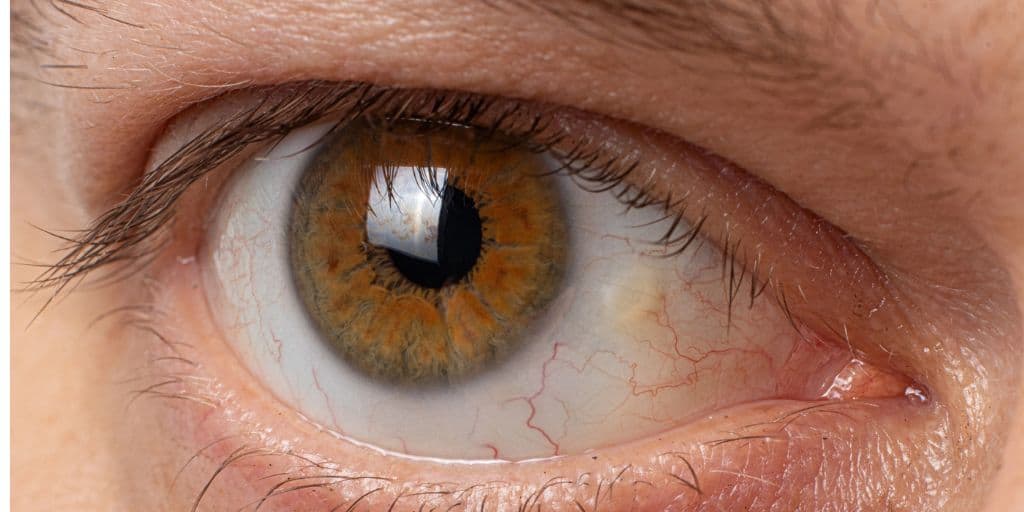
A cataract develops when the eye’s natural lens, which sits behind the iris and cornea and focuses light onto the retina, becomes cloudy over time. They can happen as a natural part of the aging process or sometimes due to eye trauma. Symptoms include:
- Blurry vision
- Sensitivity to light
- Difficulty with night vision (halos)
- Faded colors
- Double vision
In addition, as Anita discovered, there is that frustrating inability to see clearly even with an updated glasses prescription.
While Anita knew she had cataracts developing, it wasn’t until her deteriorating vision began affecting her daily life that she knew it was time to seek treatment.
Glasses cannot address cataracts once they become advanced because the clouding affects the eye’s natural lens. In the early stages, updating your prescription can compensate for vision changes and sharpen your sight, but laser cataract surgery is often necessary to restore clear vision as the cataract progresses.
Cataract surgery involves removing the cloudy natural lens and replacing it with a clear artificial lens known as an intraocular lens (IOL). The type of IOL chosen determines how well a patient can see without glasses afterward.
A monofocal IOL replaces the cloudy lens caused by cataracts and provides corrected vision at one distance, usually far away. A premium IOL is designed to provide clear vision at more than one distance, helping many people reduce or even eliminate their need for glasses. If a patient also has astigmatism, then a “toric version” of an IOL is used to address Anita’s vision correction and astigmatism.The type of IOL that is right for you depends on your vision needs, lifestyle, and eye health, and our surgeons will help you choose the very best option. You can learn more about cataract surgery and lens options at AGEI.
Why Anita chose Dr. Gaur as her cataract surgeon

Anita chose Dr. Avneet K. Sodhi Gaur because she took the time to explain what to expect at each step of cataract surgery, answered every question, and made her feel confident moving forward.
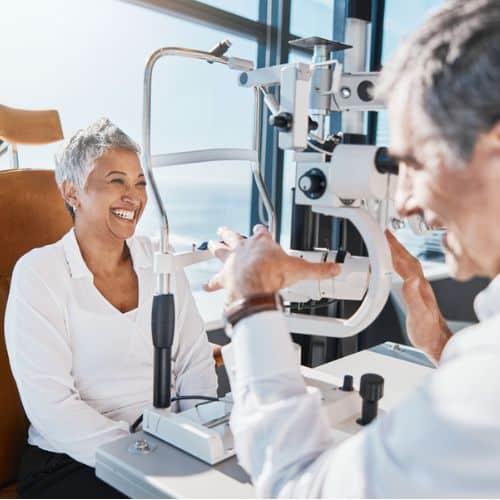
“I attended my consultation, and from the moment I walked through the door, the staff was wonderful,” she says. “I had quite a few tests at AGEI. Dr. Gaur showed me the images on a large screen and explained everything using language I could understand. She was friendly but professional. She answered all my questions, told me I was a good candidate, and made me feel completely at ease.”
Dr. Gaur recommended the Envista Envy multifocal IOL, a premium lens designed to correct vision at multiple distances, reducing or eliminating the need for glasses or contacts after surgery. For Anita, who had spent decades managing both close and distance vision with glasses and multifocal contacts to navigate her daily life, the prospect was hard to believe.
Anita was a little nervous about undergoing cataract surgery, but Dr. Gaur’s thoroughness, reassurance, honesty, and patience, evident in their every conversation, gave her the confidence to go ahead.
Request Your Consultation
Call now or book your appointment online.
What cataract surgery with Dr. Gaur was really like for Anita
In the weeks before her scheduled surgery in March, her regular eye doctor treated her for dry eye to ensure her eyes were in the best possible condition and that she was physically ready for surgery. But the idea of being awake while someone operated on her eye was a little disconcerting.
During cataract surgery, patients are typically awake but comfortable, with numbing eye drops and mild sedation (often called twilight anesthesia) used to help them relax throughout the procedure. Laser vision correction is performed on an outpatient basis, and patients can go home right afterward.
Anita says the procedure itself was comfortable, painless, and much easier than she expected.
“Dr. Gaur reassured me. She instilled enough confidence from the beginning that I trusted her,” Anita says. “I felt no pain. She talked to me throughout the whole process, and it just amazed me. The entire office was just wonderful. It was a piece of cake, really.”
Anita had one eye done first, then returned a week later for the second. “When I went back for my other eye, it was a breeze,” she says. “By that time, I knew exactly what to expect.”
How cataract surgery changed Anita’s vision
After cataract surgery with Dr. Gaur, Anita no longer needed glasses or contacts and could see clearly again.
“I remember saying, ‘Oh my gosh, I can see,'” she recalls saying. “I asked, ‘Is this for real? I can see all this without my glasses?’ And Dr. Gaur said, ‘Yes, it’s real.'”
Nearsightedness, farsightedness, and presbyopia were addressed completely. She no longer needed contacts or glasses on a daily basis and could see more clearly than she had in years.
“None of my friends and family can believe I don’t need glasses or contacts anymore, or how far I can see,” she says. “It still amazes me. I wake up and turn the TV on in bed, and I’m still shocked.”
She’s not keeping it to herself, either. “I’m telling all my friends, ‘You’ve got to get this done!'”
From the first consultation through post-op follow-up, Anita describes the experience as nothing but positive. “I know that Dr. Gaur has a lot to do with that,” she says. “It wasn’t just the outcome. It was also how she put me at ease from the outset and made sure I understood what was happening and what to do. She’s just one of the best eye surgeons.”
Why do patients choose AGEI and Dr. Gaur for cataract surgery in Los Angeles?
Patients choose Assil Gaur Eye Institute for cataract surgery because of their advanced technology, personalized care, and expertise with premium intraocular lenses.
At AGEI, fellowship-trained cataract surgeons such as Dr. Avneet K. Sodhi Gaur and their and ophthalmologists combine clinical precision with genuine, personalized care from your first consultation through every post-op follow-up. Whether you’re just beginning to notice the signs of cataracts or are ready to explore premium IOL options that can free you from glasses entirely, exceptional eye care is available at AGEI.
Request Your Consultation
Call now or book your appointment online.
AGEI serves patients throughout Southern California, including Beverly Hills, Santa Monica, West Los Angeles, and surrounding communities.
Frequently asked questions about cataract surgery
What's the difference between a standard IOL and a premium multifocal lens?
A standard monofocal IOL corrects vision at one distance, typically far, so patients may still need glasses for reading or other tasks. Premium multifocal IOLs, such as Envista Envy used for Anita or TECNIS PureSee, are designed to provide clear vision at multiple distances and reduce dependence on glasses.
Other premium options include toric IOLs, which correct astigmatism and can often provide results similar to those achieved with refractive surgery. Light Adjustable Lenses (LALs), however, are the only IOLs that allow doctors to fine-tune vision after surgery, giving patients the most precise and customizable results available.
How do I know if I'm ready for cataract surgery?
Cataracts don’t have to be at a crisis point to be treated. The right time to consider cataract surgery is when your vision has deteriorated to the point that they are affecting your quality of life. For example, you may find yourself experiencing one or more of the following:
- Driving difficulties
- Struggling with screens
- Needing frequent prescription changes
- Having blurred vision that glasses no longer fully correct
- Noticing faded colors
A comprehensive eye exam with a cataract specialist will rule out other conditions, such as macular degeneration. It will also determine how far the cataract has progressed and whether surgery can be postponed or needs to be performed sooner.
What should I do to prepare for cataract surgery?
Preparation typically includes a series of pre-surgical measurements and imaging to select the right IOL for your eye, as well as treatment for any conditions, such as dry eye or diabetic retinopathy, that could affect outcomes.
What is post-operative recovery like after cataract surgery?
Cataract surgery is a same-day procedure, and the recovery process begins when you return home. Your surgical team will provide specific aftercare and post-op instructions. Following them closely in the days after surgery supports the best possible healing and results.
Can cataracts come back after surgery?
No. Once the natural lens is removed and replaced with an artificial lens implant, a cataract cannot re-form on the replacement lens. Some patients experience a condition called posterior capsule opacification, where the membrane holding the IOL becomes cloudy, but this is easily treated with a quick, painless laser procedure in the office.
Sources
-
Cataract Surgery
https://www.ncbi.nlm.nih.gov/books/NBK559253/ -
Intraocular Lenses for Cataract Surgery
https://www.ncbi.nlm.nih.gov/books/NBK599976/
More Stories You might be interested in


Cataract Surgery Intraocular Lens (IOLs)
Light Sensitivity Made Steve’s Life Unbearable—Until Dr. Assil’s State-of-the-Art IOL Surgery

Cataract Surgery Intraocular Lens (IOLs)
39-Year-Old Couldn’t Drive at Night—Now She Sees Like a Hawk
Cataract Surgery Refractive Lens Exchange (RLE)