Best LASIK in Santa Monica: The Westside’s Standard for World-Class
Life on the Westside doesn’t pause for fogged-up glasses or a contact lens drying out in the ocean breeze. Whether your mornings start with a run along Palisades Park, a paddle out at the pier, a ride down the beach path, or a back-to-back day of meetings in Silicon Beach, your eyes are working as hard as you are. For a growing number of Santa Monica patients, the question is no longer whether to get LASIK eye surgery, but where to get it done right.
That distinction matters more than most people realize. LASIK is often marketed as a commodity, as if it were a single laser, a single price, and a single outcome. It isn’t. The gap between a discount, high-volume procedure and a genuinely world-class one can be the difference between vision that is merely acceptable and vision that lets you see the break of a wave, read a screen at the end of a long day, and drive Pacific Coast Highway at dusk without halos or strain.
This page is for the Santa Monica patient who has already decided they’re tired of glasses and contacts and now wants to choose carefully when considering LASIK or other forms of laser eye surgery. It breaks down what actually separates one LASIK practice from another, why the surgeons at Assil Gaur Eye Institute (AGEI) are trusted by world-class athletes like LeBron James and demanding Westside professionals alike, and what to expect when you walk into the Santa Monica office for a complimentary evaluation.
The Westside has no shortage of LASIK eye surgeons. Here’s what actually separates them
Search “LASIK near me” in Santa Monica, and you’ll find many providers, many advertising the same headline price and the same promise: a quick laser treatment, a few days of recovery, and freedom from glasses. What that marketing leaves out is the enormous variation hidden underneath the word “LASIK.”
Standard LASIK at a discount center may use an older microkeratome blade to create the corneal flap, a single population-average laser pass, and a brief post-op check before you’re sent home. Bladeless all-laser LASIK replaces the blade with a femtosecond laser to create a more precise flap. Eagle Vision LASIK® (developed at Assil Gaur Eye Institute) is the latest LASIK procedure. Originally developed for professional athletes and those with physically demanding jobs, it is now the gold standard that patients travel from as far away as China to have it.
EPIC PRK and LASEK® skip the flap entirely and treat the surface, trading a longer recovery for the absence of flap-related risk.
Each of those is a different tier of technology. But the technology is only half of the equation. The surgeon’s personal experience, the depth of the pre-surgical screening, and the protocol wrapped around the procedure are what truly determine your outcome. As the FDA’s own LASIK guidance emphasizes, patient selection and a thorough pre-operative evaluation are among the most decisive factors in a safe, successful result, not the brand of laser on the brochure.
In other words, choosing LASIK on the Westside isn’t about finding the nearest provider or the lowest advertised number. It’s about finding the team most likely to deliver the best possible result for your specific eyes.

Eagle Vision LASIK: a procedure you literally can’t get anywhere else
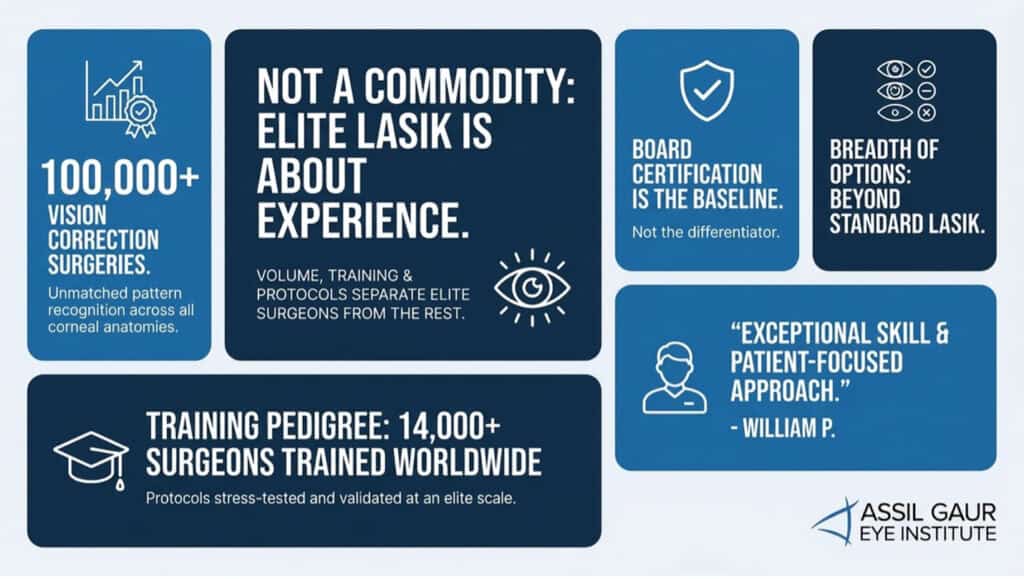
At the center of what makes AGEI different is Eagle Vision LASIK, a proprietary procedure developed and refined exclusively at the practice. It is not a marketing label slapped onto a standard protocol. It is a specific combination of advanced diagnostic mapping, customized treatment planning, and surgical execution that has been honed across more than 100,000 laser vision correction surgery procedures.
Where conventional LASIK relies on population-average treatment parameters, Eagle Vision LASIK uses wavefront-guided, patient-specific corneal mapping to design a treatment unique to each individual eye.
The target isn’t simply 20/20 vision. It’s the sharpest vision your particular anatomy can support, which, in many cases, exceeds 20/20. Peer-reviewed ophthalmology research consistently shows that customized, wavefront-guided treatment produces better contrast sensitivity and fewer higher-order aberrations like halos and glare than conventional LASIK, the kind of difference you notice driving at night or reading in low light.
Because Eagle Vision LASIK is exclusive to AGEI, it can’t be replicated at another Westside practice, no matter how similar the equipment looks. That exclusivity is exactly why patients travel, from across Los Angeles, the country, and internationally, to have their procedure done here.
Request Your Consultation
Call now or book your appointment online.
The surgeons behind your results
A board-certified ophthalmologist is the baseline for LASIK, not the differentiator. What sets elite surgeons apart is sheer volume, subspecialty training, and the range of refractive options they can offer to correct various refractive errors when standard LASIK isn’t the right call. A surgeon who has performed tens of thousands of procedures has encountered the full spectrum of corneal anatomy, healing patterns, and rare complications, and knows how to handle them.
Dr. Kerry Assil has personally performed more than 70,000 eye surgeries and trained over 14,000 surgeons worldwide. He is the surgeon who developed the Eagle Vision LASIK technique. That training pedigree is the quiet reason the protocols at AGEI are so dependable: they’ve been stress-tested and refined at a scale almost no other practice reaches.
That standard is carried by the surgeons he has trained directly. Dr. Avneet K. Sodhi Gaur was taught the Eagle Vision LASIK technique by Dr. Assil himself, making her one of the few surgeons in the world to have learned the procedure and advanced laser cataract surgery from the person who created them.
Board-certified and fellowship-trained at Tufts Medical Center and the New England Eye Center, and named a top Los Angeles ophthalmologist by Los Angeles Magazine, she has performed thousands of LASIK, cataract, and refractive surgeries. For a patient, the point is simple: the surgeon caring for your eyes doesn’t just follow Dr. Assil’s protocols. She learned them at the source.
Patients tend to describe the experience in similar terms. As Leslie W. put it, “Dr. Gaur is amazing. So detailed in her explanation and very careful with the procedure.” Another patient, William P., wrote, “I have repeatedly recommended Dr. Assil for his exceptional skill and patient-focused approach. I wouldn’t trust my vision to anyone else.”
Built for active, screen-heavy, coastal lives
Santa Monica patients put unusual demands on their eyes. Mornings outdoors mean bright sun, wind, salt air, and the kind of dryness that makes contact lenses miserable by noon. Afternoons in Silicon Beach offices or studios mean hours of screen time, which is its own driver of eye strain and tear-film instability.
Evenings might mean a drive west into the glare off the water or east into headlights on the 10.
This is precisely why the pre-operative evaluation matters so much here. Dry eye, in particular, is both a possible contraindication to LASIK and a condition that surgery can worsen if it isn’t identified and managed first. A practice that treats screening as a formality can miss it. A world-class evaluation looks for it specifically, assessing tear-film quality alongside corneal thickness, curvature, and overall ocular health (including screening for conditions like glaucoma) so your treatment plan is built around the life you actually live, not a generic profile. For patients whose dry eye requires attention before surgery, AGEI offers dedicated dry eye treatment as part of the same continuum of care.
The result patients are after isn’t just “no more glasses” or corrective lenses. It’s comfortable, stable, high-performance vision that holds up through a sunrise run, a full workday on a laptop, and a night drive home, without the halos, glare, or end-of-day fatigue that lower-tier procedures can leave behind.
Why elite performers trust this team, and why that should matter to you
You don’t have to be a professional athlete to benefit from a surgical team that operates at a professional-athlete standard. But it’s worth understanding why the most vision-dependent people in the world seek this practice out, because the reason translates directly to everyday patients.
For an elite athlete, ordinary corrected vision isn’t enough. They need optimized acuity under high-speed, high-contrast, low-light conditions, and any compromise in contrast sensitivity, depth perception, or night vision is professionally unacceptable.
That is the bar Eagle Vision LASIK was engineered to clear: outcomes that exceed the 20/20 standard rather than simply meeting it. It’s why LeBron James chose this practice for his procedure, later saying plainly, “I wasn’t nervous at all. I knew I was going to the very best.” Dwyane Wade trusted the team for both LASIK and a separate conjunctival nevus (eye freckle) removal, and Academy Award winner Marlee Matlin underwent vision-saving surgery here that allowed her to keep performing.
These aren’t marketing anecdotes; they’re documented outcomes from people whose livelihoods depend on their eyes. And the same engineering that protects a professional athlete’s career is what protects your night drive, your screen-heavy job, and your decades of vision ahead. You are getting the procedure built for the most demanding eyes in the world, applied to yours.
What a world-class Santa Monica evaluation actually includes
LASIK candidacy depends on several factors: corneal thickness and curvature, pupil size, the degree of astigmatism, the severity of nearsightedness (myopia) or farsightedness (hyperopia), tear-film health, and the absence of conditions such as keratoconus or significant dry eye disease. A surface-level screening can confirm the basics in a few minutes. A world-class evaluation goes considerably further.
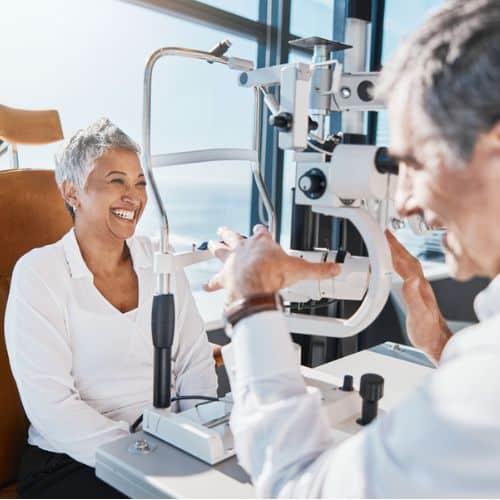
At AGEI, the complimentary evaluation includes high-resolution corneal topography, wavefront Aberrometry, and a full assessment of tear-film quality, along with a dilated retinal examination to ensure the health of your retina. You’ll speak directly with a surgeon, not only a technician, about your visual goals, your lifestyle, and any concerns. Plan for roughly 60 to 90 minutes, because your pupils are dilated for the retinal exam, it’s wise to arrange a ride or downtime afterward.
That depth isn’t academic. Consider Dr. Klaus Ito, an optometrist and longtime hard-contact-lens wearer who came in seeking Eagle Vision LASIK. During his pre-surgical consultation with Dr. Gaur, a previously undetected retinal tear was discovered, something a prior eye exam had missed. It was repaired before his LASIK procedure, and he went on to achieve 20/10 vision in each eye, sharper than 20/20, with no post-surgical dry eye.
That outcome was only possible because the evaluation was thorough enough to catch what others hadn’t. As patient Steven L. described a similar save, “Dr. P detected a retinal issue before having cataract surgery, which was a vision saver. I am so very appreciative of her and everyone at Assil Gaur.”
The principal elite patients understand this: the value of a world-class practice isn’t only in the surgery itself. It’s in everything that happens before the laser ever fires.
Request Your Consultation
Call now or book your appointment online.
Not a LASIK candidate? You still have excellent options
One of the clearest signs of a strong practice is what happens when standard LASIK isn’t your best path. At AGEI, patients who aren’t LASIK candidates aren’t simply turned away. They’re matched to a better-fitting procedure.
For thinner corneas, PRK or LASEK may be the smarter choice, and AGEI’s proprietary EPIC PRK, an all-laser technique developed by Dr. Assil that uses no blades or chemicals, is engineered to resurface the eye faster and with less irritation than conventional PRK. For prescriptions outside the LASIK range, the EVO ICL (an implantable contact lens) is an excellent option. And for patients approaching presbyopia who wish to reduce reliance on reading glasses, Refractive Lens Exchange (RLE) and premium intraocular lenses, such as the Light Adjustable Lens or the enVista Envy trifocal IOL, can provide a range of clear vision.
The goal of the evaluation is to find the right procedure for you, not to confirm a predetermined recommendation.
Visiting the Assil Gaur Eye Institute Santa Monica office
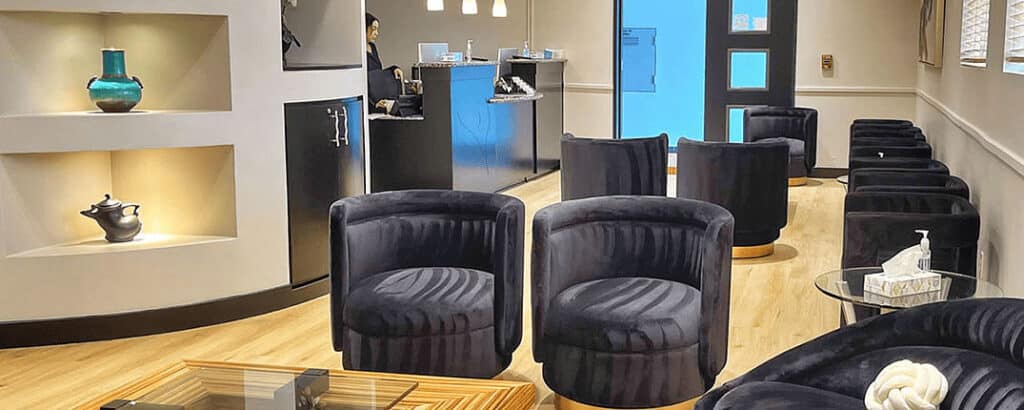
Convenience shouldn’t mean compromise. For Westside patients, the Santa Monica office puts this level of care close to home, without the drive into Beverly Hills traffic. The office is located at 2222 Santa Monica Blvd, Suite 107, Santa Monica, CA 90404, just east of downtown Santa Monica and easily reached from Brentwood, Pacific Palisades, Venice, Marina del Rey, and the broader Westside. The team can be reached at (310) 382-5050, and office hours run Monday through Friday.
The same surgeons, the same proprietary Eagle Vision LASIK technology, and the same diagnostic rigor that draw patients from around the world are available to you, a short drive from the beach. For a Santa Monica patient, that combination of elite expertise with genuine local access is hard to find anywhere else on the Westside.
A standard that traces back to 1949
The exacting approach you experience today isn’t new. The practice was chartered in 1949 by Dr. Robert M. Sinskey, often called the father of modern cataract surgery, who personally chose Dr. Kerry Assil to carry forward his surgical innovations and his commitment to patient care.
For more than seven decades, that lineage has run through everything the practice does, and it’s a meaningful part of why AGEI is now regarded as one of the top LASIK centers in the United States. When you choose this team in Santa Monica, you’re stepping into a tradition of surgical excellence that predates almost every other refractive practice in Los Angeles.
See Santa Monica and West Los Angeles more clearly
The conversation about LASIK too often gets reduced to price. The more important question isn’t what you pay, since AGEI’s fees are in line with other leading ophthalmology practices. It’s what you receive: the depth of expertise, the diagnostic rigor, and the surgical precision to deliver an outcome you’ll live with for decades.
If you’re ready to find out whether Eagle Vision LASIK is right for you, book your complimentary evaluation at the Assil Gaur Eye Institute Santa Monica office and take the first step toward the clearest vision of your life.
Closer to the other side of town? See our LASIK in Beverly Hills page.
Santa Monica LASIK FAQs
How much does LASIK cost in Santa Monica, and is paying more actually worth it?
Pricing varies widely across the Westside, and the lowest advertised numbers usually reflect standard, high-volume procedures rather than customized care. At AGEI, fees are commensurate with those of other top ophthalmology practices in the country. The more useful way to think about cost is value over time: a wavefront-guided, surgeon-customized procedure backed by a thorough pre-operative work-up and built-in post-operative monitoring is an investment in vision you’ll rely on for decades. The meaningful comparison isn’t the sticker price. It’s what you receive for it.
I get dry, tired eyes from screens and ocean air. Can I still have LASIK?
Possibly, but it depends on your tear-film health, which is exactly why a thorough evaluation matters. Dry eye can be both a reason to delay LASIK and a condition that surgery can worsen if it isn’t identified first. At AGEI, tear-film quality is assessed specifically during the complimentary evaluation, and for patients who need it, dedicated dry eye treatment can be addressed before any decision about surgery. The goal is durable, comfortable vision that holds up through screen-heavy days and breezy mornings, not just a result that looks good on day one.
How soon after LASIK can I get back to the gym, the beach, or surfing?
Most LASIK patients achieve functional vision within 24 to 48 hours and return to work and everyday activities within two to three days, with vision continuing to stabilize over about four to six weeks. Water activities and contact sports require more caution: swimming, surfing, and the ocean are typically off-limits for a couple of weeks to protect the healing cornea, and your surgeon will give you a personalized timeline at your post-operative visits. PRK recovery is longer, generally one to two weeks for comfortable functional vision, though AGEI’s proprietary EPIC PRK is engineered to speed that surface healing.
Is the Santa Monica office the same practice as the Beverly Hills location?
Yes. Assil Gaur Eye Institute serves Westside patients from its Santa Monica office at 2222 Santa Monica Blvd, Suite 107, with the same surgeons, proprietary Eagle Vision LASIK technology, and diagnostic standards that have made the practice nationally recognized. For many patients in Santa Monica, Venice, Marina del Rey, Brentwood, and Pacific Palisades, it simply offers a more convenient way to access that care.
What if I’m too nearsighted, or my corneas are too thin, for standard LASIK?
Being outside the LASIK range doesn’t mean you’re out of options. For thinner corneas, PRK or LASEK, including AGEI’s all-laser EPIC PRK, may be a better fit. For higher prescriptions, the EVO ICL implantable contact lens is an excellent alternative. And for patients approaching presbyopia or with significant farsightedness, Refractive Lens Exchange and premium lenses such as the enVista Envy trifocal IOL can provide a broad range of clear vision. The evaluation is designed to find the procedure that fits your eyes, not to push a single answer.
Who is the best LASIK surgeon near Santa Monica?
“Best” comes down to the criteria that actually predict outcomes: procedure volume, surgical training pedigree, the breadth of refractive options offered, and the depth of pre-operative diagnostics. By those measures, Dr. Kerry Assil, who has performed more than 70,000 eye surgeries, trained over 14,000 surgeons worldwide, and developed the Eagle Vision LASIK procedure trusted by elite athletes, along with the surgeons he has trained directly, including Dr. Avneet K. Sodhi Gaur, set a standard few practices can match. Board certification is the minimum; the differentiator is the combination of volume, innovation, and documented outcomes the team brings to every patient.