“Ozempic Face” Can Happen with Weight Loss. An Oculoplastics Surgeon Explains How to Fix It
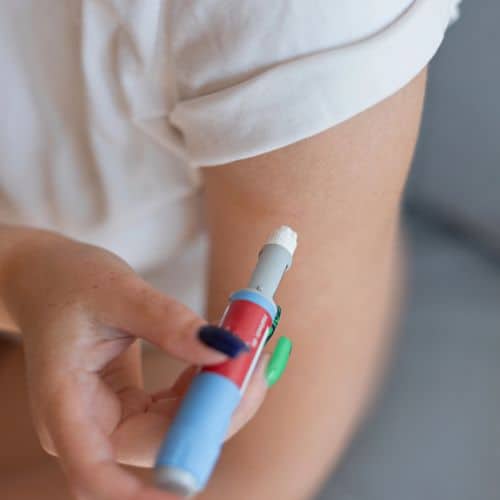
Over the last few years, certain treatments originally developed for type 2 diabetes and obesity have transformed the way people lose weight. Examples of these treatments are GLP-1 medications and peptides such as Ozempic, Wegovy, Mounjaro, and Zepbound. Many patients are achieving remarkable improvements in their health and confidence.
However, one unexpected side effect often brings them to my office. They tell me:
“I love my weight loss, but I feel like my face aged overnight.” and “Look at these eye bags! I have never had bags like this.”
This phenomenon has become so common that it has earned its own nickname: “Ozempic Face.”
What is Ozempic face?
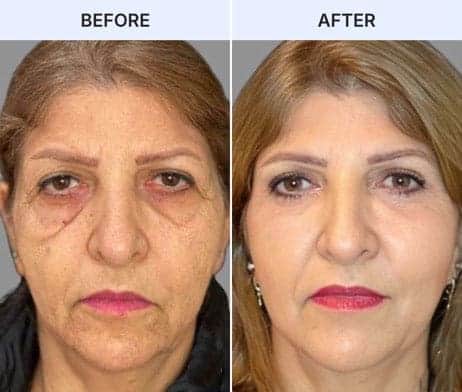
Ozempic Face is not caused by the semaglutide medication itself. Rather, it results from rapid weight loss and significant facial fat loss, similar to that seen after bariatric surgery.
Just as we lose fat and muscle mass from our waist, hips, and thighs, we also lose fat from the face. Facial fat, specifically subcutaneous fat, plays an important role in maintaining a youthful facial appearance. It provides support, soft contours, and smooth transitions between facial structures.
When facial fat decreases quickly, patients may notice:
- More prominent under-eye circles “dark circles”
- Hollow cheeks
- Increased jowling or “saggy lower face”
- Loose skin around the jawline and neck
- Deepening smile lines, nasolabial folds, and marionette lines
- A more tired or aged appearance
For some individuals, the changes are subtle. For others, they can be dramatic.
Why does the face look like it has aged so quickly after weight loss?
As an oculoplastic surgeon, I often explain to patients that facial aging is not simply about wrinkles.
A youthful face relies on three key elements:
- Volume
Fat provides structural support and softness. When volume disappears from areas like the cheeks and temples, the face can look gaunt and skeletal. - Ligament support
Facial tissues are suspended by retaining ligaments. As volume decreases and skin laxity increases, these structures become more visible, contributing to jowls and sagging. - Skin elasticity
After rapid weight loss, skin and its underlying elastin may not fully contract back to their previous position, especially in patients over 40.
The result is often a face that appears older even though the patient is healthier and slimmer.
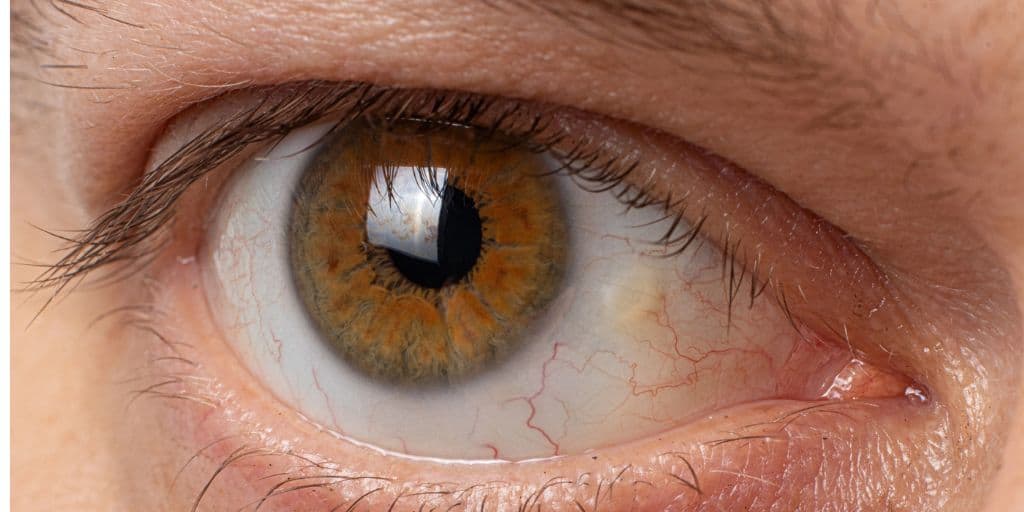
The eyes often show the biggest changes
One of the first areas affected by weight loss is the eye region. My patients commonly notice:
- Hollow upper eyelids
- More prominent eyelid creases
- Under-eye hollows
- Dark circles
- A tired appearance
Because the eyes are the focal point of the face, even small changes, such as sunken eyes, can make a person feel significantly older.
This is why many Ozempic patients seek consultation with a specialized plastic surgery expert or oculoplastic surgeon. The delicate tissues around the eyes require a specialized approach. This often involves medical-grade skincare or a consultation with a dermatologist or surgeon that balances rejuvenation with natural results.
Request Your Consultation
Call now or book your appointment online.
Does Ozempic face go away on its own?
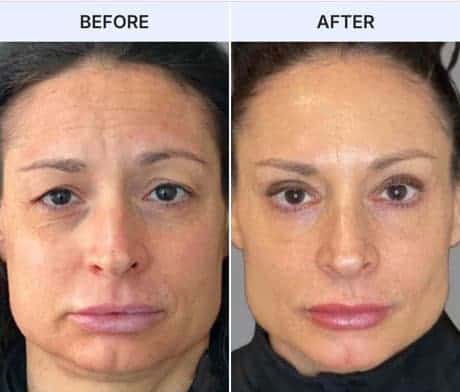
The loss of “facial volume” does not generally reverse itself unless you regain some weight. Facial fat pads that shrink stay shrunken as long as you maintain the lower weight. Some people see a modest, natural softening over the first several months as their weight stabilizes and the loss is no longer rapid.
Another factor to consider is your skin’s laxity (how loose your skin is). This is generally more age-dependent. Younger skin with good collagen and elasticity can retract and adapt somewhat over months once weight stabilizes. Older skin, or skin that has lost a lot of volume quickly, tends not to bounce back because the underlying elastic support is reduced.
In some cases, your face may regain a small amount of fullness after weight stabilizes, and the skin may tighten slightly over time. However, significant facial volume loss and skin laxity often do not fully reverse on their own. If you’re bothered by hollow cheeks, under-eye hollows, or sagging skin after weight loss, treatments such as fillers, fat transfer, laser resurfacing, or surgical rejuvenation may help restore a more youthful, refreshed appearance.
What I tell patients about when to do something about Ozempic face
The healthiest approach is usually to wait until your weight has stabilized for several months before deciding on facial rejuvenation. Once your weight is stable, it’s easier to determine which changes are temporary and which represent true volume loss or skin laxity.
What can be done about Ozempic face?
The good news is that there are many effective options.
The best treatment depends on the degree of facial volume loss, skin laxity, and the patient’s goals. These include:
Surgical fat repositioning
Surgical fat repositioning is a technique where a surgeon moves your own existing facial fat from one area to another, rather than removing it or adding filler.
It is most commonly done around the eyes, where the puffy fat that creates under-eye bags is repositioned downward to fill your hollow tear-trough area rather than being cut away. The result is a smoother transition between your lower eyelid and cheek, using your own fat to restore a more youthful, even contour.
Lower blepharoplasty
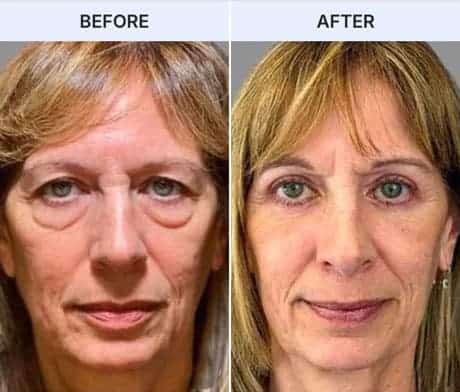
A lower blepharoplasty is a surgical procedure that improves the appearance of your lower eyelids, typically to address under-eye bags, puffiness, or loose, sagging skin.
This works by removing or repositioning the fat that causes bagginess. I also may trim excess skin, often through a hidden incision just below the lash line or on the inside of the eyelid. My patients end up with a much smoother, less tired-looking under-eye area that blends more seamlessly with the cheek.
Upper eyelid rejuvenation
Weight loss can reveal upper eyelid hollowing or excess skin that was previously less noticeable. An upper blepharoplasty can restore a refreshed, rested appearance while maintaining the unique character of the eyes.
Like a lower blepharoplasty, an upper blepharoplasty is also a surgical procedure that removes excess skin, and sometimes fat or muscle, from the upper eyelids. It addresses the heavy, hooded, or droopy look that can make eyes appear tired or, in more severe cases, can even block part of your field of vision.
My patients’ eyes wind up with a look that is much more open, giving them a much more refreshed appearance.
Brow and midface rejuvenation
As facial volume decreases, the descent of your brow and midface may become more apparent. In other words, as your face loses volume, your eyebrows and the middle part of your face may begin to sag more.
Carefully selected patients may benefit from brow lifting or a neck lift to address loose neck skin and restore and improve facial harmony rather than a full facelift.
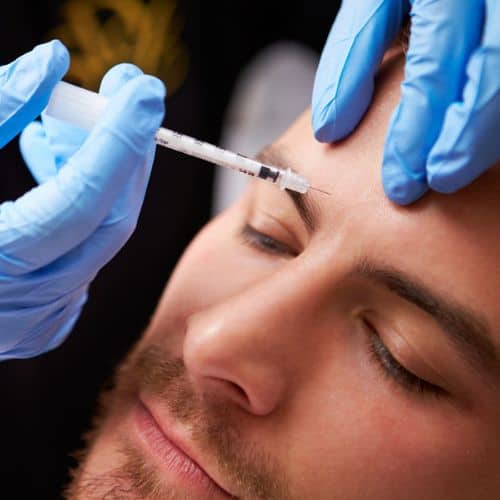
A brow lift is a procedure that raises and repositions sagging eyebrows and smooths the forehead. This addresses the heavy or perpetually tired look associated with drooping brows. It can be done surgically through small incisions, often hidden in the hairline, or with non-surgical options like Botox, radiofrequency, microneedling, injectable fillers, or thread lifts for a more subtle result.
Skin tightening and resurfacing
For patients with mild to moderate skin laxity, treatments such as our Alma Hybrid Laser can greatly improve skin texture, collagen production, and tightening. These treatments are particularly effective around the eyes, where the skin is thinnest.
The Alma Hybrid is a skin-resurfacing laser that combines two types of lasers in one device to repair the skin’s surface and stimulate collagen production. This treatment smooths fine lines and wrinkles, improves texture and pigmentation caused by sun damage, and can even soften scars, with less downtime than any traditional CO2 laser can alone.
Strategic volume restoration
Not every patient needs surgery, though some may opt for fat grafting or fat transfer to restore lost volume.
Thoughtful restoration of volume (with dermal facial fillers or fat) can soften hollow areas and recreate youthful facial contours.
The key is balance, especially when using hyaluronic acid (dermal filler) products. Overfilling rarely looks natural. The goal is to restore what was lost, not create a different face. That is what my extensive experience gives to my patients.
Request Your Consultation
Call now or book your appointment online.
The art of looking like yourself
One of the most common concerns I hear is, “I don’t want to look overdone.”, and I couldn’t agree more!
As someone who has always been passionate about art, I approach facial rejuvenation with the same principles that guide great portraiture: balance, proportion, light, shadow, and harmony.
The goal is never to erase who you are.
The goal is to help you look like the healthiest, most refreshed version of yourself while maintaining proper hydration and staying protected with daily sunscreen.
Considering Ozempic or already experiencing facial changes?
Weight loss medications can be life-changing for weight management and often provide tremendous health benefits. Please keep in mind that maintaining adequate protein intake remains essential for muscle preservation.
If you’ve noticed changes in your face after weight loss, know that you have options.
The most important step is a personalized evaluation. Every face ages differently, and the best treatment plan should be tailored to your anatomy, goals, and lifestyle.
When approached thoughtfully, facial rejuvenation after weight loss can restore balance, confidence, and a naturally refreshed appearance—without sacrificing the benefits of your weight loss journey.
Want to know if you’re a good candidate for eyelid surgery or an aesthetic procedure?
Many patients are unsure whether surgery, injectables, laser, or non-surgical options are right for them. We’re here to help!
For a limited time, I am offering a complimentary photo assessment, so you can receive an expert opinion from the comfort of your home before scheduling an in-office visit.
Click here to request your complimentary photo assessment from Dr. Adele!

Written by Dr. Adeleh Yarmohammadi

Medically Reviewed by Dr. Lindsay Harris