Dry Eye
Event Planner’s ‘Pink Eye’ Turned Out to Be Something Much More Serious
As an event planner, Connie’s sharp attention to detail and clear vision are essential to her success. So when her right eye began developing persistent redness and itchiness a few years ago—classic symptoms of dry eye—she naturally assumed it was just pink eye, something that would clear up quickly with the proper treatment.
“A few years ago, I started developing redness in my right eye that was itchy. I thought it was pink eye,” Connie recalls. What seemed like a simple eye infection led her on an unexpected journey that transformed not just her eye health but her entire approach to wellness.
A frustrating cycle of temporary relief

Her first ophthalmologist prescribed steroids, which seemed to work initially. “I got steroids that suppressed it, but I had to stop the steroids after two weeks, and it would flare again.” This became a disheartening pattern—temporary improvement followed by an inevitable return of symptoms, including burning and dryness.
“We tried different steroids, and after a few rounds, he told me he didn’t know what was wrong.” The common symptoms persisted despite multiple treatment attempts. Facing this medical dead end, Connie knew she needed to take matters into her own hands. She began researching dry eye specialists and discovered Dr. Harris at Assil Gaur Eye Institute’s dry eye center.
A different kind of detective work
Dr. Harris immediately took a more comprehensive approach during Connie’s eye exam, ordering extensive testing, including thyroid and autoimmune panels to rule out conditions like Sjogren’s syndrome. When these came back negative, Dr. Harris made a recommendation that would prove to be life-changing.
“She thought it was more systemic and recommended I see a functional medicine doctor, but one that was practicing both Eastern and Western medicine.” Dr. Harris understood that Connie’s eye problems might be just the visible symptom of something happening elsewhere in her body.
Functional medicine testing revealed the surprising culprit: Connie’s gut health was driving the inflammation manifesting in her eyes. “It was my gut that was causing the inflammation. We proved it by changing my diet and lifestyle, and improvements happened.”
A collaborative approach to healing
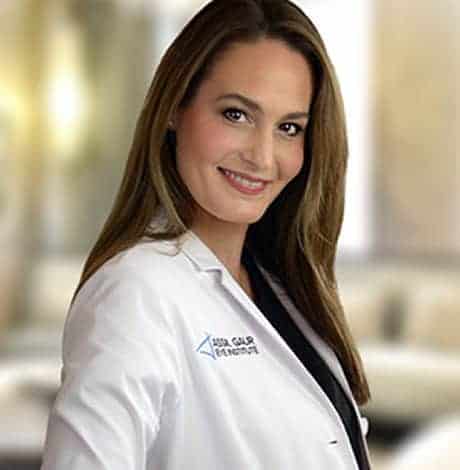
What made Connie’s treatment truly exceptional was the seamless collaboration between her two doctors, addressing both the systemic causes and the damaged ocular surface. “Dr. Harris said, ‘I can only help you topically, because it’s systemic; you have to treat it from the root—your gut.'” Rather than working in isolation, both practitioners coordinated Connie’s care.
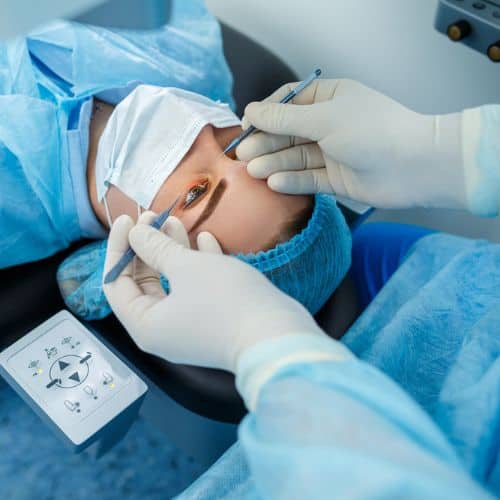
Dr. Harris implemented a comprehensive topical treatment plan using state-of-the-art in-office treatments, including BlephEx lid treatments for blepharitis, platelet-rich plasma (PRP) eye drops, and Xiidra anti-inflammatory medication. BlephEx uses a patented, medical-grade micro-sponge to gently remove bacterial biofilm from the eyelid margins, addressing meibomian gland dysfunction that affects tear film quality.
The procedure takes just six to eight minutes and helps restore healthy eyelid function, which is essential for proper lubrication. Meanwhile, the PRP eye drops—custom-made from Connie’s blood serum—provided natural growth factors and healing properties that over-the-counter artificial tears simply cannot replicate. At the same time, Xiidra targeted the underlying inflammatory processes affecting tear production.
“When I would take tests with the functional doctor, I would show the results to Dr. Harris, and Dr. Harris could read the results and make sense of them. It aligned with her diagnosis and treatment,” Connie explains. “With Dr. Harris, it wasn’t just treatment, but discussions about how to eat better and things Dr. Harris had experienced in her own life.”
Request Your Consultation
Call now or book your appointment online.
The road to continued healing
The results didn’t come overnight. “After a year, things started significantly improving.” But both doctors were honest about the chronic nature of Connie’s condition. “Dr. Harris said it is chronic and something I have to maintain. The functional doctor said the same thing.”
As someone who thrives in the high-stress world of event planning, Connie had to confront how stress was affecting her overall quality of life and eye health. “Stress is a big part of it, but I’m an event planner, so I go through lots of stress.” Her dry eye syndrome symptoms became an early warning system for her overall health.
“I made a full discovery that made sense. I didn’t use to take care of my health as well, but now I have made improvements.” The eye problems that initially seemed like such a burden became the catalyst for a complete lifestyle transformation.
A new perspective on health

Today, Connie’s eyes have dramatically improved, though she still experiences occasional flare-ups. “I still occasionally have dry eye symptoms and styes, but they’re a constant reminder that I have to manage my stress.” Rather than seeing these episodes as setbacks, she views them as valuable feedback from her body. The chronic condition no longer produces enough tears to cause the severe discomfort she once experienced daily.
“I loved the validation of both doctors’ support—I felt like I had a team behind me who was willing to work jointly,” Connie reflects on her care experience.
Her advice to others struggling with persistent eye problems is simple but profound: “Don’t give up. When my ophthalmologist said he didn’t know what the issue was, I knew it was time to switch doctors. I’m thankful that I found Dr. Harris. Seeing her met and exceeded my expectations. I assumed there would be a light treatment or something, but not systemic, and I’m grateful Dr. Harris helped me find the root of the problem.”
Connie continues to see Dr. Harris regularly, maintaining the eye health that allows her to excel in her demanding career while serving as a powerful reminder that sometimes the most effective treatment addresses not just the symptoms we see, but the underlying causes we don’t.
Why trust your eyesight to Assil Gaur Eye Institute?
Under Dr. Assil’s leadership, the Assil Gaur Eye Institute has assembled a team of top ophthalmology specialists from across the country who continue AGEI’s tradition of providing patients with the highest-quality specialist eye care in the United States. In keeping with AGEI’s founding principles, our doctors have kept their clinics comfortable and familiar, much like family-run medical practices once were.
Today, the Assil Gaur Eye Institute is nationally recognized for compassionate, patient-centric care, a commitment to pioneering advances in ophthalmology, and dedication to supporting the health and well-being of its patients and community.
Request Your Consultation
Call now or book your appointment online.
We treat patients throughout Southern California and the Los Angeles area at locations in or near Beverly Hills and Santa Monica.
Frequently asked questions about systemic dry eye treatment
What are the most common symptoms of dry eye, and when should I see an eye doctor?
Dry eye syndrome presents with various symptoms, including burning sensation, grittiness, redness, watery eyes (as the eyes overcompensate for dryness), blurred vision, and a feeling of something stuck in your eye. Many patients also experience increased sensitivity to light and difficulty with activities like reading or using contact lenses. If you’re experiencing persistent symptoms that don’t improve with over-the-counter eye drops, or if symptoms interfere with your daily quality of life, it’s time to visit an eye doctor for a comprehensive evaluation.
How do advanced treatments like IPL, TearCare, and BlephEx address different causes of dry eye?
These state-of-the-art in-office treatments target specific underlying causes of dry eye. IPL (Intense Pulsed Light) therapy treats meibomian gland dysfunction (MGD) by reducing inflammation and improving oil gland function in the eyelids. TearCare uses thermal pulsation to clear blocked oil glands and restore the tear film’s lipid layer. BlephEx addresses blepharitis by removing bacterial biofilm from eyelid margins. Together, these treatments can significantly improve tear production and corneal health when traditional methods like warm compresses aren’t enough.
What eye conditions are commonly associated with dry eye syndrome?
Dry eye can be associated with various eye conditions and may increase risks for others. Patients with MGD, blepharitis, or demodex mite infestations often experience dry eye symptoms. Additionally, those who’ve had LASIK or cataract surgery may develop temporary or permanent dry eye. Conditions like glaucoma may be more challenging to manage when the ocular surface is compromised. Systemic conditions such as Sjogren’s syndrome, rheumatoid arthritis, and hormonal changes can also contribute to insufficient tear production or poor tear film quality.
What treatment options are available beyond basic eye drops?
Modern dry eye centers offer numerous treatment options beyond over-the-counter drops. These include prescription medications like Xiidra or cyclosporine, punctal plugs to prevent tear drainage, PRP eye drops made from your blood, and advanced procedures like IPL, TearCare, and BlephEx. Some patients benefit from specialized contact lenses designed for dry eyes, while others may need to address underlying conditions through optometry or ophthalmology care. The key is finding an eye doctor who takes a comprehensive approach to identify and treat the root causes.
How can systemic health issues like gut problems affect my eyes?
The connection between systemic health and eye conditions is increasingly recognized in modern optometry and ophthalmology. Gut health can significantly impact inflammation throughout the body, including the eyes and cornea. Poor gut health may contribute to insufficient lubrication, compromised tear film quality, and increased susceptibility to conditions like blepharitis or MGD. Patients may also be taking antihistamines or other medications that affect tear production. A comprehensive evaluation at a specialized dry eye center can help identify these connections and coordinate care with other healthcare providers for optimal outcomes.
Sources
Gut microbiota and eye diseases: A review
https://pubmed.ncbi.nlm.nih.gov/39331938/
Meibomian gland disease: the role of gland dysfunction in dry eye disease
https://pmc.ncbi.nlm.nih.gov/articles/PMC5685175