This lens is truly one of a kind
The first and only FDA-approved accommodating IOL in the United States.
Modeled after our eye, it uses the muscles inside the human eye to flex and accommodate, providing active ranges of vision for those with active lifestyles.
Intraocular lenses (IOLs) are pivotal in cataract treatment, replacing the clouding eye’s natural lens and restoring clear vision. One of the options we offer here at Assil Gaur Eye Institute is the Crystalens® AO IOL.
Spotlight on Crystalens by Bausch + Lomb
Crystalens by Bausch + Lomb stands out as a revolutionary accommodating intraocular lens design in the landscape of standard IOL treatment solutions.
This unique, accommodating IOL is the only FDA-approved lens in the U.S., opening new possibilities for enhanced vision post-cataract surgery.
A unique and innovative approach
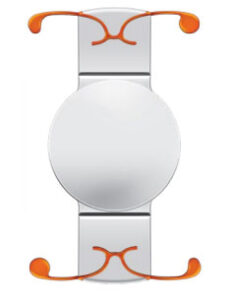
Crystalens leverage the eye’s natural focusing mechanism, anchoring to the muscles responsible for vision focus. The (haptics) attachments of this lens allow the lens to move microscopically within the eye (much like your natural lens before it became a cataract) allowing a continuous range of vision: near vision, intermediate vision, and distance vision.
This advanced mechanism, coupled with ease of implantation and minimal recovery time, distinguishes Crystalens from other intraocular lens implants
Patients opting for the Crystalens IOL experience minimal glare and fewer nighttime halos, underscoring its reliability for improved night vision. Integrating into the eye’s natural focusing system ensures a seamless vision experience.
Other unique aspects of the Crystalens include:
Utilizing the eye’s natural focusing mechanism
The innovative design of Crystalens elevates the standard of vision correction by emulating the eye’s inherent focusing capabilities.
By adjusting within the eye, Crystalens can seamlessly shift focus between objects at different distances, offering unparalleled flexibility and adaptability in vision correction.
This remarkable mimicry of the eye’s natural focusing abilities showcases the advanced intraocular lens technologies available, ensuring patients experience a natural and unobtrusive enhancement to their vision.
Quick recovery and easy adaptation
Crystalens is not only revolutionary in design but also in its implementation, offering a streamlined implantation process and swift recovery times.
Minimal downtime post-surgery underscores Crystalens’s practicality and convenience.
Patients with active lifestyles opt for this advanced lens and look forward to a swift return to their daily routine, with the added benefit of enhanced visual acuity.
Minimized visual disturbances
Crystalens takes a substantial leap forward in visual clarity by significantly mitigating common visual disturbances like glare and nighttime halos often experienced with other lenses.
A toric version for patients with astigmatism
Partner to the Crystalens, the Trulign® Toric IOL offers the same benefits while also addressing astigmatism. The Trulign toric lens provides the same clear intermediate and distance vision alongside astigmatism correction.
Call now or book your appointment online.
How are accommodating IOLs different from other types of IOLs?
General Design
- Accommodating IOLs mimic the eye’s natural lens’s ability to change shape and shift focus from distant to near objects.
- Monofocal IOLs: Provide clear vision at one distance (either near, intermediate, or distant). Glasses may be needed for other distances.
- Multifocal Lens: Have multiple focus points, allowing for vision at various distances (near, intermediate, and distant). They operate on a principle similar to bifocal or progressive eyeglasses.
- Toric IOLs: Specifically designed to correct astigmatism, a condition where the cornea’s curvature is irregular.
Mechanism of Action
- Accommodating IOLs: These lenses move or flex within the eye to focus on objects at varying distances, thus “accommodating” different visual needs.
- Monofocal IOLs: Fixed focus for a particular distance.
- Multifocal IOLs: Provide multiple fixed focus points.
- Toric IOLs: Have a specific orientation to correct the irregular curvature of the cornea.
Outcomes and Limitations
- Accommodating IOLs: Aim to provide a more natural range of vision with fewer visual disturbances like halos and glare. However, the degree of accommodation might not be as extensive as the natural lens, and some patients might still need reading glasses for close-up tasks.
- Monofocal IOLs: Provide clear vision at the chosen distance, but glasses are often needed for other distances.
- Multifocal IOLs: While they offer vision at various distances, some patients might experience halos or glare, especially in low light.
- Toric IOLs: They effectively correct astigmatism but don’t offer multifocal or accommodating features.
Ideal Candidates
- Accommodating IOLs: Those who wish for a more natural range of vision post-cataract surgery and would like to reduce dependency on glasses.
- Monofocal IOLs: Those who don’t mind wearing glasses for certain distances.
- Multifocal IOLs: Those who want vision correction for multiple distances and are willing to adapt to potential visual disturbances.
- Toric IOLs: Patients with significant astigmatism needing correction.
What are the risks and benefits of the Bausch + Lomb Crystalens IOL?
Benefits of Crystalens
- Accommodative Focus: The main advantage of the Crystalens is its ability to provide a range of vision, from near to far, reducing the need for reading glasses or bifocals.
- Clear Vision: Many patients report clear, crisp vision after the procedure.
- Fewer Halos and Glare: Some users report fewer instances of halos and glare with the Crystalens compared to other types of IOLs.
- Potential for Spectacle Independence: While not guaranteed, there’s a possibility that you might not need glasses for most daily tasks after the lens implantation.
Risks of Crystalens
- Post-Surgical Complications: As with any surgery, there’s a risk of complications, such as infection, bleeding, or inflammation. However, these risks are generally low and not higher with an accommodating lens.
- Incomplete Accommodation: Not everyone will achieve complete freedom from reading glasses. Some people may still need them for specific tasks.
- Z-Syndrome: A rare complication specific to Crystalens where the lens may misalign slightly, causing a Z-shaped distortion. This may require additional procedures to correct.
- Potential for Additional Surgeries: In some cases, additional surgeries may be needed if the lens doesn’t position correctly or if there are other complications. Again, these risks are not higher with an accommodating lens versus any other type of lens.
Have questions about the Crystalens® IOL or any other IOL? Come talk to the cataract lens experts at Assil Gaur Eye Institute
The Assil Gaur Eye Institute’s team of nationally known ophthalmologists select the highest quality intraocular lenses for their cataract patients based on their individual visual needs and lifestyles. Our cataract surgeons are equipped with the latest technology to assess your eye health and vision needs and select the best IOL for your needs.
In keeping with the founding principles of AGEI, our eye surgeons have managed to keep their clinics comfortable and familiar, much like how family-run medical practices used to be.
Call now or book your appointment online.
We are conveniently located for patients throughout Southern California and the Los Angeles area in or near Beverly Hills, Santa Monica, West Los Angeles, West Hollywood, Culver City, Hollywood, Venice, Marina del Rey, Malibu, Manhattan Beach, and Downtown Los Angeles.
In addition to outpatient laser cataract surgery, the ophthalmology experts at AGEI are nationally recognized for their eye care and treatment options for a full range of conditions, including glaucoma, retinal detachment, cornea conditions, floaters and flashes, dry eye, presbyopia, refractive surgery such as LASIK and much more.
-
Refractive aspects of cataract surgery
https://journals.lww.com/co-ophthalmology/Abstract/1996/02000/Refractive_aspects_of_cataract_surgery.5.aspx -
Long-term visual outcomes after Crystalens® HD Intraocular Lens Implantation
https://www.ncbi.nlm.nih.gov/pmc/articles/PMC4039401/ -
Bausch + Lomb Products for Eye Care and Contact Lenses
http://www.crystalens.com/