How to Choose the Best LASIK Surgeon in Los Angeles
You’ve decided you’re done with glasses and contacts. Now you’re staring at a list of LASIK surgeons in Los Angeles and wondering how on earth you’re supposed to choose without a personal referral. That’s a very common situation. LA has more LASIK providers per square mile than almost anywhere in the country, and every single one of them has a polished website, five-star reviews, and a compelling offer designed to get you through the door.
To choose the best LASIK surgeon in Los Angeles, patients should prioritize a surgeon's extensive experience, advanced technology, and strong patient outcomes. For example, Assil Gaur Eye Institute's co-founder Dr. Kerry Assil has performed over 70,000 eye surgeries and invented EagleVision LASIK, demonstrating significant expertise. The institute is also recognized for its advanced laser vision correction technology and has doctors, like Dr. Assil and Dr. Avneet K. Sodhi Gaur, repeatedly named Los Angeles Magazine Top Doctors. Additionally, a high volume of positive patient reviews, such as AGEI's 4.9 out of 5 stars across more than 16,000 reviews, indicates a trusted and reputable practice.
The problem isn’t finding a LASIK eye surgeon in Los Angeles. The problem is figuring out which ones are actually worth trusting with your vision. This guide gives you a practical framework for doing exactly that: the credentials to verify, the red flags to watch for, and the questions to ask before you ever sit in a surgical chair.
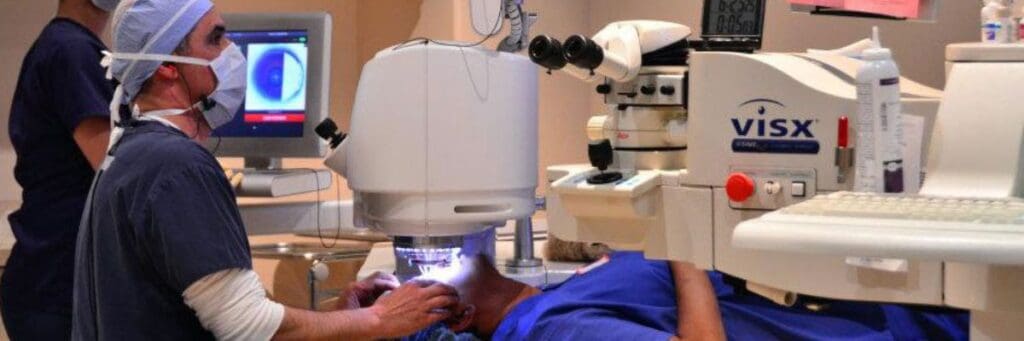
By the time you finish reading, you’ll know how to evaluate board certification and subspecialty training, what a genuinely thorough pre-op evaluation looks like, and why the technology a surgeon uses tells you more about their commitment to outcomes than any billboard ever will. If you’re already leaning toward booking a consultation, you can schedule a complimentary LASIK evaluation with our team at any point.
Why is choosing a LASIK surgeon in Los Angeles challenging?
Los Angeles is saturated with LASIK marketing. Discount chains, celebrity-endorsed practices, and boutique surgical centers all compete for the same patients, and the messaging can be nearly impossible to parse. A low advertised price might signal a high-volume, low-touch practice.
A famous name attached to a clinic doesn’t automatically mean the surgeon performing your procedure is the one who earned that reputation. There needs to be verifiable credentials and a highly satisfied client base behind them.
The density of providers also means patients are more likely to encounter high-pressure sales tactics, rushed consultations, and practices that push LASIK on candidates who aren’t actually good fits for the procedure.
The FDA recommends that patients undergo a thorough eye exam and discuss all available vision correction options before committing to LASIK, not just the one a practice happens to offer. In a market like Los Angeles, that guidance matters more than ever.
The good news: once you know what genuine quality looks like, the noise clears up fast.

Green Flag #1: Board certification and subspecialty training in refractive surgery
At minimum, your LASIK surgeon should be a board-certified ophthalmologist
by the American Board of Ophthalmology. Board certification confirms that a surgeon has completed an accredited residency, passed rigorous written and oral exams, and meets ongoing continuing education requirements. It’s the baseline, not the ceiling.
Beyond board certification, look for fellowship training or subspecialty focus in refractive surgery. A surgeon who has dedicated their career to corneal and refractive procedures has a fundamentally different depth of experience than a general ophthalmologist who performs LASIK as one of many services. Ask directly: what percentage of their practice is refractive surgery? The answer tells you a lot.
Membership in organizations like the International Society of Refractive Surgery (ISRS), the American Academy of Ophthalmology, and the American Academy of Refractive and Cataract Surgery is another positive signal. It indicates active engagement with the latest research, techniques, and peer review in the field.
At Assil Gaur Eye Institute (AGEI), our team has the credentials and qualifications you want in your surgeon.
Green Flag #2: A thorough pre-op evaluation, not just a quick screening

Candidacy for LASIK isn’t determined by a five-minute intake form. A genuinely thorough pre-operative evaluation includes corneal topography to map the shape and thickness of your cornea, pupil dilation, a full refraction measurement, and a detailed review of your ocular and medical history. Some patients have corneal irregularities, thin corneas, or dry eye conditions that make LASIK a poor choice, and a surgeon who doesn’t screen for these isn’t protecting you.
If a practice offers to confirm you’re a good candidate before you’ve even walked in the door, that’s a red flag. Real candidacy evaluation takes time and equipment. It also requires honesty: a good refractive surgeon will tell you whether PRK, ICL, or another procedure is a better fit for your eyes, even if LASIK is what you came in asking about.
At AGEI, our pre-op evaluations are designed to give patients a complete picture of their eye health before any surgical decision is made. That’s not just good medicine. It’s the only ethical way to practice.
Green Flag #3: Advanced, surgeon-specific technology like custom wavefront or EagleVision LASIK
What laser technology should a good LASIK surgeon use?
The technology a surgeon uses reflects their investment in outcomes. Bladeless LASIK, which uses a femtosecond laser to create the corneal flap rather than a mechanical blade, offers greater precision and is now considered the standard of care at high-quality practices. Wavefront-guided LASIK goes further: it creates a three-dimensional map of your eye’s unique optical imperfections and uses that data to guide the laser, rather than relying on a generic prescription correction.
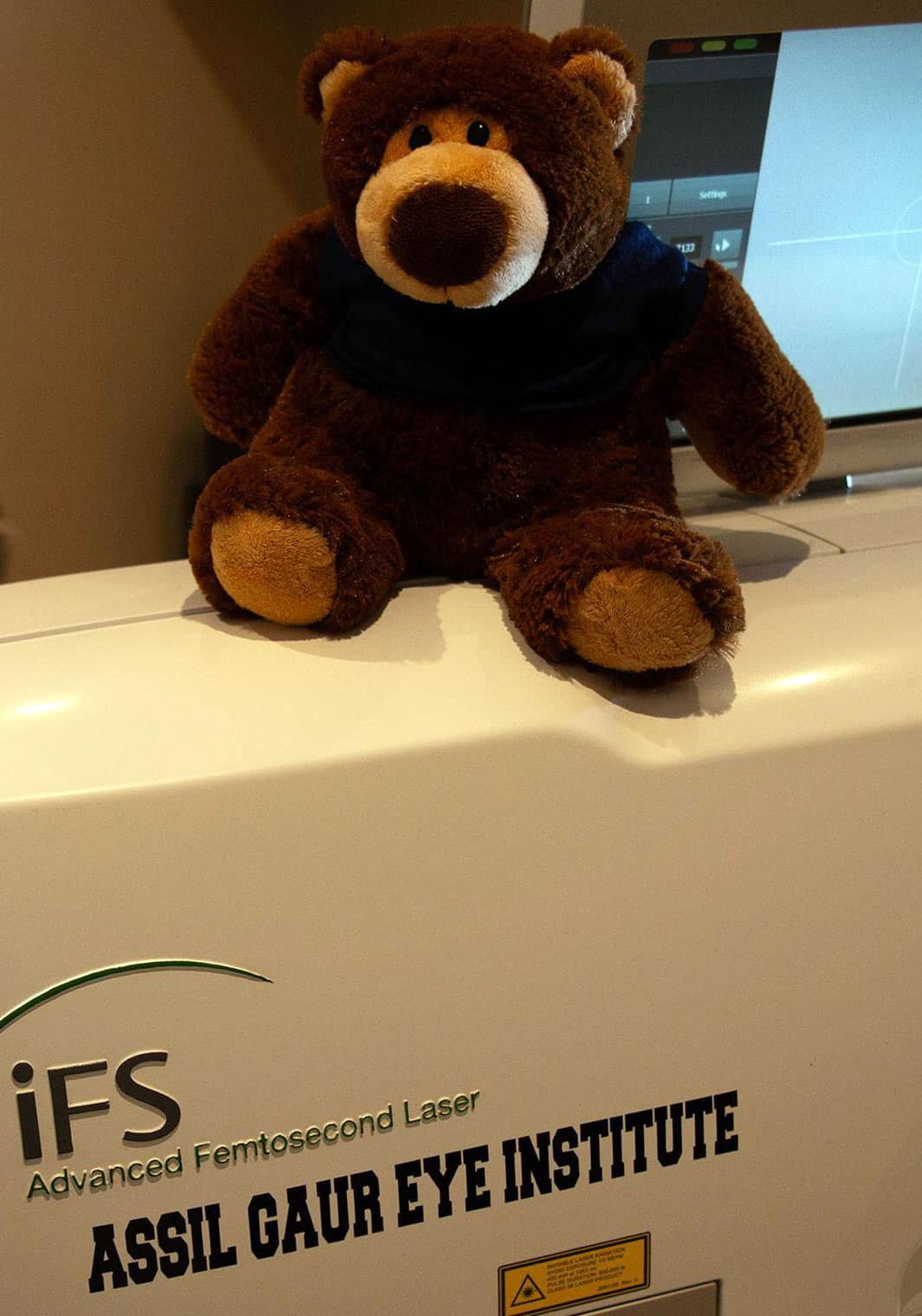
Some practices have developed proprietary approaches that go beyond standard wavefront technology. EagleVision LASIK, offered exclusively at Assil Gaur Eye Institute, is one example. It’s the state-of-the-art procedure LeBron James chose when he decided to have LASIK surgery. He put it simply: “I wasn’t nervous at all… I knew I was going to the very best.” That kind of confidence doesn’t come from a marketing campaign; it comes from a surgeon’s track record and the technology behind the procedure.
This is the procedure trusted by other elite athletes, including Dwyane Wade, Chris Paul, and Paul George, whose careers depend on vision performing at the very highest level. And it is available only at Assil Gaur Eye Institute, the only practice in greater Los Angeles with two surgical suites fully equipped to perform it. When you are weighing the odds, the most reassuring number of all is the experience of the team holding the laser.
Is bladeless LASIK better than traditional LASIK?
Yes. Bladeless LASIK reduces the risk of flap complications and allows for more precise flap creation, which matters for both safety and visual outcomes. When combined with wavefront-guided treatment, it enables surgeons to correct higher-order aberrations (abnormalities) that standard LASIK can’t address.
If a practice is still using a microkeratome blade for routine LASIK cases, that’s a practice to avoid.
Call now or book your appointment online.
Red flags to watch for when researching LA LASIK providers
The FDA recommends that patients undergo a comprehensive eye exam and discuss all vision correction options before proceeding with LASIK, not just the procedures a particular practice offers.
The Los Angeles market has a few patterns that should give any patient pause.
Is heavily discounted LASIK pricing a red flag?
Extremely low prices often reflect older technology, less experienced surgeons, or a high-volume model where individual patient care takes a back seat if the price seems too good to be true in a city where real estate, equipment, and surgical expertise all cost money, it probably is.
Are high-pressure sales tactics during a LASIK consultation a warning sign?
A reputable surgeon’s office will give you time to ask questions, review your options, and decide without urgency. If you feel pressured to book before you’re ready, walk out. The same goes for practices that offer only one procedure: a surgeon who performs only LASIK has a financial incentive to recommend it regardless of whether it’s right for you.
What if a LASIK practice lacks verifiable credentials or named surgeons?
Marketing is easy. Transparency is harder, and it’s what separates practices that genuinely stand behind their work.
Client care is built into our AGEI patient culture. We take the time to examine your eyes in detail, explain all the options that suit your particular goals, and answer all your questions. Patients are highly satisfied with our aftercare. Our price is competitive with gold-standard LASIK providers. We respectfully leave the final decision up to you. (They are your eyes after all.)
What questions should I ask during my LASIK consultation?
Walking into a consultation with prepared questions changes the dynamic entirely. Here are the ones that matter most:
- Are you board-certified by the American Board of Ophthalmology, and do you have fellowship training in refractive surgery?
- How many LASIK procedures have you personally performed, and what is your LASIK experience like? What is your enhancement rate?
- What pre-operative testing will you perform to confirm I’m a candidate?
- What technology do you use, and why did you choose it over alternatives?
- If LASIK isn’t right for me, what other options would you recommend?
- Who performs the surgery? You, or another surgeon in the practice?
- What does your post-operative care protocol look like, and how long will you follow my results?
A surgeon who answers these questions directly and without defensiveness is confident in their practice. Vague answers or deflection are data points, too.
How patient testimonials and case studies can (and can’t) help you decide
Patient reviews are useful, but they need context. A five-star rating on Google tells you patients were satisfied, but it doesn’t tell you whether the surgeon screened candidates carefully, used current technology, or handled complications well. Look for reviews that describe the process in detail, not just the outcome.
Case studies from named patients carry more weight. Dwyane Wade, for example, chose Assil Gaur Eye Institute for both LASIK and conjunctival nevus (eye freckle) removal surgery. The fact that a professional athlete whose career depends on visual precision trusted our surgeons with both procedures speaks to the level of care involved. Similarly, Academy Award-winning actress Marlee Matlin underwent vision-saving surgery at AGEI, with results that allowed her to continue performing on stage and screen.
These aren’t just celebrity endorsements. They’re examples of patients with high stakes and real alternatives choosing a specific practice for specific reasons. That’s the kind of social proof worth paying attention to.
What to do after you’ve narrowed down your list of LASIK surgeons
Once you’ve identified two or three practices that clear the credential, technology, and transparency bar, book consultations with them. Don’t commit to surgery at the first one. Use each consultation to ask your prepared questions, observe how the staff treats you, and note whether the surgeon takes time to explain your results or rushes through them.
Compare the pre-op evaluations you receive. A practice that performs corneal topography, measures your pupil size in low light, and reviews your tear film quality is doing the work. A practice that hands you a form and schedules you for surgery the same day is not. The difference in thoroughness is the difference in outcomes.
If you want a benchmark for what a thorough evaluation looks like, learn more about EagleVision LASIK and the pre-operative process our team uses before every procedure.
Schedule your complimentary LASIK evaluation to see if you’re a candidate and to determine the right vision correction procedure for your eyes.
Call now or book your appointment online.
Why Assil Gaur Eye Institute is your best choice for LASIK surgery in Los Angeles
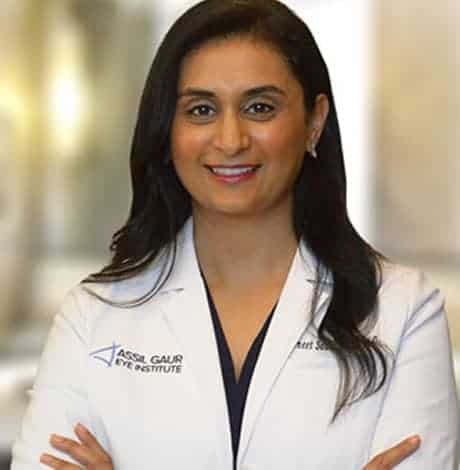
Dr. Klaus Ito, an optometrist, came to us not just for LASIK but with a problem that two doctors had missed during previous examinations. During the consultation, Dr. Avneet Sodhi Gaur discovered a retinal tear that two previous doctors had overlooked: a finding that had to be addressed before any vision correction could begin.
Ten days after the tear was repaired, Klaus underwent Eagle Vision LASIK, a next-generation procedure developed at AGEI that delivered results beyond what standard surgery could offer. The recovery was faster than he expected, and the outcome was unlike anything he’d experienced. “I’ve never had vision this crisp in my life,” Klaus said, now seeing 20/10 in each eye, a level of vision shared by less than 1% of the global population.
That outcome didn’t happen because of a routine consultation. It happened because a LASIK doctor took the time to look more carefully than anyone had before.
That level of precision is built into how we practice. Dr. Kerry Assil, Medical Director of Assil Gaur Eye Institute, is a world-renowned, board-certified LASIK and cataract surgeon with more than 30 years of experience and over 70,000 procedures performed. He is not just a user of LASIK technology; he has helped shape it, developing advanced techniques and innovations in laser vision correction, including EagleVision LASIK.
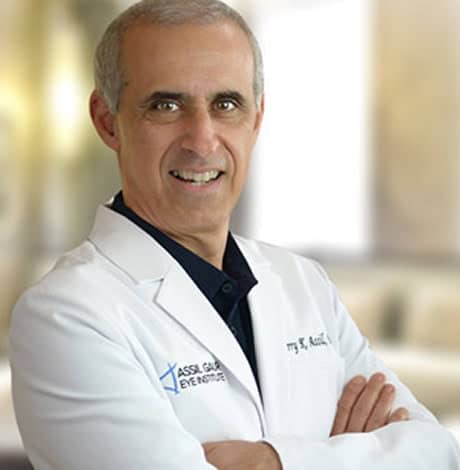
Dr. Assil has trained more than 14,000 physicians worldwide in refractive and cataract surgery, sharing the latest advancements. He has lectured at leading institutions, including Harvard, Johns Hopkins, and UCLA. This level of peer recognition is rare, and it matters. It means the surgeon performing your procedure is not just experienced, but someone other surgeons learn from.
At AGEI, that standard carries across the entire practice. Our surgeons are board-certified, fellowship-trained specialists. Our pre-operative evaluations are intentionally thorough. And our technology reflects a continued investment in achieving the best possible outcomes for each individual patient, not just meeting the standard of care, but advancing it.
A founding legacy unlike any other: AGEI was chartered in 1949 by Dr. Robert M. Sinskey, the father of modern cataract surgery, who hand-chose Dr. Kerry Assil to carry on his pioneering advances, surgical innovations, and exceptional patient care. Now seven decades in, Assil Gaur Eye Institute is considered one of the top LASIK centers in the nation.
If you’re ready to take the next step, schedule a complimentary LASIK evaluation with our team. Come in with your questions. We’ll give you straight answers.
Assil Gaur Eye Institute conveniently serves patients throughout Southern California and the greater Los Angeles area from our two locations in Beverly Hills and Santa Monica, with easy access for those in or near West Los Angeles, West Hollywood, Culver City, Hollywood, Venice, Marina del Rey, Malibu, Manhattan Beach, and Downtown Los Angeles.
Ready to see if LASIK is right for you? Learn about Eagle Vision LASIK in Santa Monica and Beverly Hills, or request a complimentary evaluation with Dr. Kerry Assil and Dr. Avneet Sodhi Gaur.
LASIK Surgery FAQs

Written by The AGEI Educational Team

Medically Reviewed by Dr. Kerry Assil