Aesthetic Eye Surgery Blepharoplasty
Why Kimberly Chose a Preventative Blepharoplasty at Age 27
Blepharoplasty is a surgical procedure which removes or repositions excess skin, muscle, and fat from the upper eyelids (upper blepharoplasty) and/or lower eyelids (lower blepharoplasty). The purpose is to improve the appearance and function of your eyes.
Generally, we think of people choosing to do blepharoplasty when they are older and trying to regain a more youthful appearance. However, the trend is changing.
At 27, Kimberly wasn’t trying to “look younger.” She was trying to stay ahead of what she already knew was coming.
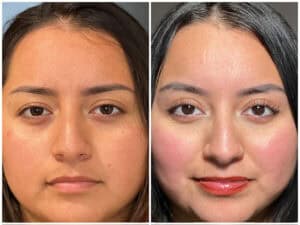
As a surgical technician who had worked alongside Dr. Adeleh Yarmohammadi at Assil Gaur Eye Institute (better known as “Dr. Adele”), Kimberly had spent years watching patients choose upper blepharoplasty after their upper eyelid hooding became severe, sometimes even impacting their vision. Although she was young and her eyelid hooding was very mild, Kimberly couldn’t ignore the possibility that her ptosis, or drooping of the eyelid skin, could worsen over time. This led her on a preventative journey.
How working in the surgery center shaped her trust in Dr. Adele
Unlike many patients who came in for a cosmetic surgery revision, Kimberly already knew what exceptional blepharoplasty results looked like. On the flip side, she was very aware of what less-than-ideal results looked like, too. Working in the surgery center gave her a perspective most people never have.
“I’ve worked with Dr. Adele. I’ve seen her with patients from start to finish,” Kimberly says. “Her technique, her skill, her attention to detail, the before-and-afters—everything she does is very skilled, thoughtful, and natural-looking. I trusted her with my eyes completely.”
Kimberly had watched patients return for follow-ups, watched swelling turn into beautifully healed incisions, and observed the consistency of Dr. Adele’s work. “Dr. Adele’s results speak for themselves,” she admits.

This firsthand knowledge made her more confident that early, conservative blepharoplasty could help maintain her natural anatomy over time.
Seeing the early signs of hooded eyes before they become severe
In younger patients, early hooding occurs for several reasons. These include natural anatomy, genetics, and subtle collagen changes. Many people assume eyelid surgery is only for older adults experiencing advanced sagging, but Kimberly understood that aging isn’t a sudden event; it’s gradual.
“And because I’m in the operating room all the time, I knew exactly what older patients wanted corrected later in life. I didn’t want to wait until it reached that point.”
“I realized that the hooding I had, even though it was mild, looked exactly like what my relatives had before theirs worsened,” Kimberly explains. “Once I looked around, it was like I could see my future. ‘This is going to progress,’ I thought. And as someone who works in surgery, I just wanted to know: can having a blepharoplasty earlier actually help prevent droopy upper lids later in life?”
Her question led her to a preventative conversation with the surgeon she respected most.
A preventative approach that came without pressure
Kimberly didn’t want a dramatic change. She wanted long-term prevention. So she booked a consultation with Dr. Adele—this time as a patient, not a surgical tech. Dr. Adele said that she had mild hooding, nothing dramatic, nothing that affected vision or required surgery. However, it did affect Kimberly’s confidence. “I always looked tired,” she noted, “even if I had slept and just woken up.”
Kimberly also knew from experience that eyelid hooding rarely stops where it starts. “When I saw how my relatives’ eyelids sat and the way theirs progressed with age, it made sense that mine would follow the same path.”
“When I talked to her, she was very honest,” Kimberly recalls. “She said, ‘You don’t have to do this now. You could wait. But if preventative care is your goal, you’re not too early.’”
That balance of reassurance and no pressure mattered.
“Because of my experience in the medical field, I’ve seen a wide range of approaches to plastic surgery and procedures. Some doctors can be pushy, but Dr. Adele is never like that. She gives information, explains the anatomy, and lets you decide.”
For Kimberly, the preventative reasoning made perfect sense:
- Addressing the minor hooding now meant a more conservative excision.
- Keeping the natural crease in its youthful position could age better over time.
- Early intervention could delay or reduce the need for more extensive surgery later.
“If I could stop it from getting worse with age and gravity, why wouldn’t I?” Kimberly says.
A calm, smooth upper blepharoplasty experience
On blepharoplasty procedure day, Kimberly felt a mix of excitement and nerves, as anyone would, even someone who works in surgery.
“I came in, did my pre-op exams, and Dr. Adele marked my lids. She made me feel so comfortable,” she says. “We talked a little, and then I dozed off.”
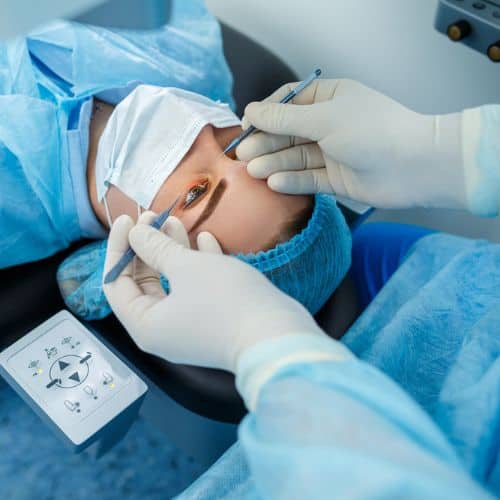
Upper blepharoplasty is often done with local anesthesia and light sedation, something Kimberly had witnessed many times from the other side of the operating table. Experiencing it herself only reinforced how seamless blepharoplasty surgery is when performed by a skilled oculoplastic surgeon.
Recovery supported by clear communication and attentive follow-up
But what impressed Kimberly most came after the procedure.
“When I woke up, Dr. Adele went over everything with me, but I was still medicated, so she made sure my boyfriend had the instructions, too,” she says. “Then she texted both of us later just to make sure I had what I needed and that we were clear on the post-op instructions.”
Her postoperative recovery was straightforward, consisting of icing for a few days, hydration drops to prevent dry eyes, and rest. Younger patients tend to heal quickly, and Kimberly was no exception. “My surgery was on Thursday. By Monday, I was back at work. People were shocked at how good it looked.” The incisions, hidden in the natural crease, healed beautifully, which is just what Kimberly hoped for.
A natural result that feels functional, not cosmetic
Kimberly didn’t pursue blepharoplasty for glamour or a dramatic transformation.
“I didn’t want to look different—I just wanted to slow down the progression that I knew could happen as I age,” she says. But she will admit she appreciates the bonus benefits and the natural enhancement.
“I look more awake. I can do more makeup as I have more eyelid to work with, and I feel refreshed. But the main thing is: I know I stopped something early rather than waiting for it to get worse.” And she would encourage others to have a conversation about thoughtful, conservative preventive care if they’re concerned about upper- or lower-lid sagging.
“If you’re young and you see early signs, and you’ve seen what happens later in your family members, it’s worth talking to someone. I tell everyone that.”
Her story reflects a growing reality: preventative blepharoplasty isn’t about chasing youth. It’s about understanding your genetics and anatomy, and working with a surgeon you trust to maintain what you already have.
Why trust AGEI to help you maintain your youthful appearance?
Assil Gaur Eye Institute remains laser-focused on our founding mission of providing exceptional healthcare in a compassionate and caring environment. We continue to be driven to advance the field of ophthalmology and give back to our community every day.
Request Your Consultation
Call now or book your appointment online.
We are conveniently located for patients throughout Southern California and the Los Angeles area, with offices in or near Beverly Hills, Santa Monica, West Los Angeles, West Hollywood, Culver City, Hollywood, Venice, Marina del Rey, Malibu, Manhattan Beach, and Downtown Los Angeles.
If you’re considering preventive blepharoplasty or other cosmetic procedures to rejuvenate your appearance, AGEI’s experienced surgeons offer expert consultations to discuss treatment options tailored to your age and goals. Contact us to schedule a consultation.
Frequently asked questions about preventative blepharoplasty for younger patients
Is 27 too young for upper blepharoplasty? Should I wait until I'm older?
Age alone doesn’t determine candidacy for eyelid surgery. Anatomy and concerns matter more. Some younger patients develop hooding early due to genetics or eyelid anatomy, making preventative upper blepharoplasty reasonable if it bothers them. A board-certified oculoplastic surgeon can assess whether conservative enhancement makes sense now or if waiting is better, without pressure either way.
What's the difference between preventative blepharoplasty and traditional correction?
Preventative blepharoplasty for younger patients typically involves more conservative excision of minimal excess skin to address early hooding, while traditional blepharoplasty for older patients removes more significant sagging skin and may address puffiness or fat redistribution. The goal of preventative surgery is natural-looking enhancement rather than dramatic rejuvenation.
Should I consider non-surgical alternatives before pursuing preventative blepharoplasty?
For younger patients with minimal concerns, non-surgical treatment options like Botox for brow position, radiofrequency treatments to stimulate collagen, or laser skin resurfacing for texture may suffice. However, if the primary concern is true hooding from excess eyelid skin, a surgical procedure provides more definitive, lasting results. Your oculoplastic surgeon can discuss all options during consultation.
Will preventative blepharoplasty mean I won't need revision surgery later in life?
Younger patients considering this path should understand that while surgery can prevent progression of hooding, natural aging continues. The goal isn’t to stop aging entirely but to address specific anatomical concerns early, similar to how some people pursue non-surgical treatments like Botox, fillers, or laser skin resurfacing to maintain their appearance.
Sources
-
Blepharoplasty patients are getting younger – here’s why
https://www.plasticsurgery.org/news/articles/blepharoplasty-patients-are-getting-younger-heres-why -
The aging eye: when to worry about eyelid problems
https://www.health.harvard.edu/staying-healthy/the-aging-eye-when-to-worry-about-eyelid-problems
More Stories You might be interested in
Aesthetic Eye Surgery
Jeannie Spent Thousands on Eye Treatments That Never Worked. Then Dr. Adele Saw What Everyone Else Missed

Aesthetic Eye Surgery Blepharoplasty
From a Daily Letdown to Loving Her Reflection: How Blepharoplasty with Dr. Adele Renewed Alyssa’s Confidence
Aesthetic Eye Surgery Blepharoplasty