Why Does Your CPAP Machine Give You Dry Eyes?
If you’ve been diagnosed with obstructive sleep apnea, you know how difficult it can be to get good-quality sleep. Obstructive sleep apnea is a sleep disorder that causes people to stop breathing multiple times a night. Obviously, this isn’t good.
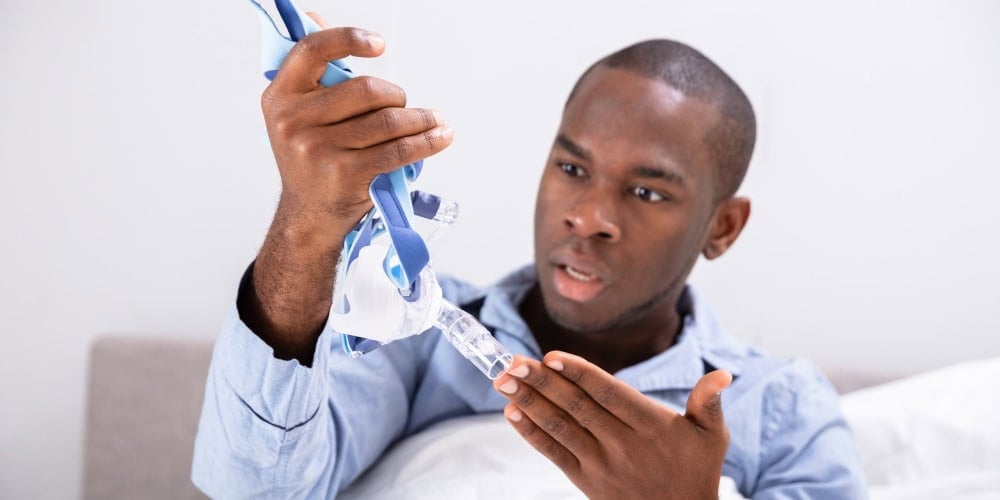
So, many people with obstructive sleep apnea get prescribed a continuous positive airway pressure machine—more commonly referred to as a CPAP machine—to wear at night for better sleep.
This device delivers a steady, prescribed amount of air pressure into the nose and mouth through a mask. The positive pressure opens up the airway, relieving the obstruction that causes sleep apnea. A CPAP machine is a reliable way to treat sleep apnea. However, many people find it difficult to wear the mask all night, and other CPAP users experience machine-related dry eyes.
What are dry eye symptoms?
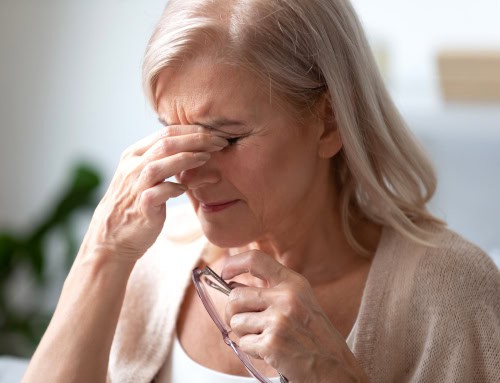
Dry eyes can be bothersome and sometimes painful. CPAP mask leaks often trigger a flare of dry eye syndrome or dry eye disease (DED).
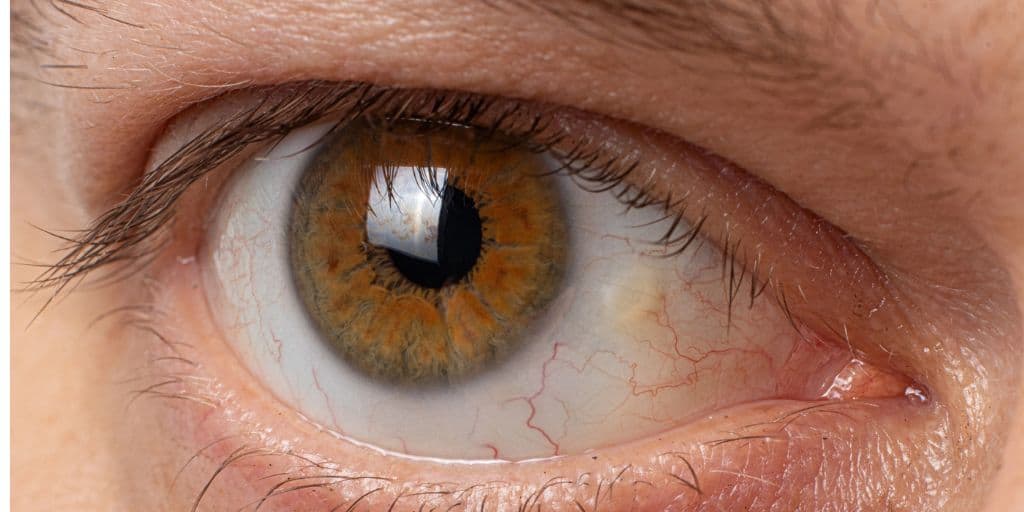
What are the symptoms of dry eye disorder? The most common symptoms that patients experience include:
Watery eyes
Red eyes
Eye itching
Burning sensation in the eye
The sense of dust or grit in the eye
Blurry vision
Light sensitivity
Feeling as if eyes are heavy or tired
Some people also develop extra discharge in and around the eyes.
Does CPAP cause dry eyes?
According to Ophthalmology Times, dry eye disease affects about 6.8% of adults in the United States. But many patients are not diagnosed with DED clinically because they assume their eye irritation may be related to allergies or exposure to some type of irritant. As a result, patients may try to treat dry eyes at home with little to no improvement.
Women with sleep apnea tend to have a higher incidence of DED – almost double that of men. DED is also markedly higher among patients 75 years of age and older.
The biggest question is whether CPAP use causes dry eyes and, if so, whether there is a way to treat it. Studies have found that the incidence of dry eye disease is higher in patients who use CPAP.
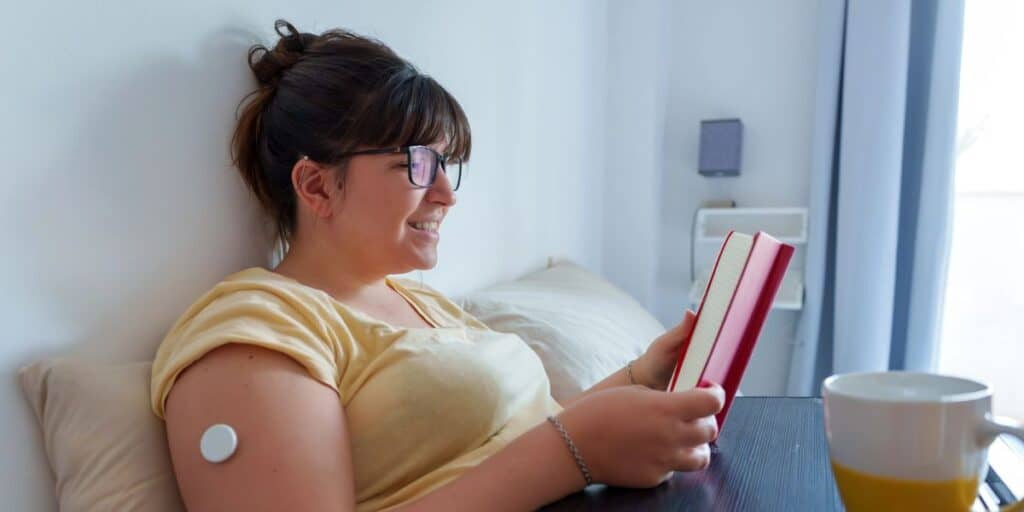
Patients with no history of dry eye disease may develop it after starting CPAP therapy for sleep apnea. The incidence of the disease is higher among those who have diabetes and chronic obstructive pulmonary disease.
While this does not mean that a CPAP device directly causes dry eye disease, it appears to be a risk factor for developing the condition.
Understanding why CPAP contributes to dry eyes requires a closer look at what happens to your ocular surface while you sleep. Three main biological mechanisms are at work. First, pressurized air can leak from a poorly fitted mask and blow directly across the eye’s surface, stripping away the tear film that lubricates and protects the cornea.
Second, blink rate drops significantly during sleep, which means the natural mechanism your eyes use to spread and replenish tears is largely inactive for hours at a time. Third, many CPAP users breathe through their mouth during the night, which dramatically increases evaporative tear loss by drawing moisture away from the ocular surface. Any one of these factors can irritate the eye on its own, but for many CPAP users, all three occur simultaneously, which is why CPAP-related dry eye can feel more intense than typical environmental dryness.
How does CPAP air leakage affect your tear film?
To understand why CPAP dry eyes happen, it helps to know a little about your tear film. Your tear film is a delicate three-layer structure that coats the surface of your eye every time you blink. It keeps your cornea lubricated, clear, and protected. When something disrupts that film, your eyes dry out quickly, and pressurized air from a CPAP machine is one of the most aggressive disruptors.
When your CPAP mask does not fit perfectly, air escapes through small gaps around the seal. That escaping air flows directly across your eyes while you sleep. Because you don’t blink during sleep, your tear film cannot replenish itself the way it normally would during waking hours. The constant airflow causes the aqueous layer of your tear film to evaporate much faster than your eyes can replace it, leaving the corneal surface exposed and irritated by morning.
Another secondary problem is worth knowing about. The meibomian glands along your eyelid margins produce the oily outer layer of your tear film, which slows evaporation. Chronic air exposure can aggravate these glands, a condition called meibomitis, which further reduces tear film quality even when you are not wearing your mask. Over time, this creates a cycle where the damage compounds night after night.
Research suggests that certain nutritional factors also influence tear film stability, which is worth exploring with your eye care provider. If you regularly wake up with gritty, burning, or blurry eyes, tear film disruption from air leakage is very likely the cause, and it is absolutely worth addressing with a world-class dry eye specialist.
How to prevent dry eyes from CPAP?
If you are sure your CPAP machine is contributing to your dry eyes, you are probably wondering how to prevent dry eyes from CPAP use. Here are a few things you can do to ensure you are treating your sleep apnea properly and minimizing the risk of developing or worsening dry eye disease:
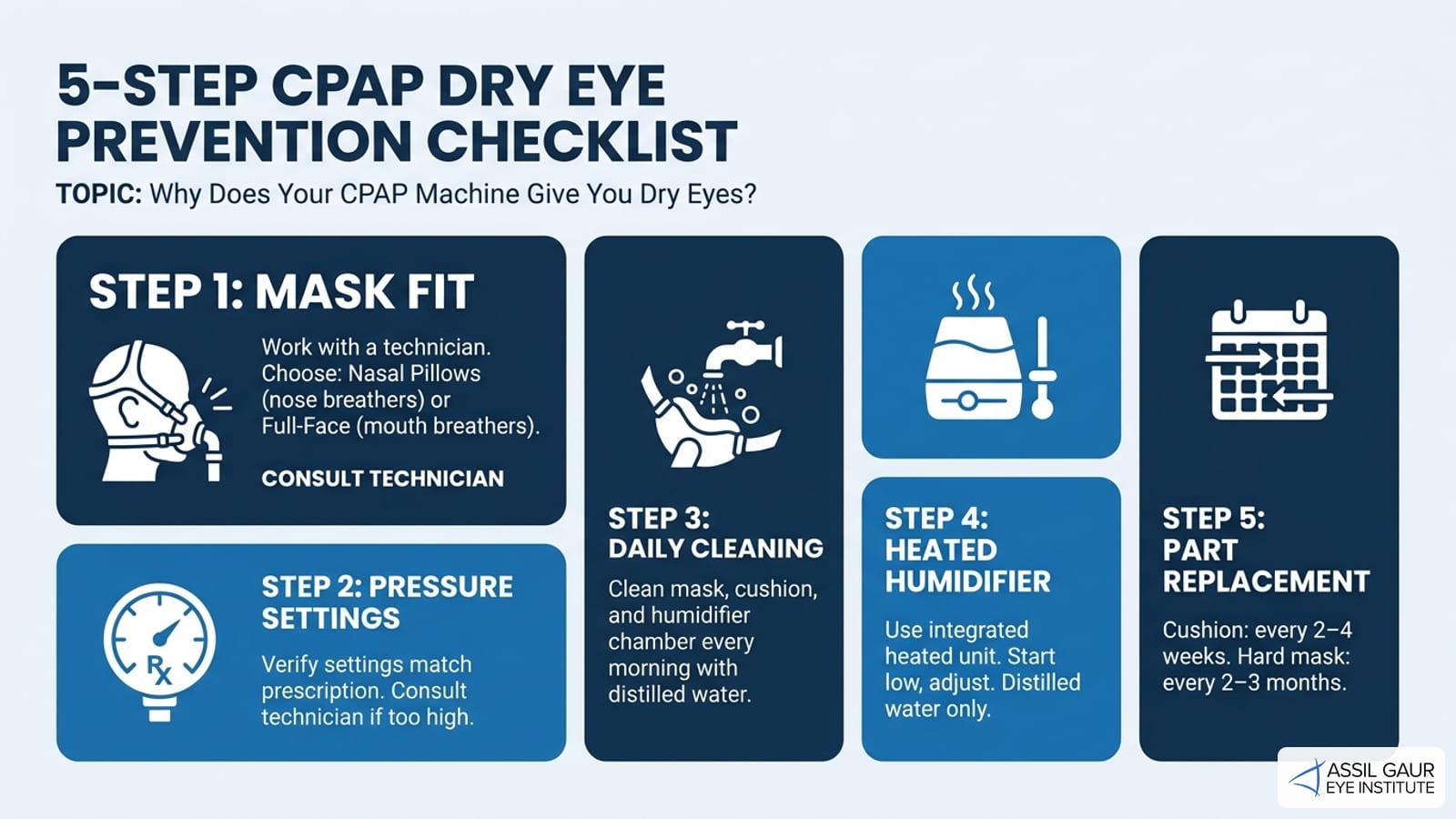
Ensure a proper fit
The biggest culprit of dry eyes related to CPAP use is an improperly fitting mask. If it is too big, too small, or the wrong shape, air may leak around the seal. This air usually blows directly into your eyes, causing dryness.
To fix this issue, have a technician work with you. Make sure you are wearing a prescribed fit.
You may also benefit from switching from a full face mask to nasal pillows. Nasal pillows carry less risk of air leaks. That said, nasal pillows are not the right choice for everyone. If you are a mouth breather, air escapes through your mouth during sleep, which can actually worsen eye dryness by disrupting airflow and reducing the effectiveness of your therapy. In that case, a full-face mask that covers both your nose and mouth may be a better option, since it creates a sealed system that accounts for mouth breathing and reduces the chance of air redirecting toward your eyes.
Mouth breathers who prefer to keep using a nasal mask or nasal pillow setup have a couple of practical workarounds worth discussing with your sleep technician. A chin strap wraps around your jaw to keep your mouth closed during sleep, helping to prevent air from escaping and reducing the pressure imbalances that send air toward your eyes. CPAP mask tape, sometimes called mouth tape, is a gentler alternative that gently holds the lips together for the same purpose.
Both options are low-cost and widely available, and either one can make a meaningful difference if an ill-fitting or leaking mask is the root cause of your CPAP dry eyes. If you are unsure which solution fits your situation, a sleep specialist or an ophthalmologist experienced in dry eye treatment can help you identify the right path forward.
Check the pressure settings
Have you messed with the air pressure settings? Did the technician accidentally set the pressure too high? Have your kids or grandkids been playing with your machine? A high pressure setting can result in air leakage.
To fix this, check your settings and relay them to your technician or healthcare provider. If your settings aren’t correct, get help adjusting them.
Clean your machine regularly
If you’ve been neglecting to clean your machine as recommended, skin oils and dust may build up. Contaminants can interfere with the mask’s seal and cause air leaks.
To fix this, clean every part of your machine and mask as the manufacturer recommends. If you moisturize your skin at night, choose a product with less oil.
Add a humidifier
Make sure to fill your humidifier! The built-in humidifier will keep the airflow from drying out your mouth or nose. Too little moisture, and you’re dealing with dry air. Too much moisture buildup around the mask can break the seal and cause air leakage. To address this, start at the lowest setting and adjust until comfortable.
If your CPAP machine has an integrated heated humidifier, use it. Heated humidification matters here: the warmth lets the air carry significantly more moisture than a cold passover unit can, which directly reduces the dry, irritated feeling many CPAP users wake up with. Healthline notes that heated humidification is one of the most consistently recommended interventions for CPAP-related dryness, including dry eye symptoms caused by air leaking upward toward the eyes overnight.
It helps to understand the difference between your two main options. Most modern CPAP machines have an integrated heated humidifier chamber that warms water before it enters the tubing. Standalone humidifiers are separate units that attach to older or travel machines that lack a built-in chamber. Both can be effective, but integrated heated units give you finer control over temperature and humidity levels, making it easier to dial in the right balance for your comfort.
A few practical tips to get the most out of your humidifier:
Use distilled water only. Tap water leaves mineral deposits that degrade the chamber and can introduce irritants into the airflow.
If you notice condensation pooling in your tubing (sometimes called rainout), raise the humidifier temperature slightly or lower the room temperature to reduce the temperature gap between the tube and the air outside it.
Empty and rinse the chamber every morning. Stagnant water is a breeding ground for bacteria that can worsen eye and nasal irritation.
If you are already using a humidifier and still waking up with dry, red, or irritated eyes, the issue may be mask fit rather than humidity level. Air escaping upward from a poorly sealed mask blows directly across the ocular surface all night, and no humidifier setting will fully compensate for that. Address the seal first, then fine-tune your humidity.
Check that all parts are functioning
If all else fails, make sure you aren’t due for a part replacement. Replace the soft cushion that contacts your skin every 2-4 weeks and the hard masks every 2-3 months.
When should you see an eye doctor about CPAP dry eyes?
Home remedies like adjusting your mask fit, adding a humidifier, and using over-the-counter lubricating drops can go a long way toward relieving CPAP dry eyes. But at some point, self-managing the problem isn’t enough, and knowing when to cross that line matters for your long-term eye health.
A good rule of thumb: if your dry eye symptoms persist beyond two weeks despite adjusting your CPAP setup and using lubricating drops regularly, it is time to book a professional evaluation. Chronic dryness that goes untreated can damage the surface of your eye over time, so waiting it out is not a risk worth taking.
You should also see an eye doctor sooner rather than later if you notice any of the following:
Blurred vision that does not clear up after blinking
Significant eye redness that lingers through the day
A gritty or burning sensation that worsens over time
Increased light sensitivity
Discharge or crusting around your eyelids in the morning
Pain in or around the eye
These symptoms can point to underlying conditions like meibomian gland dysfunction or corneal irritation that require advanced, precision treatment beyond what drops alone can address. A world-class dry eye specialist can identify exactly what is driving your discomfort and build a targeted plan around it.
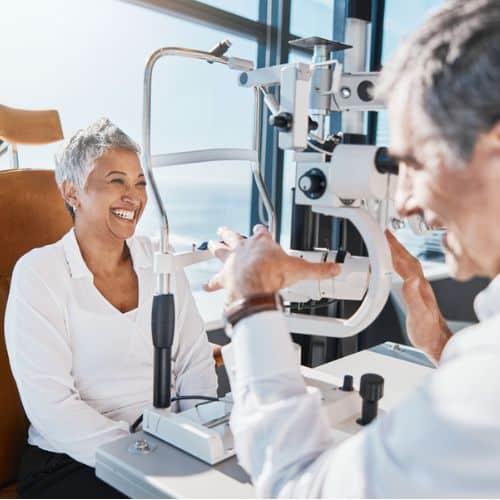
At Assil Gaur Eye Institute, our team offers advanced dry eye treatment trusted by patients across Los Angeles who want real answers, not temporary relief. A complimentary evaluation is the first step toward genuinely better eye health.
How to help dry eye symptoms?
Dry eyes cause unpleasant side effects on their own, but can also compromise your overall eye health. Artificial tears or eye drops can help relieve symptoms in the short term, but if your dry eyes persist, you’ll need an eye doctor to find the underlying cause. For CPAP users dealing with chronic dryness, a layered approach that addresses both the mask and the eye itself tends to produce the best results.
Start with the basics at home. Warm compresses applied to closed eyelids for 10 minutes each morning help loosen blocked meibomian gland secretions, which is especially useful if meibomitis is contributing to your symptoms. Omega-3 fatty acid supplements, taken daily with food, support the lipid layer of your tear film and can meaningfully reduce evaporation over time. For nighttime dryness, a lubricant gel drop or ointment applied before bed provides longer-lasting relief than standard artificial tears, though keep in mind that oily formulas can transfer to your mask cushion and break the seal, so apply them after your mask is fitted and settled.
When home remedies are not enough, prescription options are available. Cyclosporine (Restasis) and lifitegrast (Xiidra) are both clinically proven anti-inflammatory eye drops that treat the underlying inflammation driving chronic dry eye disease rather than simply masking the discomfort. Your doctor may also recommend punctal plugs, tiny devices inserted into the tear drainage channels to keep moisture on the eye surface longer.
If your symptoms have persisted beyond two weeks despite consistent home care, that is a clear signal to see an ophthalmologist. World-class dry eye treatment goes well beyond the drugstore shelf, and a precise diagnosis is the only way to match the right therapy to your specific condition. AGEI offers advanced dry eye evaluation so you can get authoritative answers and a treatment plan built around your eyes, not a generic protocol.
Frequently asked questions about CPAP and dry eyes
Can a CPAP machine cause dry eyes?
Yes, CPAP use is a recognized risk factor for dry eye disease. Research shows that CPAP users have a higher incidence of dry eye disease than non-users, even when they had no prior history of the condition. The most common cause is pressurized air leaking from a poorly fitted mask and blowing directly across the ocular surface overnight, stripping away the tear film. Mouth breathing during sleep and a reduced blink rate while sleeping compound the problem.
How do I stop my CPAP from drying out my eyes?
The most effective steps are to ensure your mask fits correctly so there are no air leaks near the eyes; use your machine’s integrated heated humidifier with distilled water; and, if you are a mouth breather, add a chin strap or switch to a full-face mask. Cleaning your mask and humidifier chamber daily also prevents contaminant build-up that can break the seal. If symptoms persist despite these adjustments, a world-class dry eye specialist can assess whether underlying meibomian gland dysfunction is contributing.
What is the best CPAP mask for dry eyes?
No single mask works best for every patient; the right choice depends on how you breathe at night. Nasal pillow masks create a minimal seal and reduce the surface area where leaks can occur, making them a popular option for nose breathers. Full-face masks that cover both the nose and mouth are generally better for mouth breathers because they create a sealed system that prevents air from redirecting toward the eyes. A sleep technician can help you find the right fit for your anatomy and breathing pattern.
Can CPAP goggles help with dry eyes?
CPAP moisture goggles are a niche but legitimate option for patients who continue to experience eye dryness despite a well-fitted mask. They create a sealed, humid microenvironment around the eyes that shields the ocular surface from any residual airflow. They are not a first-line solution—fixing mask fit and using a heated humidifier should come first—but they can provide meaningful relief for patients with persistent symptoms or underlying conditions such as floppy eyelid syndrome.
When should I see an eye doctor about CPAP-related dry eyes?
If you regularly wake up with gritty, burning, red, or blurry eyes and adjusting your mask fit and humidifier settings hasn’t resolved the problem, it is time to see an eye care specialist. Chronic dry eye can cause lasting damage to the corneal surface if left untreated. An eye doctor can evaluate your tear film, check for meibomian gland dysfunction, and recommend advanced dry eye treatments tailored to your situation. At Assil Gaur Eye Institute, our team provides a complimentary evaluation and a precision-driven approach trusted by patients across Los Angeles and beyond.
Are there other eye conditions linked to sleep apnea
Yes! Dry eye is far from the only eye condition that sleep apnea can contribute to. The repeated drops in blood oxygen that happen during apnea episodes put real stress on the delicate structures of the eye, and research has linked untreated sleep apnea to several serious ocular disorders worth knowing about.
Floppy eyelid syndrome is one of the most common. The upper eyelid becomes unusually loose and can flip inside out during sleep, exposing the eye to friction and irritation every night. Many people with this condition also have obstructive sleep apnea, and the two are thought to share underlying tissue changes.
Glaucoma is another significant concern. Fluctuating oxygen levels and changes in blood flow can raise pressure inside the eye or damage the optic nerve over time. If you already have a family history of glaucoma, untreated sleep apnea may accelerate your risk. Our world-class glaucoma care team monitors these subtle changes before they become vision-threatening.
Papilledema, swelling of the optic disc caused by increased intracranial pressure, has also been associated with sleep apnea, as has non-arteritic anterior ischemic optic neuropathy (NAION), a condition in which reduced blood flow causes sudden vision loss in one eye.
Retinal vein occlusion and central serous retinopathy, both linked to poor circulation and elevated stress hormones, round out the list of conditions that sleep apnea can quietly worsen over time.
If you have a sleep apnea diagnosis, a comprehensive eye exam is a smart and proactive step. Catching these conditions early makes all the difference.
What are some other dry eye causes?
Other conditions that can cause dry eyes include:
- Age: Over 75% of persons over age 65 have dry eye disease
- Airborne environmental factors: such as dust, smoke, wind, or irritants
- Wearing contact lenses or improperly cleaned contact lenses
- Allergies: These can develop at any age. The most common are pollen, dust, and animal dander.
- Medications: Certain medications, such as antihistamines, antihypertensives, and hormonal medications, can cause dry eyes
- Autoimmune conditions: such as Sjogren’s syndrome, rheumatoid arthritis, or lupus
- Other health conditions such as diabetes, psoriasis, rosacea, irritable bowel syndrome (IBS), or vitamin A deficiency
- Blepharitis: Inflammation of the base of the eyelashes and lid
- Meibomitis: When oil glands along the eyelid rim become clogged, blocking tear supply
- Floppy eyelid syndrome: When eyelids don’t close completely during sleep, so the ocular surface is exposed to air and dries out. Eyes are particularly irritable when the patient awakens
You may also develop dry eyes from a combination of these factors plus cold weather or excessive screen time.
Not all dry eye is the same. The most common subtype is evaporative dry eye, which accounts for roughly 85% of cases and is directly linked to meibomian gland dysfunction (MGD). The meibomian glands line the upper and lower eyelid margins and secrete the oily outer layer of the tear film.
When these glands become blocked or inflamed, the protective lipid layer thins, tears evaporate too quickly, and the ocular surface is left exposed and irritated. CPAP users are particularly vulnerable to evaporative dry eye because airflow directed toward the face accelerates tear evaporation overnight, worsening any underlying MGD.
If you experience persistent morning dryness, grittiness, or blurred vision on waking, MGD could be a significant contributing factor worth discussing with your eye care specialist.
Assil Gaur Eye Institute is the master of dry eye care
The professional care team of ophthalmologists and optometrists at AGEI offers first-class eye care and vision correction, specializing in LASIK vision correction and treating glaucoma, cataracts, and a wide variety of cornea and retinal conditions. And, of course, dry eye disease.
AGEI is a state-of-the-art health care facility bringing together revolutionary technologies and experienced eye care professionals. Our goal is to help you see better.
Please call 866-945-2745 or visit us here to make an appointment online. If you are experiencing concerning symptoms or need immediate eye care, contact us right away to schedule an exam.
We are conveniently located for patients throughout Southern California and the Los Angeles area at locations in or near Beverly Hills, Santa Monica, West Los Angeles, West Hollywood, Culver City, Hollywood, Venice, Marina del Rey, Malibu, Manhattan Beach, and Downtown Los Angeles.