Am I a Good Candidate for LASIK? Your Complete Guide
If you’re wondering whether you’re a good candidate for LASIK surgery, here’s the short (but very important) answer: most people who ask that question will benefit from laser vision correction of some kind, though not always LASIK specifically.
Being told “You’re not a LASIK candidate” is not the same as being told you have to keep wearing glasses. At Assil Gaur Eye Institute, a meaningful percentage of the patients who come to us after being turned down elsewhere end up with excellent vision through PRK, EVO ICL, or a refractive lens procedure.
This guide walks through many factors our LASIK surgeons measure, the real thresholds, and what your options look like if LASIK isn’t the right fit.
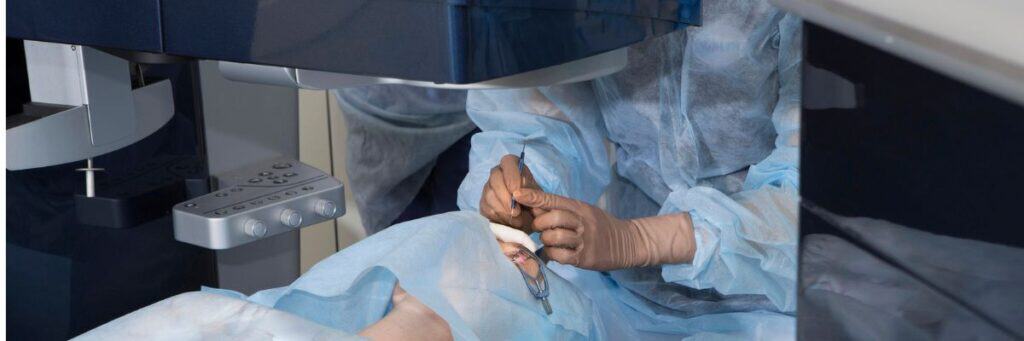
What makes someone a good candidate for LASIK?
A good LASIK candidate meets six core requirements:
- You should typically be at least 18 years old (with some rare exceptions).
- Your eyeglass prescription should be stable. In other words, it has stayed consistent for 12 months.
- The refractive error you have (nearsightedness, farsightedness, etc.) is within the treatable range.
- Your corneal thickness can safely support the procedure
- You have generally healthy corneas free of keratoconus or other structural weakness.
- Your eye health is good without conditions that impair healing.
An important seventh requirement doesn’t show up on any scan: realistic expectations.
LASIK is exceptionally good at freeing you from glasses and contacts for distance vision. It does not stop your eyes from aging, and unless the treatment is modified, it doesn’t prevent the reading glasses most people start to need at some point in their mid-40s.
But it isn’t all or nothing.
What most candidacy articles don’t tell you is that these criteria aren’t a simple checklist where one failed item ends the conversation. They interact. A borderline corneal thickness with a low prescription is a completely different situation than the same cornea with a high prescription, because the amount of tissue your correction requires changes everything.
That’s why a real candidacy evaluation with an experienced eye doctor involves comprehensive measurements, not quiz questions.
Prescription requirements: which prescriptions qualify for LASIK?
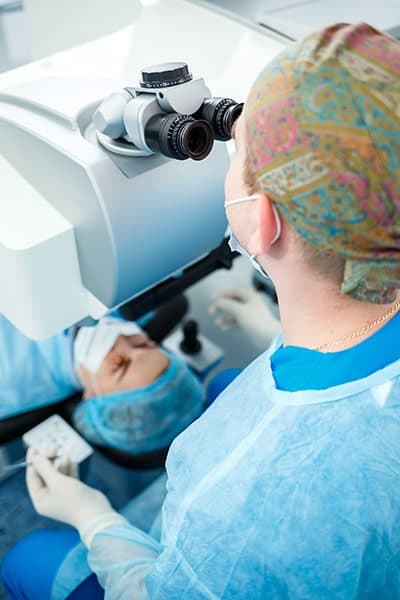
Modern laser platforms can treat myopia (nearsightedness) up to roughly -12.00 diopters, hyperopia (farsightedness) up to about +6.00 diopters, and astigmatism up to approximately 6 diopters, according to the American Refractive Surgery Council’s guidance on prescription limits.
Most patients fall comfortably inside these numbers. In other words, if you’re between -1.00 and -8.00 with moderate astigmatism, you’re in the range where LASIK produces its most predictable results.
Which prescription is too high for LASIK?
Prescriptions beyond about -10.00 to -12.00 diopters push into territory where LASIK may stop being the best choice, even when it’s technically possible.
The reason is tissue. Correcting a high prescription requires removing more corneal tissue, and at some point, the amount needed exceeds what your cornea can safely give up. Pushing past that limit can lead to corneal ectasia, a progressive weakening and bulging of the cornea that’s far harder to fix than the original nearsightedness.
For those prescriptions, EVO ICL is usually the stronger option and often produces sharper vision than a maximum-depth laser treatment would.
Can I get LASIK with astigmatism?
Yes. Astigmatism is one of the conditions LASIK treats particularly well, and it is not a disqualifier.
This is one of the most persistent myths in refractive surgery, and it dates back to early laser platforms that genuinely struggled with it. Today’s wavefront-guided laser eye surgery maps the unique distortions in your eye at thousands of points and shapes the correction around them, making astigmatism a target rather than an obstacle.
The astigmatism that raises a real flag isn’t the amount; it’s the pattern. Irregular, asymmetric astigmatism on corneal topography can be an early sign of keratoconus, which is a different conversation entirely.
Corneal thickness: why it matters and what the minimum is

Average corneal thickness runs roughly 540 to 560 microns, or a little over half a millimeter. LASIK requires creating a thin flap and then reshaping the tissue underneath, so both steps permanently impact thickness.
The number our surgeons care most about is the residual stromal bed, meaning the tissue remaining beneath the flap after your correction is complete. The commonly cited safety threshold is 250 microns, though, as the American Academy of Ophthalmology has documented, specialists still debate whether that number alone is protective enough.
Is 500 microns enough for LASIK?
Usually yes, depending on your prescription. Corneas in the 450 to 500 micron range can be treated safely in the right patient, but the margin for error narrows considerably.
What’s often missed is that thickness is only one input. A cornea measuring a healthy 550 microns with suspicious topography is a worse candidate than a 490-micron-thick cornea with a perfectly regular shape. Thickness, surface curvature, epithelial mapping, and posterior corneal elevation all get weighed together.
If your cornea is too thin for LASIK, PRK is frequently an option, since it skips the flap entirely and preserves that tissue. EVO ICL is another route, because it doesn’t remove corneal tissue at all.
Age requirements: how old do you need to be for LASIK?
The FDA has not approved any laser for LASIK in patients under 18, which makes 18 the floor. In practice, our surgeons prefer patients to be at least 20, because prescriptions frequently continue shifting through the late teens. Again, exceptions may be needed, as in the case of a teenage competitive water polo player who cannot wear glasses or contact lenses in the water.
What actually governs the decision is demonstrating a stable prescription, not your birthday. Your prescription should have held relatively steady for 12 months. Operating on a moving target means correcting to a prescription you’ll have outgrown within a few years.
Am I too old for LASIK?
There’s no upper age limit for LASIK, but after about 45, the better question becomes whether LASIK is still the best procedure for you.
Two things change as you get older. The first is that presbyopia arrives in your 40s, meaning your eyes lose the ability to shift focus for reading. LASIK does not correct this. The second is that, typically in your 50s and 60s, your natural lens begins to cloud into a cataract.
If you’re 55 and developing early lens changes, LASIK would correct your distance vision now, only to be partially undone when you need cataract surgery a few years later. A refractive lens exchange or cataract procedure with a premium intraocular lens addresses distance vision, reading vision, and the lens itself in a single operation. Our surgeons will tell you when you’re in that window.
On the other hand, patients who had cataract surgery in prior years and still require eyeglasses could benefit from basic even if they’re in their 90s, if they wish to be free of their eyeglasses.
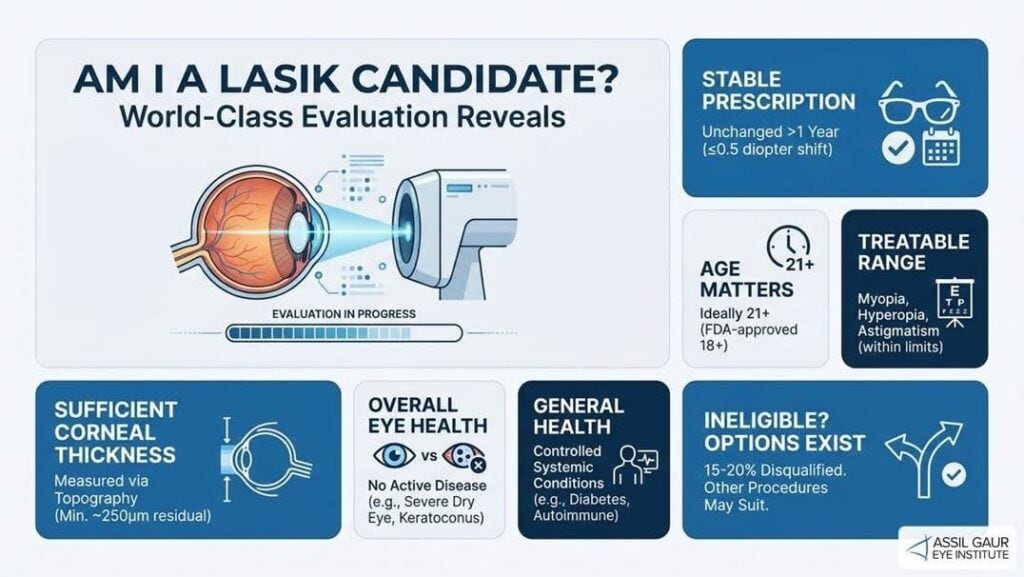
Conditions that may disqualify you from LASIK, and what to do instead
Some conditions rule out LASIK permanently. Many others are temporary obstacles that get treated first. This is a major distinction plenty of patients never hear.
Conditions that genuinely rule out LASIK
- Keratoconus or any evidence of corneal ectasia, since LASIK would accelerate the weakening.
- Significant corneal scarring or dystrophy in the treatment zone.
- Advanced glaucoma with extensive optic nerve damage.
- A history of herpes simplex or herpes zoster keratitis affecting the eye and not readily controlled with medication.
- Autoimmune diseases such as lupus or rheumatoid arthritis, if uncontrolled, may be associated with severe dry eye, and thus meaningfully impair corneal healing.
Conditions that are usually temporary
- Being pregnant or breastfeeding, since hormones shift your prescription. We simply wait.
- Uncontrolled diabetes, which becomes workable once blood sugar is well managed.
- A highly unstable prescription, which needs a period of documented stability before we proceed.
- Recent contact lens wear, which distorts corneal measurements until you take a short break.
Can dry eye disease disqualify you from LASIK?

Not by itself. Dry eye syndrome is one of the most common reasons patients get turned away elsewhere. However, in most cases it’s a treatable condition rather than a permanent disqualification.
The concern is legitimate. LASIK temporarily interrupts corneal nerves that regulate tear production, so operating on an eye that’s already dry can make symptoms worse. That’s a reason to treat the dry eye first, not a reason to close the door.
Our dry eye specialists evaluate tear film quality, meibomian (oil) gland function, tear film health, and overall ocular surface condition, then treat what they find. Many patients who arrive with a dry eye disqualification become good candidates after a course of therapy. For those with dry eye that won’t stabilize, EVO ICL avoids corneal nerve disruption altogether.
LASIK vs. Epic PRK vs. EVO ICL: which is right for you?
All three procedures produce excellent vision. Each simply approaches the problem differently.
LASIK
A thin flap is created, the underlying tissue is reshaped with a laser, and the flap is repositioned. Recovery time is the fastest of these three options, with most patients seeing clearly within 24 hours. Best for patients with adequate corneal thickness and prescriptions in the standard range.
Epic PRK
With Epic PRK, an advanced PRK procedure developed at Assil Gaur Eye Institute, the epithelial (dead skin), surface layer of your outer corneal cells is removed rather than a flap being created, and the laser reshapes the cornea directly. The end result matches LASIK, but full visual recovery takes several days to a few weeks. Best for thinner corneas and anyone whose corneal anatomy makes a flap unwise.
EVO ICL
A soft collamer lens is placed inside your eye, in front of your natural lens. No corneal tissue is removed, and the lens can be removed later if needed. It’s approved for myopia from -3.00 to -20.00 diopters with astigmatism up to 4 diopters.
What is the difference between LASIK and ICL?
LASIK reshapes your cornea permanently by removing tissue. EVO ICL adds a corrective lens inside your eye and removes nothing, which makes it removable.
That difference drives the recommendation. High prescriptions, thin corneas, and significant dry eye all favor ICL. In February 2026, the FDA expanded the approved age range for EVO ICL from 21 to 45 up to 21 to 60, which opened the procedure to a large group of patients who previously had fewer options.
How Assil Gaur Eye Institute evaluates LASIK candidacy in Los Angeles
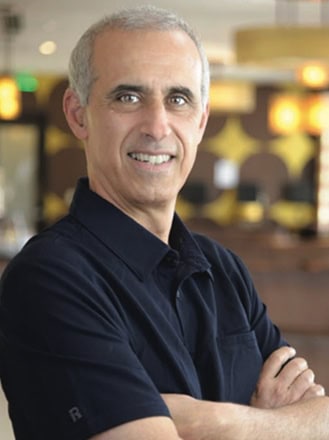
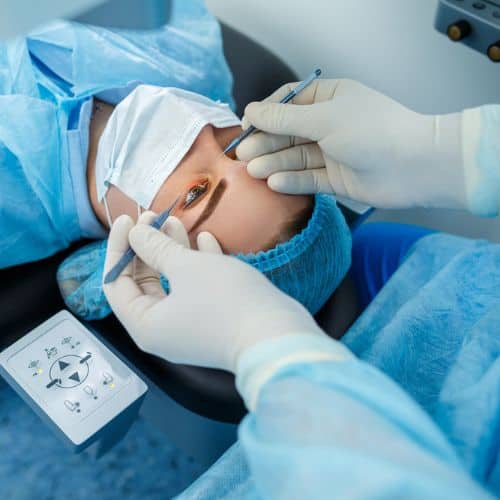
At Assil Gaur Eye Institute, your candidacy evaluation is a diagnostic workup, not a sales appointment.
Our surgeons perform corneal topography and tomography to map both surfaces of the cornea, epithelial thickness mapping to catch early keratoconus that standard topography can miss, wavefront analysis of your eye’s complete optical system, pupillometry to measure pupil size in both bright and dim light, ocular dominance to determine which of your eyes the brain pays greatest attention to a distance, a full dry eye assessment, and a cycloplegic refraction that confirms your true prescription with focusing muscles relaxed.
That last measurement catches a surprising number of patients whose everyday prescription was slightly overcorrected.
AGEI serves patients across Los Angeles, Beverly Hills, and Santa Monica. In addition, our surgeons are a frequent referral destination for complex cornea and retina issues, and for patients seeking correction after refractive surgery elsewhere. Both situations call for an honest evaluation, not a fast yes.
What happens at a LASIK candidacy consultation?
Plan on about 90 minutes. Your eyes will be dilated, so expect light sensitivity for several hours afterward.
Before you come in for your LASIK consultation, stop wearing contact lenses. Soft lenses need to be out for at least three days to a week, and toric or rigid gas permeable lenses require longer, sometimes two weeks or more. Contacts reshape your cornea, and measuring through that distortion produces unreliable results.
You’ll leave knowing which procedures you qualify for, which one our surgeons recommend and why, what vision result to realistically expect, and what it costs. If you’re not a candidate for anything, you’ll hear that too, along with the reason.
Request Your Consultation
Call now or book your appointment online.
Schedule your complimentary LASIK candidacy evaluation
You don’t have to guess whether you qualify, and you shouldn’t accept a “no” that came without a full corneal map.
Schedule your free consultation and candidacy evaluation at Assil Gaur Eye Institute and get a direct answer about which vision correction solution (LASIK eye surgery or something else) best fits your eyes.
Frequently Asked Questions About LASIK Candidacy
Am I too old for LASIK?
No upper age limit exists. After 45, our surgeons evaluate whether a lens-based procedure would serve you better, since LASIK doesn’t address presbyopia or developing cataracts. We have even successfully treated Patients with Lasik, who are in their 90s, if they may have had prior cataract surgery and wish not to wear glasses.
Can I get LASIK with astigmatism?
Yes. Wavefront-guided LASIK treats astigmatism up to roughly 6 diopters and typically delivers excellent results.
What prescription is too high for LASIK?
Beyond about -12.00 diopters of myopia or +6.00 of hyperopia, LASIK is no longer the best option. EVO ICL corrects myopia to -20.00 diopters.
Can dry eye disease disqualify you from LASIK?
Usually not permanently. Most dry eye is treated first, after which patients become candidates. Severe cases are better served by EVO ICL.
What is the difference between LASIK and ICL?
LASIK removes corneal tissue to reshape your eye. EVO ICL implants a lens inside the eye without removing tissue, and the lens can later be removed if your needs change.

Written by The AGEI Educational Team

Medically Reviewed by Dr. Kerry Assil