Blepharoplasty
Ellie's Upper & Lower Eyelid Surgery Story: Finding Herself Again with Dr. Adele
Ellie’s upper eyelids had become heavy. So heavy that applying eye makeup became frustrating, and she carried it in her expression all day. The puffiness under her eyes bothered her just as much.
But what Ellie couldn’t shake was something harder to name than a physical symptom.
She had just come through one of the most difficult periods of her life, and over time she saw it settle into her face in the mirror. “I no longer felt or looked like myself,” she says, “and that realization was becoming increasingly difficult for me.”
What did Ellie try before eyelid surgery?
Ellie initially tried Botox for her concerns, but her doctor referred her to Dr. Adele for eyelid surgery as Botox was not the appropriate solution. Ellie had hoped Botox might help her eye concerns, but her doctor honestly explained it wouldn't address her actual issues and referred her to Dr. Adele. Though initially hesitant about surgery, Ellie followed Dr. Adele on Instagram, finding encouragement from her therapist to pursue a solution for her eyes, ultimately deciding that eyelid surgery would be a 'gift' to herself to regain the appearance she remembered from her twenties.
Dr. Adele meant surgery, and Ellie’s mindset wasn’t quite there yet. So, she began following Dr. Adele on Instagram, where Dr. Adele regularly posts before-and-after pictures and educational content.
During that time, Ellie’s therapist encouraged her to do something for herself. Something that could bring a little joy back into her life. Ellie thought about what would mean the most to her, and her mind kept returning to her eyes.
For years she had quietly wished for the eyes she remembered from her twenties. She missed enjoying makeup and being able to look in the mirror and recognize the woman looking back. Eventually, she decided that doing something about her eyes would be, in her words, “the gift I gave myself.”
Dr. Adele brings an artist’s eye to eyelid surgery
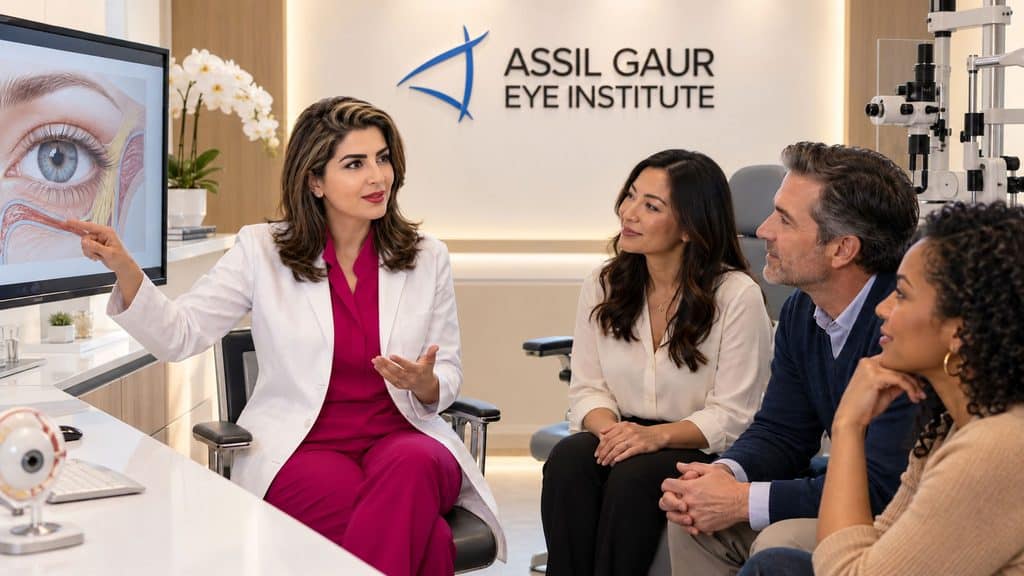
Dr. Adeleh “Dr. Adele” Yarmohammadi is a board-certified ophthalmologist and the Director of Oculoplastic Surgery at Assil Gaur Eye Institute (AGEI). Unlike general plastic surgeons, oculoplastic surgeons are eye doctors with advanced training in the eyelids and the delicate structures around the eye. They approach cosmetic surgery by planning every incision with both appearance and eye health in mind.
But before she began practicing medicine, Dr. Adele was an artist. Her artistic training taught her to study light, symmetry, and balance long before she picked up a surgical instrument. Today, she teaches other eye care professionals to read the face the way a painter would.
When Ellie met her, she immediately sensed her artistic background. “After meeting her, I felt that Dr. Adele doesn’t simply perform cosmetic procedures,” she says.
“She understands the face, its balance, its expression, and the subtle details that would preserve who I am while bringing out the natural beauty I felt was missing in my life.”
They decided that a few procedures, including upper and lower lid blepharoplasties, eyelid ptosis repair, and lacrimal gland repositioning, would address both Ellie’s physical and aesthetic concerns.
What helped Ellie feel ready for eyelid surgery
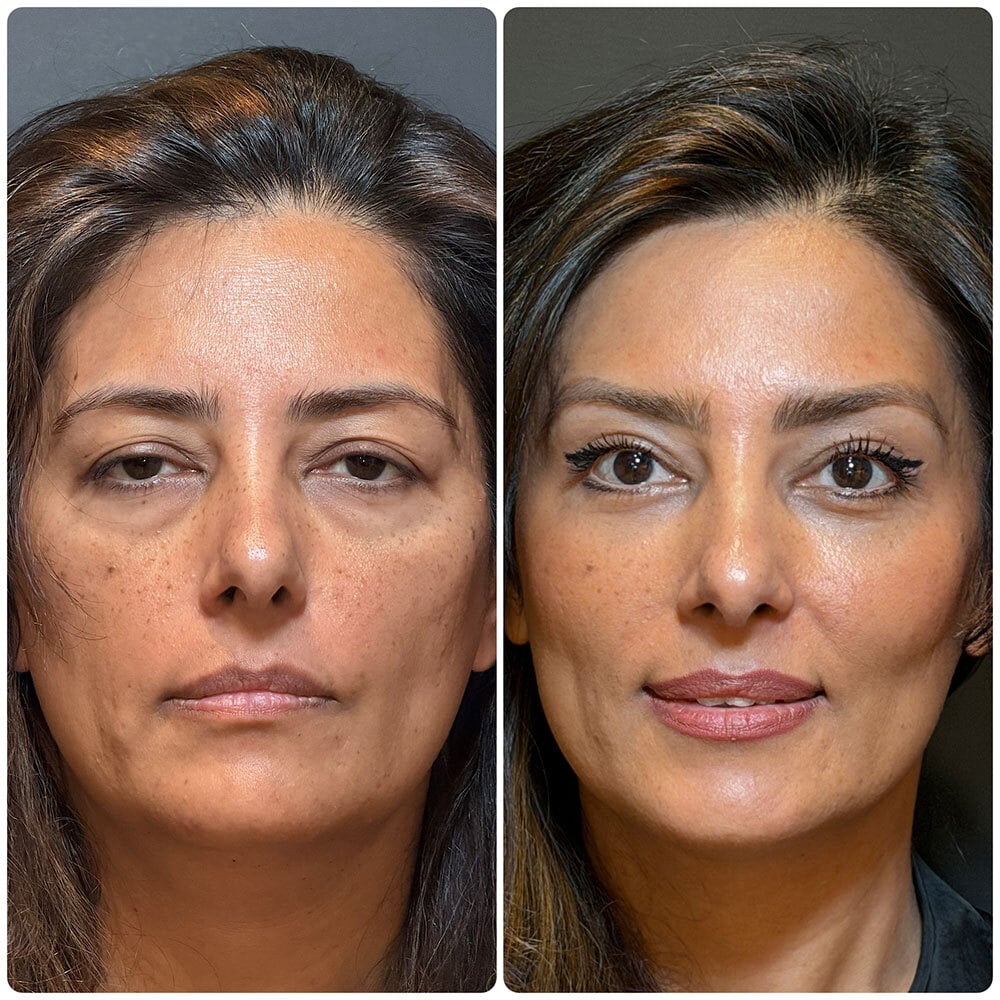
Ellie felt some anxiety going in, which is completely normal. But speaking with Dr. Adele changed things. “Her confidence and my strong desire to do this for myself helped me feel ready,” Ellie says. The combination of procedures Dr. Adele performed addressed both the functional heaviness and the cosmetic concerns Ellie had carried for years.
Dr. Adele’s extraordinary skill, artistic eye, and passion for her work really come through. And the kindness with which she treats her patients, the way she listens, the attention she gives to every detail, and the genuine care – you can feel it throughout the entire experience.
Ellie’s recovery after upper and lower blepharoplasty
Blepharoplasty recovery was, as Ellie puts it, exactly as described. She experienced no pain and followed a routine of cold compresses and careful aftercare, as Dr. Adele recommended.
The incisions were placed so carefully during a transconjunctival blepharoplasty and minimally invasive eyelid lift (MINEL) procedure that any scarring is virtually invisible. Ellie noted that “bruising lasted about two weeks, faded through the third, and was almost completely gone by the fourth, with a small amount lingering a little longer on the right side,” a common post-blepharoplasty experience.
“I never felt like I was simply another patient,” Ellie recalls. Dr. Adele invited her to text her with any concerns after surgery and always responded promptly with the guidance she needed. “That made me feel truly cared for,” Ellie says.
A month later, Ellie is still healing but can hardly tell she had surgery.
Request Your Consultation
Call now or book your appointment online.
One month after eyelid surgery, Ellie began to recognize herself again
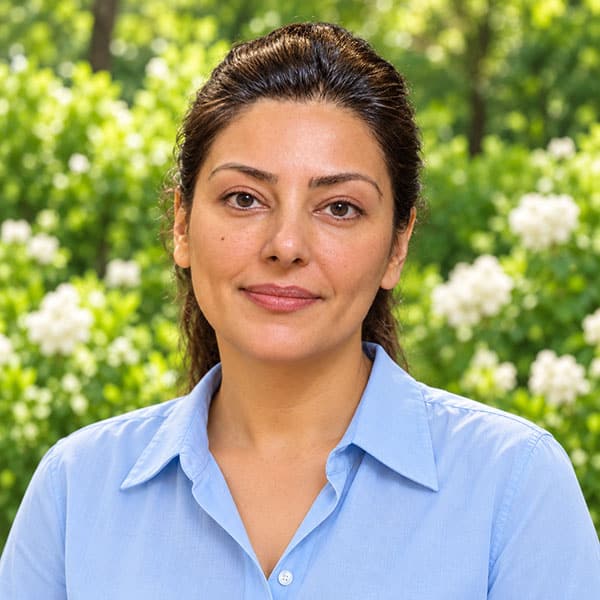
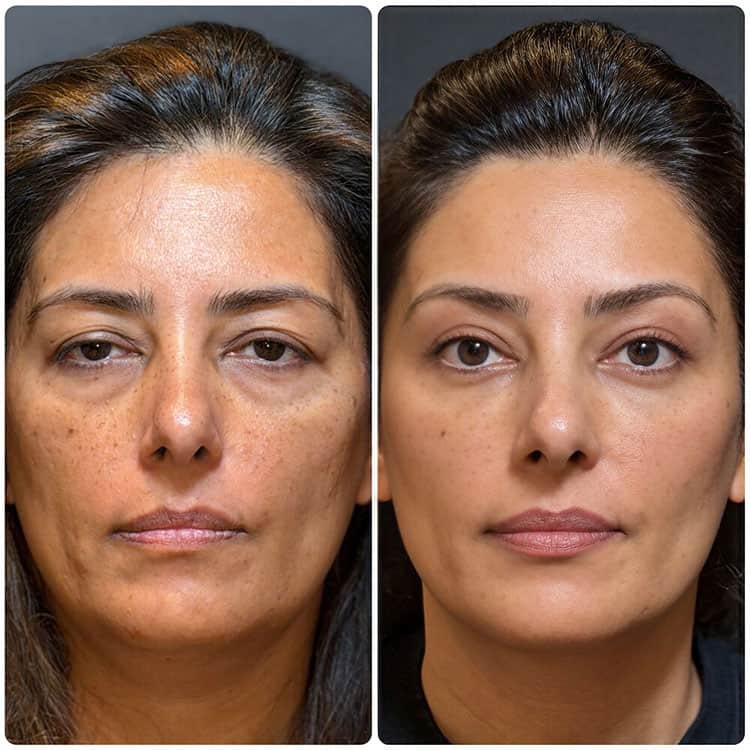
“I used to wonder if my eyes could ever look like they did at twenty,” she says. “When I looked closely in the mirror afterward, I felt they looked even more beautiful. It was an incredible feeling I can hardly describe.”
The reactions from the people around her mirror what she feels inside. Family members are thrilled. Friends say she looks younger and more beautiful after her upper- and lower-eyelid surgery. People who don’t know about the surgery ask what has changed or guess that she looks ten or fifteen years younger.
All these comments added to what Ellie was already feeling.
She now enjoys looking in the mirror and reapplying her eye makeup. These things may seem small to an outsider, but they are significant to Ellie. “This experience showed me how deeply a physical change can affect emotional well-being,” she says. “I’m so glad I did this for myself.”
She also has a message for anyone sitting with similar concerns: “Our eyes let us see the beauty around us, including our own, so choosing someone we trust is essential.”
What was Ellie's message of gratitude to Dr. Adele?
Ellie's message of gratitude to Dr. Adele was: 'You gave me far more than beautiful eyes. You helped me recognize myself again at a time in my life when that meant more than I could ever explain.' This powerful sentiment highlights her profound appreciation for Dr. Adele's work, which extended beyond physical changes to emotional well-being. Ellie unequivocally recommends Dr. Adele to others.
Dr. Adele’s skill, attentiveness, and care are why I wholeheartedly recommend her. What makes Dr. Adele so special goes far beyond her talent as a surgeon – it is her heart.
Upper and lower eyelid surgery at Assil Gaur Eye Institute

Assil Gaur Eye Institute remains laser-focused on its founding mission: delivering exceptional healthcare in a compassionate, caring environment. AGEI continues to advance ophthalmology and give back to the community daily.
If you’re considering upper eyelid blepharoplasty, lower eyelid blepharoplasty, ptosis repair, a brow lift or eye lift, revision of prior eyelid surgery, or other facial rejuvenation procedures, AGEI’s experienced oculoplastic surgeons provide expert care that blends ophthalmological expertise with aesthetic excellence. Contact us to schedule a consultation.
Please call (866) 945-2745 or make an appointment online.
Assil Gaur Eye Institute is conveniently located for patients throughout Southern California and the Los Angeles area, with locations in or near Beverly Hills, Santa Monica, West Los Angeles, West Hollywood, Culver City, Hollywood, Venice, Marina del Rey, Malibu, Manhattan Beach, and Downtown Los Angeles.
Request Your Consultation
Call now or book your appointment online.
Frequently asked questions about upper and lower eyelid surgery
What is the difference between upper and lower blepharoplasty?
Upper lid blepharoplasty addresses heavy, sagging upper eyelids by removing excess skin that crowds the eyelid. It can improve your vision and address aesthetic concerns. Lower blepharoplasty addresses the under-eye area, treating puffiness, hollows or bags under the eyes, and the tired appearance caused by changes at the lower eyelid-cheek transition. Both can be performed together, as in Ellie’s case, and combined with ptosis repair when the eyelid itself has lost muscle tone and begun to droop over the eye.
What is eyelid ptosis repair, and how does it differ from a standard blepharoplasty?
Ptosis is eyelid drooping caused by a weakened levator muscle, which lifts the eyelid. A standard upper blepharoplasty removes excess eyelid skin along the lid’s natural crease but doesn’t address the muscle itself. Ptosis repair tightens or repositions the levator muscle to restore proper lid height. For patients with upper eyelid heaviness that skin removal alone can’t address, ptosis repair is often performed at the same time.
Will eyelid surgery affect my ability to wear eye makeup?
For many patients, eyelid surgery restores the ability to wear makeup. Heavy upper lids or puffiness in the lower eyelids can make application difficult and cause products to settle differently than intended. Once swelling has resolved and the eyelids have fully healed, most patients find applying eye makeup significantly easier (and more enjoyable) than before surgery.
How long does recovery from blepharoplasty take?
Blepharoplasty recovery typically takes one to two weeks, with the most noticeable bruising and swelling occurring in the first week. It’s an outpatient procedure performed under local anesthesia with twilight sedation (rather than general anesthesia), so patients can return home the same day. Most patients feel comfortable in social settings within one to two weeks, though final eyelid contours can take several months to develop.
More Stories You might be interested in

Aesthetic Eye Surgery Blepharoplasty
After Years of Hiding her Under-Eye Bags, Briana Found Confidence with Dr. Adele
Aesthetic Eye Surgery Blepharoplasty
How One Woman Found the Perfect Surgeon for a Lower Blepharoplasty Transformation

Aesthetic Eye Surgery Blepharoplasty