Intraocular Lens (IOLs)
 iDose TR for Glaucoma
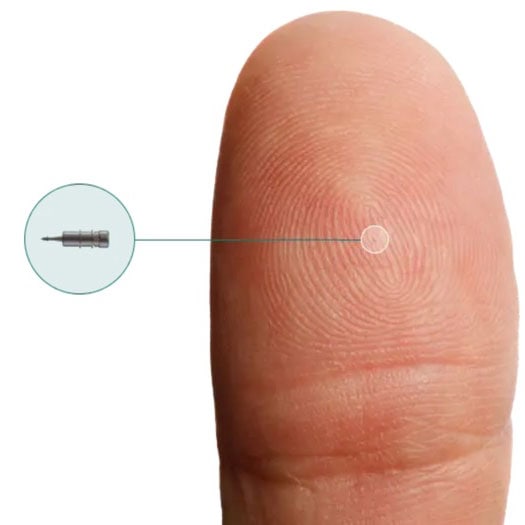
iDose TR is a tiny, titanium implant, roughly the size of a grain of rice. This FDA-approved implant continuously releases a proven glaucoma medication inside your eye.
That medication is called travoprost, which has been used to treat glaucoma for years, most often in the form of daily drops.
Now the same medication is delivered from within the eye instead of from a bottle. As a result, managing your condition is no longer a daily routine.
Assil Gaur Eye Institute is proud to offer iDose TR, and Dr. Avneet K. Sodhi Gaur, our fellowship-trained glaucoma specialist, performs the procedure. Below, we’ll walk you through what iDose TR is, how it works as a breakthrough in interventional glaucoma, who it’s designed for, and what to expect, so you can decide whether it might be right for you.
What is the goal of iDose TR?
Just like your eye drops, the goal is to lower your intraocular pressure (IOP), the fluid pressure inside your eye. When IOP stays too high, it can gradually damage your optic nerve and lead to permanent vision loss. This is why keeping it in a healthy range is the cornerstone of glaucoma care.
How does iDose TR work?
Travoprost works by improving the natural outflow of fluid through the trabecular meshwork from your eye, which lowers the pressure inside it. Because the medication is delivered continuously from inside the eye, iDose TR takes the guesswork out of treatment. There’s no bottle to remember, no doses to miss, and no drops to fit around your daily schedule.
During a short procedure, Dr. Gaur places your iDose TR implant inside the front chamber of your eye. Then she anchors it securely into the scleral tissue at the angle where your iris meets the cornea. Once it’s in place within the anterior chamber, the implant releases travoprost around the clock through a controlled, steady process, so your eye receives a consistent dose every hour of every day.
The U.S. Food and Drug Administration first approved iDose TR in December 2023, and a single implant is designed to keep working for up to three years.
Who is a candidate for iDose TR?
iDose TR is approved to reduce eye pressure in adults with open-angle glaucoma (OAG) or ocular hypertension (OHT), the two most common forms of elevated eye pressure. It can be an especially good fit if you struggle to keep up with daily drops, find that drops irritate your eyes, or simply want a more dependable way to keep your pressure under control.
iDose TR isn’t right for everyone, though. It’s used with caution in patients with narrow angles. It isn’t recommended if you have an active or suspected eye infection, certain corneal conditions such as Fuchs’ dystrophy, corneal guttata or other forms of corneal endothelial cell dystrophy, a history of corneal transplant, or a known allergy to travoprost.
Before recommending iDose TR, our AGEI ophthalmologists perform a thorough evaluation, including a measurement of the cells that line the inside of your cornea—the same layer addressed in Descemet’s Stripping Automated Endothelial Keratoplasty—to confirm that the implant is a safe choice for you.
SEE LIFE THROUGH DR. GAUR'S PATIENTS' EYES
READ HER HONEST PATIENT STORIES







What to expect during the procedure
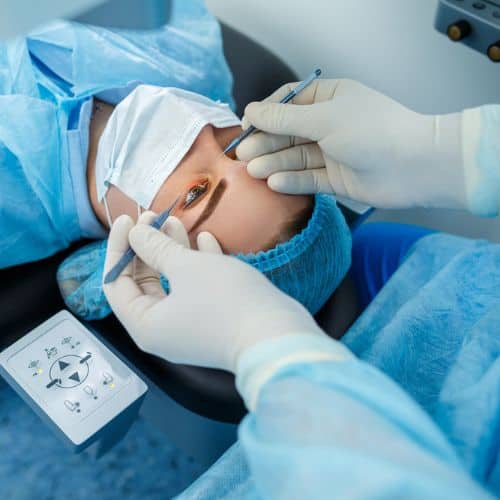
iDose TR is placed during a minimally invasive, in-office procedure that usually takes only a few minutes. Your eye is numbed beforehand for your comfort, so you shouldn't feel pain during the process. Dr. Gaur makes a very small, self-sealing incision at the edge of the cornea—like the technique used in cataract surgery—positions the implant, and secures it in place.
You will most likely head home the same day and return to your normal routine quickly, with a short recovery and a few follow-up visits, so our doctors can confirm your eye pressure is responding well. Our team will give you clear, personalized instructions on what to expect and how to care for your eyes afterward.
What are the benefits of iDose TR?
For many patients, the biggest advantage of iDose TR is simple: it takes the daily work out of glaucoma treatment. Some of the other key benefits include:
- Continuous, around-the-clock eye pressure control from a single implant.
- Freedom from the daily eye drop routine; in clinical trials, 81% of patients were completely free of pressure-lowering drops at 12 months.
- Long-lasting results with one implant designed to last up to 3 years.
- A minimally invasive, in-office procedure with a short recovery.
- The option to be re-administered; the FDA has approved repeat treatment when the time comes.
What are the potential side effects and risks?
As with any procedure, iDose TR carries some risks, and it's important to weigh them alongside the benefits. In clinical studies, the most common side effects, reported in roughly 2% to 6% of patients, included increases in eye pressure, inflammation of the iris (iritis), dry eye, visual field defects, eye pain, redness, and reduced sharpness of vision.
Like travoprost eye drops, iDose TR can also cause a gradual increase in the iris's brown pigment, which is likely permanent.
Serious complications are uncommon, and our ophthalmologists will discuss your individual risks with you in detail before you decide. If you notice anything unusual after your procedure, our team is always just a call away.
Request Your Consultation
Call now or book your appointment online.
Three reasons iDose TR could be a game-changer for your glaucoma care
When you look closely at how iDose TR fits into everyday life with glaucoma, a few advantages really stand out the most:
- You may be able to cut back on or stop your daily drops. Because iDose TR delivers travoprost continuously from inside your eye, many patients are able to reduce or eliminate the prostaglandin drops and other topical medications they've been using. In clinical trials, 81% of patients needed no glaucoma drops at all after one year, and their eye pressure was, on average, lower than it was on the drop form of a similar medication.
- It takes daily remembering out of the equation. Staying on top of glaucoma drops is harder than it sounds. Research published in the American Journal of Ophthalmology found that more than 90% of patients don't take their drops exactly as prescribed every single time, whether because of a busy schedule, trouble getting the drop in, or side effects that make them want to stop. Because iDose TR works around the clock on its own, there's nothing to remember. And while up to half of patients on prostaglandin drops deal with side effects, the side effects reported with iDose TR stayed in the 2% to 6% range.
- The safety data is reassuring, especially for your cornea. Any implant procedure raises fair questions about safety. One concern with earlier eye implants has been damage to the cornea, the clear window at the front of your eye, which in rare cases can call for a corneal transplant such as DSAEK. In studies of iDose TR, no patients experienced significant loss of the cells that keep the cornea clear, and none needed corneal transplantations or endothelial cell transplants. Combined with the implant's tiny size, that's an encouraging picture. Dr. Gaur will walk you through what it means for your eyes.
How does iDose TR compare to other glaucoma treatments?
iDose TR is one of several ways to manage glaucoma, and the right choice depends on your eyes, your lifestyle, and your goals. Here's how it compares to two other common approaches, daily eye drops and selective laser trabeculoplasty (SLT):
| Daily eye drops | SLT laser | iDose TR | |
|---|---|---|---|
| How it works | You apply medication to the eye at least once a day. | A laser improves the eye's natural drainage in a single visit. | A tiny implant releases medication inside the eye. |
| What you must do | Remember every dose, every day. | One office visit; effect may fade over time. | One office visit; no daily routine to keep up. |
| How long does it last | As long as you keep using drops. | One to five years, then can be repeated. | Works up to three years, then can be repeated. |
| Common trade-offs | Missed doses, irritation, and cost over time. | The effect is not permanent and varies by patient. | Office procedure with a short recovery. |
Many patients use more than one approach over the course of their care. During your consultation, Dr. Gaur will help you understand where iDose TR fits into your overall treatment plan.
Request Your Consultation
Call now or book your appointment online.
Why choose Assil Gaur Eye Institute for your glaucoma care?
Glaucoma is a lifelong condition, and the care you choose matters as much as the treatment itself. At Assil Gaur Eye Institute, our ophthalmologists combine decades of pioneering experience with the newest advances in glaucoma care, including innovative options like iDose TR, so you're never limited to a one-size-fits-all plan.
Dr. Gaur and her team take the time to understand your eyes, your daily life, and your goals. Then, they build a treatment approach designed around you.
More than anything, we believe protecting your vision should feel like a partnership, one where your questions are always welcome and your comfort always comes first. If you're ready for glaucoma care that's as forward-thinking as it is personal, we'd be honored to help you see what's possible.
Ready to learn more? Schedule a consultation online with Dr. Gaur and our team or call us at (866) 945-2745.
Frequently asked questions about iDose TR
How effective is iDose TR at lowering eye pressure?
In pivotal trials, average IOP reduction during the first three months was approximately 6.6–8.4 mmHg from a mean baseline of 24 mmHg. It was noninferior to twice-daily timolol during those first three months, but did not demonstrate noninferiority during the following nine months. [FDA clinical-study results]
Will I still need glaucoma eye drops after iDose TR?
Possibly. Some patients can reduce or discontinue drops, while others need supplemental medication to reach their individual target pressure. iDose TR does not guarantee freedom from eye drops.
Does the implantation procedure hurt?
The eye is anesthetized before the implant is inserted through a small corneal incision. Patients may experience temporary discomfort afterward. Persistent or increasing pain requires prompt evaluation.
Is the procedure painful?
Your eye is numbed before the procedure, so you shouldn’t feel pain while the implant is placed. Most patients describe only mild pressure or awareness during the few minutes it takes, and any tenderness afterward is usually minor and short-lived.
What is recovery like after iDose TR?
Recovery instructions vary by surgeon. Patients generally need follow-up pressure and implant-position checks and should follow their surgeon’s restrictions concerning eye rubbing, swimming, exercise, and other eye medications.
Will I still need to use eye drops?
Many patients can reduce or stop their daily glaucoma drops after receiving iDose TR, in fact, 81% of patients in clinical trials were completely drop-free at 12 months. That said, some patients still need additional treatment, and our doctors will monitor your pressure and tailor your plan to your needs.
What happens when the implant runs out?
Because iDose TR is designed to work for up to three years, our ophthalmologists will keep an eye on your pressure over time. When the implant’s effect begins to fade, they can discuss re-administering iDose TR or adjusting your treatment plan.
What are the most common side effects?
Adverse reactions reported in 2%–6% of clinical-trial patients included increased eye pressure, iris inflammation, dry eye, visual-field defects, eye pain, eye redness, and reduced visual acuity.
Less-common complications included device dislocation, corneal abrasion and light sensitivity. [FDA safety information]
Who should not receive iDose TR?
Contraindications include active or suspected eye-area infection, corneal endothelial dystrophy, previous corneal or endothelial-cell transplant, and allergy to travoprost or another component. Narrow or abnormal drainage angles require special caution and may make placement unsuitable. [Glaukos patient safety information]
Can iDose TR be removed or replaced?
Yes, surgical removal is possible when medically necessary. Under the current label, a new implant can be placed and the previous implant removed during readministration. Corneal endothelial-cell testing is required when evaluating repeat treatment.
How does iDose TR compare with Durysta, laser treatment or daily drops?
iDose TR is an anchored, non-dissolving travoprost implant. Durysta is a biodegradable bimatoprost implant; SLT is a laser procedure; and drops are self-administered medications. The best choice depends on glaucoma severity, target pressure, eye anatomy, adherence, previous treatments and tolerance.
Is iDose TR safe with an MRI?
It is “MR Conditional,” meaning MRI is permitted only under specified scanning conditions. Patients should carry their implant card and inform the MRI facility beforehand. [Glaukos MRI information]
Can iDose TR be used in both eyes?
One implant may be administered per treated eye. Whether to treat both eyes together or separately is a decision for the ophthalmologist based on anatomy, pressure targets and surgical planning.
Can iDose TR permanently change eye color?
Travoprost can increase brown iris pigmentation. The change may develop gradually and is likely permanent. [FDA warnings]
How much does iDose TR cost, and is it covered by insurance or Medicare?
Coverage and out-of-pocket expense vary by insurer, diagnosis, provider and treatment setting. Please ask our billing team to verify both the implant and procedure benefits before scheduling.
Is iDose TR covered by insurance?
Coverage varies by plan, and our team can help you understand your options. Reach out to us and we’ll walk you through the details for your specific situation.
Take the next step in your glaucoma care
You don't have to let daily drops define how you manage your glaucoma. If you're curious whether iDose TR could give you steadier pressure control and one less thing to worry about, we'd love to talk with you.
Ready to learn more? Schedule a consultation with Dr. Gaur and our team.
Sources
-
About the iDose TR implant from its manufacturer, Glaukos
https://www.glaukos.com/glaucoma/products/idose-tr/ -
Understanding Glaucoma: Symptoms, Causes, Diagnosis, Treatment
https://www.aao.org/eye-health/diseases/what-is-glaucoma -
Glaucoma Research Foundation’s patient resources
https://glaucoma.org/