Aesthetic Eye Surgery Blepharoplasty
Droopy Eyelids Threatened His Quality of Life Until Dr. Adele Restored His Vision and Made Him Look 10 Years Younger
For Christiaan, a 70-year-old production designer in the film industry, watching his field of vision gradually disappear wasn’t just frustrating; it was dangerous. It all began as hereditary droopy eyelids. Then, it developed further, threatening his safety and quality of life. After watching his mother and sister undergo eyelid surgery years earlier, he finally decided it was his turn.
Christiaan’s upper eyelid blepharoplasty with Dr. Adeleh Yarmohammadi at Assil Gaur Eye Institute didn’t just restore his peripheral vision; it brought back vivid colors, improved his depth perception, and gave him an “unexpected bonus”: a more youthful appearance.
Have your sagging upper eyelids become more than a cosmetic procedure?
This was the situation for Christiaan. “It’s hereditary,” Christiaan begins, “And soon enough, my upper eyelids started closing in on me. My vision and being able to see clearly in lower light were becoming compromised,” Christiaan explains.
The excess skin on his upper eyelids gradually hooded over his eyes, blocking more and more of his visual field. This condition is commonly referred to as eyelid ptosis.
“Finally, it got to the point where it was very bothersome and somewhat dangerous, as I couldn’t see much at the top of my vision,” he recalls.
For many people dealing with age-related eyelid changes, the problem isn’t just about looking tired. When excess fat and excess skin accumulate on the upper lid, they can create significant functional problems. The upper eyelid skin droops so severely that it actually blocks vision. That’s when the condition goes beyond cosmetic reasons into genuine medical necessity.
How did previous cataract surgery lead to finding the ideal blepharoplasty surgeon?
Already being a patient at AGEI meant Christiaan had experienced their level of care firsthand. When he met Dr. Adeleh Yarmohammadi, known as Dr. Adele to her patients, the connection was immediate.
“I had cataract surgery a little over two years ago at AGEI, so I was already in and out of the office. And then I met with Dr. Adele, and we talked about the blepharoplasty,” Christiaan explains.
As a board-certified ophthalmologist specializing in oculoplastic surgery, Dr. Adele has a unique combination that many cosmetic surgeons don’t. As an ophthalmologist who focuses on the delicate structures around the eye, she understands not just the aesthetics but the functional aspects of eyelid surgery. Her training means she approaches upper blepharoplasty with the precision of an eye surgeon and the sensibility of an artist.
“At first, Dr. Adele suggested that I have my vision tested to see how badly my eyelids were affecting my vision,” Christiaan said. The results were sobering. “They took a scan to see how much peripheral vision I had, and it was pretty abysmal.” An upper eyelid blepharoplasty was the obvious recommendation.
Watching family members undergo eyelid lift surgery first
Christiaan wasn’t unfamiliar with the procedure. It was part of the family’s medical history. “My mother had it done in her 50s, and my sister in her 40s. I waited until now, in my 70s,” he says.
Seeing his family members go through upper blepharoplasty gave him a frame of reference, but waiting until his 70s meant the problem had progressed significantly. Christiann’s natural aging process, combined with hereditary factors, meant his droopy upper eyelids had reached a point where they were genuinely interfering with daily life.
What surprised Christiaan was Dr. Adele’s natural artistic talent.
What makes an oculoplastic surgeon different from a cosmetic surgeon?
“Dr. Adele has an artistic flair, as a sculptor would, just a great perception and awareness.”
As an artist himself, Christiaan recognized something special in Dr. Adele’s approach. “We actually had a little bit of conversation about art, and it was wonderful. That’s rare nowadays, to just be able to sit down and have a little conversation with a doctor. It was just wonderful, very enjoyable, and personable.”
This artistic sensibility matters tremendously in eyelid lift surgery. The goal isn’t simply to remove tissue, but to work with the natural crease of the eyelid, preserving its appearance while restoring function. Dr. Adele explained this to Christiaan during their consultation.
“She sits down and talks with you, explaining how she works with the natural creases in your skin and that she’ll be very careful not to alter the structure of your face, just improve upon certain things,” he remembers.
This careful approach distinguishes truly excellent oculoplastic surgeons from those who simply perform eyelid surgery as just another procedure among the many appearance-altering surgeries they do. Dr. Adele’s training in anatomy and aesthetics allows her to create a balanced, natural appearance.
Moreover, this dual focus of vision and appearance sets oculoplastic surgery apart. Many people seek upper eyelid surgery for cosmetic reasons, hoping for a more youthful appearance or to address hooding that makes them look tired. Others, like Christiaan, need it for genuine visual field restoration.
Request Your Consultation
Call now or book your appointment online.
The streamlined upper blepharoplasty experience from consultation to surgery
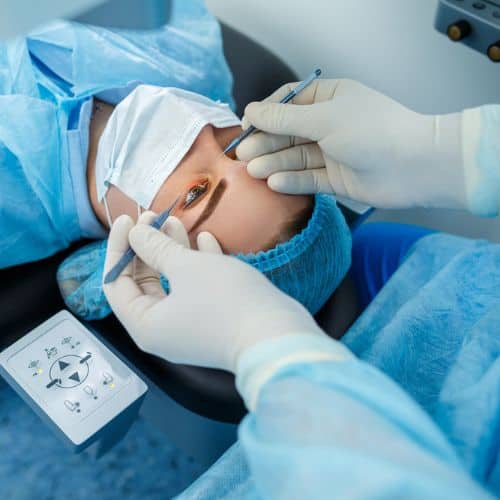
The blepharoplasty procedure itself is typically performed as outpatient surgery, often using local anesthesia rather than general anesthesia. For upper eyelid surgery specifically, the surgical procedure involves making an incision (cut) along the natural eyelid crease. Then the excess tissue is removed or repositioned. Lastly, the surgeon closes the incision with sutures designed to heal with minimal scarring.
“We scheduled the operation, and everything went fine. It was very streamlined and smooth. Dr. Adele was very comforting.” Christiaan says.
Dr. Adele’s bedside manner made the entire experience less stressful for Christiaan. “Her bedside manner is great, and she takes her time,” he notes.
In an era when many patients feel rushed through appointments, having a surgeon who genuinely listens and explains makes an enormous difference.
How quick is the recovery?
Recovery from upper blepharoplasty is generally faster than many people expect. Most patients can return to normal activities within a week or two, though healing time varies. The key is following postoperative instructions, which Christiaan is adamant he followed closely. They typically include using cold compresses to reduce swelling and discoloration, keeping the head elevated, avoiding strenuous activity during the initial healing period, and attending all follow-up appointments.
Is Christiaan pleased with the results?
“The results are fantastic. I was in really bad shape,” Christiaan reflects. “I didn’t have a lot of light entering my eyes anymore. I was really concerned about the trouble I was having with my vision, and now things are great.”
He was very pleased with his surgeon, too. “Dr. Adele is very pleasant, and you can tell, from her personality and her work, that this isn’t just a job for her. She actually really enjoys the experience of making you healthier and improving your quality of life,” Christiaan emphasizes.
What surprised him most wasn’t just the functional improvement, though that was dramatic; it was his appearance. “I wasn’t really concerned with the look of my eyes and how they would turn out, but other people do look at me and say, ‘Oh my gosh, you look 10 years younger!'”
The cosmetic benefit of his plastic surgery was not his primary goal. Yet, it turned out to be a wonderful bonus. Upper eyelid blepharoplasty naturally creates a more alert, refreshed appearance by removing the heavy, tired look that sagging eyelids can create.
Still, Christiaan says the real revelation was sensory. “Colors are more vivid. My depth perception and my field of vision… I wake up and look out the window, and it’s just amazing.”
After years of gradually losing light, having it flood back in changed everything. The world literally looked different, brighter, more vibrant, more alive.
What makes eyelid surgery truly transformative beyond the operating room?
Christiaan’s story illustrates an important point about upper blepharoplasty: when it’s performed for the right reasons by the right surgeon, it’s genuinely life-changing. The combination of functional restoration and aesthetic rejuvenation creates results that feel almost miraculous to patients who’ve been struggling.
Yes, the surgery corrects a physical problem, removing excess upper eyelid skin and opening up visual fields. But the impact extends far beyond that. For someone like Christiaan, an artist who depends on his vision, getting that clarity back meant reconnecting with his passion and his work in a way that had been slowly fading.
Why choose AGEI for upper eyelid surgery and oculoplastic procedures?
At Assil Gaur Eye Institute, oculoplastic specialists like Dr. Adele combine surgical precision with genuine artistry. Whether you’re experiencing vision problems due to droopy eyelids, considering eyelid lift surgery for cosmetic reasons, or dealing with other conditions affecting the eyelids and surrounding structures, comprehensive care from a board-certified oculoplastic surgeon makes all the difference.
Enjoy taking a look at some before and after photos.
Request Your Consultation
Call now or book your appointment online.
AGEI serves patients throughout Southern California, including Beverly Hills, Santa Monica, West Los Angeles, and surrounding communities.
Frequently asked questions about upper eyelid surgery
How do you know if your droopy eyelids are a medical problem or just cosmetic?
If your upper eyelids are blocking your peripheral vision or making it difficult to see when looking up, it’s a functional problem, not just cosmetic. A visual field test can show exactly how much your peripheral vision is affected. Some insurance plans cover upper blepharoplasty when it’s medically necessary for vision obstruction, though you’ll need documentation showing the functional impairment.
Why does eyelid drooping often run in families?
Droopy upper eyelids frequently have a hereditary component because the strength and elasticity of the levator muscle (which lifts the eyelid) and the quality of eyelid skin are genetically influenced. If your parents or siblings have experienced sagging upper eyelids at relatively young ages, you’re more likely to develop the same condition. However, droopy eyelids can also result from medical conditions such as high blood pressure, neurological conditions, or aging.
Can you wait too long to have eyelid surgery if it's affecting your vision?
While there’s no absolute deadline, waiting until your vision is significantly compromised by ptosis (drooping of the upper eyelid) can unnecessarily affect your safety and quality of life for years. As Christiaan discovered, the problem became “somewhat dangerous” before he sought treatment. Once your peripheral vision is notably affected, you’re at increased risk for accidents, especially when driving or navigating stairs. Earlier treatment means more years of clear, unobstructed vision.
How is an oculoplastic surgeon different from a regular plastic surgeon for eyelid surgery?
Oculoplastic surgeons, such as Dr. Adele, are ophthalmologists who complete additional specialized training in plastic and reconstructive surgery of the eyelids, tear ducts, and surrounding facial structures. Unlike general plastic surgeons, who may perform eyelid surgery alongside many other body procedures, oculoplastic surgeons focus exclusively on the eye area. They understand the eye’s complex anatomy, can address both functional vision problems and aesthetic concerns, and are trained to protect your eye health throughout the surgical process.
Sources
-
A review of acquired blepharoptosis: prevalence, diagnosis, and current treatment options
-
Ptosis Correction
https://www.ncbi.nlm.nih.gov/books/NBK539828/
More Stories You might be interested in
Aesthetic Eye Surgery
Jeannie Spent Thousands on Eye Treatments That Never Worked. Then Dr. Adele Saw What Everyone Else Missed
Aesthetic Eye Surgery Blepharoplasty
From a Daily Letdown to Loving Her Reflection: How Blepharoplasty with Dr. Adele Renewed Alyssa’s Confidence
Aesthetic Eye Surgery Blepharoplasty