LASIK
Eagle Vision LASIKExclusively available at Assil Gaur Eye Institute
Exclusively available at Assil Gaur Eye Institute
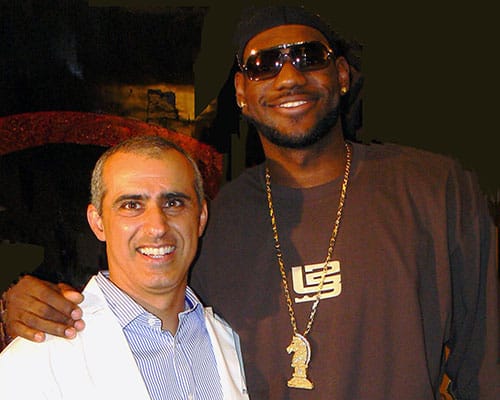
Eagle Vision® LASIK, the choice of LeBron James
Eagle Vision® LASIK laser eye surgery is the latest and most advanced fifth-generation LASIK technique available.
Originally developed to meet the visual demands of elite athletes and others who require exceptional visual performance and stability in challenging physical circumstances, Eagle Vision LASIK has been chosen by professional athletes including LeBron James, Dwyane Wade, Anthony Davis, Sugar Shane Mosley, Chris Paul, and Paul George, to name just a few. They quickly found that Eagle Vision LASIK achieved superior results beyond their expectations.
What are the advantages of the Eagle Vision® LASIK Procedure?
It has been our experience that, compared to other LASIK procedures, the unique features of the Eagle Vision® LASIK technique may offer patients numerous important benefits, including:
- Better night vision.
- Fewer halos and less glare.
- Crisper distance vision.
- Less post-operative dry eye.
- Faster vision recovery.
Also, our exclusive ergonomic flap design offers several benefits, including
- The option of a larger treatment area.
- Quicker healing.
- Added protection against eye injury because the flap design offers greater stability, especially beneficial for individuals who participate in high-contact sports or physically demanding jobs or activities.
Because the treatment also carefully aligns with pupil size, yet another benefit may ensue
- Greater preservation of corneal tissue, which may enhance long-term corneal stability and make future vision enhancements more feasible, if ever needed.
These reflect the key innovations that distinguish our approach from all other LASIK surgeries. Dr. Kerry Assil has created a unique, truly personalized LASIK patient experience and standard of patient care, including comprehensive post-operative care.
It’s not just a little bit better, it’s beyond perfect at 20/15. I’ve got the same vision that fighter pilots have!” – Toby Miller, Olympic snowboarder
SEE LIFE THROUGH OUR LASIK PATIENTS' EYES





Trusted by Professional Athletes. Proven by Thousands of Patients. So why isn't Eagle Vision LASIK offered everywhere?
Delivering this level of customization requires not only the right technology, but also an experienced surgeon and surgical team trained in its application. Other practices and clinics simply cannot offer this level of surgical planning and customization.
Additionally, Eagle Vision® LASIK requires the integration of four refined technologies (Excimer Laser, Femtosecond Laser, Dynamic Pupilometer, and iDesign) plus the use of Dr. Assil’s proprietary patient-customized algorithm for surgical planning.
It's better than 20/20. I've never had vision this crisp in my life! - Dr. Klaus Ito, Optometrist
How does Eagle Vision LASIK work?
Assil Gaur Eye Institute takes laser vision correction to the next level by customizing four key components of LASIK surgery.
Component 1: Treatment Plan Customization
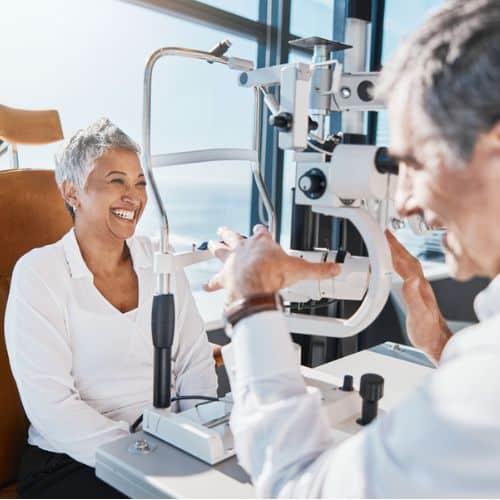
Your Eagle Vision® LASIK experience at AGEI begins with a comprehensive eye exam and advanced diagnostic tests. We create a highly personalized treatment plan based on your eyes' unique characteristics.
For this step, we use iDesign, which takes 25 times more precise measurements than conventional methods and more than 4 times as many data points as any other vision measurement system available today.
iDesign uses wavefront technology developed by NASA to measure both the inside and the outside of your eye. Together with detailed corneal elevation and curvature mapping, iDesign measures your eye's standard prescription power (the kind correctable with glasses or contact lenses) as well as subtler sources of blur known as "higher-order aberrations," which glasses and contacts can't correct. It captures this data from both the front and internal optical structures of your eye. This includes the retina to create a precise three-dimensional "optical fingerprint." This wavefront-guided (Aberrometry-guided) data is then verified using multiple diagnostic platforms to ensure the highest level of accuracy.
The Eagle Vision LASIK approach further customizes the iDesign programs using algorithms developed by Dr. Assil that adjust for patient age, lifestyle, and eye shape. Age matters most after 40, when the eye's natural lens gradually loses its ability to focus up close. For these patients, treatment can be planned as monovision, with the dominant eye set for distance and the other for reading.
We also perform specialized pupil measurements under multiple lighting conditions. These measurements create a detailed 3-D map of your eye’s focusing capability.
By combining these individual data points, we can customize your treatment to your eye's anatomy, visual needs, and specific refractive error - whether for myopia (nearsightedness), hyperopia (farsightedness), or astigmatism.
This allows us to optimize our laser’s ability to reshape your cornea with exquisite precision. No two eyes receive the same treatment because each eye is as unique as a fingerprint. Your procedure is customized to your eye’s anatomy and visual needs to deliver exceptional visual outcomes while supporting long-term corneal stability.
Component 2: Optimized Tissue Preservation
Eagle Vision® LASIK is not a one-size-fits-all approach. After your diagnostic testing is complete, we review and verify multiple measurements before processing them through our proprietary laser-enhancing treatment algorithms.
This advanced planning system combines detailed pupil measurements (such as your pupil behavior under different lighting conditions, age, lifestyle, eye shape, and prescription), wavefront data, and corneal mapping. The result is a highly individualized treatment plan designed to optimize visual quality while preserving as much healthy corneal tissue as possible.
This customized attention to detail is critical, as correcting the exact same eyeglass prescription using two different algorithms may result in tissue sculpting that differs by as much as 400%!
Component 3: Corneal Flap Creation
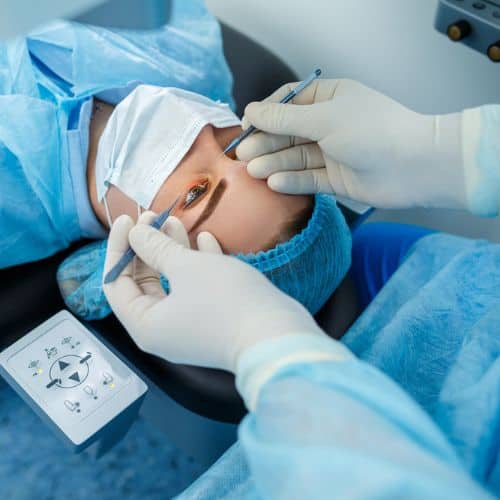
The first step in every LASIK surgery is known as laser-assisted in situ keratomileusis. The surgeon creates a thin flap from the outer layer of your cornea, then folds it back to expose the underlying tissue for laser sculpting.
The question is, “What technologies are being used in Eagle Vision LASIK surgery?”
Some LASIK surgeons still use an actual blade (though rarer these days) or outdated lasers to create the corneal flap. We at Assil Gaur Eye Institute never do.
Instead, like other best-in-class centers, we use the iFS (Femtosecond Laser), the only FDA-approved laser that can create both circular and non-circular (elliptical) flaps. This Laser delivers microscopic pulses just beneath the corneal surface to create a flap thinner than a strand of hair. This has been proven to provide far greater safety and precision than a blade or older lasers.
Our equipment is state-of-the-art, and Eagle Vision LASIK also lets us customize the diameter and shape of the corneal flap. This enables us to better match the natural curvature of each patient's cornea and the specific requirements of their treatment. Dr. Kerry Assil developed this innovative technology in collaboration with Intralase.
Component 4: Corneal Flap Customization and Positioning
Drawing on decades of surgical experience, Dr. Kerry Assil redesigned the traditional LASIK flap. Unlike the conventional round flap used in other LASIK procedures, Eagle Vision® LASIK creates a customized elliptical flap tailored to your eye’s unique corneal shape, pupil size, and treatment requirements. This ergonomic improvement better complements your eyes' natural anatomy.
Another key innovation is the flap hinge's position. Rather than being placed at the top of the cornea, the Eagle Vision® flap is anchored on the temporal (outer) side of your eye.
This region provides not only a larger corneal surface area, allowing the hinge to be positioned farther from the laser treatment zone, but also a wider, more stable hinge. Plus, the human head's bone structure offers the flap greater protection.
Together, these refinements provide several potential advantages over traditional LASIK techniques, including:
- A larger treatment area that allows for more uniform laser treatment without interference from the flap hinge.
- A wider, more stable flap hinge that helps create a smoother flap and promotes early healing.
- Earlier flap sealing because the hinge is positioned in the same direction as the eyelids' strongest natural closing forces.
- Greater flap stability and additional corneal protection by placing the hinge in a location that renders the flap more naturally protected by surrounding bones.
- Better preservation of delicate corneal nerves, which may reduce the likelihood of post-operative dry eye symptoms.
These design innovations reflect Dr. Assil's commitment to preserving corneal tissue, optimizing healing, and enhancing the long-term stability of LASIK.
Not everyone is a candidate for LASIK, and the right procedure depends on your prescription, corneal thickness, and eye health. See our full guide to whether you're a good candidate for LASIK, including what your options are if LASIK isn't the best fit.

Meet the surgeon behind Eagle Vision® LASIK
Dr. Kerry Assil, a board-certified ophthalmologist and internationally recognized leader in LASIK eye surgery, laser vision correction, and advanced cataract surgery, developed Eagle Vision® LASIK.
With more than 30 years of experience and over 70,000 eye surgeries performed, including advanced cataract surgery, Dr. Assil has dedicated his career to advancing the safety, precision, and outcomes of refractive surgery.
In addition, Dr. Assil has trained more than 14,000 ophthalmologists and optometrist professionals worldwide, authored more than 100 scientific publications and textbook chapters, and served as a Distinguished Professor and invited lecturer at leading institutions, including Harvard, Johns Hopkins, Duke, Baylor, Tokyo, and UCLA. His innovations in LASIK technology and surgical planning led to the development of Eagle Vision LASIK, a personalized approach trusted by professional athletes and patients seeking the highest level of vision correction.
The same Eagle Vision® precision is now available for cataract surgery. Learn about Eagle Vision® Cataract Surgery, exclusively at AGEI.
To learn more about Dr. Assil's experience and contributions to ophthalmology, visit Dr. Assil’s profile page.
We only have one pair of eyes, and each is unique. People should have their eye surgery at a world-class clinic. Dr. Assil is the best. - Aaron A., Grad Student
Request Your Consultation
Call now or book your appointment online.
Eagle Vision® LASIK FAQs
What does Eagle Vision stand for?
It stands for:
Ergonomic elliptical-flap design
Aberrometry-Guided planning
Laser-enhanced treatment algorithms
In other words, elliptical-flap Aberrometry guided laser-enhanced vision.
Is Eagle Vision® LASIK right for everyone?
No. The best vision correction procedure depends on your eyes, prescription, lifestyle, and overall eye health, including any conditions such as glaucoma or presbyopia. If you are in your 40s and reaching for readers, monovision LASIK may be worth discussing: one eye is corrected for distance and the other for near. During your consultation, we will determine whether Eagle Vision® LASIK, PRK, EVO ICL, or another procedure is the safest and most effective option for you.
How is Eagle Vision® LASIK different from wavefront-guided LASIK?
Wavefront-guided technology is one part of the Eagle Vision® approach. Eagle Vision® also incorporates advanced corneal mapping, customized pupil measurements, proprietary treatment algorithms, and an ergonomic flap design to create a treatment plan tailored to each patient.
Is Eagle Vision® LASIK safer than traditional LASIK?
Every surgical procedure carries risks. Eagle Vision® LASIK was designed to maximize precision, preserve corneal tissue, and provide a highly customized treatment plan based on each patient’s unique anatomy and visual needs.
Why does preserving corneal tissue matter?
Preserving healthy corneal tissue may support long-term corneal stability and make future vision-enhancement procedures more feasible if your prescription changes over time.
Why does the LASIK flap design matter?
The design and placement of the corneal flap can influence healing, stability, and access to the treatment area. Eagle Vision® LASIK uses a customized elliptical flap coupled with an exceptionally wide hinge, designed to better match the eye’s natural anatomy and improve visual acuity results.
Why do professional athletes choose Eagle Vision LASIK?
Professional athletes depend on fast and stable recovery, protection against injury, and exceptional visual performance. Eagle Vision LASIK was originally developed to meet those demands through a highly customized approach that optimizes visual quality, recovery, and long-term performance.
What does LASIK stand for?
LASIK stands for laser-assisted in situ keratomileusis. (Situ keratomileusis is Latin for “reshaping the cornea in place”.)
Sources
-
Refractive Errors & Refractive Surgery Preferred Practice Pattern®. American Academy of Ophthalmology.
https://www.aaojournal.org/article/S0161-6420(22)00867-3/fulltext. -
LASIK for Myopia and Astigmatism: Safety and Efficacy. American Academy of Ophthalmology EyeWiki:
https://eyewiki.aao.org/LASIK_for_Myopia_and_Astigmatism:_Safety_and_Efficacy. -
Preoperative Evaluation for LASIK Surgery. American Academy of Ophthalmology EyeWiki.
https://eyewiki.aao.org/Preoperative_Evaluation_for_LASIK_Surgery. -
Femtosecond Lasers and Laser-Assisted In Situ Keratomileusis (LASIK). American Academy of Ophthalmology EyeWiki. https://eyewiki.aao.org/Femtosecond_lasers_and_laser_assisted_in_situ_keratomileusis_(LASIK).
-
LASIK Eye Surgery. MedlinePlus, National Library of Medicine.
https://medlineplus.gov/ency/article/007018.htm. -
LASIK World Literature Review: Quality of Life and Patient Satisfaction. Solomon KD, Fernández de Castro LE, Sandoval HP, et al. Ophthalmology.
https://pubmed.ncbi.nlm.nih.gov/19344821/ -
Wavefront-guided Laser In Situ Keratomileusis: Early Results in Three Eyes. Mrochen M, Kaemmerer M, Seiler T. Journal of Refractive Surgery
https://pubmed.ncbi.nlm.nih.gov/10939733/

Written by The AGEI Educational Team

Medically Reviewed by Dr. Kerry Assil
No form shortcode found.