

Epiphora Surgeryfor watery eyes in Los Angeles
for watery eyes in Los Angeles
What causes epiphora (watery eyes)?
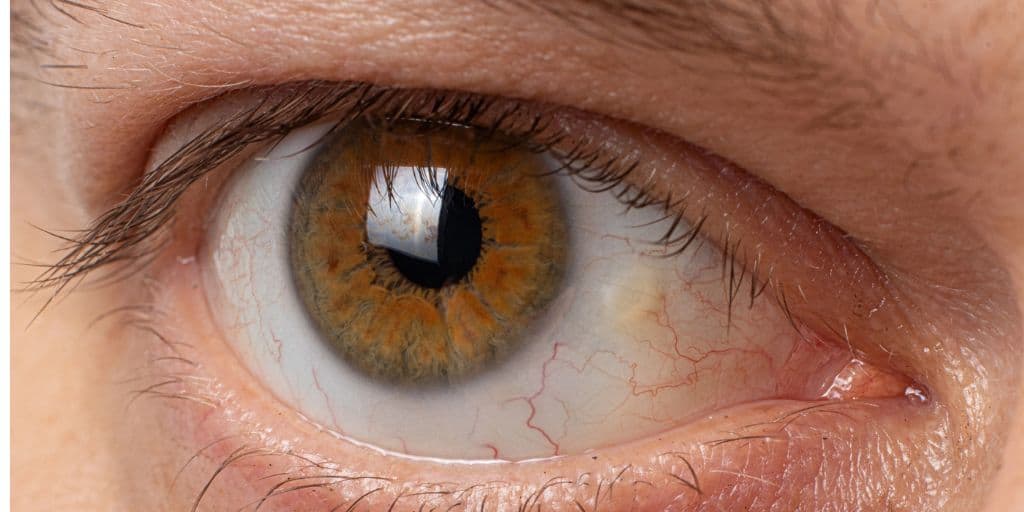
Epiphora is the medical term for watery eyes, which happens when tears are produced too rapidly or can’t drain away properly.
Epiphora can occur at any age, and while it may be a nuisance, it’s typically not a threat to vision. However, understanding its causes and getting appropriate treatment can significantly improve your comfort and quality of life. It can affect one or both eyes.

Get a Complimentary Surgical Photo Assessment from Dr. Adele!
What are the leading causes of watery eyes?
- Blocked tear ducts: The most common cause of watery eyes in adults is a blocked tear duct. When tears can’t drain properly, they build up and overflow onto the cheek.
- Irritated by a foreign body object(s) in the eye.
- Chemical irritants or allergies can lead to excessive tear production.
- Ingrown eyelash (trichiasis).
- Eyelid problems or eyelid malposition, such as lids that don’t close fully or are improperly positioned, can lead to epiphora by disrupting the normal spread and drainage of tears.
- Dry eye syndrome: when the eyes are dry, they may produce reflex tears, which are more watery and less effective at lubricating the eye. They can overflow and cause watery eyes.
- Styes or chalazion.
- A scratched cornea or a corneal disease.
- Infections like pink eye (conjunctivitis).
How does epiphora affect you?
Aside from having watery eyes, you may also suffer from the following:
- Red eyes
- Eye pain
- Itchiness
- Cloudy vision
- Sinus headaches
How is epiphora diagnosed?
Our ophthalmologist will examine your eyes and both upper and lower eyelids. They may apply colored eye drops to monitor their drainage. Typically, your tears would quickly flush out these drops and their dye. However, if the color persists, it could indicate a potential blockage in your tear duct.
How is epiphora treated?
Treatment for epiphora varies based on the underlying cause. In mild cases, treatment may not be needed, as the condition often resolves on its own.
Medication
If the cause is dry eyes, inflammation (blepharitis), or allergies, our ophthalmologist will likely prescribe medication. For example, we may recommend artificial tears or prescription eye drops if you have dry eye. If a stye causes eyelid inflammation, our eye specialist may recommend applying warm compresses to your eye.
Removing foreign objects
If a foreign object enters your eye or you injure it, our healthcare provider will remove the object or treat any damage.
Clearing blocked tear ducts
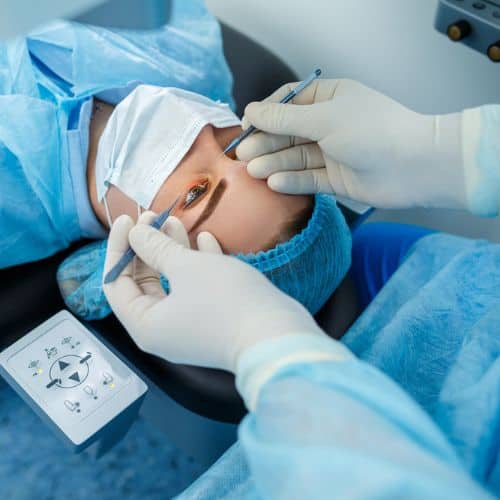
If a tear duct is blocked, our doctor may need to open it with a small probe and flush it to clear any obstruction. This procedure is usually done under local anesthesia.
Repairing eyelids
Suppose the cause of your tear overflow is a functional problem, like an eyelid deformity or weak eye closure. In that case, our eye doctor may recommend surgery to restore proper eye closure and tear drainage.
Why choose Assil Gaur Eye Institute for your epiphora treatment?
Your eyes are one of the most delicate structures in your body. That’s why, when you’re looking for a Los Angeles area surgeon to correct the appearance or function of your eyelids and the structures surrounding your eyes, you want to seek an oculoplastic surgeon.
As a trained ophthalmologist with a sub-specialty in oculoplastic surgery, Dr. Adeleh Yarmohammadi (known as “Dr. Adele” will thoroughly examine your eyes, understand any underlying eye disease, and identify potential problems that might impact the surgical plan — things that even a board-certified facial plastic surgeon is not trained to do.
Our specialists have decades of combined experience treating functional eye problems affecting patients’ vision and health. He has performed thousands of cosmetic procedures, including revisions of surgeries performed elsewhere with unsatisfactory outcomes.
AGEI treats excess eyelid skin or fat, drooping eyelids, wrinkles around the eyes, eyelid reconstruction after tumor removal or eye injuries, excessive tearing, revisions of prior unsatisfactory eyelid surgeries, and abnormally turned-in (entropion) or turned-out (ectropion) lid margins.
Read real patient stories about aesthetic eye surgery.
Please call 866-945-2745 or click here to request an appointment online.
Assil Gaur Eye Institute is conveniently located for patients throughout Southern California and the Los Angeles area, including Beverly Hills, Santa Monica, West Los Angeles, West Hollywood, Culver City, Hollywood, Venice, Marina del Rey, Malibu, Manhattan Beach, and Downtown Los Angeles.
Get a Complimentary Surgical Photo Assessment from Dr. Adele!
Epiphora FAQs
What is the difference between epiphora and lacrimation?
Lacrimation is the process of producing tears. On the other hand, epiphora refers to the condition where there is an overflow of tears.
So, you can think of lacrimation as the “making” of tears and epiphora as a “spilling over” of tears.
Can Bell's palsy cause epiphora?
Yes, Bell’s palsy can interfere with normal eyelid closure, leading to inadequate spreading and evaporation of tears. Consequently, the tear film may accumulate and overflow from the eye, leading to epiphora.
What is a dacryocystorhinostomy?
A dacryocystorhinostomy, often called a DCR, is a type of surgical procedure that creates a new pathway for tears to drain from the eye when the natural tear ducts are blocked. In this procedure, the surgeon makes a small hole in the bone between the eye and nose, connecting the lacrimal sac (the part of the tear duct system that collects tears) directly to the nasal cavity.
This allows the tears to bypass the blocked part of the tear duct, relieving symptoms like watery eyes or infections that can occur when tears can’t drain properly. The surgery is usually performed under general anesthesia and can be done using traditional surgical techniques or less invasive endoscopic methods.
-
Perez, Y., et al. (2021). Nasolacrimal duct obstruction.
https://www.ncbi.nlm.nih.gov/books/NBK532873/ -
Handbook of Ocular Disease Management – Chronic Epiphora”. Archived from the original on 2007-05-09. Retrieved 2007-05-13.
-
Jones LT. Conjunctivodacryocystorhinostomy. Am J Ophthalmol. 2018 Mar; 187:xxxvi-xliv.
-
Kashkouli MB, Beigi B, Murthy R, Astbury N. Acquired external punctal stenosis: Etiology and associated findings. Am J Ophthalmol 2003:136:1079-84.
-
W. N. Offutt IV and D. E. Cowen, “Stenotic puncta: microsurgical punctoplasty,” Ophthalmic Plastic & Reconstructive Surgery, vol. 9, no. 3, pp. 201–205, 1993.
-
Shimazaki, M. Sakala, and K. Tsubota, “Ocular surface changes and discomfort in patients with meibomian gland dysfunction,” Archives of Ophthalmology, vol. 113, no. 10, pp. 1266–1270, 1995.
-
Kashkonli MB, Rezaee R, Nilforonshan N, et al. Topical antiglaucoma medications and lacrimal drainage system obstruction. Ophthal Plast Reconstr Surg. 2008 May-Jun. 24(3):175-6.
-
Sumalee Vangveeravong. Microbiology of Primary Acquired Nasolacrimal Duct Obstruction: Simple Epiphora, Acute Dacryocystitis and Chronic Dacryocystitis. Clinical Ophthalmology. 2016 Feb 2022. 10:337-342.
-
Munk PL, Lin DT, Morris DC. Epiphora: treatment by means of dacryocystoplasty with balloon dilation of the nasolacrimal drainage apparatus. Radiology. 1990;177:687–90.
-
Williams B, et al. (2014). Patterns and causes of epiphora referrals to a tertiary oculoplastic practice. DOI: 10.1016/j.jcjo.2013.12.003
-
Esmer O, Karadag R, Soylu E, Oner AF, Burakgazi-Dalkilic E. Nasolacrimal system obstruction, ptosis and esotropia due to chemotherapy in acute lymphoblastic leukemia. Cutan Ocul Toxicol. 2013.

Written by The AGEI Educational Team

Medically Reviewed by Dr. Adeleh Yarmohammadi