EPIC PRK™ and LASEK Eye Surgery in Los Angeles
Why PRK remains a trusted vision correction option
PRK may be an excellent option for anyone who:
- Has been told they are not a candidate for LASIK.
- Is looking for a laser vision correction procedure that preserves as much of your natural cornea as possible.
PRK eye surgery is the first FDA-approved laser vision correction surgery. Since 1995 it has a long history of delivering safe, predictable, and long-lasting results for millions of people worldwide.
Dr. Assil explains the ins and outs of PRK
At Assil Gaur Eye Institute (AGEI), we’ve built on PRK’s proven foundation with our advanced all-laser approach, designed to improve patient comfort and support the healing process while preserving the tissue-saving advantages of traditional PRK. We call this improved approach EPIC PRK™.
This guide explains EPIC PRK™ in plain English and compares it with LASEK, SMILE, and LASIK. It should also help you understand how your eye anatomy, prescription, lifestyle, and long-term vision goals all play an important role in choosing the right vision correction procedure.
Every eye is unique, and our goal is to give you the information you need to make an informed decision before your personalized consultation at Assil Gaur Eye Institute. During your consultation, your AGEI surgeon will discuss with you the procedure that is best suited to your eyes and your lifestyle.
What is PRK?
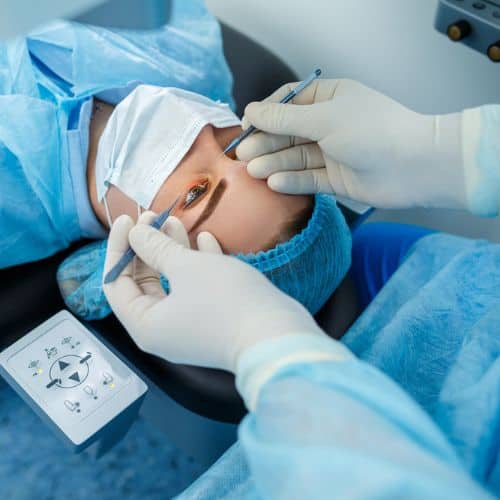
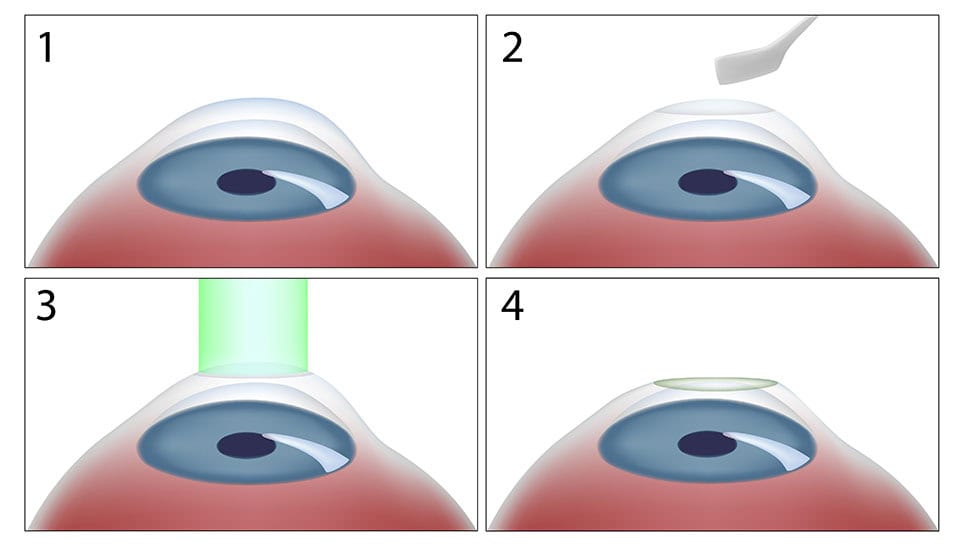
PRK (Photorefractive Keratectomy) is one of the most established and trusted forms of laser vision correction. Unlike LASIK, which creates a thin flap in the cornea, PRK is a surface procedure. In other words, the laser treatment is performed directly on the front surface of the cornea without creating a flap in the cornea.
During PRK, our surgeon gently removes the cornea’s thin outer protective layer, called the epithelium, before using an excimer laser to precisely reshape the underlying cornea and correct refractive errors such as myopia (nearsightedness) and astigmatism. A soft bandage contact lens is then placed on the eye to protect the surface and support healing while the epithelium naturally grows back over the next several days.
Because PRK doesn’t require creating a corneal flap, it preserves more of the cornea’s natural structure than LASIK. This makes it an excellent option for many patients with thin corneas, certain corneal irregularities, or those who want to preserve as much healthy corneal tissue as possible.
What is LASEK?
LASEK (Laser-Assisted Subepithelial Keratectomy) is a variation of PRK that uses the same excimer laser to reshape the cornea. The primary difference is how the cornea’s thin outer layer, called the epithelium, is treated. Instead of removing it immediately, your surgeon first loosens it with a diluted alcohol solution before performing the laser treatment.
While LASEK remains an effective option for some patients, it is performed less frequently today because modern PRK offers comparable visual outcomes with a simpler surgical technique.
What is LASIK?
LASIK (Laser-Assisted In Situ Keratomileusis) is the most commonly performed laser eye surgery. Unlike PRK, LASIK begins by creating a thin flap in the cornea using a femtosecond laser. Your surgeon gently lifts the flap, reshapes the underlying cornea with an excimer laser to correct your vision, and then carefully repositions the flap, where it naturally heals.
Because the corneal surface remains largely intact, most patients experience minimal discomfort and a rapid recovery time, often returning to normal activities within a day or two. However, some patients may be better suited to a flap-free procedure such as PRK based on their corneal thickness, eye health, lifestyle, or vision goals.
What is SMILE?
SMILE (Small Incision Lenticule Extraction) is a flap-free laser vision correction procedure (like PRK) that primarily treats nearsightedness and some cases of astigmatism. A femtosecond laser creates a small disc of tissue within the cornea, which is then removed through a tiny incision. This reshapes the cornea and corrects your vision.
SMILE can be an appropriate option for select patients. However, it currently treats a narrower range of vision problems than PRK or LASIK, so it isn’t the right choice for everyone. Since SMILE has been approved, there is evidence that SMILE surgery is not performing as well as anticipated.
Introducing EPIC PRK™: The advanced evolution of PRK
EPIC PRK™ is an advanced evolution of traditional PRK developed at Assil Gaur Eye Institute by Dr. Kerry Assil, who also developed Eagle Vision LASIK and Eagle Vision Cataract. Like conventional PRK, it corrects nearsightedness, farsightedness (hyperopia), and astigmatism without creating a corneal flap. The difference is in how the treatment is performed.
With traditional PRK, the cornea’s thin outer protective layer (the epithelium) is removed either mechanically or with a diluted alcohol solution before the underlying cornea is reshaped with an excimer laser. With EPIC PRK™, a customized excimer laser performs both the epithelial removal and the vision correction, making it an all-laser procedure that avoids mechanical instruments and alcohol.
By combining advanced corneal imaging with precise pupil measurements, the EPIC PRK procedure is customized to each patient’s unique eye anatomy. For appropriate candidates, this allows the laser treatment to be carefully matched to the treatment area, helping to preserve even more healthy corneal tissue than traditional PRK, while supporting a smoother healing process.
Like traditional PRK, EPIC PRK™ does not create a corneal flap, making it an excellent option for patients with thin corneas, certain corneal irregularities, or those who want to preserve as much healthy corneal tissue as possible.
Call now or book your appointment online.
Why choose PRK instead of LASIK?
Both PRK and LASIK are highly effective procedures that can provide long-lasting vision correction. The best choice depends on your eye anatomy, lifestyle, and long-term vision goals. Our AGEI team may recommend PRK over LASIK if you have:
Thin corneas
Because PRK doesn’t require creating a corneal flap, it preserves more of the cornea’s natural structure, making it an excellent option for many patients with thinner corneas.
Dry eye concerns
LASIK temporarily affects corneal nerves that help regulate tear production. While many patients with dry eye can still have LASIK, a flap-free procedure like PRK may be a better choice for some individuals.
Certain corneal surface conditions
Patients with conditions such as recurrent corneal erosion or some superficial corneal irregularities may benefit from a surface procedure that allows a new, healthy epithelial layer to regenerate.
An active lifestyle
Some patients, particularly those involved in contact sports or occupations at higher risk of eye injury, prefer a flap-free procedure because it eliminates future concerns about a corneal flap.
A desire to preserve corneal tissue
Because PRK leaves more corneal tissue intact, it may provide additional flexibility for certain patients should future vision correction ever be desired or needed.
Ultimately, neither PRK nor LASIK is universally better. The right procedure is the one that’s safest and most appropriate for your unique eyes. Assil Gaur Eye Institute’s complimentary comprehensive evaluation is the best way to determine which option is right for you.
Who may not be a good candidate for PRK or EPIC PRK?
PRK or EPIC PRK may not be recommended if you have:
- An unstable or changing glasses prescription.
- Severe nearsightedness that may be better treated with EVO ICL.
- Significant farsightedness that may be better treated with Refractive Lens Exchange (RLE).
- Advanced glaucoma or visually significant cataracts.
- Certain corneal diseases, excessive corneal scarring, or active eye infections.
- Uncontrolled diabetes or another medical condition that could affect healing.
Also, these options may not be recommended if you are pregnant or breastfeeding, when vision and healing may be temporarily affected.
What are the limitations of PRK?
Every vision correction procedure has advantages and trade-offs. Compared with LASIK, PRK typically involves:
- A longer recovery period (though EPIC PRK tends to be less than traditional PRK) with vision continuing to improve over several weeks.
- More discomfort during the first few days while the corneal surface heals.
- A temporary risk of light sensitivity, glare, or corneal haze during healing, which is minimized by carefully following your post-operative instructions.
- As with any refractive surgery or procedure, some patients may still need glasses for certain activities later in life or require an enhancement if their vision changes over time.
Call now or book your appointment online.
EPIC PRK recovery timeline: what to expect
Recovery after PRK or EPIC PRK™ is more gradual than LASIK because the cornea’s outer protective layer needs time to heal. While everyone heals at a different pace, here’s what most patients can expect:
Days 1-3
It’s normal to experience blurred vision, light sensitivity, tearing, and a scratchy or gritty sensation. A bandage contact lens helps protect the eye and improve comfort while the surface begins to heal. Most patients take a few days off from driving and work.
Days 4-7
As the cornea heals, discomfort continues to improve. Your bandage contact lens is typically removed during this time, although vision may still be blurry or fluctuate.
Weeks 2-4
Vision gradually becomes sharper, and most patients return to their normal daily activities. Mild fluctuations, glare, or halos may continue as your eyes heal.
Months 1-3
Vision continues to stabilize, with many patients achieving their best visual outcome within one to three months. Our team will monitor your progress during follow-up visits to ensure you’re healing as expected.
Following your surgeon’s post-operative instructions, using your prescribed eye drops, and protecting your eyes as they heal all play important roles in achieving the best possible outcome.
What are the long-term PRK results?
For appropriate candidates, PRK and EPIC PRK™ are designed to provide long-lasting vision correction. Because the cornea is permanently reshaped during the procedure, the results are intended to be permanent.
However, laser vision correction cannot prevent the natural aging of the eye. As you get older, it’s normal to develop presbyopia, which often requires reading glasses. You might also develop cataracts, which can affect vision later in life. These age-related changes are not a sign that your PRK procedure has “worn off.”
Many patients enjoy years, and often decades, of 20/20 vision or reduced dependence on glasses, contact lenses, or other corrective lenses after PRK. If your vision changes over time, our AGEI ophthalmologist can discuss which additional treatment or other vision correction procedure may be appropriate.
Which vision correction procedure is right for me?
Choosing between EPIC PRK™, PRK, LASEK, SMILE, and LASIK isn’t a one-size-fits-all decision. The best procedure depends on your prescription, corneal thickness and shape, tear quality, overall eye health, lifestyle, and long-term vision goals.
During your comprehensive evaluation, our surgeons use advanced diagnostic testing to determine which procedure is the safest and most effective for your unique eyes. For some patients, that may be LASIK because of its quick recovery. For others, EPIC PRK™ may be the better choice. Then, there are people for whom EVO ICL or Refractive Lens Exchange (RLE) may be recommended instead.
Because Assil Gaur Eye Institute offers a full range of advanced vision correction procedures, our recommendations are based on what’s best for your eyes.
Why choose Assil Gaur Eye Institute for your PRK eye surgery?
Choosing the right procedure is important, but choosing the right surgical team is just as important. At Assil Gaur Eye Institute, you’ll find nationally recognized ophthalmologists who combine decades of experience with advanced technology to deliver personalized vision correction tailored to your unique eyes.
When considering vision correction surgery, experience, technology, and personalized treatment planning all matter. Here’s what sets Assil Gaur Eye Institute apart:
- We have more than 100 years of combined ophthalmic experience and have performed over 100,000 vision correction procedures.
- Dr. Kerry Assil, Medical Director, is an internationally recognized refractive surgeon who has helped pioneer advancements in laser vision correction and has trained more than 14,000 eye surgeons worldwide.
- Dr. Avneet K. Sodhi Gaur, Dr. Assil’s hand-picked partner, is a board-certified, fellowship-trained ophthalmologist specializing in LASIK, cataract surgery, and glaucoma. She completed advanced fellowship training at nationally renowned institutions, including Tufts Medical Center, the New England Eye Center, and Ophthalmic Consultants of Boston.
- We use state-of-the-art diagnostic imaging, including detailed views of the retina, and customized treatment planning designed to match the safest and most effective procedure to each patient’s unique eyes.
- Our team is trusted by professional athletes, physicians, entertainers, and patients from around the world who seek the most trustworthy and advanced vision correction.
No matter which vision correction option you choose, our goal is the same: to help you achieve the clearest vision possible with a treatment plan that’s personalized to your eyes and delivered with exceptional expertise and compassionate care.
Call now or book your appointment online.
EPIC PRK FAQs
How can you speed up PRK recovery?
Recovery after EPIC PRK surgery can take several days. While the recovery period cannot be avoided entirely, some steps can help speed up the healing process.
- Following your doctor’s post-operative instructions is crucial, including using any prescribed eye drops, avoiding rubbing your eyes, and protecting them from bright light and dust.
- Rest and avoid strenuous activities such as swimming.
- Use lubricating eye drops as your doctor directs to keep your eyes moist and comfortable.
- Wear protective eyewear such as sunglasses or goggles outdoors to protect your eyes from dust, wind, and other environmental factors.
- A diet rich in antioxidants and omega-3 fatty acids can help promote healing and reduce inflammation.
- Avoid smoking and alcohol consumption, which can slow healing and increase the risk of complications.
How long after EPIC PRK can I watch TV?
It’s important to avoid activities that could strain your eyes, including watching TV or using a computer, for the first few days after surgery.
Your doctor will provide specific instructions on when it’s safe to resume normal activities, including watching TV. Most people can resume watching TV and using a computer within a few days to a week after surgery
Is EPIC PRK better than LASIK?
Both procedures effectively treat common vision problems such as nearsightedness, farsightedness, and astigmatism, but they differ in how the surgery is performed and the recovery process.
Ultimately, choosing between EPIC PRK and LASIK should be made in consultation with our experienced eye surgeon, who will evaluate your needs and recommend the benefits of PRK, LASEK, or LASIK.
How long does EPIC PRK surgery take?
The actual EPIC PRK surgery typically takes only less than 15 minutes per eye. However, the process may take several hours, including pre-operative preparations and post-operative follow-up appointments.
Am I too old for PRK?
There is no strict upper age limit. What matters more is the health of your eyes and a stable prescription. If a cataract is developing, a lens-based procedure may make more sense, which is one reason a full evaluation is important.
Does EPIC PRK hurt?
You should not feel pain during surgery thanks to numbing drops. Afterward, most patients describe mild to moderate discomfort, a gritty or scratchy sensation, and light sensitivity for roughly 24–36 hours to a few days while the surface heals. Prescribed drops and a bandage contact lens help manage it.
Does EPIC PRK fix astigmatism?
Yes, EPIK PRK surgery can effectively treat astigmatism, a standard refractive error that causes blurred or distorted vision at all distances. It’s important to note that while PRK can be an effective treatment for astigmatism, it is not a guarantee of perfect vision. Some patients may need to wear glasses or contact lenses after surgery, particularly for reading or other close-up work.
Can you get LASIK after EPIC PRK?
Sometimes. It depends on how much corneal tissue remains and the shape of your cornea after PRK, and surgeons typically wait until the eye has fully healed and stabilized. Your surgeon will advise whether it is safe in your case.
Can you wear contacts after EPIK PRK?
During the initial healing period after EPIC PRK, a contact lens is used to accelerate the healing. Thereafter, contact lenses are typically not needed as your vision has been corrected.
Once your eye doctor determines that your eyes have healed sufficiently and it’s safe, then contact lenses, such as cosmetic lenses, may be considered.
Does EPIC PRK cause dry eyes?
Some patients notice temporary dryness during the healing period as the corneal surface recovers. It usually improves as the eye heals, and lubricating drops help. Because it avoids a flap, PRK is often chosen by patients already prone to dry eye.
How long after EPIC PRK can I wear eye makeup?
Plan to skip eye makeup for at least three days, or until your surgeon gives the go-ahead, to reduce the risk of irritation or infection while the surface heals.
How soon can you exercise after EPIC PRK?
Avoid strenuous exercise for at least a couple of days, and avoid swimming, hot tubs, and contact sports until your surgeon clears you, since water and impact can affect the healing surface.
When can I drive after PRK?
Many patients cannot drive for the first day or two and should not drive until their vision is clear enough and their surgeon confirms it is safe. Because vision can fluctuate early on, plan for someone to drive you home on the day of surgery.
How long after EPIC PRK can I use a computer?
After EPIC PRK, it’s generally safe to use a computer and other electronic devices once your vision has stabilized and you feel comfortable doing so. However, avoiding prolonged use of electronic devices during the initial healing period is essential, as this can put additional strain on your eyes and delay the healing process.
Can you have cataract surgery after EPIC PRK surgery?
Yes. Having had PRK does not prevent you from having cataract surgery later in life. It is helpful to let your cataract surgeon know about your prior laser vision correction so lens calculations can be adjusted.
What are the Pros and Cons of EPIC PRK Vision Surgery?
EPIC PRK is a highly effective laser vision correction procedure that can deliver long-term results similar to LASIK, especially for patients with thin corneas or active lifestyles. However, it does come with a longer recovery time, temporary discomfort, and potential side effects like dryness or light sensitivity during healing. Learn more about the pros and cons of PRK vision surgery.
Can you get EPIC PRK twice?
An enhancement can be performed, though it is very uncommon. A second surface treatment can be more involved because the cornea is thinner after the first procedure, so careful evaluation is essential before considering it.
-
Photorefractive Keratectomy (PRK), American Academy of Ophthalmology – EyeWiki https://eyewiki.aao.org/Photorefractive_Keratectomy
-
What Is Photorefractive Keratectomy (PRK)? American Academy of Ophthalmology – EyeSmart https://www.aao.org/eye-health/treatments/photorefractive-keratectomy-prk
-
Photorefractive Keratectomy (PRK) – FDA Premarket Approval, U.S. Food & Drug Administration https://www.accessdata.fda.gov/scripts/cdrh/cfdocs/cfpma/pma.cfm?id=P930034
-
Photorefractive Keratectomy (PRK), MedlinePlus (U.S. National Library of Medicine)

Written by The AGEI Educational Team

Medically Reviewed by Dr. Kerry Assil
No form shortcode found.