Cataract Surgery Before & After Photos in Los Angeles
What is Cataract Surgery?
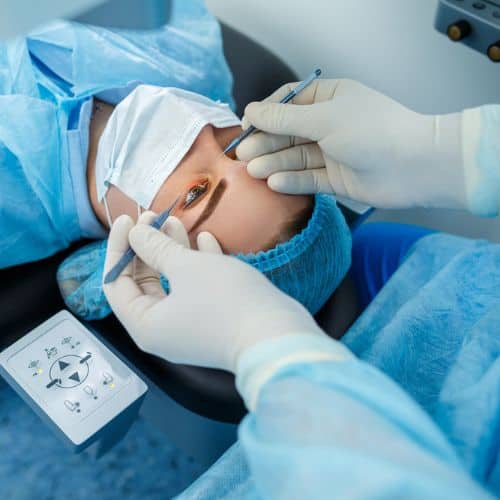
Cataract surgery is a procedure to remove the cloudy lens (a cataract) of your eye and replace it with an artificial one. This surgery restores clear vision quickly and painlessly. After surgery, you’ll likely notice a significant improvement in your ability to see clearly.
BEFORE

AFTER
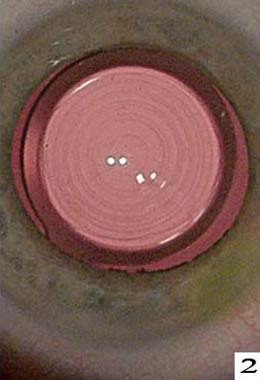
What are Nuclear Sclerotic and Oil Droplet Cataracts, and how are they treated with Odyssey Lenses?
Nuclear Sclerotic (NS) and Oil Droplet cataracts are types of lens opacities that can cause nearsightedness, dim vision, and glare. In one case, a 67-year-old woman presented with these cataracts, experiencing increased nearsightedness and difficulty in dim lighting and when looking towards the sun. Her vision was corrected using Odyssey lenses, which addressed her distance, intermediate, and near vision based on our EAGLE Vision Algorithm and her lifestyle needs.
BEFORE
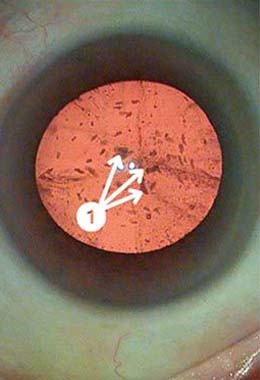
AFTER
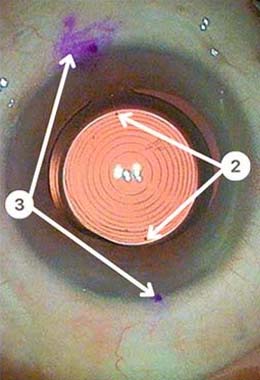
How are Oil Droplet Cataracts treated with Symfony Toric Lenses?
Oil Droplet cataracts, characterized by focal opacities like Water Vacuoles, cause extreme glare from light sources. In one instance, a patient experiencing severe glare from these cataracts, along with astigmatism, was treated with a Symfony Optiblue Toric lens. This lens was recommended by our EAGLE Vision algorithm to provide optimal quality vision and astigmatism correction, with the Ora Aberrometer used for precise alignment during the procedure.
BEFORE
AFTER
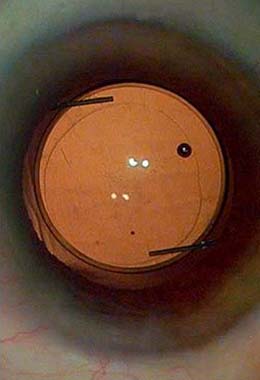
How are Mixed Cataracts treated with Sensar Lenses?
Mixed cataracts, such as cortical spoking and nuclear sclerotic cataracts, can cause glare and blurred vision. For example, a 63-year-old architect with these conditions, along with large pupils and early Dry Age-Related Macular Degeneration (Dry AMD), sought the sharpest possible distance vision. Our EAGLE Vision Algorithm recommended the Sensar lens based on his specific eye conditions and visual goals.
BEFORE
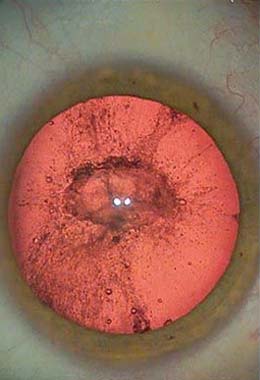
AFTER
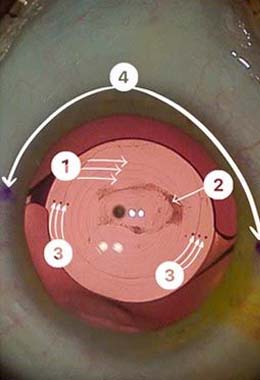
How are cataracts treated with Diffractive Optic Toric Lenses after Retinal Detachment Repair?
Cataracts can develop as a consequence of retinal detachment repair, requiring treatment with specialized lenses like diffractive optic toric lenses. For example, a 44-year-old patient developed a dense cataract after successful retinal detachment repair. To achieve independence from glasses for near and far, a diffractive pattern multifocal lens with astigmatism correction (Toric) was used. The EAGLE Vision platform, including the Ora Aberrometer, was employed for precise astigmatism treatment and lens alignment.
BEFORE
AFTER
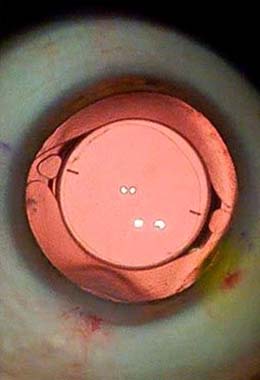
How are Posterior Subcapsular Cataracts treated with Envista Toric Lenses?
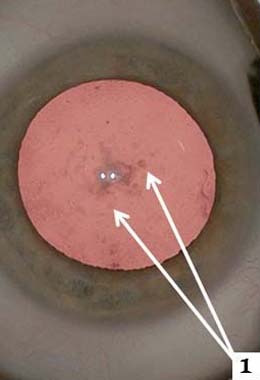
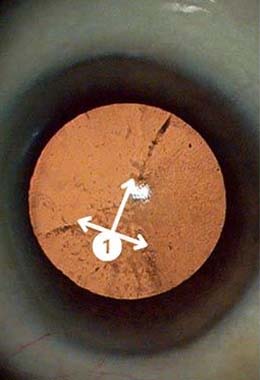
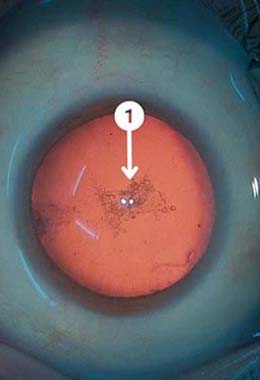
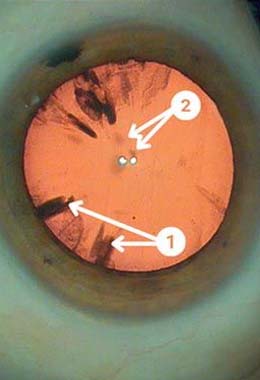
This 69-year-old female engineer had developed a posterior sub-capsular (PSC) [arrow 1] cataract and wished to have superb glare-free distance vision and wear magnifiers for her myriad of near work.
She had large pupils (making glare a bigger challenge) and centrally steep-shaped corneas from prior Hyperopic PRK (for a high amount of farsightedness). She also had the early stages of a membrane growing over the retina (Epi-Retinal Membrane – ERM) Our EAGLE algorithm selected the Engista Toric IOL as the best lens selection for her. This single vision, astigmatism correcting lens produces minimum glare and nicely compliments her very steep corneas (as it has a very flat asphericity profile, offsetting the steep corneal shape). This combination provides her with the sharpest and most glare-free distance vision while necessitating magnifiers for intermediate and near viewing.
BEFORE
AFTER
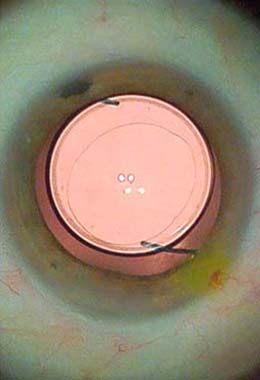
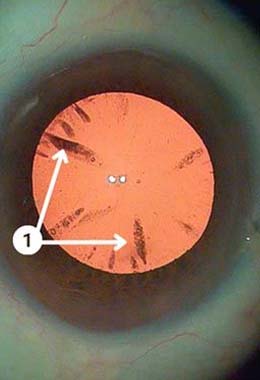
How are Mixed Pattern Cataracts treated with Sensar IOLs?
Mixed pattern cataracts, including Nuclear Sclerosis, Cortical Spoking, and Oil Droplets, can significantly reduce vision. For example, a 71-year-old mail clerk developed these three types of opacities, severely impacting her vision even with eyeglasses. Considering economic factors and her comfort with eyeglasses, she opted for a standard IOL and was provided with a Sensar lens to remedy her vision issues.
BEFORE
AFTER
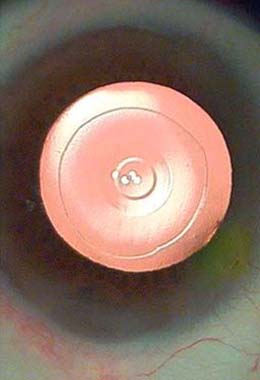
How are Cortical Spoking Cataracts treated with Vivity IOLs?
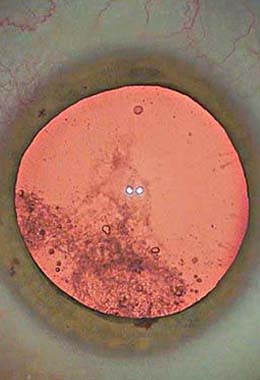
Cortical Spoking (CS) cataracts can cause glare and difficulty with vision, especially in bright lights. For example, a 64-year-old executive with CS cataracts experienced glare and struggled with intermediate vision, impacting his race car driving. He aimed for excellent distance and strong intermediate vision with reduced glare. Our EAGLE Vision Algorithm recommended a Vivity Lens based on his lifestyle needs, pupil size, and corneal curvature to achieve these goals.
BEFORE
AFTER
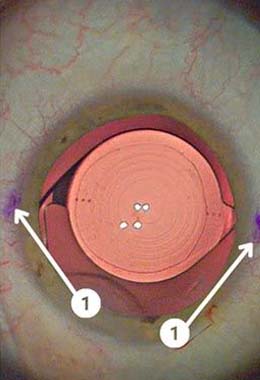
How are Posterior Sub-Capsular (PSC) Cataracts treated with Extended Depth of Focus (EDOF) Toric IOLs?
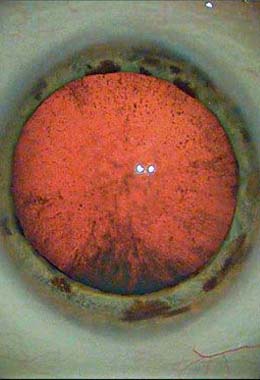
Posterior Sub-Capsular (PSC) cataracts, often seen with prolonged steroid use, cause visual blur and disabling glare, and can be treated with Extended Depth of Focus (EDOF) Toric IOLs. For example, a young patient with asthma using chronic steroid inhalers developed a PSC cataract. Based on their age, active lifestyle, corneal shape, nearsightedness, and astigmatism, our Enriched Optics Algorithm recommended an EDOF Toric IOL. Astigmatism was precisely treated using the Ora, real-time Aberrometry Guided system, ensuring optimal lens alignment and vision correction.
BEFORE
AFTER
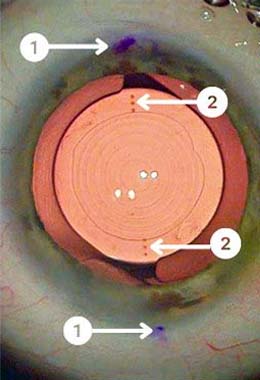
How are Variable Pattern Cataracts treated with Symfony Optiblue Toric Lenses?
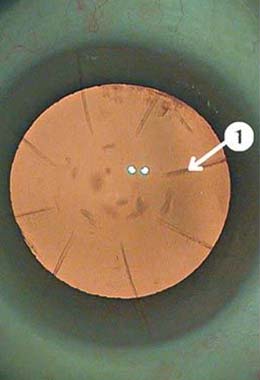
Variable pattern cataracts, including hardened nuclear sclerosis, can be treated with Symfony Optiblue Toric lenses, especially in cases with early retinal changes and astigmatism. For example, a 93-year-old patient with variable pattern and extremely hardened cataracts, early retinal aging, and significant astigmatism was treated with a Symfony Optiblue Toric IOL. This lens was chosen for its superb contrast acuity, and astigmatism was precisely corrected using our developed real-time Aberrometry Guided system, ORA, ensuring optimal lens alignment.
BEFORE
AFTER
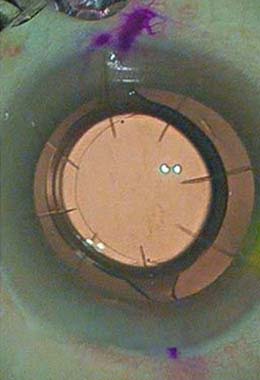
How are Water Vacuole Cataracts in Post-Radial Keratotomy (RK) Eyes treated with Tecnis Eyhance Toric Lenses?
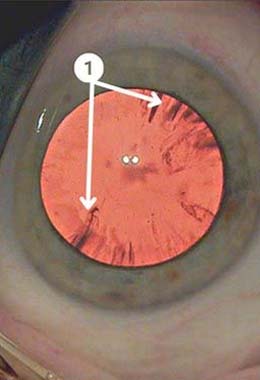
Water Vacuole or Oil Droplet cataracts in post-Radial Keratotomy (RK) eyes can cause blurred vision, glare, and ghosting, and can be treated with Tecnis Eyhance Toric Lenses. For example, a 64-year-old patient with a post-RK eye developed a Water Vacuole cataract and astigmatism, desiring clear distance and intermediate vision with minimal glare. Our Enriched Optics Algorithm selected a Tecnis Eyhance Toric IOL, an EDOF lens with a steepened curvature that complements the flattened post-RK cornea. Astigmatism was corrected using the Ora laser measurement system for precise alignment, ensuring optimal vision despite old RK incisions.
BEFORE
AFTER
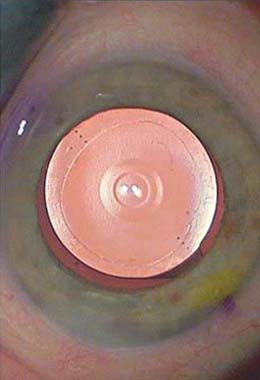
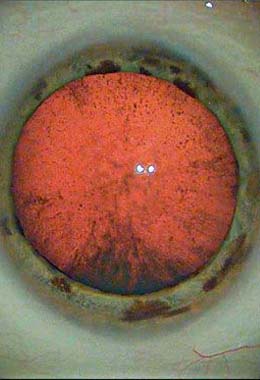
How are Cortical Spoking and Oil Droplet Cataracts treated with Vivity Lenses?
Cortical Spoking and Oil Droplet cataracts scatter light, causing glare, especially at night when pupils enlarge. For example, a 53-year-old fireman with both types of cataracts found it difficult to drive his fire truck at night due to glare. A Vivity model, Extended Depth of Focus, glare-minimizing Intraocular Lens (IOL) was used to replace the cataract, optimizing his night and far distance vision. This lens was ideal due to his pupil size variations in different lighting conditions.
BEFORE
AFTER
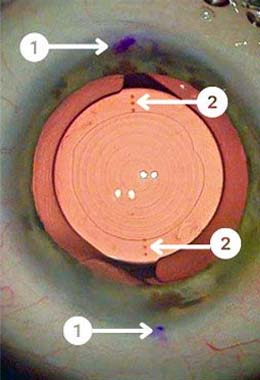
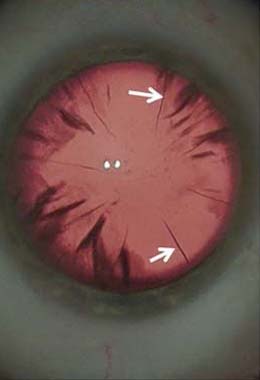
How are Variable Pattern Cataracts treated with Symfony Optiblue Toric IOLs?
Variable pattern cataracts, especially hardened ones, can be treated with Symfony Optiblue Toric IOLs, particularly when combined with early retinal aging changes and astigmatism. For example, a 93-year-old patient with these conditions was recommended the Symfony Optiblue Toric IOL by our Enriched Optics Algorithm due to its superb contrast acuity. Astigmatism was precisely treated using our real-time Aberrometry Guided system, ensuring optimal lens alignment and confirming perfect positioning after surgery.
BEFORE
AFTER
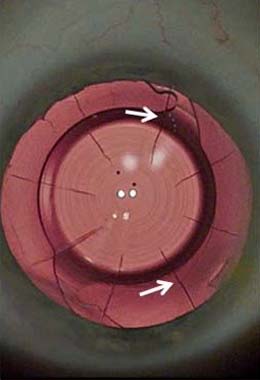
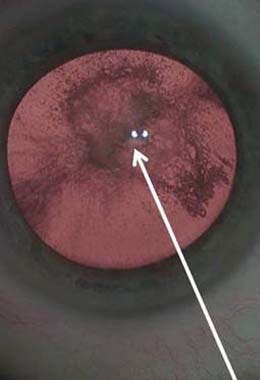
How are Cortical Spoking Cataracts in Radial Keratectomy (RK) Eyes treated with Odyssey Premium Lenses?
Cortical Spoking (CS) cataracts in eyes with prior Radial Keratotomy (RK) can cause increased glare, especially at night, and can be treated with Odyssey Premium Lenses. For example, a 71-year-old male with CS cataracts and a history of 8-incision RK struggled with night glare and sought to reduce dependency on glasses. Our Eagle Vision Algorithm recommended Odyssey lenses due to their unique design, which pairs well with eyes that had prior corneal refractive surgery, offsetting corneal shape changes without compromising contrast acuity. The lens power was further refined during surgery using the Aberrometry Guided (ORA) System, crucial for eyes with prior corneal surgery.
BEFORE
AFTER
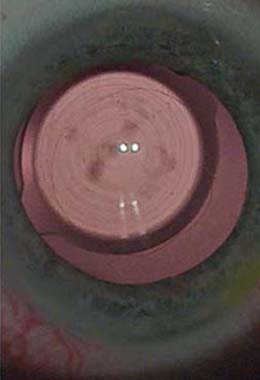
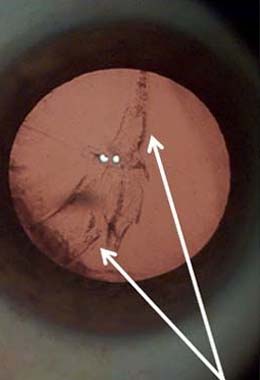
How are Posterior Subcapsular Cataracts treated with Odyssey Premium Lenses?
Posterior Subcapsular (PS) cataracts, often linked to steroid use, can cause rapid vision shifts and disabling glare, and can be treated with Odyssey Premium Lenses. For example, a 63-year-old accountant developed a PS cataract after pneumonia treated with long-term oral steroids, experiencing uncorrectable vision changes and headlight glare. His goals were independence from computer glasses and excellent distance vision for golf. Our EAGLE Vision Algorithm determined he was a great candidate for Odyssey lenses based on his pupil size, corneal shape, and lifestyle needs.
BEFORE
AFTER
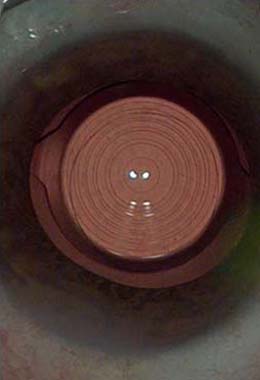
How are Cortical Spoking Cataracts with mild Epiretinal Membrane treated with Odyssey Premium Lenses?
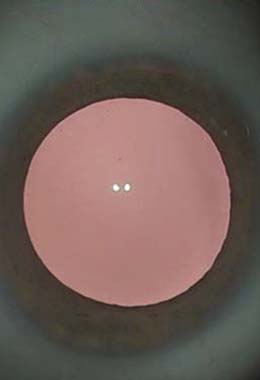
Cortical Spoking (CS) cataracts, even with a mild Epiretinal Membrane (ERM), can decrease vision and cause glare, and can be treated with Odyssey Premium Lenses. For example, a 58-year-old real estate agent with CS cataracts and a stable mild ERM struggled with distance vision, glare, and computer reading. She sought excellent distance, intermediate, and near vision. Our EAGLE Vision Algorithm recommended an Odyssey Intraocular Lens, which provides binocular vision and independence from glasses, notably without reducing contrast sensitivity, making it suitable for eyes with stable early ocular disease.
BEFORE
AFTER
Refractive Lens Exchange with Odyssey Premium Lens
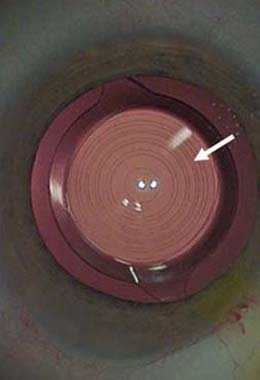
This 49-year-old nurse noticed her distance and near vision deteriorating due to progressive farsightedness (hyperopia) and loss of near-focusing ability (presbyopia). She wanted to be free of glasses and did not like the vision quality when wearing mono-vision contact lenses.
Upon examination, she had clear lenses (before image) in both eyes. She sought to achieve excellent distance and near vision and good intermediate. Based on her lifestyle needs, her somewhat large pupil size, and her corneal shape, our EAGLE Vision Algorithm recommended the Odyssey Lens (after image). Note the repeating “dual ring” pattern on the lens’s front (arrow). This diffractive pattern is unique to the Odyssey lens and greatly contributes to the clean vision provided by this lens.
BEFORE

AFTER
Premium Cataract Surgery With The Odyssey Lens
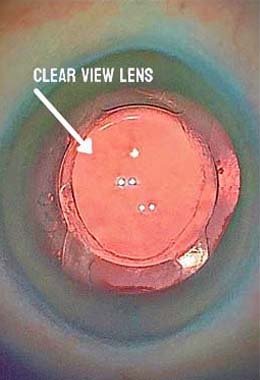
Odyssey lens implanted in a 42 year old male hx of multiple myeloma with prolonged steroid use. He had a PSC cataract.
BEFORE
AFTER
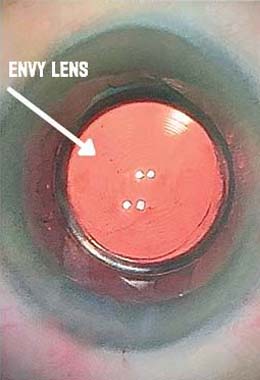
What is ClearView IOL Lens Revision, and how is it performed with the enVista Envy Lens?
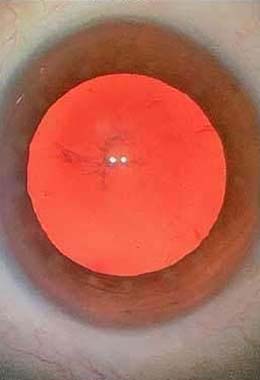
ClearView IOL Lens Revision involves replacing a previously implanted IOL, often with a new enVista Envy Lens, to address vision issues. For example, a 72-year-old female, who had prior LASIK and a ClearView IOL for cataract, experienced blurry distance vision. She underwent a lens exchange at Assil Gaur Eye Institute. Based on her large pupil diameter, steep corneal curvature, and desire for minimal glare, the Bausch and Lomb Envista Envy lens was identified as ideal, resulting in 20/20 near and distance vision without halos or glare.
BEFORE
AFTER
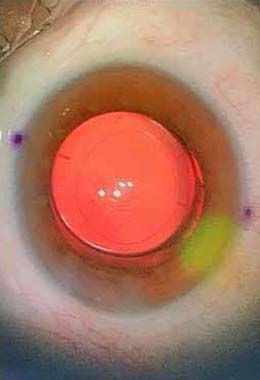
What is Bausch + Lomb EnVista IOL Revision Surgery?
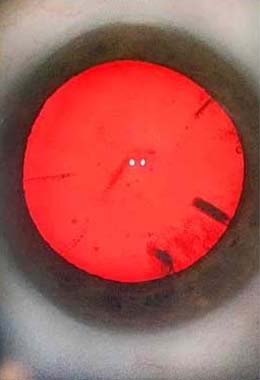
Bausch + Lomb EnVista IOL Revision Surgery involves replacing an IOL, often chosen for patients seeking optimal vision. For example, a 53-year-old pilot with mild farsightedness and moderate astigmatism, experiencing dry eye symptoms, opted for Refractive Lens Exchange over MonoVision Lasik for binocular vision. Our IOL selection algorithm recommended the Envy Lens (Toric version) for optimal results, with the Ora Aberrometer used during surgery to precisely align the lens and correct astigmatism.
BEFORE
AFTER
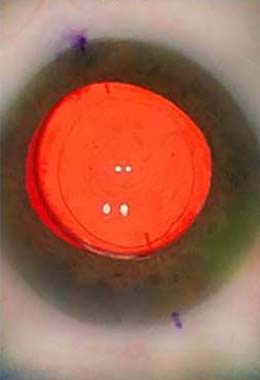
How are Cortical Spoking Cataracts treated with EnVista Envy Toric IOLs?
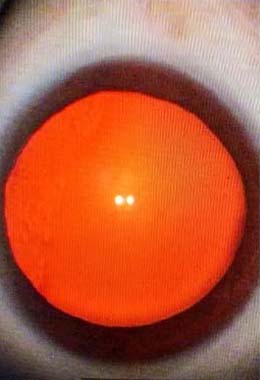
Cortical Spoking cataracts can be effectively treated with EnVista Envy Toric IOLs, especially in patients with prior refractive surgery and astigmatism. For example, a 59-year-old female with a history of LASIK and chronic contact lens wear developed cataracts and was treated with an Envista Envy Toric IOL. Based on her eye anatomy and astigmatism, the lens position was precisely refined using the Ora Aberrometer to eliminate astigmatism, resulting in 20/20 near and distant vision.
BEFORE
AFTER
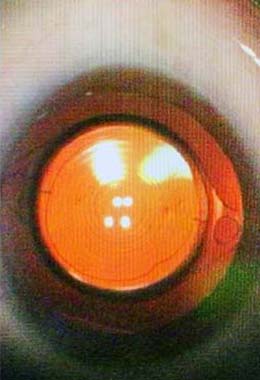
Bausch & Lomb EnVista Envy Toric IOL
A Cataract with high Astigmatism in this patient’s right eye was treated with the Bausch & Lomb enVista Envy Toric lens. When aligned with the Ora aberometer’s identified axis of the eye’s astigmatism, these hash marks neutralize that Astigmatism.
BEFORE

AFTER
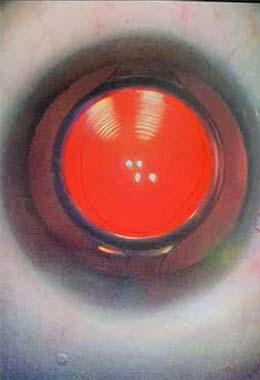
Bausch + Lomb enVista Envy Toric IOL
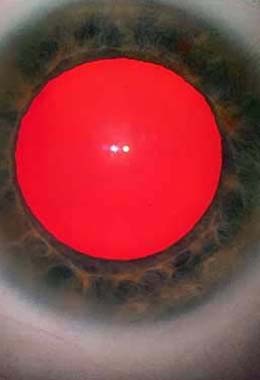
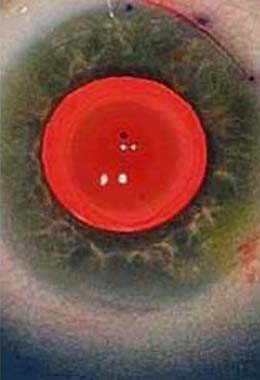
With a Nuclear Sclerotic Cataract on this patient’s left eye, our IOL selection algorithms indicated that he should receive the Bausch & Lomb enVista Envy Toric premium IOL. This lens is designed to address his high degree of nearsightedness.
BEFORE
AFTER
How are Cataracts and Astigmatism treated with Envista Envy Lenses, LRI, and RLE Surgery?
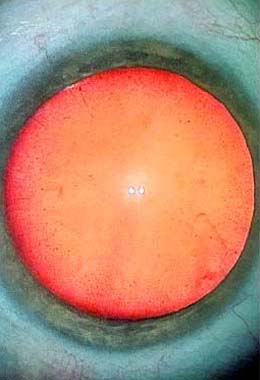
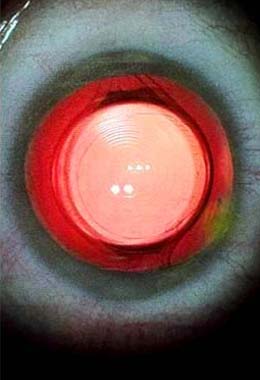
Cataracts, farsightedness, and astigmatism can be treated with a combination of Envista Envy lenses, Limbal Relaxing Incision (LRI), and Refractive Lens Exchange (RLE) surgery. For example, a 64-year-old pilot with Nuclear Sclerosis, Oil Droplet, and Posterior Sub-Capsular cataracts, along with farsightedness and astigmatism, had his vision compromised. Our premium IOL selection algorithm recommended the enVista Envy lens. The Ora Intraoperative Aberrometer guided the treatment, including an LRI for astigmatism below toric IOL levels. Due to his satisfaction, he then underwent RLE in his non-cataractous eye to achieve crisp, clear vision without glasses.
BEFORE
AFTER
Envy IOL Post Odyssey Lens
A 49-year-old ex-boxer and fireman with post-traumatic cataracts, the enVista Envy lens was selected due to the shape of his eyes and his desire to minimize nighttime glare while driving the fire truck.